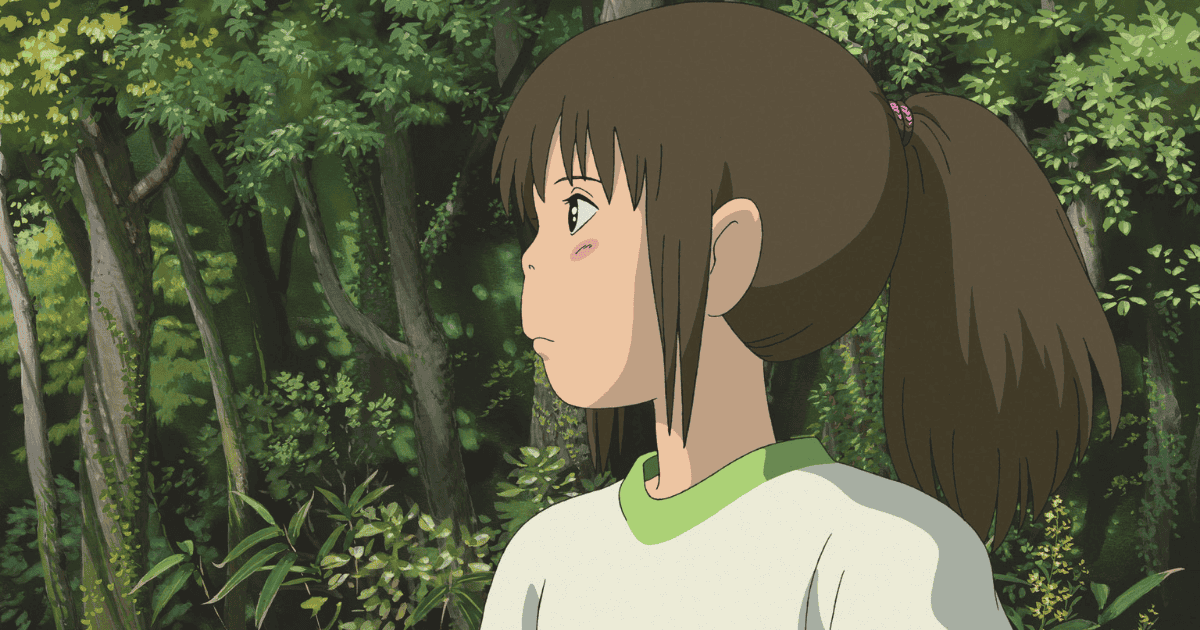
Spirited Away (Official Website) is the monumental, Academy Award-winning animated feature film directed by Hayao Miyazaki, released in 2001.
In this deep dive, we are compiling the ultimate collection of trivia and behind-the-scenes secrets about Spirited Away. While you certainly do not need to know these details to appreciate the masterpiece, discovering the “adult circumstances,” rejected drafts, and hidden inspirations behind the film will drastically alter how you view Chihiro’s journey.
*This is a translated version. The original (Japanese) is available here.
On this pageContents
The Ultimate Spirited Away Trivia & Behind-the-Scenes Collection
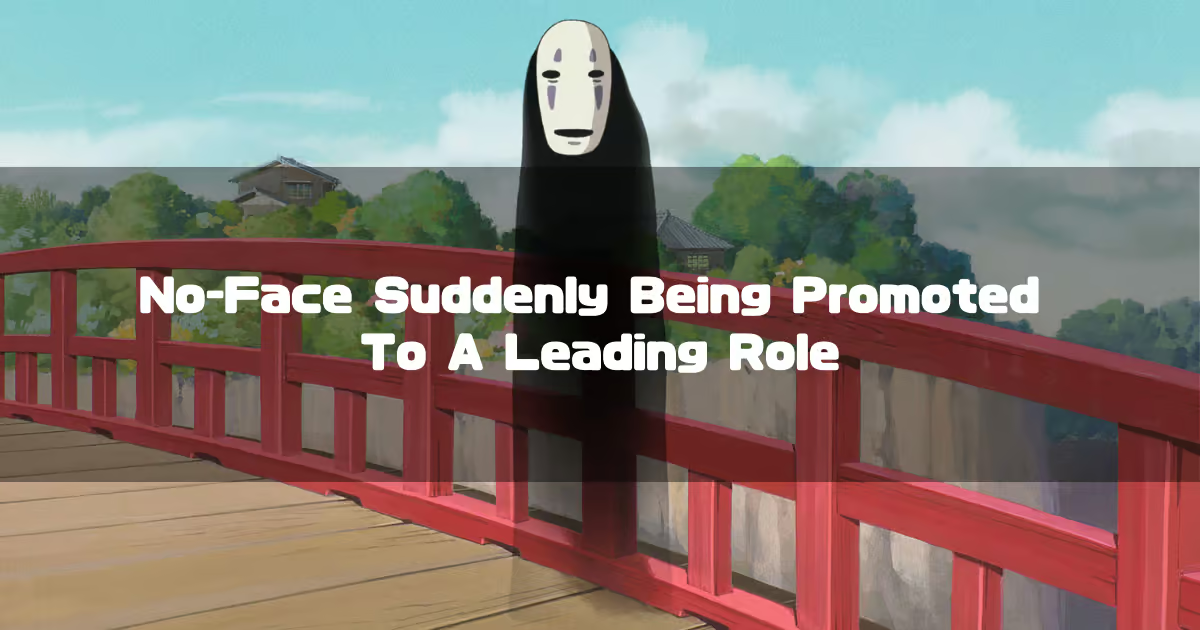
Chihiro’s Model is a Real 10-Year-Old Girl Named Chiaki
Chihiro, the sullen and apathetic protagonist of Spirited Away, was not pulled from thin air. She has a direct, real-world model: a girl named Chiaki, who was exactly 10 years old at the time of conceptualization. She is the daughter of Seiji Okuda, the Nippon Television executive who closely collaborated with Studio Ghibli.
Following the intense, grueling production of Princess Mononoke, Miyazaki was struggling to find his next project. He developed two pitches—one adaptation and one original concept—but both were ultimately scrapped.
What Miyazaki proposed next was affectionately dubbed “Chiaki’s Movie.” Observing Okuda’s parenting, Miyazaki apparently had some rather meddlesome, grandfatherly thoughts: “If we leave her to those parents, what will happen to Chiaki? Shouldn’t we make a movie specifically for her?” Furthermore, during a press conference held at the Edo-Tokyo Open Air Architectural Museum on March 26, 2001, Director Miyazaki explained his motivation:
“Actually, I have about five young girlfriends who are right around the actress Rumi Hiiragi’s age (13 at the time). I’ve known them very well since they were babies, and I spend a few days with them at a mountain cabin every summer. Watching those children, I realized that there simply wasn’t a movie out there truly made for them. I wanted to create a film that they could genuinely enjoy. That was the target, or rather, the ultimate trigger for this project.”
(Original Text in Japanese)
「実は僕には、ちょうど柊さん(当時13歳)くらいの、赤ん坊の頃からよく知っているガールフレンドが5人ほどいまして、毎年夏に山小屋で2、3日一緒に過ごすんですが、その子達を見ていて、この子達のための映画がないなとおもいまして、その子達が本当に楽しめる映画を作ろうと思ったのが、狙いというかきっかけです。」
He clarified that the initial spark for the film ignited when his young “girlfriends” were around 10 years old, directly inspiring Chihiro’s characterization.
- Ghibli Textbook 12: Spirited Away (ジブリの教科書12 千と千尋の神隠し)
In the Early Drafts, Zeniba Was the Final Boss, and No-Face Was a Nobody
The emotional and visual climax of Spirited Away as we know it today is the terrifying, gluttonous rampage of No-Face through the bathhouse. However, in the initial planning stages, No-Face was nothing more than a background extra. The fact that he became the central antagonist of the second act was a brilliant cinematic “accident.”
In the original outline (drafted around the time the first 40 minutes of storyboards were completed), the plot was vastly different: After successfully defeating Yubaba, Chihiro and Haku would discover an even more terrifying witch named Zeniba. They would then join forces to wage an epic battle against Zeniba to finally break the curse on Chihiro’s parents.
However, veteran producer Toshio Suzuki quickly realized a fatal flaw: executing that massive, action-heavy outline would result in a movie easily exceeding three hours. To animate it, they would need to delay the release date by an entire year. Although Miyazaki and Supervising Animator Masashi Ando initially pushed back against Suzuki’s reality check, they eventually compromised, leading to the story we know today.
Reflecting on this in Ghibli Textbook 12, Suzuki noted:
“(Regarding the initial concept) Miya-san pitched it to me passionately, but it didn’t really click. No, to be brutally honest, I thought it was a bit ridiculous (bitter laugh). But of course, I couldn’t just say that to his face, right?”
(Original Text in Japanese)
「(初期構想について)宮さんは熱弁してくれたんですけど、僕はあまりピンとこなかった。いや、正直にいうと、ちょっとバカバカしいんじゃないかと思った(苦笑)。だけど、それを率直にいうわけにもいかないですよね。」
According to Suzuki, the daunting “3-hour runtime” warning was somewhat improvised on the spot to rein Miyazaki in. However, that specific logistical boundary forced a drastic change in direction.
Miyazaki, fiercely rejecting Suzuki’s casual offer to “just extend the release date,” fell silent. After a moment of deep thought, he suddenly proposed the idea of elevating the background character No-Face to the main antagonist. Suzuki claims he made the final executive decision to greenlight the “No-Face route.”
Objectively, this is the official narrative… but reading between the lines, you can glimpse the profound “Ah-Un” (unspoken, telepathic understanding) between these two legends. It is highly unlikely that a master filmmaker like Miyazaki didn’t already know his epic draft would breach three hours. He likely sensed it himself.
So, why did this exact exchange happen? Perhaps Miyazaki himself wasn’t entirely sold on his “Zeniba Final Boss” draft. On the flip side, he might have lacked the absolute confidence to pivot the entire film around a weird, silent ghost like No-Face. By framing the decision as a logistical choice and letting Suzuki pull the trigger, Miyazaki gained the necessary validation to pursue the weirder, more psychological No-Face plotline. While this is purely speculation, it perfectly aligns with their legendary dynamic.
- Ghibli Textbook 12: Spirited Away (ジブリの教科書12 千と千尋の神隠し)
Legendary Actor Bunta Sugawara Cast as Kamaji on Suzuki’s Recommendation
From Mari Natsuki’s iconic dual performance as Yubaba and Zeniba to the rest of the ensemble, the voice casting in Spirited Away is immaculate. One of the absolute standouts is the late, legendary yakuza film actor Bunta Sugawara as the gruff, multi-armed boiler man, Kamaji.
Audiences around the world are moved by Kamaji’s deeply affectionate line regarding Haku: “Don’t you get it? It’s love. Love.“
The brilliant decision to cast Sugawara in this role came directly from Toshio Suzuki, who insisted, “Only Sugawara-san has the gravitas to give real, persuasive power to a line about love.” Hearing a famously tough, hard-boiled actor deliver such a tender line is what gives the scene its magic.
- Ghibli Textbook 12: Spirited Away (ジブリの教科書12 千と千尋の神隠し)
The Iconic Theme Song Was Originally Written for a Scrapped Movie
The closing theme song of Spirited Away, “Always With Me” (Itsumo Nando Demo) by Yumi Kimura, is universally beloved. However, it was never meant to be the theme song. Originally, the ending theme was supposed to be a track titled “To the River of That Day” (Ano Hi no Kawa e), composed by Joe Hisaishi with lyrics penned by Miyazaki himself. When Miyazaki struggled to finalize the lyrics, he suddenly remembered “Always With Me” and proposed swapping it in.
The fascinating part is why Miyazaki remembered it. In reality, Yumi Kimura and lyricist Wakako Kaku had written “Always With Me” entirely voluntarily for a completely different, rejected Ghibli pitch titled Rin the Chimney Painter. The timeline of this musical miracle is astonishing:
- Deeply moved by Princess Mononoke, musician Yumi Kimura sends a heartfelt fan letter to Hayao Miyazaki, attaching a CD of her singing the Mononoke theme.
- To her shock, Miyazaki writes back, mentioning that he is currently developing a new film called Rin the Chimney Painter, and briefly outlines the plot.
- Though completely unsolicited, Kimura is inspired by the concept. She teams up with Wakako Kaku to compose a song (“Always With Me”) that perfectly captures the vibe of the pitch, and mails it directly to Miyazaki.
- Years pass with no word. Rin is canceled. But when Miyazaki hits a wall on Spirited Away, he pulls Kimura’s tape from his desk, and cinema history is made.
It sounds like a Hollywood fairy tale, but it is entirely true.
As a side note, the scrapped pitch Rin the Chimney Painter sounds incredibly intriguing. Based on fragmentary information, the plot was roughly this:
- The setting is a traditional bathhouse left standing in a post-apocalyptic Tokyo devastated by catastrophic earthquakes.
- A 20-year-old female art student named Rin travels from Osaka and is permitted to live in the bathhouse in exchange for painting grand murals on its towering chimney.
- The plot centers on her fierce conflict with an underground syndicate run by a ruthless 60-year-old man who tries to sabotage her work.
- In a bizarre twist, Rin eventually falls deeply in love with the 60-year-old villain.
It sounds wildly different from standard Ghibli fare… but who wouldn’t want to see what Miyazaki could have done with that concept?
- Ghibli Textbook 12: Spirited Away (ジブリの教科書12 千と千尋の神隠し)
The Cop Movie “Bayside Shakedown” Killed “Rin” and Birthed “Chihiro”
So, what exactly killed Rin the Chimney Painter? The surprising culprit was a massive live-action Japanese police comedy: Bayside Shakedown The Movie (Odoru Daisousasen).
While Miyazaki was furiously drawing concept art and storyboards for Rin, Toshio Suzuki went to the theater to watch the wildly popular Bayside Shakedown. In Ghibli Textbook 12, Suzuki recalls his reaction:
“While masquerading as a lighthearted, comedic police drama, the film brilliantly captured the exact mood, the cynical perspectives, and the behavioral patterns of modern youth. It hit me like a ton of bricks: ‘Ah, this is what the modern age actually looks like.'”
(Original Text in Japanese)
「コメディタッチの刑事もののふりをしながら、今の若者たちの気分、ものの見方、行動パターン、すべてが見事に表現されている。これが現代かと思い知らされました。」
Rin, the protagonist of Miyazaki’s pitch, was a 20-year-old woman. After watching Bayside, Suzuki developed a deep fear: could Hayao Miyazaki, a man rapidly approaching his 60th birthday, authentically write and direct a realistic 20-year-old modern woman without it feeling dated or out of touch? Suzuki visited Miyazaki’s atelier and gently shared his impressions of the cop film.
Instantly reading between the lines of Suzuki’s critique, Miyazaki didn’t argue. He immediately tossed his massive stack of Rin concept art into the trash and simply said, “Let’s do Chiaki’s movie instead.”
This anecdote perfectly highlights Miyazaki’s terrifyingly swift decision-making. However, once again, the “Ah-Un” dynamic is at play. Despite drawing hundreds of image boards, Miyazaki himself likely felt that Rin wasn’t quite clicking. Meanwhile, the core concepts of what would become Spirited Away were already bubbling in his subconscious. Suzuki’s subtle critique of Bayside Shakedown simply provided Miyazaki with the perfect excuse to execute a clean break from a flawed concept.
- Ghibli Textbook 12: Spirited Away (ジブリの教科書12 千と千尋の神隠し)
The Bathhouse Was Inspired by Hostess Clubs
Spirited Away achieved unprecedented global dominance, winning the Golden Bear at the 52nd Berlin International Film Festival in 2002 and the Academy Award for Best Animated Feature in 2003. Famously, Miyazaki declined to attend either ceremony in person.
However, he did attend the Japan Foundation Award ceremony in 2005 (Official Website) to accept an honor.
Following that event, Miyazaki turned to Suzuki and casually remarked, “You know, this entire movie started because of a single comment you made, Suzuki-san. You don’t remember? The story about the cabaret club.”
The “cabaret club” (hostess bar) story was an anecdote Suzuki had heard from an acquaintance who frequented the nightlife district. Suzuki had relayed the observation to Miyazaki, and it is documented in Ghibli Textbook 12 as follows:
“Many of the young women who come to work at cabaret clubs are inherently shy, withdrawn, and terrible at communicating with people. However, out of sheer necessity for survival, as they force themselves to desperately engage with difficult customers every night, they gradually become energetic, confident, and capable.”
(Original Text in Japanese)
キャバクラへ働きに来る子たちは、もともと引っ込み思案で、人とのコミュニケーションがうまくできない子も多い。ところが、必要に迫られて、一生懸命いろんなお客さんと会話するうちにだんだん元気になっていく。
This gritty, real-world observation flawlessly maps onto Chihiro’s psychological journey in the magical bathhouse.
The Terrifying Fate Awaiting Those Who Refuse to Work
Throughout her terrifying first night in the spirit realm, Chihiro repeats a single, desperate mantra to Yubaba: “Please let me work here.” Through sheer persistence, she secures a contract and sets off toward her happy ending. But what would have happened if the terrified 10-year-old had broken down and cried, “Actually, never mind, I just want to go home!”?
It is a natural question, and the horrifying answer is explicitly detailed in Miyazaki’s original project proposal document, “Chihiro of the Mysterious Town: The Aim of This Film”:
“In the bathhouse ruled absolutely by Yubaba, if one utters even a single phrase of weakness like ‘I don’t want to’ or ‘I want to go home,’ the witch will immediately cast Chihiro out. She will be left with only two horrific options: to wander the spirit realm aimlessly until her body fades into nothingness, or to be magically transformed into a chicken, forced to lay eggs endlessly until she is eventually slaughtered and eaten.”
(Original Text in Japanese)
湯婆婆が支配する湯屋では、「いやだ」「帰りたい」と一言でも口にしたら、魔女はたちまち千尋を放り出し、彼女はどこにも行くあてのないままさまよい消滅するか、ニワトリにされて食われるまで卵を生みつづけるかの道しかなくなる。
What an absolutely terrifying ultimatum. Knowing this gruesome consequence makes Chihiro’s trembling determination to keep demanding a job an incredible display of a child’s raw will to survive.
Yubaba Keeps the Lights Off to “Save on Overhead”
When Chihiro first arrives at Yubaba’s opulent penthouse office in the early act of the film, the entire floor is draped in thick, unsettling shadows. The dim lighting perfectly amplifies Chihiro’s paralyzing fear and establishes a brilliantly sinister atmosphere. While this is an undeniable artistic choice, Supervising Animator Masashi Ando revealed a hilarious, shockingly mundane lore reason for the darkness.
According to Ando, Yubaba was conceptualized as a “nasty, tacky nouveau riche,” surrounded by gaudy, excessive European decor. Yet, despite her extreme wealth, she is incredibly stingy. Ando explained the lighting situation in Ghibli Textbook 12:
“Yubaba intentionally keeps the top floor of the bathhouse—her personal living quarters—quite dim because she has implemented a strict energy-saving policy. It’s purely for cost reduction (laughs). Apparently, as the CEO, she is constantly racking her brain trying to cut down the bathhouse’s massive utility bills.”
(Original Text in Japanese)
湯婆婆自身は、自分が住んでいる湯屋の最上階などはかなり薄暗くして省エネ体制をとっているんです。経費削減ということで(笑い)。あれで相当経営者として頭を悩ませているということらしいです。
It is incredibly funny to realize that the terrifying witch of the spirit realm is just a stressed-out small business owner trying to save a few bucks on her electricity bill.
- Ghibli Textbook 12: Spirited Away (ジブリの教科書12 千と千尋の神隠し)
The Tragic Truth: Chihiro Forgets Everything at the End
Over the course of the film, Chihiro undergoes extreme emotional trauma, profound growth, and magical experiences. Logically, trying to re-integrate into normal human society while carrying the memories of dragons, witches, and shape-shifting spirits would be a psychological nightmare. At the very least, her parents would think she was insane.
However, the bittersweet reality is that the moment she passes back through the red tunnel into the human world, her memories of the spirit realm are wiped clean. This tragic fact is explicitly confirmed in Miyazaki’s final storyboards:


Realizing that she forgets Haku, Lin, and Kamaji leaves the viewer with a profound sense of melancholy. However, we must remember the brilliant wisdom imparted by Zeniba earlier in the film: “Once you’ve met someone, you never really forget them. It just takes a while for your memories to return.”
Even if her conscious mind has been wiped blank, the bravery, empathy, and resilience she forged in the bathhouse have been permanently accumulated within her soul. Those forgotten experiences are the bedrock upon which she will build the rest of her life.
- Ghibli Textbook 12: Spirited Away (ジブリの教科書12 千と千尋の神隠し)
- Studio Ghibli Storyboard Collection 13: Spirited Away (千と千尋の神隠し スタジオジブリ絵コンテ全集〈13〉)
Can you name the movie before the scene comes into focus?
Put your visual memory to the test with a blurred Studio Ghibli scene.
Reader Comments