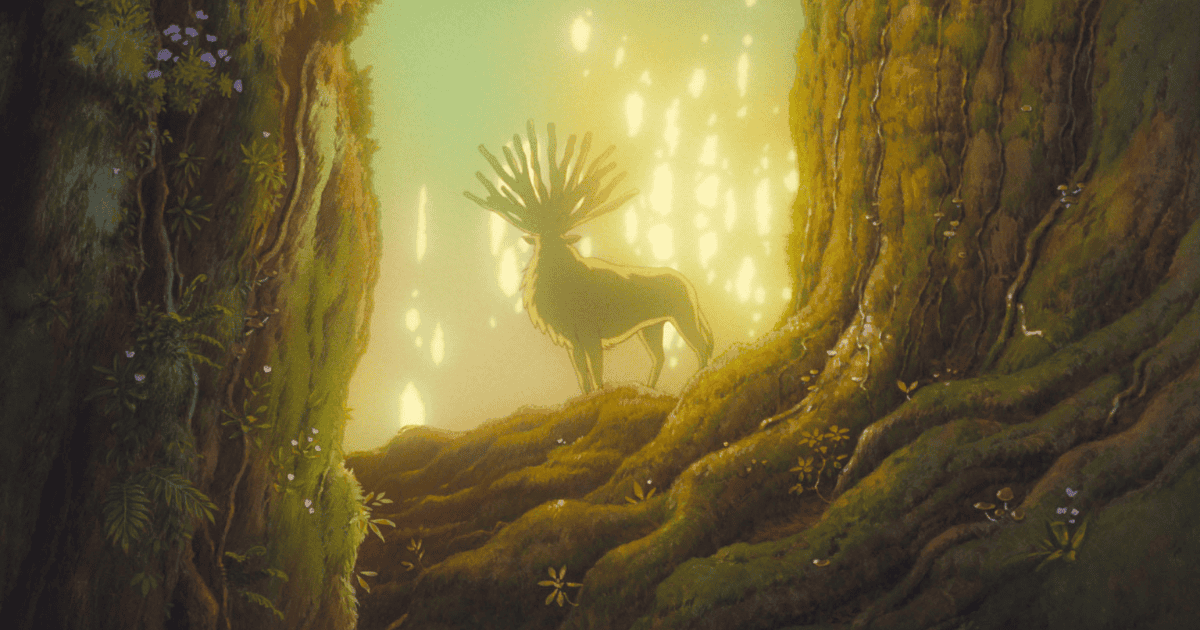
Hayao Miyazaki’s Princess Mononoke (Official Studio Ghibli Website) is an animated film released in 1997.
Here, I will consider the meaning of Ashitaka’s words to San at the end: “The Forest Spirit can’t die. It is life itself. It possesses both life and death.”
Miyazaki’s direction makes us feel, “I sort of understand, though not quite—but perhaps that’s all right!” And we stop thinking about what Ashitaka means.
There is nothing wrong with stopping there. This time, though, I would like to keep thinking.
One clue, I think, is that when Eboshi and the others approach, the Forest Spirit does not stop transforming into the Night-Walker.
When you first watched Princess Mononoke, did you wonder, “Why not deal with Eboshi first, then take its time becoming the Night-Walker?”
I think that odd detail offers a way into Ashitaka’s final words.
First, I will explore a reading in which the Forest Spirit’s nature changes, using that detail as a starting point. Then I will consider a different interpretation. I have not found a scene or source that conclusively settles the meaning, so I consider both readings equally possible; the words could also carry both meanings at once.
To consider the change in the Forest Spirit’s nature, let’s first look at Miyazaki’s comments.
*This is a translated version. The original (Japanese) is available here.
-
The Forest Spirit’s “Death” and a Change in Its Nature
Miyazaki calls the Forest Spirit a lower-ranking god. One possible reading is that its disappearance marks a change into an unseen higher god, an object of awe and faith. Life and death then represent nature’s two sides: what sustains us and what threatens us. -
Encouragement for San
Ashitaka speaks to San, who has lost the forest that sustained her. His words can be read as reassurance that the forest she protected will return through the Forest Spirit’s power over life and death. -
Ashitaka’s Own Hope
Ashitaka’s mark has not disappeared completely. If the Forest Spirit is still his hope for healing, the words may also express his own urgent wish as he goes on living with an injustice he cannot resolve.
On this pageContents
Interpretation 1: A Change in the Forest Spirit’s Nature
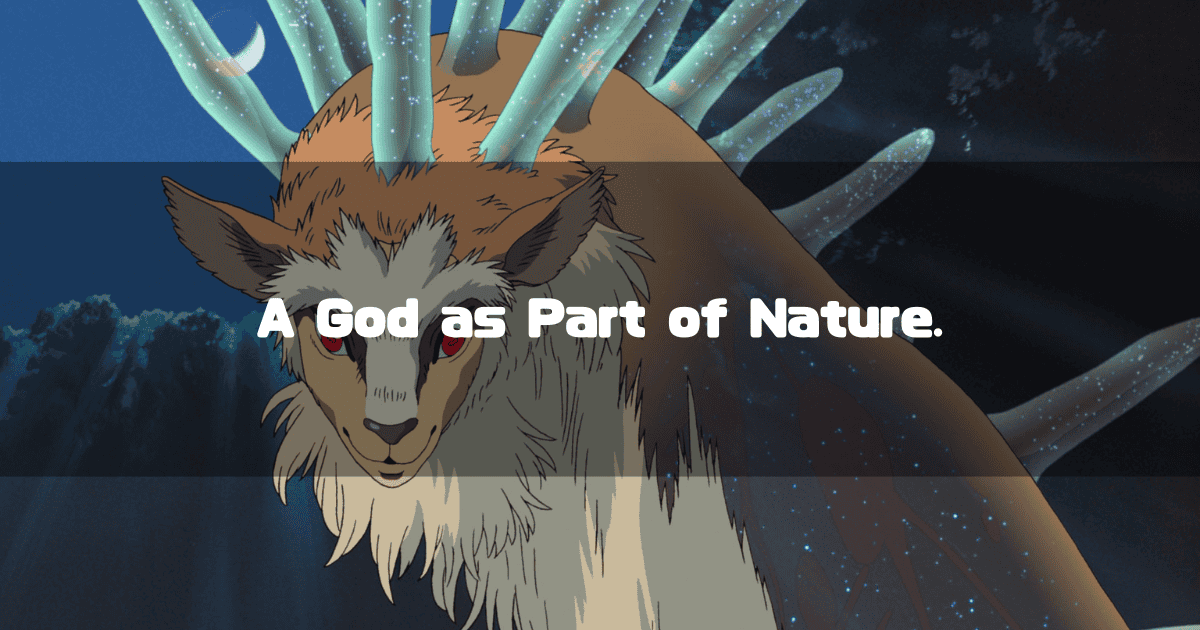
Miyazaki’s Comments on the Forest Spirit
In a conversation with the philosopher Takeshi Umehara, collected in Orikaeshiten: 1997-2008 (折り返し点: 1997~2008, in Japanese), Miyazaki answers the direct question, “What is the Forest Spirit?”:
Well, it was a desperate measure. It’s ‘night,’ you see. It walks around, nurturing the forest. During the day, it vanishes and exists there as a single creature. It’s a rather haphazard thing, with the antlers of a deer, the face of a human, the feet of a bird, and the body of a goat… Actually, I depicted this Forest Spirit as a very low-ranking god. I couldn’t draw anything beyond that, so in the end, I just made it the ‘God of the Forest.’ All the while thinking there must be higher-ranking gods.
(Original Text in Japanese)
いや、苦し紛れなんです。『夜』なんですけどね。歩き回って森を育てている。昼間は消えて、一つの生き物としてそこにいるんです。鹿の角をはやした、人面と鳥の足と山羊の身体を持ったような、いい加減なものです。・・・実はこのシシ神も、うんと下級の神様として描いたんです。それ以上はもう描けなくて、結局それを最終的に『森の神』ということにしてしまった。もう少し上級神がいるんだろうと思いながら。
The Forest Spirit makes plants grow around its feet, takes life, and becomes the Night-Walker. Yet Miyazaki describes it as a lower-ranking god.
To explore what he means by that, let’s turn to another statement. In “Forty-Four Questions for Director Hayao Miyazaki about Princess Mononoke by Foreign Reporters,” collected in Ghibli no Kyokasho 10 Mononoke Hime (ジブリの教科書10 もののけ姫, in Japanese), he answers a question about animism and religion:
Many Japanese people still retain a strong religious feeling today: the belief that in the most remote part of our country there is a place of great purity where people must not set foot, where abundant water flows and protects a deep forest. I feel very strongly that the most wonderful thing is for humans to return to a place with that sense of purity. There is no bible and there are no saints. It may not be recognized as a religion among the world’s religions, but for Japanese people it is a very real religious feeling.
(Original Text in Japanese)
今でも多くの日本人の中に宗教心として強く残っている感情があります。それは自分たちの国の一番奥に、人が足を踏み入れてはいけない非常に清浄なところがあって、そこには豊かな水が流れ出て、深い森を守っているのだと信じている心です。そういう一種の清浄感があるところに人間は戻っていくのが一番素晴らしいんだという宗教感覚を、僕は激しく持っています。それには聖書もなければ、聖人もいないんです。ですから世界の宗教レベルでは、宗教として認められないけれども、日本人にとっては、非常に確かな宗教心なんです。
I will use these comments as clues in thinking about Ashitaka’s words.
A God Within Nature: Why the Forest Spirit Does Not Stop Changing
Let’s return to that puzzling moment in the climax.
Why does the Forest Spirit continue becoming the Night-Walker while surrounded by people aiming at its head? Not stopping allows Eboshi to shoot off and take its head.
Might the idea of a lower-ranking god make it natural to think that the Forest Spirit cannot choose not to become the Night-Walker?
In this reading, the change is an irresistible natural process, like sleep for us: something the Forest Spirit cannot control.
Seen that way, the Forest Spirit and human beings are not wholly separate. It plainly has powers beyond ours, but it may be better understood as part of nature, like us, rather than a supernatural being that rules over nature.
That is what I think Miyazaki may mean by a lower-ranking god.
A Formless, Pure “Something”: The Higher God Miyazaki Could Not Depict
If that is what makes the Forest Spirit a lower-ranking god, what sort of higher god did Miyazaki have in mind?
He calls it a desperate measure and says, “It’s ‘night.’” I understand this to mean that he wanted to depict a higher god but could not, and arrived at the Forest Spirit as a compromise.
Even that compromise may contain clues. The phrase “It’s ‘night’” seems important. In the documentary How Princess Mononoke Was Born (『もののけ姫』はこうして生まれた。, in Japanese), the Night-Walker is described as representing the darkness of night itself.
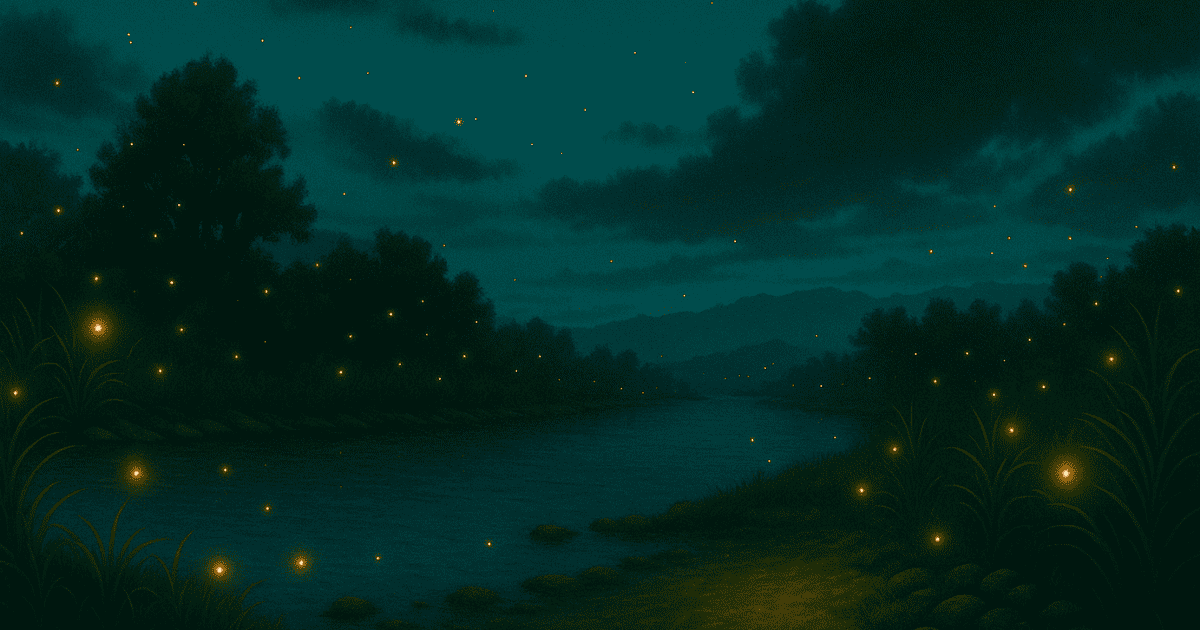
Many of us have felt that something is present in the dark, or experienced a fear of darkness we cannot quite explain.
It may be natural to understand that fear as an instinct for protection from danger. But might fear of the night also give rise to a kind of faith?
I think it connects with awe before earthquakes, typhoons, and floods, and with a simple faith in nature. What matters here is that this object of awe has no distinct form.
We understand something of how these events occur. But perhaps faith in nature is less about the events themselves than the unseen “something” behind them that causes them.
Might Miyazaki have been trying to depict that unseen something?
I think he did not want to give it a human form. His remark about there being no bible or saints suggests this. Giving it a human shape would run against that idea. Since the gods of Japanese mythology also take human forms, perhaps he wanted to avoid those images too.
His struggle led to the Forest Spirit, which he apparently still found unsatisfactory. For an ordinary viewer like me, though, the design is already wonderful—hardly something I would call a desperate measure.
Perhaps the higher god he imagined was the “something” sensed by the belief that deep within our country lies a pure place where humans must not tread, where water flows and the forest is protected. Unable to fully express it, he called the Forest Spirit a lower-ranking god.
What, then, might the Forest Spirit’s disappearance at the end mean?
Reading Ashitaka’s Words: The Forest Spirit as a Higher God
To consider this, I need to make one assumption about what happens after Princess Mononoke, since the film does not show it:
After the story’s conclusion, no human ever saw the physical form of the Forest Spirit again.
Calling it an assumption may seem unnecessary, but I want to make it explicit. Although the film shows only a little recovery, I imagine the landscape becomes a dense forest again over time.
Wouldn’t it be natural for the legend of the Forest Spirit to survive there?
It was already called the Forest Spirit’s forest, and many people experienced those extraordinary events. They might pass the story down, even if no one sees the Forest Spirit itself again. The being they could once injure with a gun is no longer visible, but its legend—or perhaps just the forest’s name—could remain.
People might attribute a presence in the forest to the Forest Spirit, an unexplained event to its curse, or earthquakes, typhoons, and floods to its power. They might also regard peaceful days as its blessing. Yet they would never see its form.
Could it then be understood as the unseen “something” behind those natural events, and as a symbol of the pure place humans must not enter?
On that reading, Ashitaka’s words might mean:
By losing its visible form, the Forest Spirit became an object of the fear and sense of purity people feel before nature. In that sense, it became a higher being rather than dying. Fear and purity represent the two sides of life and death: threats that may kill us and blessings that sustain us.
Now let’s consider a quite different interpretation.
Interpretation 2: Encouragement for San and Hope for Himself
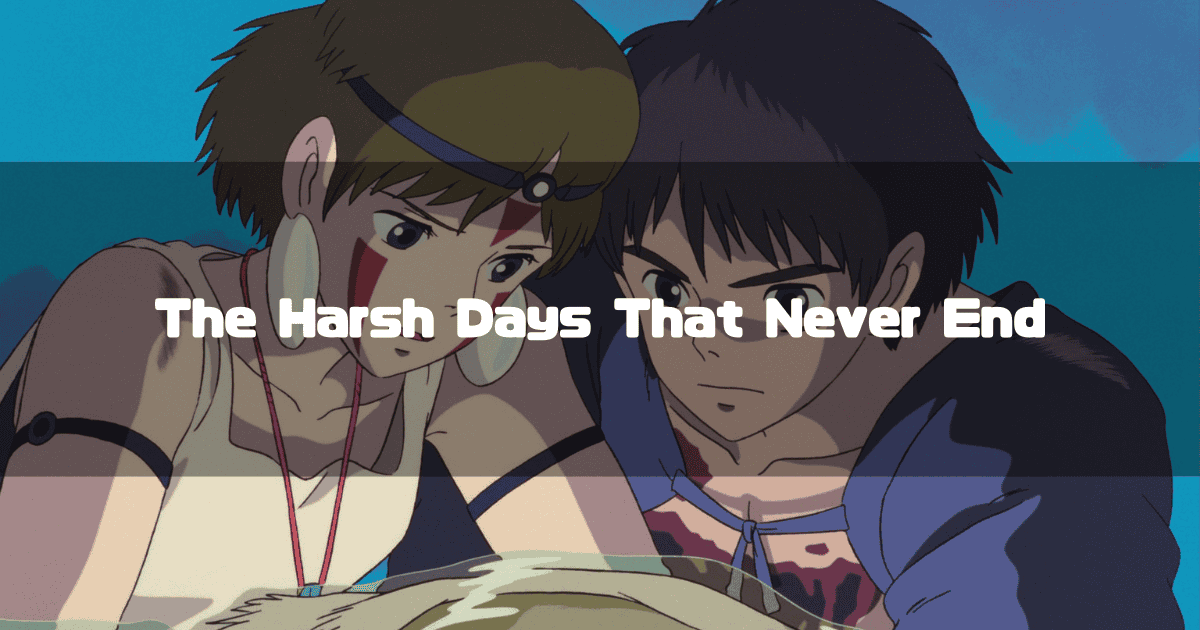
The Forest as San’s Reason to Live
There is something the discussion so far has overlooked: who is Ashitaka speaking to?
He is speaking to San. With that in mind, we must remember that the headless Night-Walker has destroyed the forest.
San has therefore lost what sustained her life.
Abandoned by her parents as a baby, San calls herself a wolf despite looking entirely human. Her resolve to protect the Forest Spirit’s forest has sustained her through the contradiction of living as a wolf while being human.
Having lost that forest—or at least feeling she has lost it—what could Ashitaka say to her at this moment except that the Forest Spirit cannot die?
In that context, I read his words as follows:
“San, of course the Forest Spirit can’t die! The forest you risked your life to protect will return as the Forest Spirit’s forest. It possesses both life and death. Moro said so too: it gives life and takes it away.”
We could end there, but let’s take the thought a little further.
The Forest Spirit as Ashitaka’s Hope
Finally, let’s consider Ashitaka himself.
Princess Mononoke begins with his aimless journey west after receiving an unjust curse. Jigo leads him toward hope in the Forest Spirit, but he faces the despair of not being healed. He finds a new reason to live in San, and finally a new home at Irontown.
The mark never disappears completely, though it fades considerably.
At the end, Ashitaka seems healthy again, as though a burden has lifted. He might accept the remaining mark or curse as part of himself. But something could still trouble him inwardly; personally, I find that possibility more likely.
Meanwhile, the Forest Spirit is the only being with powers that might completely remove his curse.
In that context, might his words also mean:
“The Forest Spirit can’t die—no, it must not die. My curse hasn’t healed completely! Surely the Forest Spirit will heal it!”
This is almost a cry from the soul, and a painful one. It is sad to imagine him feeling this at the end, but not so strange when injustice and insoluble problems are among the themes of Princess Mononoke. This is not a story that ends with “Everything’s solved!”
The three possibilities considered here do not conflict. Rather, I think it is natural to read Ashitaka’s words as containing these thoughts together.
How do you understand Ashitaka’s words: “The Forest Spirit can’t die. It is life itself. It possesses both life and death”?
The images used in this article are provided by the Studio Ghibli Still Images collection.
Can you name the movie before the scene comes into focus?
Put your visual memory to the test with a blurred Studio Ghibli scene.

Reader Comments