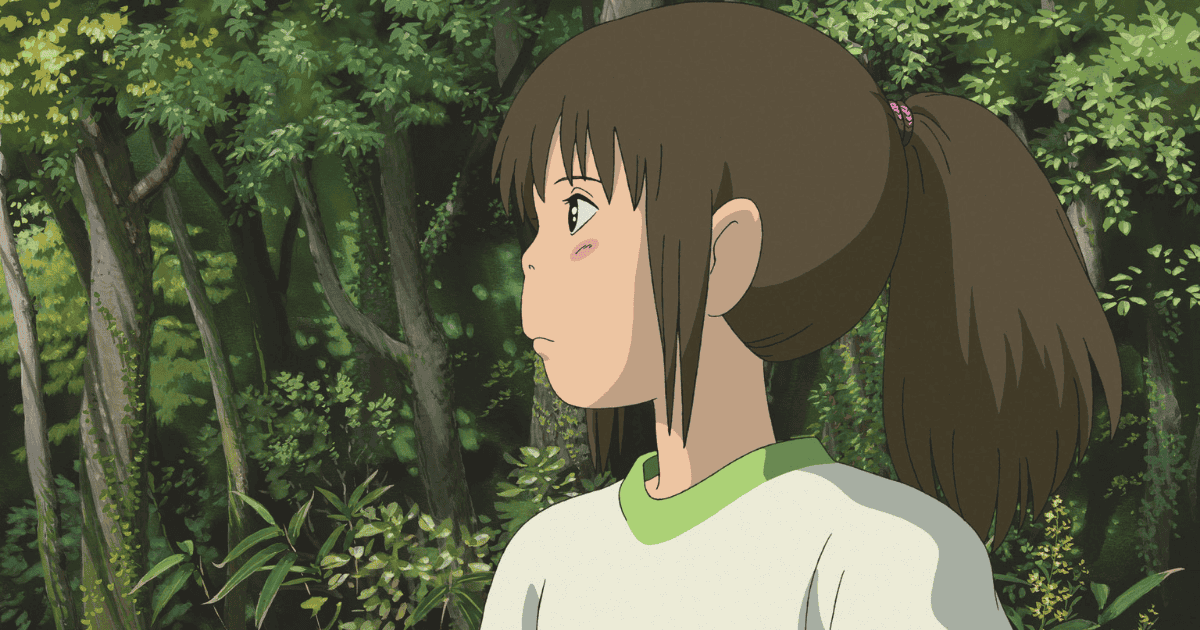
Released in 2001, Hayao Miyazaki’s masterpiece Spirited Away (Official Studio Ghibli Website) is a cultural juggernaut that has inevitably spawned countless urban legends.
When discussing these internet rumors, the debate usually centers around “is it true or false?” However, as a film analyst, I believe the most important metric for an urban legend is simply: “Is it interesting?“
From that perspective, the most brilliantly constructed, genuinely fascinating urban legend in the entire Studio Ghibli fandom is the “Phantom Ending of Spirited Away.”
Today, I want to dissect the anatomy of this urban legend and explore exactly why it is so terrifyingly effective at hijacking our brains.
*Disclaimer: The following analysis is based entirely on the premise that the “phantom ending” is a hoax and does not actually exist in any official cut of the film.
*This is a translated version. The original (Japanese) is available here.
-
The Legend Itself
A highly detailed, emotionally satisfying “alternate ending” has spread across the internet for years. Despite never actually existing, thousands of fans swear they remember seeing it in theaters or on TV broadcasts. -
The Architecture of False Memory
The terrifying brilliance of this urban legend lies in its construction. The creator stitched together plot points and visual motifs that actually exist elsewhere in the film (dialogue about moving vans, flashbacks of a river). The human brain seamlessly splices these real memories together to generate a fake scene. -
Personal Examples of the Mandela Effect
To illustrate how easily the brain edits film memories, I share two personal examples of “Mandela Effects” regarding iconic scenes from Terminator 2 and Patlabor 2. -
The Fragility of the Human Mind
The “Phantom Ending” is a masterclass in psychological manipulation. It proves how fragile, unreliable, and highly editable our cinematic memories truly are.
On this pageContents
The Phantom Ending of Spirited Away (2001)

The Outline of the “Fake” Ending
First, let’s review the details of the “phantom ending” that thousands of fans vividly swear they remember watching.
As the family drives away from the tunnel, Chihiro looks in the rearview mirror and notices that her standard hair tie has magically transformed into the sparkling, woven hairband she received from Zeniba. She touches it, feeling a strange sense of nostalgia, though she cannot remember why.
As they crest the hill approaching their new town, they look down and see the moving truck already parked in their driveway. Chihiro’s mother angrily snaps at her father, “See? I told you the movers would beat us here!”
When they pull into the driveway, one of the moving men physically scolds the father, saying, “You can’t just be late like this on moving day.”
While the parents unpack, Chihiro wanders around her new neighborhood alone. She eventually discovers a small, beautiful stream with a short bridge over it.
Standing on the bridge and staring down into the flowing water, Chihiro experiences a sudden, emotional epiphany. She realizes, without knowing how, that this specific river is the reincarnation of Haku. He has found his new home. The film ends on this beautiful, hopeful note.
How does that sound? Familiar? If you search the internet, you will find countless fans absolutely convinced they saw this sequence. The earliest recorded origin of this highly specific urban legend traces back to a thread on the Japanese message board 2channel (now 5channel) around 2014.
Now, let’s review the actual, canonical ending of the movie:
Chihiro and her parents exit the tunnel to find their Audi covered in dust and dead leaves. While her confused parents immediately head for the car, Chihiro turns back and stares silently at the dark tunnel, as if trying to grasp a fading dream. Her father calls her name, snapping her out of her trance. She runs to the car, climbs into the back seat, and they drive away down the dirt road. The screen cuts to black.
That is the entire ending. There are no moving vans, no angry foremen, and absolutely no river. In fact, it is so incredibly abrupt and simple that it leaves many viewers feeling a bit empty, wondering, “Wait, was that really it?”
The true cinematic brilliance of the real ending is its devastating emotional subtlety: the bittersweet tragedy that she has forgotten the spirit world, contrasted with the silent, physical proof of her journey—the hair tie sparkling in the sunlight.
So, if the real ending is so poetic, why is the “phantom ending” so terrifyingly sticky in our cultural memory?
The Architecture of the Perfect Urban Legend
The sheer genius of this urban legend is how flawlessly it utilizes the brain’s tendency to fill in narrative blanks, allowing us to perfectly visualize a scene that was never animated.
The reason this fake scene feels so incredibly real is that the architect of this legend didn’t invent anything out of thin air. Instead, they took actual plot points and visual motifs established earlier in the film and simply transposed them onto the ending:
- The Movers: We never see the moving men, but the mother explicitly complains about the moving van beating them to the house during the car ride in the opening scene.
- The Hilltop View: In the opening sequence, the father gets lost and drives up a hill where they look down at their new, blue-roofed suburban neighborhood.
- The River: A small river doesn’t appear at the end, but the visual imagery of Chihiro falling into the Kohaku River is heavily featured during her climactic flashback while riding Haku the dragon.
We don’t know the identity of the anonymous 2channel user who first typed out this “phantom ending.” But whoever they were, they possessed a terrifyingly deep understanding of human psychology, memory splicing, and narrative structure.
They recognized that the real ending left narrative threads untied (the movers, Haku’s fate), so they simply gathered the loose threads established in Act 1 and tied them into a neat bow for Act 3. Our brains recognize the threads as “real,” so we subconsciously accept the fake bow as “real” too.
It is a level of psychological sophistication that utterly eclipses lazy, spooky creepypastas like “Totoro is the God of Death.”
While researching the mechanics of how our brains fabricate the “Spirited Away” ending, I realized I have fallen victim to this exact same psychological trap with other classic movies. I want to share two personal examples of “memory fabrication.”
The Psychology of Memory Splicing: Two Cinematic Examples

Terminator 2: Judgment Day (1991)
In the first act of James Cameron’s Terminator 2, a young John Connor calls his foster parents from a payphone to warn them. The film famously cuts to his foster mother in the kitchen, who has already been murdered and replaced by the shapeshifting T-1000.
While she mimics the mother’s voice on the phone to lure John home, her husband walks up behind her, complaining about the dog barking.
If you ask me to describe that scene from memory, I will swear to you that the T-1000 silently transforms its index finger into a long, sharp needle and drives it directly into the top of the husband’s skull.
However, if you watch the actual scene, the T-1000 morphs its entire left arm into a massive, wide sword blade and impales him through the mouth/head.
Why is my memory so specifically wrong? Because I spliced two different scenes together. During the climax in the steel mill, there is an incredibly iconic shot where the T-1000 morphs its index finger into a long needle and stabs Sarah Connor through the shoulder to torture her.
My brain took the “needle finger” visual from Act 3 and retroactively pasted it onto the murder in Act 1. My mind seamlessly merged two factual elements to create a highly convenient, totally fabricated memory.
I guarantee if you asked a room full of T2 fans, “Hey, remember when the T-1000 stabbed the foster dad through the head with its needle finger?”, half of them would enthusiastically reply, “Oh yeah, that was brutal!”
Patlabor 2: The Movie (1993)
I experienced an even more extreme fabrication regarding Mamoru Oshii’s political mecha thriller, Patlabor 2.
There is a quiet, tense scene where the main character, Captain Shinobu Nagumo, steps into a glass elevator. Just as the doors close, a little girl wearing a yellow dress happily runs in to join her.
For over a decade, I was absolutely convinced that the little girl was holding a bright red balloon. Even as I write this, I can vividly see the red balloon contrasting against the cold, gray elevator in my mind’s eye.
But when I rewatched the Blu-ray, she wasn’t holding a balloon at all. Her hands were empty.
Where did the balloon come from? I eventually realized I had spliced in imagery from The Snow Rondo, a totally different episode from the earlier Patlabor OVA series. That episode prominently features a visual motif of a woman holding a red balloon.
Because both Patlabor 2 and The Snow Rondo share an incredibly similar, melancholic atmosphere defined by heavy snowfall, my brain categorized them in the same folder and accidentally dragged the balloon asset from one file into the other.
What the “phantom ending” of Spirited Away teaches us isn’t just that the internet loves a good rumor. It teaches us the terrifying reality that human memory is fundamentally fragile, highly editable, and shockingly easy to manipulate.
Our brains are constantly auto-correcting our reality to make narratives feel more satisfying. While it is fun to analyze with movies, it’s a sobering thought when applied to our real lives.
Our memories are precious, but they are also deeply flawed. Let’s do our best to cherish the reality of them, even when the fiction sounds better.
Can you name the movie before the scene comes into focus?
Put your visual memory to the test with a blurred Studio Ghibli scene.
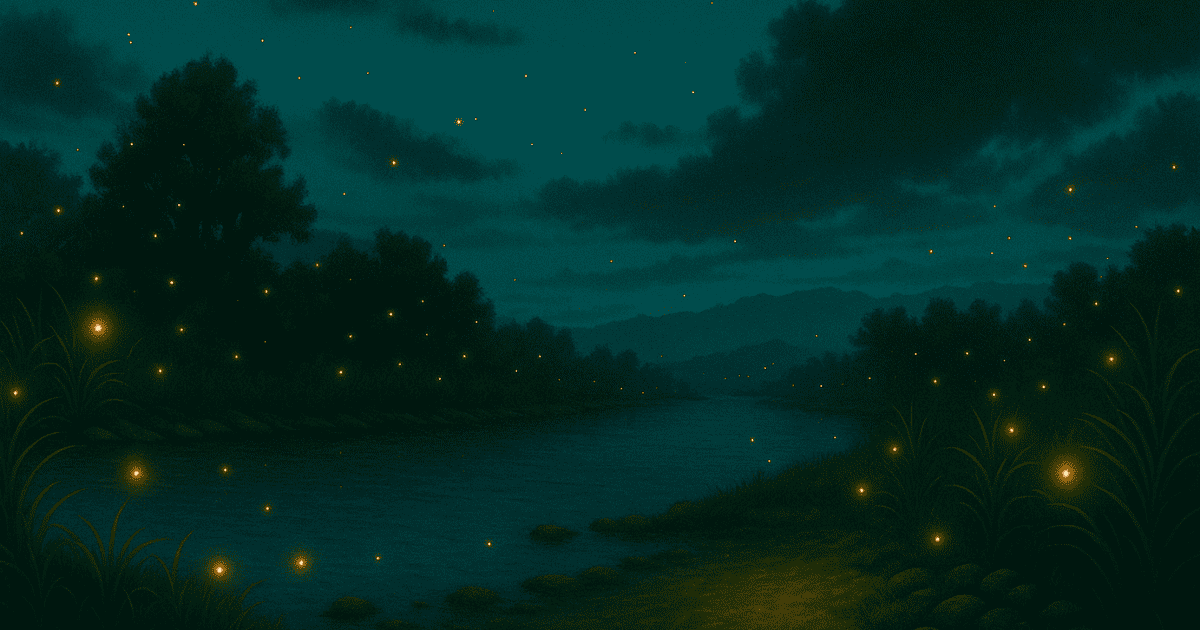
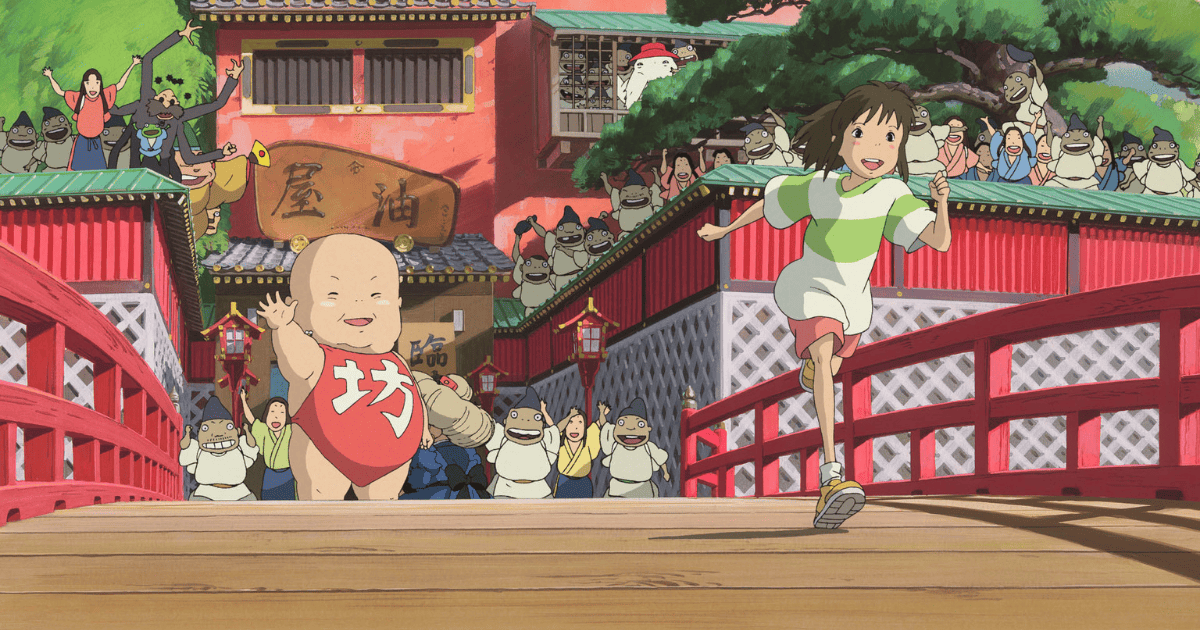
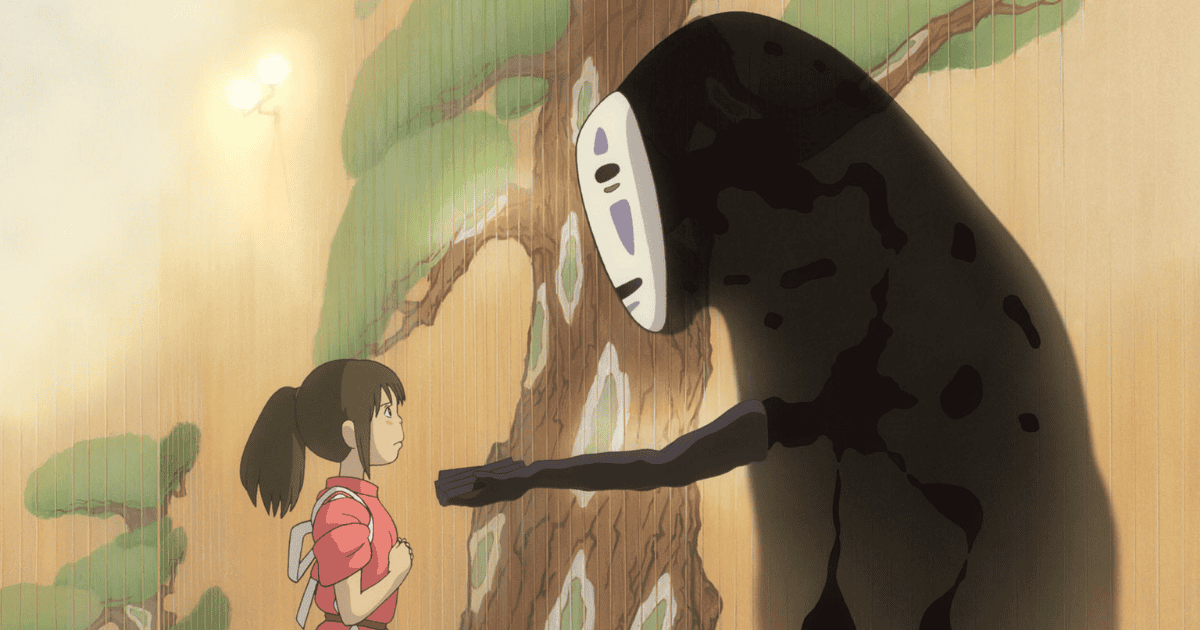
I reproduced it in the illustration on the following website:
ttps://mandelaeffectinfo.blogspot.com/2026/01/spirited-away-phantom-ending-reproduced.html