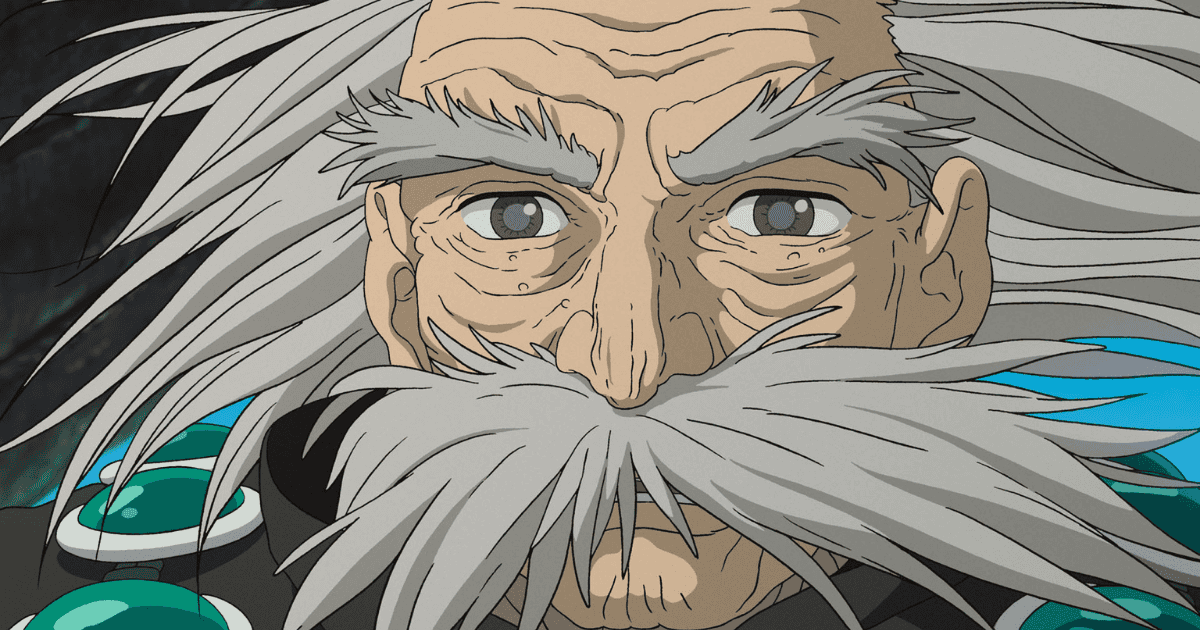
Hayao Miyazaki’s The Boy and the Heron (Studio Ghibli Official) is a staggering cinematic puzzle, but perhaps its most intensely debated mystery lies in a simple pile of building blocks: the “malice-filled stones.”
As Studio Ghibli producer Toshio Suzuki has openly confirmed, this 2023 animated feature is a deeply autobiographical confession from the legendary director. When analyzing the film’s narrative, it becomes blindingly obvious that the 13 malice-filled stones represent the exact cinematic works Miyazaki has painstakingly created over his career.
While that baseline explanation makes thematic sense, the specific numbers—”8″ and “13”—have been gnawing at me. If Mahito is offered 13 stones to build his world, “what does the number ‘8’ refer to?” Pay close attention to the film’s climax: when the Granduncle presents the 13 untainted stones to Mahito, we can clearly see the “collapsing pile of stones” that the Granduncle has already built. Count them. There are exactly eight stones in that fragile tower.
Miyazaki does not choose numbers by accident. Trying to perfectly divide the massive filmographies of Studio Ghibli, Hayao Miyazaki, and Isao Takahata to equal “8” and “13” is a complex mathematical puzzle. However, after extensive research, I discovered that from one highly specific perspective, these numbers align flawlessly.
Today, we are going to crack this cinematic cipher. The ultimate hint lies in the complicated, lifelong relationship between Hayao Miyazaki and his late mentor, Isao Takahata—the undeniable model for the Granduncle. Let’s break it down.
*This is a translated version. The original (Japanese) is available here.
-
The Granduncle and the Stones: A Symbol of the Crucible
The Granduncle is a complex psychological projection of both Isao Takahata and Hayao Miyazaki. The bizarre tower and the world below directly symbolize Studio Ghibli and Miyazaki’s inner mind. The “malice-filled stones” are the masterworks themselves, born through an agonizing, often toxic creative process. -
Decoding “8” and “13”: The Boundary of Collaboration
The math finally makes sense: the 8 stacked stones represent the 8 specific films Miyazaki co-created with Isao Takahata. The 13 unstacked stones represent the 13 major works Miyazaki spearheaded without Takahata’s direct involvement. The act of balancing these stones visualizes the crushing burden of their artistic achievements. -
Mahito’s Refusal: A New Beginning from Self-Critique
Mahito’s outright rejection of the 13 stones serves as Hayao Miyazaki’s brutal self-criticism of his own dictatorial methods. Yet, the fact that Mahito pockets a single stone to take back to the real world signifies a renewed creative determination. It is proof of “the man who is not finished,” Hayao Miyazaki.
On this pageContents
Cracking the Code: The True Meaning of the 8 and 13 Malice-Filled Stones
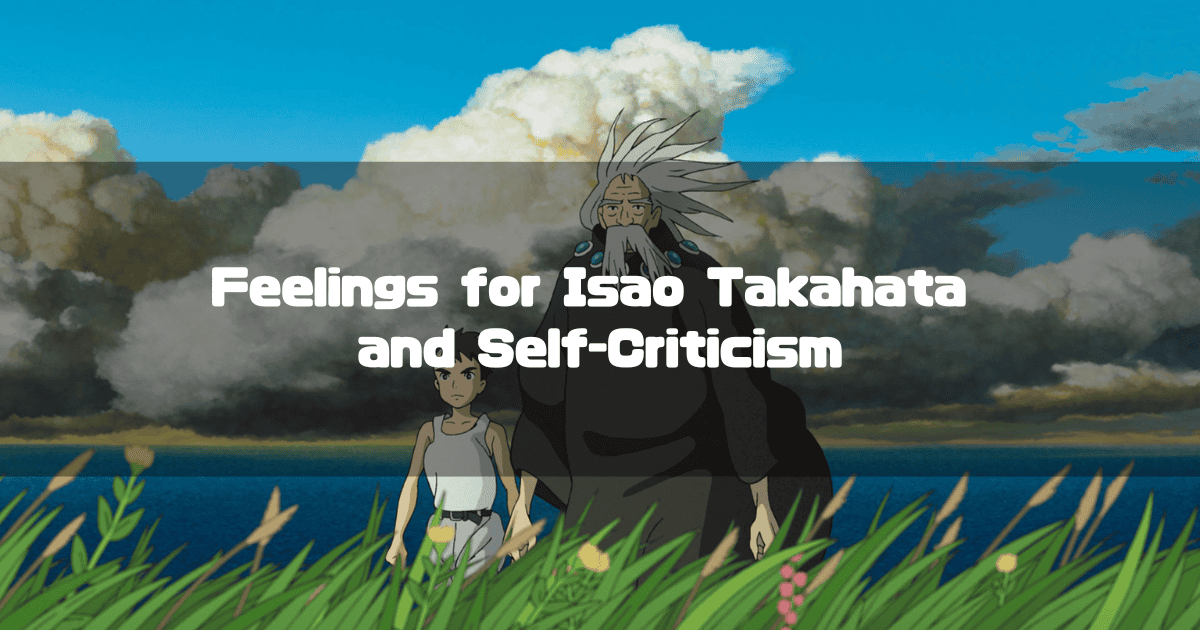
The Granduncle: A Metaphor for the Masters
Who Really Built the Tower?
To accurately decode the numbers of the malice-filled stones, we must first establish exactly who the Granduncle and the “world below” symbolize. I have explored this extensively in a previous article, What Do the Numerous Parakeets and Pelicans Mean? #The Granduncle’s Tower and the World Below -Preparing to Understand the Film-, utilizing quotes from various documentaries. Here is the essential summary:
The Boy and the Heron operates as a deeply profound autobiography of Director Hayao Miyazaki. Within this framework:
- Toshio Suzuki has explicitly equated the “tower” to “Studio Ghibli.” The entire film functions as a surreal map of Miyazaki’s mind and his grueling creative ecosystem.
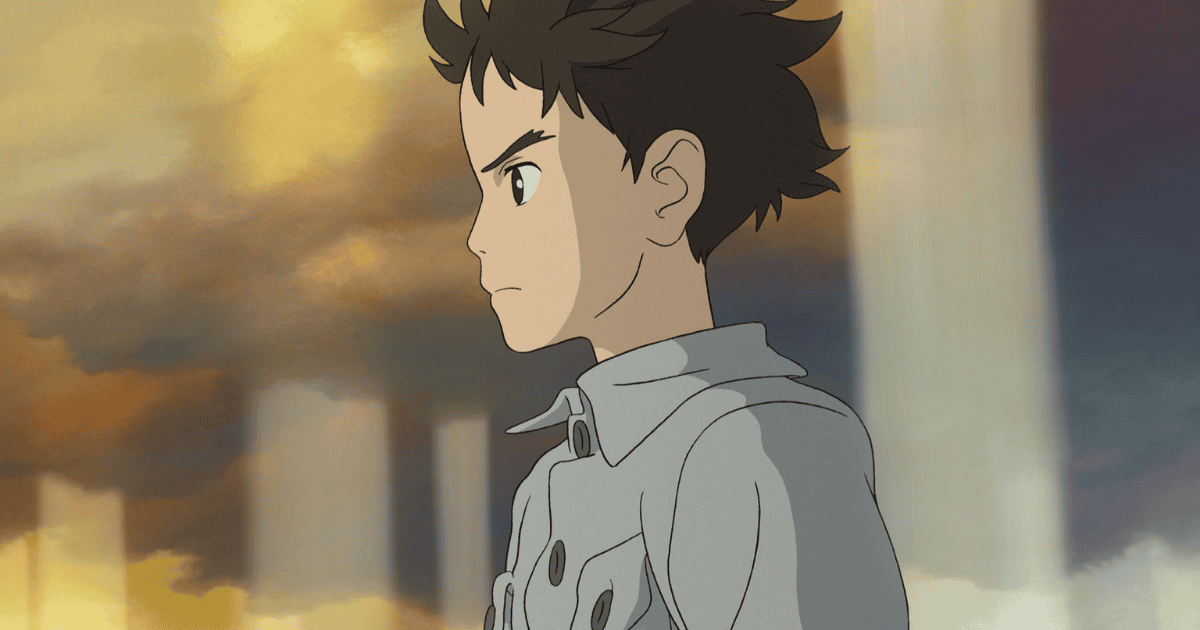
- The protagonist, Mahito, is widely accepted as an alter ego of Miyazaki himself (specifically, “the other self he desperately wanted to be”).
While official sources confirm that the Granduncle was heavily modeled after Director Isao Takahata, the character is far more complex than a simple tribute:
- He is not exclusively Takahata; Hayao Miyazaki’s own ego and anxieties are heavily projected onto the character as well.
- As the ultimate “creator” within the film’s universe, the Granduncle serves as a vessel for Miyazaki’s personal views on life, art, and the heavy toll of leadership.
To fully grasp this dynamic, we must understand the historical relationship between Miyazaki and Takahata:
- Isao Takahata was the “master” who first discovered Miyazaki’s raw talent. They fought side-by-side in the animation trenches from their youth.
- While their mutual respect was legendary, their creative philosophies frequently clashed, leading to periods of intense, public criticism of one another’s work.
Synthesizing all this, it becomes undeniable: the Granduncle depicted in The Boy and the Heron is not merely a ghost of Isao Takahata, but a composite entity that fiercely symbolizes Hayao Miyazaki himself and his agonizing life of creation.
Furthermore, as detailed in my analysis of Hayao Miyazaki’s Statement in the Documentary, Miyazaki’s animation studio was notoriously ruthless—an environment so harsh that Miyazaki lamented it caused him to “lose friends.”
Isao Takahata’s production environment was equally, if not more, unforgiving. Toshio Suzuki shares a chilling anecdote in Ghibli Textbook 19: The Tale of the Princess Kaguya(ジブリの教科書 19 かぐや姫の物語, in Japanese), recalling the words of the late Yoshifumi Kondo (director of Whisper of the Heart):
On the night we visited Sendai for the Whisper of the Heart promotional campaign—which would tragically be his first and last directorial work—he started talking about Mr. Takahata and simply couldn’t stop. “Mr. Takahata tried to kill me. Just thinking about him still makes my body tremble.” He said this and cried uncontrollably for over two hours.
(Original Text in Japanese)
最初で最後の監督作となった『耳をすませば』のキャンペーンで仙台を訪れた日の夜、高畑さんのことを話しだしたら、止まらなくなりました。「高畑さんは僕のことを殺そうとした。高畑さんのことを考えると、いまだに体が震える。」そういって二時間以上、涙を流していました。
While quoting this singular passage may lack full context—I highly encourage you to research Director Takahata’s legendary perfectionism yourself—it perfectly illustrates the sheer emotional and physical devastation required to survive his animation sets.
It captures the raw terror felt by the artists who bled to bring Takahata’s visions to life.
With this harrowing background, it becomes crystal clear why the geometric blocks the Granduncle obsessively stacks are dubbed “malice-filled stones.” The final animated films may be breathtakingly beautiful, but the path taken to create them was paved with cruelty, exhaustion, and malice.
Hayao Miyazaki willingly fought alongside this man for decades. To crack the code of the stones, we must map out their shared history.
The Chronology of Creation: Miyazaki and Takahata
Let’s look at the hard data. To understand the numbers “8” and “13,” we must review the exact production chronology of Hayao Miyazaki and Isao Takahata.
| Release Year | Title | Production | Hayao Miyazaki’s Role | Isao Takahata’s Role |
|---|---|---|---|---|
| 1968 | Horus: Prince of the Sun | Toei Animation | Key Animation, Art Setting, Scene Design | Director |
| 1972 | Panda! Go, Panda! | A Production | Concept, Screenplay, Scene Setting, Key Animation | Director |
| 1973 | Panda! Go, Panda!: The Rainy-Day Circus | A Production | Concept, Screenplay, Scene Setting, Key Animation | Director |
| 1974 | Heidi, Girl of the Alps | Zuiyo Eizo | Scene Setting, Screen Composition | Direction, Director |
| 1976 | 3000 Leagues in Search of Mother | Nippon Animation | Scene Setting, Layout | Direction, Director |
| 1978 | Future Boy Conan | Nippon Animation | Original Story, Screenplay, Storyboard, Director | — |
| 1979 | Lupin the 3rd: The Castle of Cagliostro | Tokyo Movie Shinsha | Director, Screenplay | — |
| 1979 | Anne of Green Gables | Nippon Animation | Scene Setting, Screen Composition | Director |
| 1984 | Nausicaä of the Valley of the Wind | Topcraft → Ghibli Preparation Office | Original Story, Screenplay, Director | Producer |
| 1986 | Castle in the Sky | Studio Ghibli | Original Story, Screenplay, Director | Producer |
| 1988 | My Neighbor Totoro | Studio Ghibli | Original Story, Screenplay, Director | — |
| 1988 | Grave of the Fireflies | Studio Ghibli | — | Director, Screenplay |
| 1989 | Kiki’s Delivery Service | Studio Ghibli | Screenplay, Director | Music Direction |
| 1991 | Only Yesterday | Studio Ghibli | Executive Producer | Director |
| 1992 | Porco Rosso | Studio Ghibli | Original Story, Screenplay, Director | — |
| 1994 | Pom Poko | Studio Ghibli | Planning | Director, Screenplay |
| 1995 | Whisper of the Heart | Studio Ghibli | Planning, Screenplay, Storyboard, Executive Producer | — |
| 1997 | Princess Mononoke | Studio Ghibli | Original Story, Screenplay, Director | — |
| 1999 | My Neighbors the Yamadas | Studio Ghibli | — | Director, Screenplay |
| 2001 | Spirited Away | Studio Ghibli | Original Story, Screenplay, Director | — |
| 2004 | Howl’s Moving Castle | Studio Ghibli | Director, Screenplay | — |
| 2008 | Ponyo | Studio Ghibli | Original Story, Screenplay, Director | — |
| 2011 | From Up on Poppy Hill | Studio Ghibli | Planning, Screenplay | — |
| 2013 | The Wind Rises | Studio Ghibli | Original Story, Screenplay, Director | — |
| 2013 | The Tale of the Princess Kaguya | Studio Ghibli | — | Director, Screenplay |
| 2023 | The Boy and the Heron | Studio Ghibli | Original Story, Screenplay, Director | — |
As the timeline proves, their direct creative involvement with one another thinned out drastically after Only Yesterday (1991). From a filmmaking perspective, they essentially ceased operating as “main staff” on each other’s subsequent projects.
With this roadmap in place, the true meaning of the numbers “8” and “13” finally clicks into place.
The Cinematic Cipher: Decoding “8” and “13”
Based on the intertwined histories of these two titans, let’s unlock the cipher of the malice-filled stones. First, I will give you the definitive conclusion.
The Verdict: A Division of Labor
To cut straight to the truth, the 8 stones stacked by the Granduncle represent the following 8 works:
| Title | Release Year | Hayao Miyazaki’s Role | Isao Takahata’s Role |
|---|---|---|---|
| Horus: Prince of the Sun | 1968 | Key Animation, Art Setting, Scene Design | Director |
| Panda! Go, Panda! | 1972, 1973 | Concept, Screenplay, Scene Setting, Key Animation | Director |
| Heidi, Girl of the Alps | 1974 | Scene Setting, Screen Composition | Direction, Director |
| 3000 Leagues in Search of Mother | 1976 | Scene Setting, Layout | Direction, Director |
| Anne of Green Gables | 1979 | Scene Setting, Screen Composition | Direction, Director |
| Only Yesterday | 1991 | Executive Producer | Director |
| Nausicaä of the Valley of the Wind | 1984 | Original Story, Screenplay, Director | Producer |
| Castle in the Sky | 1986 | Original Story, Screenplay, Director | Producer |
(Note: Panda! Go, Panda! is logically treated as a single unified work, combining the 1972 original and the 1973 Rainy-Day Circus sequel.)
Conversely, the 13 stones offered to Mahito represent the following 13 works:
| Title | Release Year | Hayao Miyazaki’s Role |
|---|---|---|
| Future Boy Conan | 1978 | Original Story, Screenplay, Storyboard, Director |
| Lupin the 3rd: The Castle of Cagliostro | 1979 | Director, Screenplay |
| My Neighbor Totoro | 1988 | Original Story, Screenplay, Director |
| Kiki’s Delivery Service | 1989 | Screenplay, Director |
| Porco Rosso | 1992 | Original Story, Screenplay, Director |
| Whisper of the Heart | 1995 | Planning, Screenplay, Executive Producer |
| On Your Mark | 1995 | Original Story, Screenplay, Director |
| Princess Mononoke | 1997 | Original Story, Screenplay, Director |
| Spirited Away | 2001 | Original Story, Screenplay, Director |
| Howl’s Moving Castle | 2004 | Screenplay, Director |
| Ponyo | 2008 | Original Story, Screenplay, Director |
| From Up on Poppy Hill | 2011 | Planning, Screenplay |
| The Wind Rises | 2013 | Original Story, Screenplay, Director |
You may be wondering why Pom Poko and The Tale of the Princess Kaguya are entirely absent from both lists. I will explain the precise logic behind these exclusions.
The Final Act: Mahito’s Rejection and the Parakeet King
To accept the division of “8” and “13,” we must remember the crucial dual-nature of the Granduncle: he is a projection of both Isao Takahata and Hayao Miyazaki.
If you stubbornly view the Granduncle as *only* Takahata, or *only* Miyazaki, the math behind the malice-filled stones collapses entirely.
Ultimately, the 8 stones represent the works Hayao Miyazaki built shoulder-to-shoulder with Isao Takahata, while the 13 stones represent the works Miyazaki created entirely without Takahata’s direct involvement. (For clarity: while rumor has it Takahata “helped” behind the scenes on Future Boy Conan, and he officially served as Music Director for Kiki’s Delivery Service, he did not hold a core directorial/production role on those films, so they belong in the 13).
Additionally, while they technically collaborated on the live-action documentary The Story of Yanagawa’s Canals (1987), it is excluded from this count simply because it is live-action, not animation.
You might point out that the “13 stones” list includes films Miyazaki did not officially direct (like Whisper of the Heart and From Up on Poppy Hill). However, because Miyazaki wrote the screenplays and practically dictated the storyboards, ignoring them would be a far bigger critical error. Furthermore, Pom Poko and The Tale of the Princess Kaguya are excluded from both lists because they were solely Takahata’s directorial visions; Miyazaki’s hands-on involvement was practically nonexistent.
A keen observer might note: while the Granduncle’s collapsing tower clearly features 8 stones at the end, if you count the loose stones on the table earlier in the film, there are 10. You could argue those two extra stones represent Pom Poko and Kaguya. In fact, right as the “world below” begins its apocalyptic collapse, there are actually 11 stones scattered about. Miyazaki leaves the exact, on-screen count slightly ambiguous, keeping the metaphor fluid.
Now that we have established that the “malice-filled stones” are literal filmographies forged in a punishing environment, we must analyze the division. Why “8” versus “13”?
The answer is hidden in the climactic sequence: the Granduncle offers the 13 stones to Mahito, Mahito rejects them, and finally, the volatile Parakeet King impulsively stacks them, causing the universe to shatter.
As Toshio Suzuki revealed in SWITCH Vol.41 No.9:
Miya-san says, “The Parakeet King is me.” And he also said, “The other self I wanted to be is Mahito.”
(Original Text in Japanese)
宮さんは「インコ大王は自分だ」と言う。そして「なりたかったもう一人の自分が眞人だ」と言っていました。
Because the Parakeet King (Miyazaki’s raging ego) grabs and stacks the 13 stones, we know the “13 stones” definitively represent the films Hayao Miyazaki directed independently. Consequently, Mahito’s steadfast refusal to touch those stones serves as a brutal self-criticism. Miyazaki is actively rejecting the toxic, obsessive methods he utilized to forge those 13 masterpieces.
Conversely, because the “8 stones” were already balanced by the Granduncle (the hybrid projection of Takahata and Miyazaki), it perfectly confirms they are the works the two masters forged together in their youth.
In the film’s final moments, Mahito consciously rejects the Granduncle’s cursed legacy, yet he deliberately pockets a single “malice-filled stone” to carry back to the real world. What does this mean?
Mahito’s rejection is especially significant because “malice” is also the word he uses to describe himself and the scar on his head. For the original Japanese lines and their English translations, see The Boy and the Heron quotes in Japanese and English.
It is a bold declaration of survival. It represents his “determination to continue creating art, but in an entirely new way.”
The Boy and the Heron is a staggering autobiography laced with heavy self-criticism. Yet, by walking out of the ruins with that single stone, the film refuses to be a simple retirement letter. It stands as a roaring testament to the man who is not finished: Hayao Miyazaki.
This breaks down my personal theory regarding the encrypted numbers “8” and “13” behind the malice-filled stones. I started with the raw numbers and reverse-engineered the filmography to see if the pieces fit. While art is entirely subjective and other valid interpretations certainly exist, I firmly believe this theory hits the thematic bullseye.
What do you think the “8” and “13” stones truly represent?
The images used in this article are provided by the Studio Ghibli Works Still Images collection.
Can you name the movie before the scene comes into focus?
Put your visual memory to the test with a blurred Studio Ghibli scene.


Reader Comments