
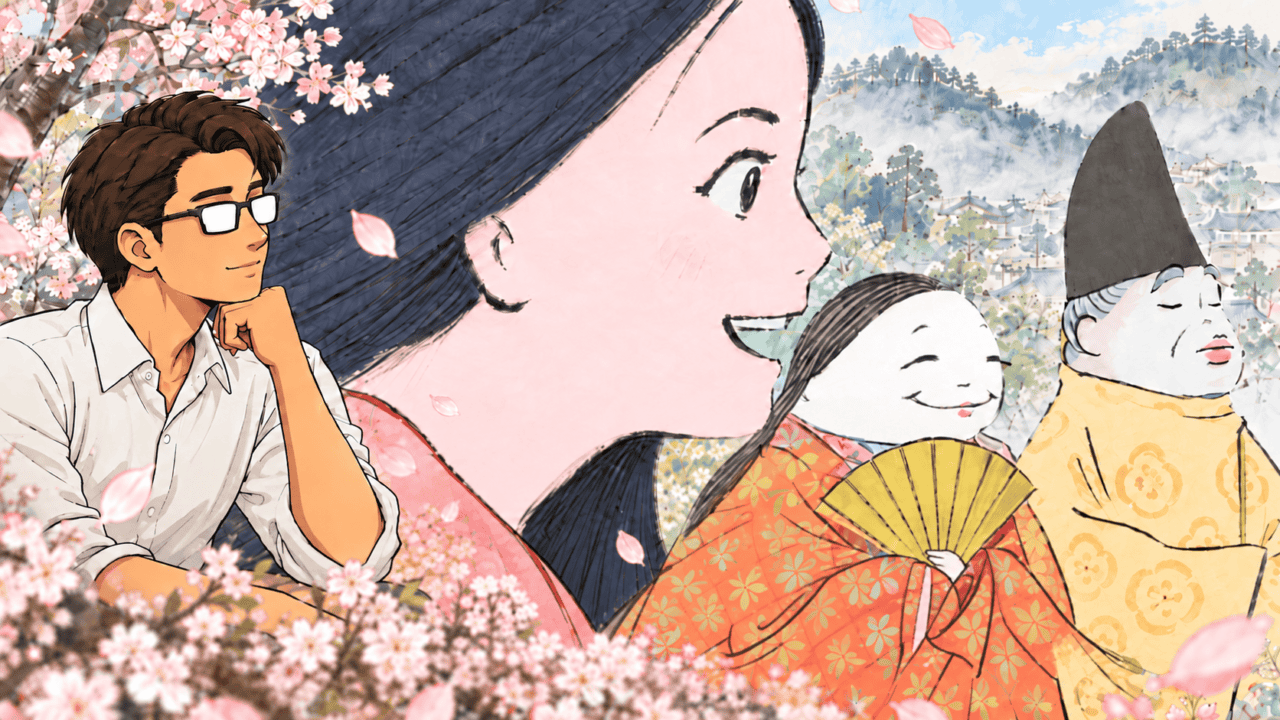
The Tale of the Princess Kaguya (Official) is an animated feature directed by Isao Takahata, released in 2013.
Here, I want to revisit the characters and English voice cast, and consider the stories of the people in The Tale of the Princess Kaguya. What sort of lives do they lead?
The discussion below contains spoilers, sometimes without warning.
*This is a translated version. The original (Japanese) is available here.
On this pageContents
The Tale of the Princess Kaguya (2013) Main Characters & English Voice Cast List
*Click a character’s name to jump to their profile and interpretation. Voice actor links lead to external profiles.
| Name | Age | Voice Actor (English Dub) |
|---|---|---|
 | 0–20 years old?[1] | Chloë Grace Moretz |
 | 50–70 years old?[2] | James Caan |
 | ? | Mary Steenburgen |
 | 13 years old–[3] | Darren Criss |
 | ? | Hynden Walch |
 | ? | Lucy Liu |
 | ? | Dean Cain |
- [1]
- The film never explicitly states her age. In the original folklore, The Tale of the Bamboo Cutter, Okina remarks, “It has been over twenty years since I humbly began raising Princess Kaguya.” Furthermore, halfway through the film, an old charcoal burner mentions that Sutemaru’s group won’t return for ten years. Since we see them return near the story’s climax, it implies a significant chunk of time has passed on Earth. However, judging purely by the pacing of the film, Kaguya’s time on Earth feels much shorter and more fleeting than a full decade.
- [2]
- Okina’s age is similarly ambiguous in the film. Even the original tale contains contradictory descriptions, stating both that “Okina is over seventy years old” and “Okina is about fifty this year.” In the film, he looks no older than about fifty to me.
- [3]
- According to the official production storyboards, Sutemaru is exactly 13 years old when he makes his first appearance.
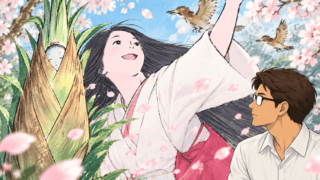
The Tale of the Princess Kaguya (2013) Character Map
The map outlines the relationships discussed in this guide and provides a reference for the character profiles below.
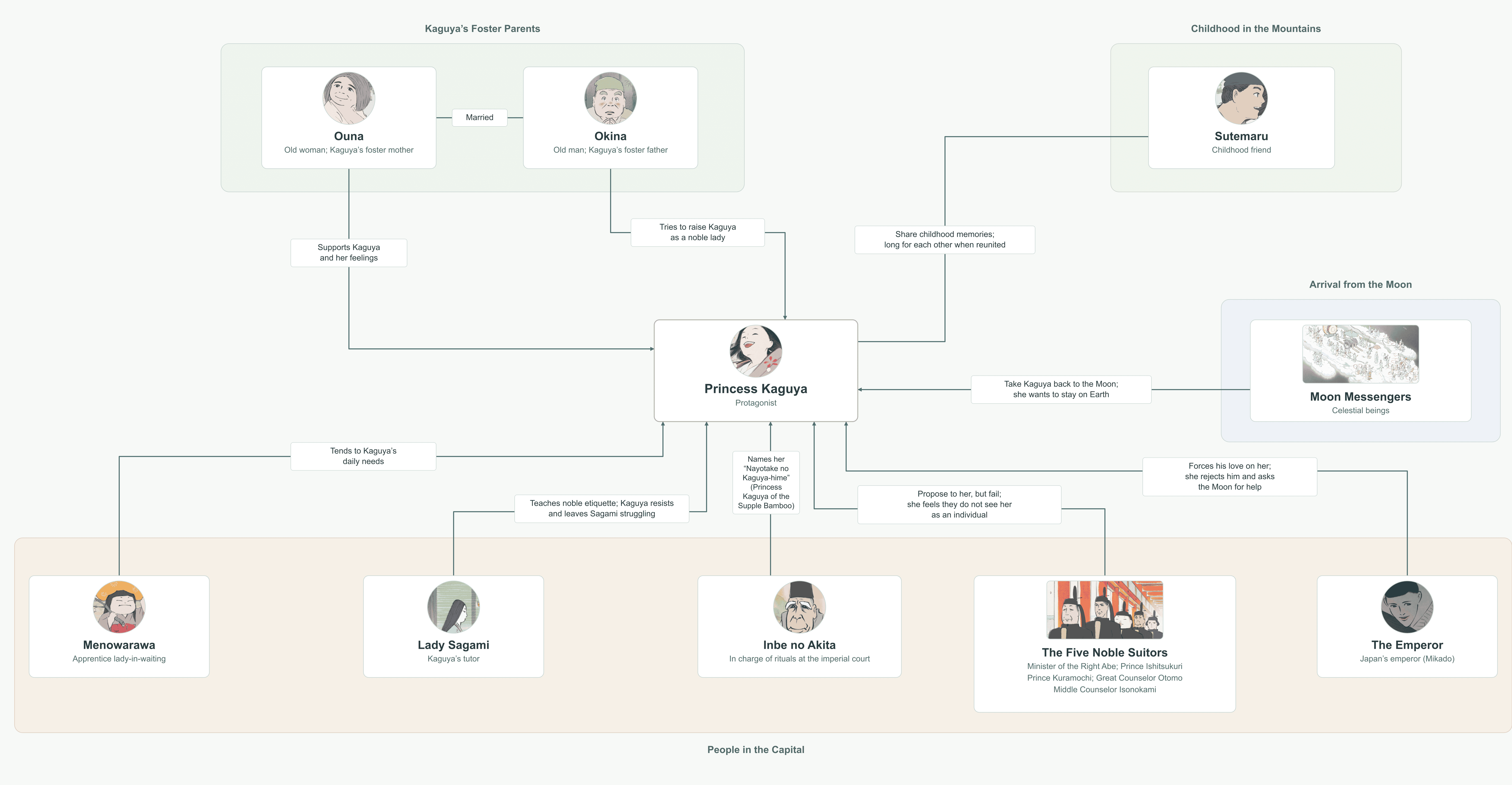
In The Tale of the Bamboo Cutter, Kaguya and the Emperor gradually grow closer through correspondence. In the film, his forceful advances instead hurt her so deeply that she wishes to leave Earth. That wish brings the messengers from the moon.
▼ Read the full story and synopsis based on this character map.
The Tale of the Princess Kaguya (2013): Character Profiles and Interpretations
The profiles below consider the characters’ motives, relationships, and roles in the story.
Princess Kaguya | Voice Actor: Chloë Grace Moretz
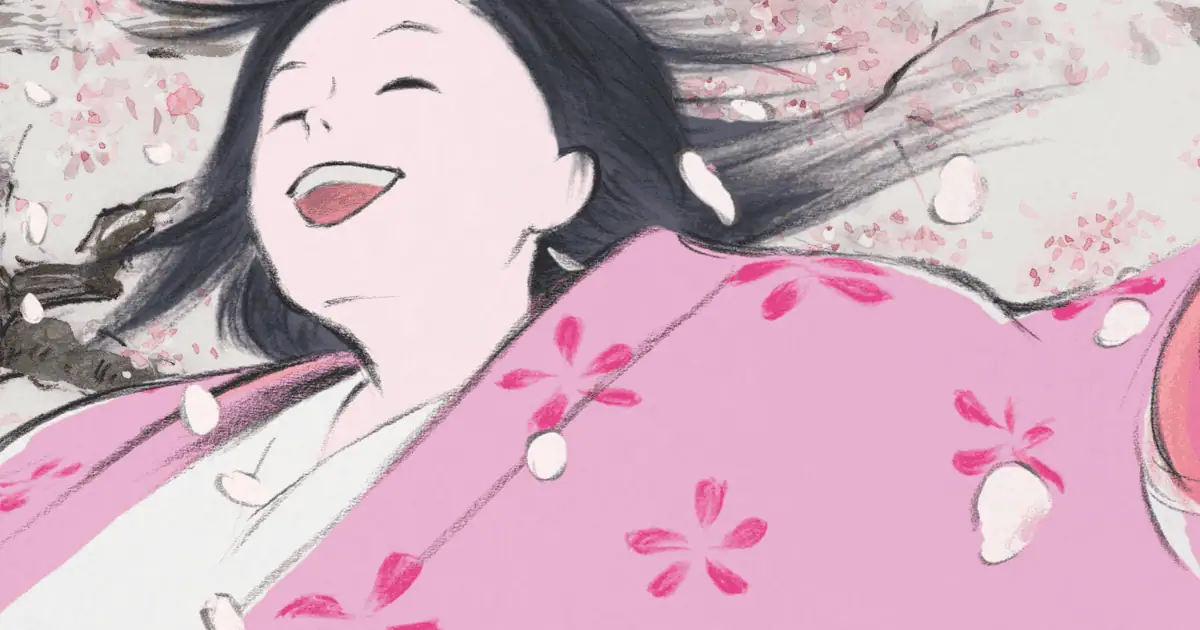
View Princess Kaguya’s [Basic Info, Analysis, and Voice Actor Info]
Princess Kaguya: Background and Interpretation
Kaguya is the protagonist. Because she grows so quickly, the children near her home call her Takenoko, or Little Bamboo. Okina dislikes the nickname and insists on calling her Princess.
Like the heroine of the original tale, she comes from the moon. She seems to have been sent to Earth as punishment for some sin committed there. I explore my own thoughts about her “crime and punishment” in the two articles below.

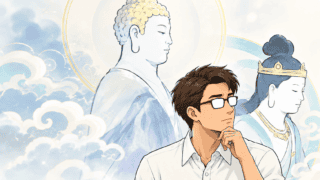
The film was promoted with the phrase “A princess’s crime and punishment.” Toshio Suzuki seems to have been keen on that approach, but Takahata reportedly felt the story had ceased to be about that during production.
Watching the film, I see less a story of crime and punishment than one of a woman caught up in circumstances she never wanted.
Kaguya loves Earth’s complexity and its cycles of life. But Okina’s attempts to give her happiness in human society expose her to the curiosity of the aristocracy. She does her best for his sake, until the Emperor’s forceful courtship breaks her spirit and sends her back to the moon—the opposite of her relationship with him in the original tale.
It is a hard film to watch when you imagine how Kaguya feels. Yet Kazumi Nikaido’s closing song, “Inochi no Kioku” (Memory of Life), leaves me feeling somehow saved. What a wonderful song.
Okina | Voice Actor: James Caan
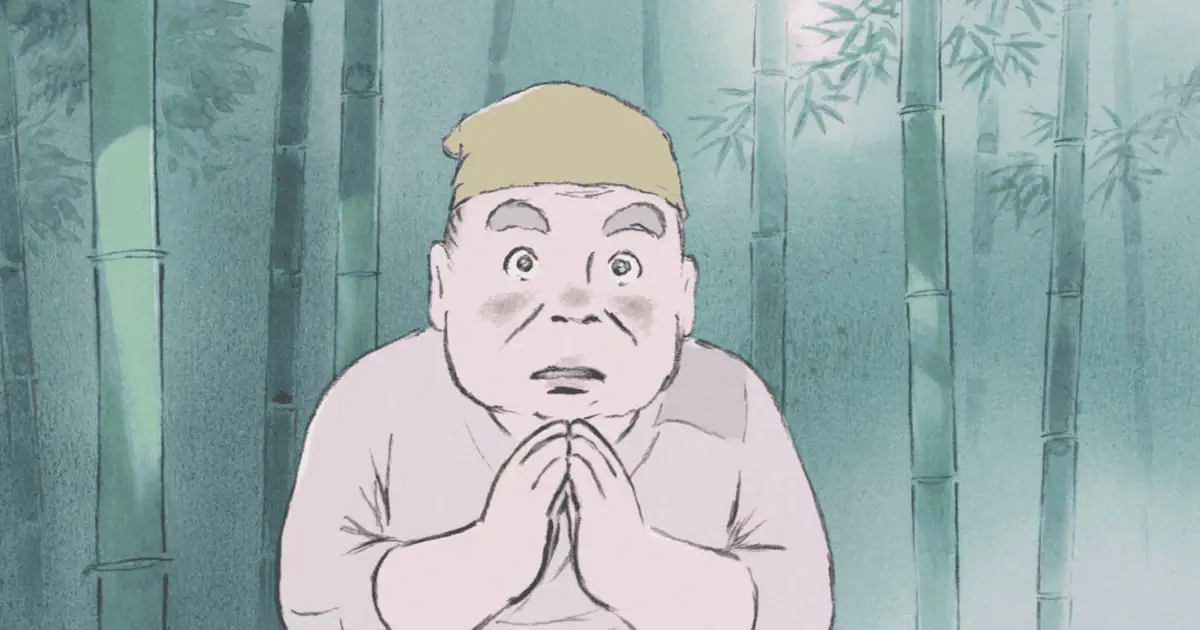
View Okina’s [Basic Info, Analysis, and Voice Actor Info]
Okina: A Father’s Good Intentions
Okina is the first person on Earth to find Kaguya, and becomes her adoptive father.
In the original tale, he helps bring her into contact with the Emperor, who becomes important to her. In the film, he blunders again and again, ultimately becoming the person who drives her into misery.
But that is a judgment made with hindsight. Given the circumstances of his time, his decisions are perfectly reasonable.
Parents so often go astray while trying to do good. Fathers fuss over daughters; mothers fuss over sons. Perhaps Okina reflects that helpless tendency in parenthood.
Ouna | Voice Actor: Mary Steenburgen
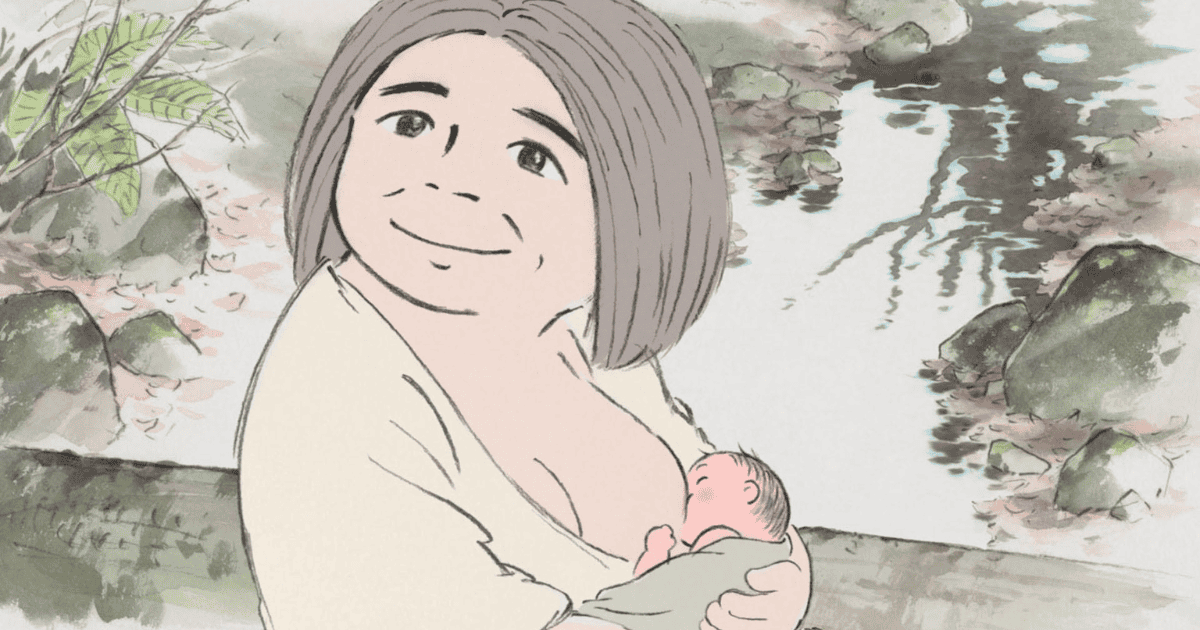
View Ouna’s [Basic Info, Analysis, and Voice Actor Info]
Ouna: A Mother’s Quiet Love
Ouna meets Kaguya after Okina and raises her as her mother.
In contrast to Okina’s misguided efforts, Ouna stays close to Kaguya to the very end. She is quiet and gentle, but her love for the girl is no less deep than his.
Only at the end does her emotion burst out in a cry of “Don’t go, Princess!” It is a painful moment that reveals how much she has been holding back.
Here, the father blunders while the mother quietly supports their daughter. Had this been The Tale of Momotaro, would the roles have been reversed? I would have loved to see Takahata make that film.
Sutemaru | Voice Actor: Darren Criss
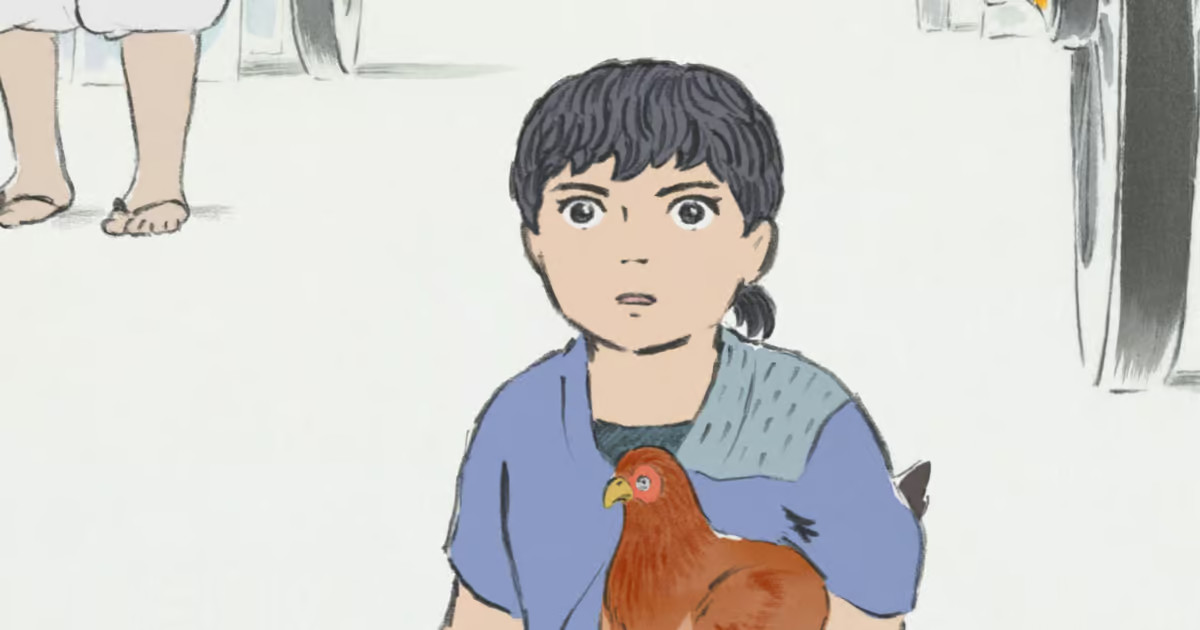
View Sutemaru’s [Basic Info, Analysis, and Voice Actor Info]
Sutemaru: Kaguya’s Childhood Companion
Sutemaru is an original character, absent from the classical tale. Aged thirteen when introduced, he belongs to a group of woodworkers (Kijiya) who move through the mountains, making and selling wooden utensils.
He lives near the place where Kaguya spends her early childhood and leads the local children.
He seems to have feelings for her even then, but receives the rather sad declaration that she will always be his underling.
This line becomes even more interesting when the original Japanese is compared with the English subtitle. I examine it together with other memorable dialogue in The Tale of the Princess Kaguya quotes in Japanese and English.
“Family-Abandoning Sutemaru” and the Hagoromo Legend
Near the end, Sutemaru tries to escape with Kaguya as she resists her return to the moon.
That might have been a purely romantic scene, except that he already has a family. Hence the mocking nickname Kazoku Sutemaru—“Family-Abandoning Sutemaru.” Still, I think there is a reason for his behavior.
It lies in the connection between The Tale of the Princess Kaguya and the Hagoromo legend, a Japanese version of the swan-maiden tale.
Kaguya became interested in Earth because of someone in the lunar capital: a celestial woman resembling the maiden of that legend.
The film does not explain it plainly in words, but the images suggest that this woman became involved with a man on Earth. And that man, too, had a child.
Perhaps Sutemaru represents the encounters between people of Earth and the moon repeating themselves. It seems that an earthly man who meets a lunar woman is ready to throw everything away for her.
Mind you, that hardly saves him from being called “Family-Abandoning Sutemaru.”
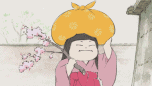
Menowarawa | Voice Actor: Hynden Walch
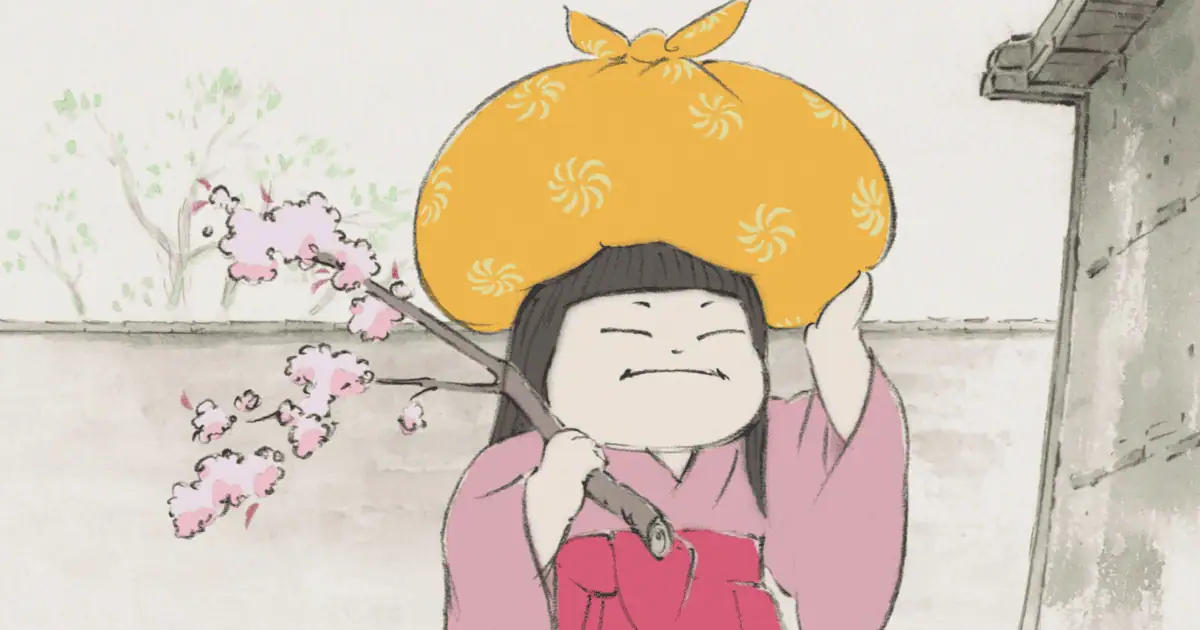
View Menowarawa’s [Basic Info, Analysis, and Voice Actor Info]
Menowarawa: Another Kaguya?
Menowarawa looks after Kaguya once the family moves to the capital.
She is a small but important source of warmth and comic relief around a princess buffeted by fate. Her scenes offer a little respite from the film’s suffering.
But I think she means more than that: she is another Kaguya.
I explore that interpretation in the article below:
What does her presence mean within the story?
Lady Sagami | Voice Actor: Lucy Liu
View Lady Sagami’s [Basic Info, Analysis, and Voice Actor Info]
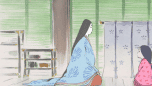
Lady Sagami: Teaching a Princess to Fit In
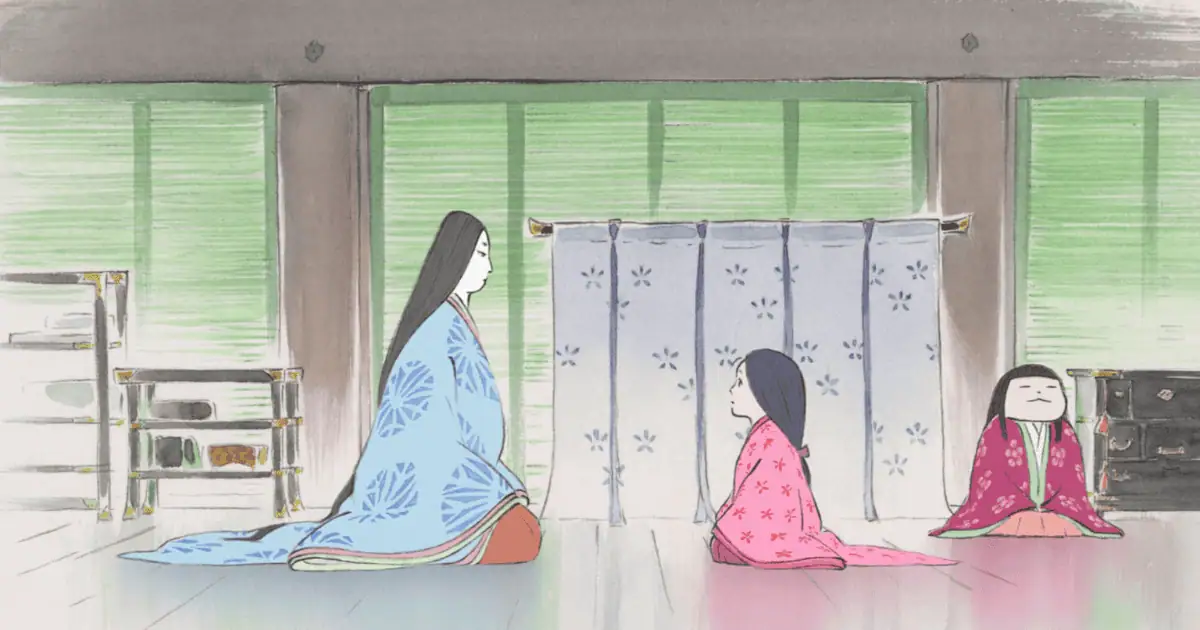
Sagami becomes Kaguya’s tutor in the capital. She tries to turn her into a refined lady, teaching everything from small gestures to playing the koto—or, more precisely, the guzheng.
Kaguya loves the nature of Earth itself, and has no interest in the manners human society has devised. She keeps troubling Sagami, yet when Okina appears, she suddenly demonstrates fine manners and plays beautifully.
Perhaps she can do this because she learned those skills while living on the moon.
The more important question, though, is why the diverse Earth she loves does not seem to include human society.
One possible answer is that human society is where humans suffer. Perhaps The Tale of the Princess Kaguya is a story about people unable to escape that suffering. In practice, it becomes a painful story of a woman suffering against her will. It is bitterly ironic that Sagami, another woman, tries to prepare her for a future she does not want.
But Sagami is not simply to blame. She, too, has arrived there after struggling with circumstances she could not avoid.
The Five Noble Suitors
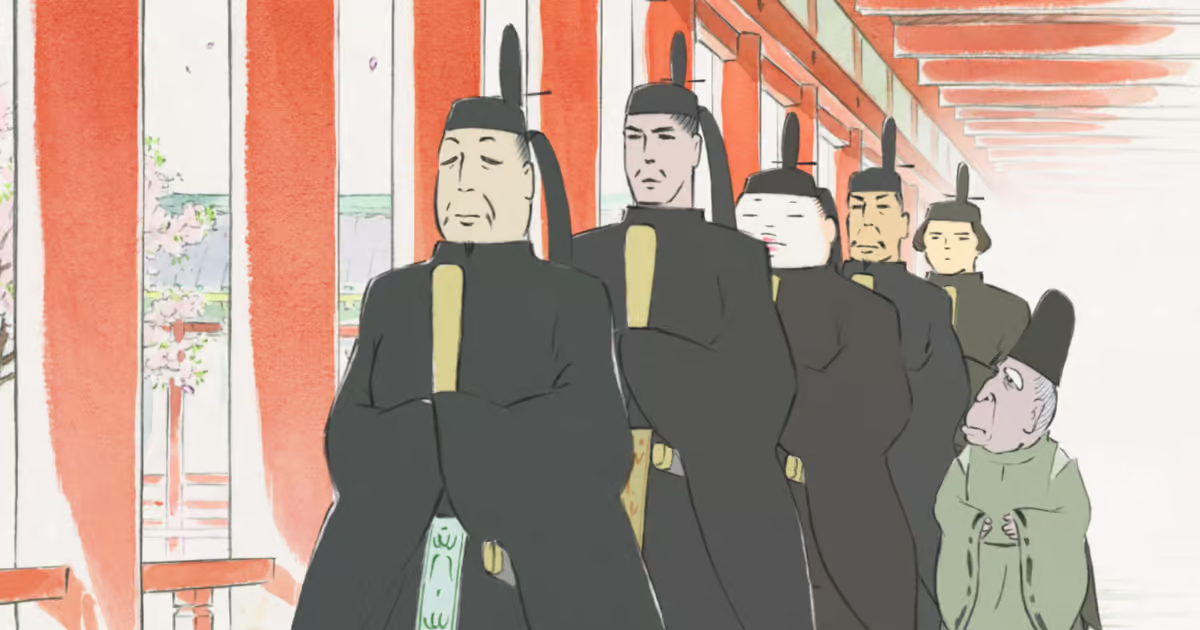
Mention The Tale of the Bamboo Cutter, and the five suitors are likely among the first things you remember. They appear in the film, too, but with a small difference: in the original, Kaguya sets the impossible tasks; in the film, the men bring up the treasures themselves. Their unhappy ends remain much the same.
Prince 1: Prince Kuramochi | Voice Actor: Beau Bridges
View Prince Kuramochi’s [Basic Info, Analysis, and Voice Actor Info]
Prince Kuramochi: An Empty Boast
Kuramochi, at the far left of the image, is the first to mention an impossible treasure. The others are to blame for trying to outdo him, but things might have gone differently had he said something more modest. His pitch is:
If I could make you my wife, my happiness would be like obtaining the jeweled branch said to grow on Mount Penglai, with silver roots, a golden stem, and white jade fruit.
(Original Text, in Japanese)
もし あなた様を我が妻とすることができたならば それは かの蓬莱(ほうらい)の山にあるという 銀の根 黄金の茎 白き玉の実をつける宝の枝をうるがごとき幸せ
Kaguya tells him to bring her that jeweled branch. Penglai, or Horai in Japanese, is one of the mythical Chinese islands where immortals are said to live; others include Fangzhang and Yingzhou.
Three years later, he returns with a fake branch and a string of lies. But its craftsmen appear demanding payment. Realizing he has been exposed, he slips away, leaving Kaguya to pay them—which she is happy to do.
In the original tale, he attacks the rewarded craftsmen on their way home, beating them until they vomit blood and taking their reward. The film does not show this, but I suspect they met the same fate.
Prince 2: Prince Ishitsukuri | Voice Actor: James Marsden
View Prince Ishitsukuri’s [Basic Info, Analysis, and Voice Actor Info]
Prince Ishitsukuri: A Contest of Sincerity
Ishitsukuri speaks next. His good looks and voice make him seem a man who knows how to charm. He tells her:
If Princess Kaguya would become my wife, I would regard you as the Buddha’s stone begging bowl passed down in India, bowing before you morning and evening and worshiping you as a treasure.
(Original Text, in Japanese)
かぐや姫様が私の妻になってくださるならば 私はあなたを天竺に伝わる仏の御石の鉢と思い 朝夕御前にぬかずき 宝のように崇め奉るつもりです
His approach differs from the others’. Rather than a counterfeit bowl, he brings a single flower, then pours out words of love in a contest of apparent sincerity.
For a moment, Kaguya senses something unlike the men who want to possess her as an object, and her heart begins to move. Then his wife appears, and her intervention saves Kaguya.
In the original, he does at least look for the bowl, but eventually gives Kaguya one from a mountain temple with a poem and is readily rejected. There, he is the least inventive suitor. In the film, he comes close to making an impression. Almost.
Prince 3: Minister of the Right Abe | Voice Actor: Oliver Platt
View Minister of the Right Abe’s [Basic Info, Analysis, and Voice Actor Info]
Minister Abe: Wealth Meets Its Limit
Abe, the third man, is an enormous figure covered in white powder. He is decidedly comic—or ridiculous. He declares:
Princess Kaguya, to me you are the robe of fire-rat fur: even in the fire it does not burn, but sheds only its dirt and shines all the brighter. A spotless princess is just such a rare treasure as is said to exist in China.
(Original Text, in Japanese)
かぐや姫様 私にとってあなたこそは 火にくべても決して燃えず 汚れだけが焼け落ちて 炎の中で一層輝きを増す 火鼠の皮衣 汚れなき姫は 唐土にあると伝え聞く まさにそのような得難き宝です
He, too, brings a counterfeit. Kaguya makes the perfectly reasonable request that he burn it before her eyes. The robe burns—and with it, his hopes.
Prince 4: Great Counselor Otomo | Voice Actor: Daniel Dae Kim
View Great Counselor Otomo’s [Basic Info, Analysis, and Voice Actor Info]
Counselor Otomo: A Warrior’s Failed Quest
Otomo, the fourth suitor, is a fierce-looking man with a sharp gaze. To win Kaguya, he declares:
To me, Princess Kaguya is a treasure shining even more brilliantly than the five-colored jewel said to hang from a dragon’s neck!
(Original Text, in Japanese)
私にとってのかぐや姫様は 龍の首にかかるという五色に輝く玉よりもさらにさらに燦然と光り輝く宝物よ!
Taking the task seriously, he goes in search of the jewel, fails, and is discouraged enough to give up on Kaguya.
This broadly follows the original tale. There, he first sends his men to fetch it; when that gets nowhere, he goes to sea himself, suffers badly, and abandons the attempt.
Prince 5: Middle Counselor Isonokami | Voice Actor: John Cho
View Middle Counselor Isonokami’s [Basic Info, Analysis, and Voice Actor Info]
Counselor Isonokami: The Most Tragic Suitor
The last man, Isonokami, is rather timid. Nevertheless, he makes his own attempt:
T-to me, Princess Kaguya is a still warmer treasure: the swallow’s cowry shell, a charm for safe childbirth, held and warmed with the greatest care.
(Original Text, in Japanese)
ぼ 僕にとってのかぐや姫様は もっともっと温かい 安産の守りともなる燕の子安貝 抱かれて大切に大切に温められた宝物なのです
The swallow’s cowry shell is a legendary shell the bird was said to lay. Swallows do not lay shells, of course, though they apparently sometimes bring them to their nests for their young. Isonokami was therefore closest to finding something real. So near, and yet so far.
He meets the most tragic end in both the original and the film. Reaching for a swallow’s nest, he falls and breaks bones in his lower back. He lives for a while, but eventually dies from the injury.
It is a great tragedy, yet the original Kaguya’s reaction is:
Hearing this, Princess Kaguya felt a little pity.
(Original Text, in Japanese)
これを聞きて、かぐや姫、少しあはれと思しけり
She does not seem to feel much responsibility for his death. In the film, by contrast, it casts a deep shadow over her.
The original Japanese voice is Tamaki Kojo, a member of Studio Ghibli’s post-production department. He apparently auditioned at Takahata’s request. I think his performance is remarkably good.
The Emperor | Voice Actor: Dean Cain
View The Emperor’s [Basic Info, Analysis, and Voice Actor Info]
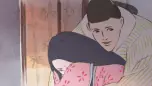
The Emperor: A Decisive Encounter
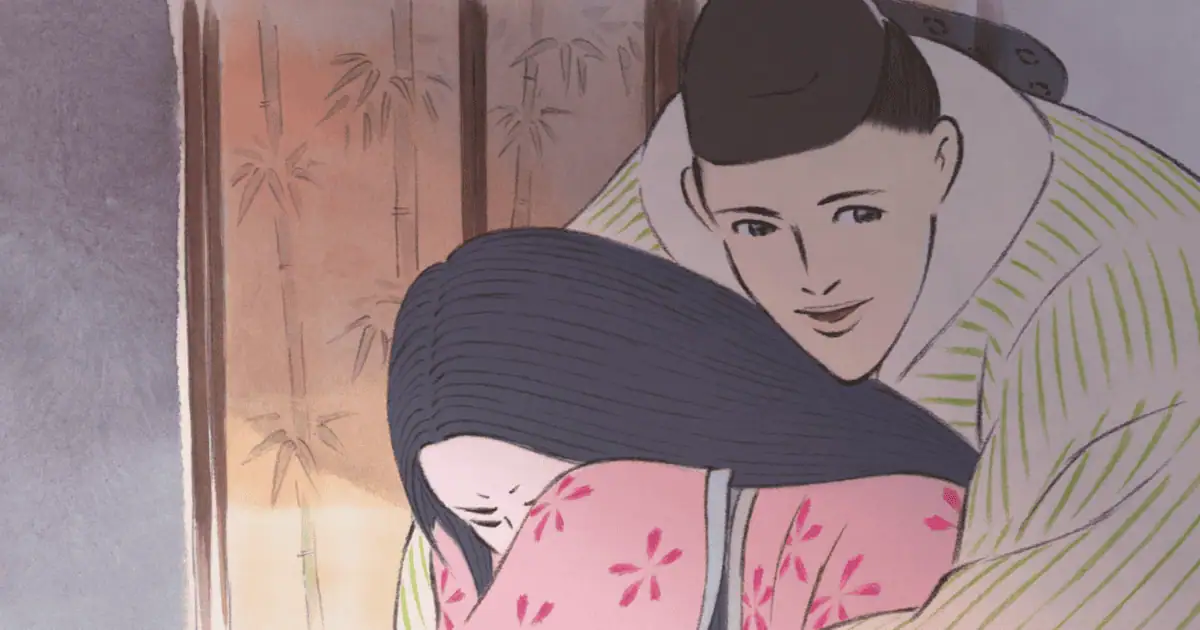
The Emperor appears late in the film and becomes the decisive cause of Kaguya’s return to the moon. Within this version of the story, he may be the person most responsible for what happens to her.
In The Tale of the Bamboo Cutter, though, he is the one person she finds precious—the place Sutemaru occupies in the film. They correspond for three years, and I find it hard to believe that was all. Perhaps those were her few moments of happiness on Earth.
Only Takahata could have told us why he changed that relationship, but we can imagine an explanation. Here is one way I think about it:
- As someone from the moon, Kaguya has no obvious reason to be interested in earthly men.
- She therefore rejects all five suitors.
- On that reading, her closeness to the Emperor in the original might be an accommodation to the expectations of its time—a kind of sontaku, or deference to power.
- Without that accommodation, she would not become close to him.
Sutemaru seems to contradict this reading, but there is a reason: the days she spent with him were her most beautiful days. Perhaps she can feel something special for him because he belongs to those memories.
Even so, I cannot simply blame the Emperor. He did not choose to be born at the top of Japan’s hierarchy, nor could he escape his lineage. Like the suitors, he is driven by something he cannot help. His belief that no woman would refuse him may itself be a curse; Kaguya’s rejection might free him from it.
Kaguya, meanwhile, can only return to the moon: an adaptation of The Tale of the Bamboo Cutter could hardly deny her that fate. Perhaps giving her Sutemaru was Takahata’s gesture of generosity—a way of letting her have at least a few beautiful days. Have you had days like that? Though, to be honest, I am more curious about his than yours. What memories was he drawing on? Does anybody know?
Inbe no Akita | Voice Actor: George Segal
View Inbe no Akita’s [Basic Info, Analysis, and Voice Actor Info]
Inbe no Akita: Naming the Princess
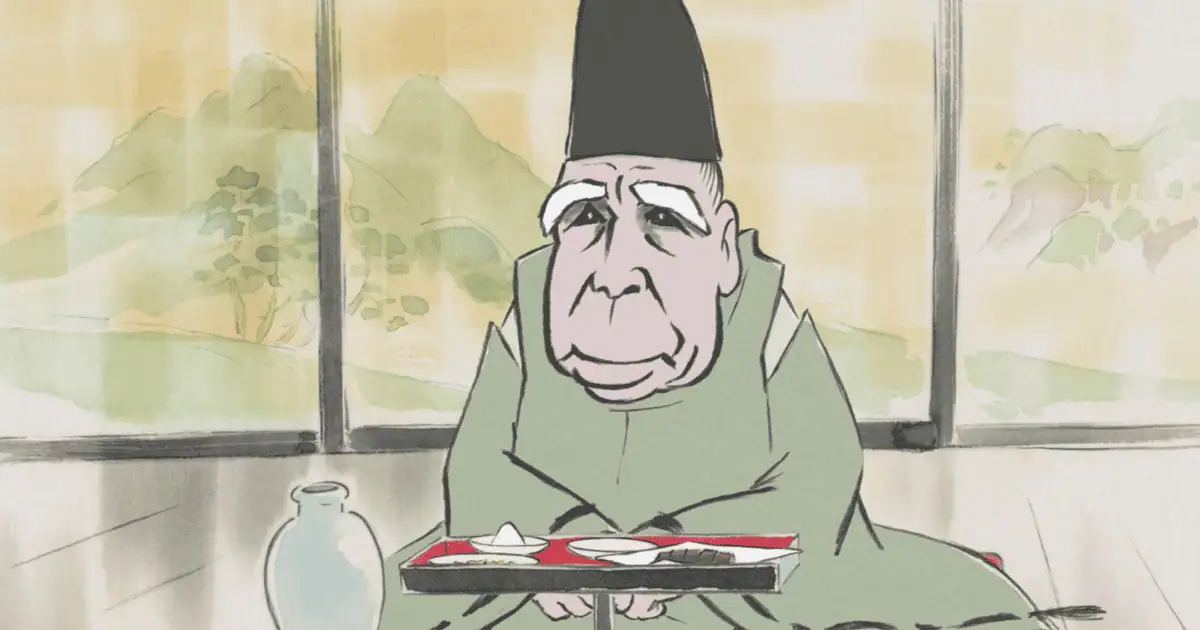
Akita gives Kaguya her name and helps set the five noblemen’s competition in motion.
At first he thinks little of Okina or the girl. But one look at Kaguya seems to revive a sense of manhood he thought he had lost. Given her age, it is an unsettling moment. I read his response as an expression of something unusual she possesses as a person from the moon.
She does not want that something, but she has it nonetheless. If even an old man like Akita seems close to losing his head over her, what chance do the others have?
The Moon King and Female Attendant
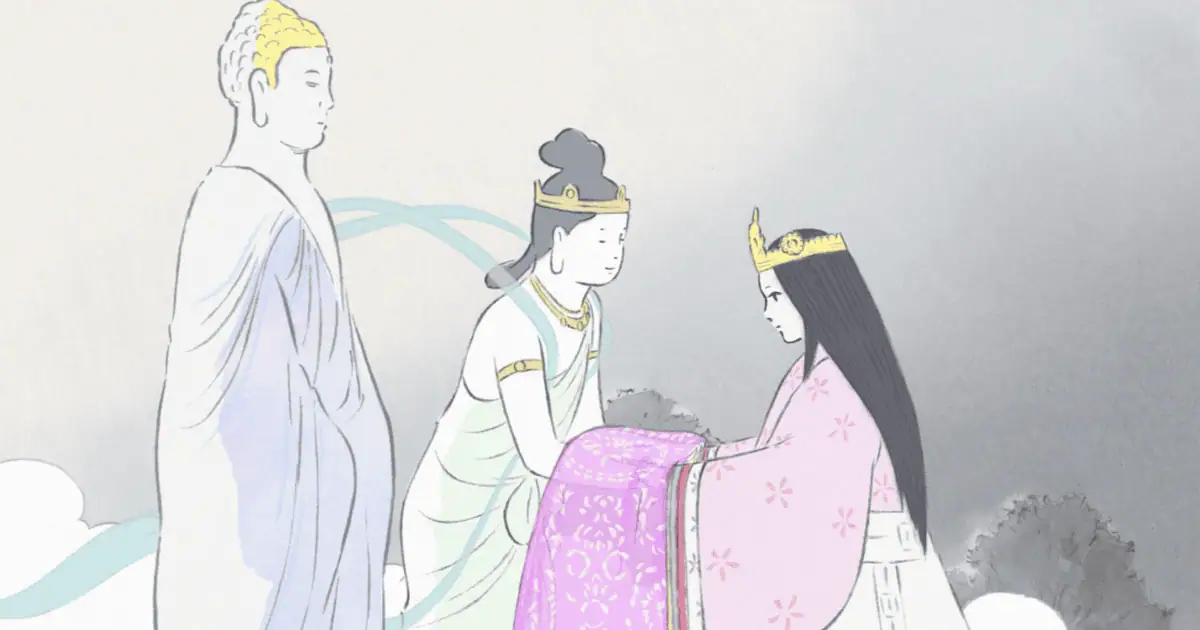
View The Moon King and Female Attendant’s [Basic Info, Analysis, and Voice Actor Info]
The Moon King and Female Attendant: Visitors from Another World
The leader of the party sent from the moon comes to collect Kaguya with his female attendant. He merely gazes at her; the attendant speaks as she presents the celestial robe.
Their arrival makes me feel as though I have been transported to another world. That strange sensation was especially powerful in the cinema, accompanied by the extraordinary “Music of the Celestials.”
I discuss the moment Takahata first asked for that music in the article below:
“Asked for it” may be too precise a description of what he actually said. I would love to know more about the exchange between Takahata and Joe Hisaishi that produced it. What strange music it is.
In the original Japanese version, the female attendant is voiced by Aki Asakura, who also voices Kaguya.
Your Take
What is your view? Choose the answer that comes closest to your own response.
Poll results
Who seems to understand Kaguya’s feelings best?
- Ouna, her adoptive mother.0%
- Sutemaru.0%
- Menowarawa.0%
- More than one of them equally.0%
- No one fully understands her.0%
- I see it differently.0%
The images used in this article are from the “Studio Ghibli Works Stills” collection.
Can you name the movie before the scene comes into focus?
Put your visual memory to the test with a blurred Studio Ghibli scene.

Reader Comments
Have a thought or interpretation? Leave a comment