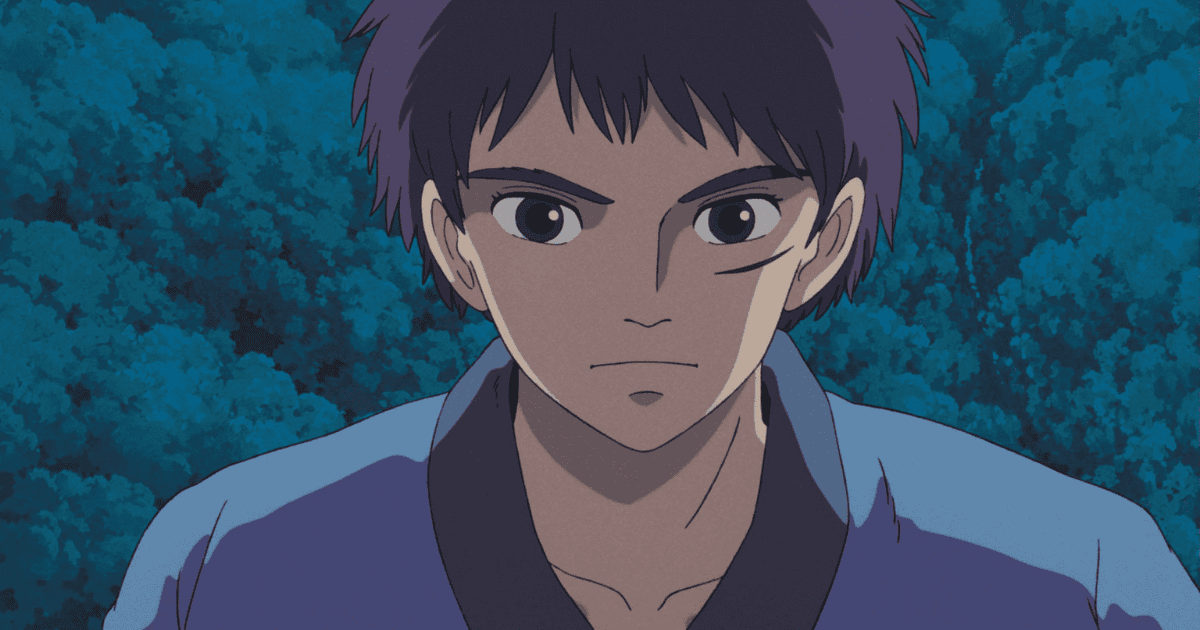
Princess Mononoke (Studio Ghibli Official) is a 1997 animated feature film written and directed by Hayao Miyazaki. It was released in Japan on July 12, 1997.
In this article, I have selected 21 of my favorite quotes from Princess Mononoke.
The film is filled with dialogue that sounds simple at first but becomes much more interesting when we look at the original Japanese. Some lines are deliberately archaic, some hide emotions beneath formal language, and others change noticeably in the English subtitles and dub.
For each quote, I will therefore look at the original Japanese, romanization, English subtitle, a literal translation, and what the line tells us about the characters and the story.
These are not necessarily the 21 most objectively famous lines from the film. They are simply the lines that have remained with me personally.
The film’s official English title is:
Princess Mononoke
Translation note: The English subtitle wording in this article is based on the commercially released Blu-ray available to the author. The English dub is also discussed where its wording creates an important difference. Subtitle and dub wording may vary between releases and territories.
▼ Read the full story and analysis behind these quotes
On this pageContents
Ashitaka Quotes in Japanese and English
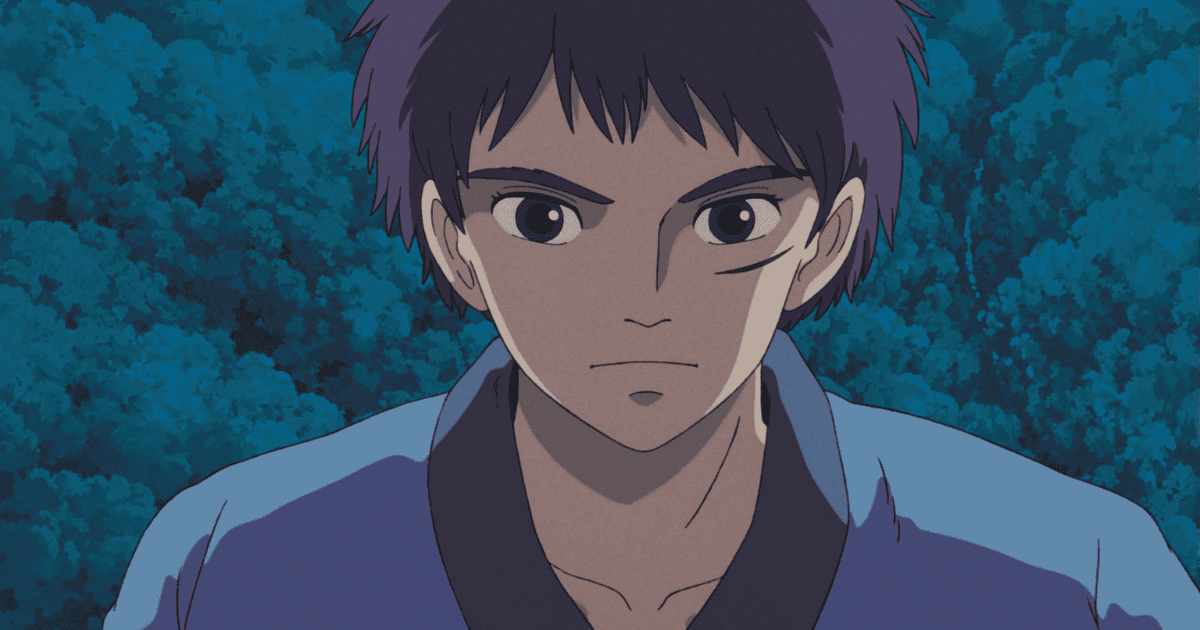
“I will see with eyes unclouded, and decide.”
曇り無き眼でものごとを見定め、決める。
Kumori naki manako de monogoto o misadame, kimeru.
I will see with eyes unclouded, and decide.
I will look at things with unclouded eyes, judge them for what they are, and decide.
Read the Commentary and Analysis
Ashitaka says this after showing Lady Eboshi the iron bullet he found inside Nago and being asked what he intends to do after learning its secret.
Strictly speaking, it does not really answer her question.
Nevertheless, it has become one of the most famous lines in Princess Mononoke.
One important detail is that the phrase “eyes unclouded” is not originally Ashitaka’s own language.
It is something Hii-sama tells him before he leaves his village.
There are several ways to interpret that fact.
During Ashitaka’s long journey westward, Hii-sama’s instruction may have been his only real source of guidance. Even though she was the person who effectively sentenced him to exile, he continues to trust her.
That suggests just how deeply respected she must have been within the Emishi community.
There is also a slightly less flattering interpretation.
Even at this stage of the story, Ashitaka is still using someone else’s words to explain what he intends to do.
In that sense, the famous line may also reveal his immaturity.
Perhaps he has yet to find words of his own for the conflict.
The English translation is remarkably direct.
The Japanese kumori naki manako literally means something close to “eyes without cloudiness,” and both the subtitle and dub use the elegant phrase “eyes unclouded.”
The word manako is itself somewhat literary, making the elevated English phrasing especially appropriate.
“Live… you’re beautiful.”
生きろ、そなたは美しい。
Ikiro, sonata wa utsukushii.
Live… you’re beautiful.
Live. You are beautiful.
Read the Commentary and Analysis
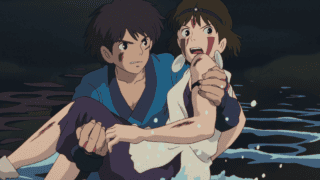
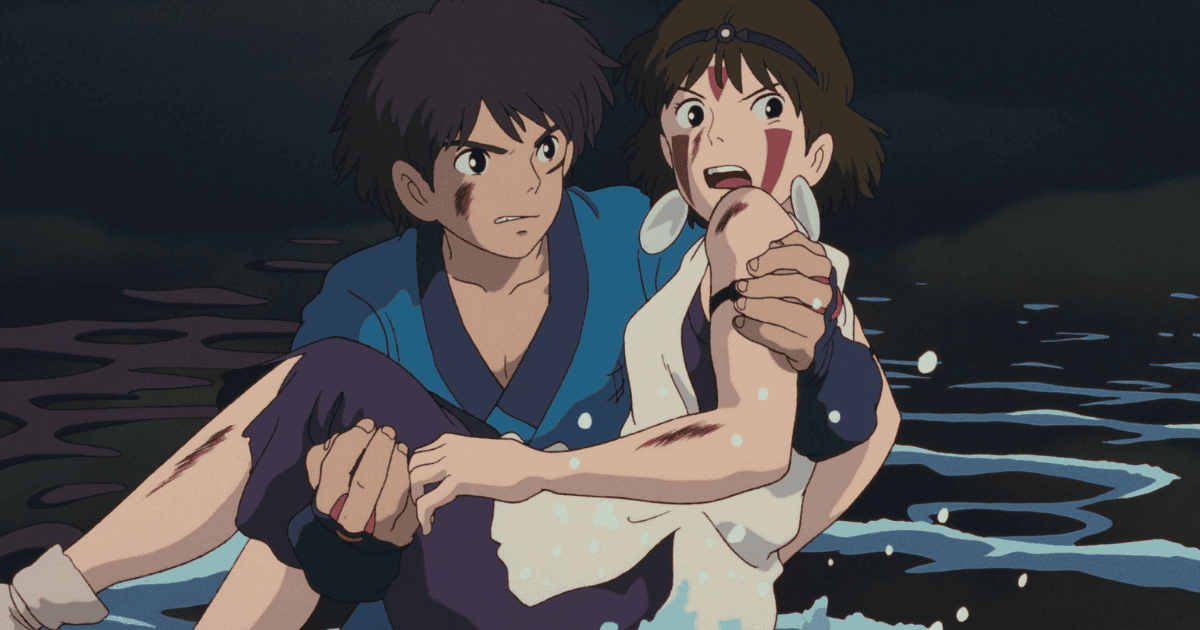
Ashitaka says this after carrying San out of Irontown while barely remaining conscious from the gunshot wound he has suffered.
San confronts him, and at the point where he is almost collapsing, he tells her to live because she is beautiful.
This is also the moment when the famous promotional word ikiro—“Live”—finally appears in the film.
At first glance, it is an undeniably powerful scene.
Yet from a modern perspective, it has also become one of the film’s most famous “Wait… what exactly does that mean?” moments.
The obvious joke is that if “You’re beautiful, so live” is true, does the reverse implication become “If you’re ugly, die”?
Or does Ashitaka’s motivation ultimately come down to San’s appearance?
On balance, I think it is reasonable to conclude that he is not saying “If you’re ugly, die.” The logical implication does not run in both directions.
Most importantly, Ashitaka does not seem to treat beauty as some objective admission requirement for deserving life.
Or perhaps he says “You’re beautiful” to everyone, whoever they are.
There is another important point.
Ashitaka is basically the only person in the entire film who describes San as beautiful.
Moro calls her beloved daughter, but of course she is San’s mother.
If we view Princess Mononoke as a story filtered partly through Ashitaka’s subjective perception, it is even possible that San is not supposed to be objectively beautiful at all.
She is beautiful because Ashitaka sees her that way.
That is considerably more romantic.
Let us give the man that much.
The English expression itself is essentially unavoidable. The Japanese sonata is an old-fashioned second-person pronoun, which adds a slight archaic dignity that the plain English “you” cannot reproduce.
“Set her free! She’s human.”
あの子を解き放て。あの子は人間だぞ。
Ano ko o tokihanate. Ano ko wa ningen da zo.
Set her free! She’s human.
Release that girl. She is human.
Read the Commentary and Analysis
Ashitaka says this during his confrontation with Moro.
Along with “Live… you’re beautiful,” it is probably one of his defining lines.
From Moro’s perspective, however, this must be an incredibly frustrating thing to hear.
Her internal response was probably something close to:
“Do you think I haven’t known that for years? If simply releasing her solved everything, none of us would have suffered this much.”
This tendency to present someone with an unquestionably correct principle without necessarily appreciating the impossible reality beneath it is one of Ashitaka’s characteristic behaviors throughout the film.
He is right.
San is human.
But Moro’s entire speech immediately afterward exists to explain why that fact does not provide an easy solution.
The English subtitle is completely straightforward.
The dub expands the distinction:
“You must set her free! She’s not a wolf. She’s a human.”
By explicitly adding “She’s not a wolf,” the dub makes the identity conflict even more direct than the Japanese.
“Give this to San.”
案内ご苦労! ひとつ頼みがある。これをサンに渡してくれ!
Annai gokurō! Hitotsu tanomi ga aru. Kore o San ni watashite kure!
Thank you for guiding me. I have a favor to ask. Give this to San.
Thank you for guiding me. I have one favor to ask. Please give this to San.
Read the Commentary and Analysis
Ashitaka says this to one of the wolves after San has nursed him back to health and the wolf has escorted him away from the forest.
This scene rivals “Live… you’re beautiful” as one of the great uncomfortable moments of Princess Mononoke.
At the beginning of the story, Kaya gives Ashitaka her precious crystal dagger during their deeply emotional farewell.
Ashitaka then calmly gives that exact dagger to San.
I first saw the film in elementary school, and even then I remember thinking:
“Wait… you’re giving it away?”
To make matters even more awkward, San receives the dagger, thinks it is beautiful, and happily wears it.
San! That was remarkably easy!
The scene is still debated, but as an adult I have come to appreciate it in a different way.
I explore the reasons in detail here:
Seen as an object that emotionally supported Ashitaka after his exile, the dagger can be interpreted not simply as a romantic gift from Kaya but as something that helped him survive the worst period of his life.
Passing it to San may therefore mean that Ashitaka no longer needs that emotional anchor and wants its protective meaning to pass to her.
That interpretation does not eliminate every awkward question.
But these days I can at least watch the scene and think:
“You know what? Maybe this is actually rather beautiful.”
There is nothing especially unusual in the English wording. The dub is also very similar.
“Together, we’ll live.”
それでもいい。サンは森で、私はタタラ場で暮らそう。共に生きよう。会いに行くよ。ヤックルに乗って。
Sore demo ii. San wa mori de, watashi wa Tataraba de kurasō. Tomo ni ikiyō. Ai ni iku yo. Yakkuru ni notte.
Then live in the forest, and I’ll live at the ironworks. Together, we’ll live. Yakul and I will visit you.
That’s all right. San will live in the forest, and I will live in Irontown. Let us live together. I’ll come to see you, riding Yakul.
Read the Commentary and Analysis
This is Ashitaka’s final line in Princess Mononoke.
It sounds extraordinarily romantic.
It also marks the beginning of what will probably be an extraordinarily difficult life.
Miyazaki himself has discussed the basic problem in various contexts.
After the ending, Ashitaka will effectively live between San and Irontown.
If he fully accepts San’s demands, Irontown cannot function.
If he fully accepts the needs of Irontown, he will inevitably come into conflict with San.
That sounds exhausting.
But compared with being expelled forever from his homeland while waiting for a curse to kill him, it is still an enormous improvement.
San is there too.
We should wish him luck.
There is another meaning in the line that interests me even more.
I also hear something else in that promise: the forest and the mountains have become places Ashitaka can “go to.”
That sounds completely normal to us today.
To me, the film seems to capture the moment when that way of seeing the forest emerges.
In this reading, the sacred forest becomes a place apart from human settlement—a place to visit.
I explore that transformation, together with the meaning of killing the Forest Spirit, here:
Considering the film’s Muromachi-period setting, I do not think that interpretation is entirely excessive.
The dub expands Ashitaka’s practical plan:
“You’ll live in the forest and I’ll go help them rebuild Irontown. I’ll always be near. Yakul and I will come and visit you whenever we can.”
The basic meaning is the same, although the subtitle’s “Together, we’ll live” preserves the Japanese tomo ni ikiyō more beautifully.
▼ Read more about Ashitaka, his curse, and his role as the film’s protagonist
San Quotes in Japanese and English
“I’ll help you, because the Deer God saved your life.”
シシ神様がおまえを生かした。だから助ける。
Shishigami-sama ga omae o ikashita. Dakara tasukeru.
I’ll help you, because the Deer God saved your life.
The Forest Spirit allowed you to live. That is why I will help you.
Read the Commentary and Analysis
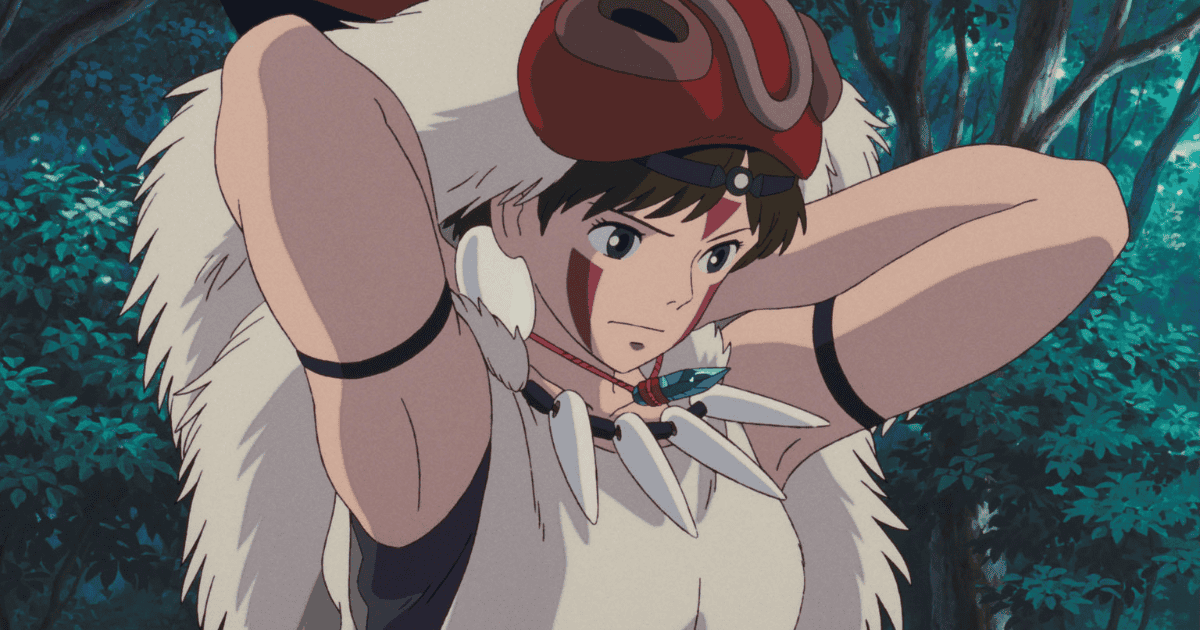
San says this after the Forest Spirit heals Ashitaka’s gunshot wound.
It sounds like a simple explanation.
But I cannot help feeling that San is hiding something about her own emotions.
In other words, perhaps she is already beginning to fall in love with Ashitaka.
The previous night, she had clearly been thrown off balance by his “Live… you’re beautiful” declaration.
If that sentence alone was enough to make her fall for him, one might say that San is a little too easy.
On the other hand, it may very well have been the first time in her entire life that anyone had ever told her she was beautiful.
Some people go through their whole lives without hearing that.
Perhaps we should not be too harsh.
There is also very little else in the story that could serve as the decisive moment when San begins viewing Ashitaka romantically.
But because San defines herself through opposition to humanity, she cannot simply admit that she personally wants to save a human boy.
So she places the decision on the Forest Spirit.
If the god chooses to let him live, she can help him.
The next morning, the Forest Spirit has indeed saved him.
Perhaps she wins her little emotional bet and, delighted, greets him with an insult.
I choose to believe that is what happened.
The English sentence is direct and preserves the logic of the Japanese very well.
“I’m a wolf!”
私は山犬だ!
Watashi wa yamainu da!
I’m a wolf!
I am a mountain dog!
Read the Commentary and Analysis
After Lady Eboshi shoots off the Forest Spirit’s head and the Night-Walker begins its catastrophic rampage, Ashitaka tries to save the badly wounded Eboshi.
San screams that she hates humans.
Ashitaka responds:
“You are human too.”
San answers:
“I’m a wolf!”
This is personally the line that strikes me hardest in the entire film.
I am not sure that “favorite” is even the correct word for it.
To me, this is the cry of someone who has tried harder than anyone to become a wolf, while struggling more than anyone with the reality that she is human.
This line is the scream produced by that contradiction.
I do not think anything more needs to be added.
The Japanese uses yamainu, literally “mountain dog,” an old Japanese term associated with wolves.
The English naturally chooses the much simpler “wolf.”
“I love you, Ashitaka. But I’ll never forgive the human race.”
アシタカは好きだ。でも、人間を許すことはできない。
Ashitaka wa suki da. Demo, ningen o yurusu koto wa dekinai.
I love you, Ashitaka. But I’ll never forgive the human race.
I love you, Ashitaka. But I cannot forgive humans.
Read the Commentary and Analysis
San says this to Ashitaka from the back of a wolf near the end of the film.
At the very end of the story, she finally says something openly affectionate about a human being.
Throughout Princess Mononoke, San has suffered between two identities:
the identity she desperately wants—being a wolf—and the knowledge that she is biologically human.
In order to protect the former identity, she directs an almost excessive hatred toward humanity.
That hatred may even be deeper than Moro’s.
After all, San was abandoned by her human parents.
Yet there is no law saying that she must be either entirely “wolf” or entirely “human.”
She does not need to choose one identity and destroy the other.
After the film ends, I hope San gradually realizes that she can simply be San.
Ashitaka will probably be extremely important in helping her reach that point.
During the film, San becomes a kind of salvation for Ashitaka.
After the film, perhaps Ashitaka will become the same thing for San.
Or rather, I sincerely hope so.
The dub changes the direct “I love you” into:
“Ashitaka, you mean so much to me, but I can’t forgive the humans.”
“You mean so much to me” means that someone is extremely important or precious to you.
It is emotionally softer than “I love you,” but it also avoids forcing the Japanese suki into only one possible English category.
▼ Read more about San, her identity, and her relationship with Moro
Lady Eboshi Quotes in Japanese and English
“Enough talk of your curse. I’ll cut that arm off!”
賢しらに僅かな不運を見せびらかすな。
Sakashira ni wazukana fuun o misebirakasu na.
Enough talk of your curse. I’ll cut that arm off!
Do not smugly parade your small misfortune as though you were so wise.
Read the Commentary and Analysis
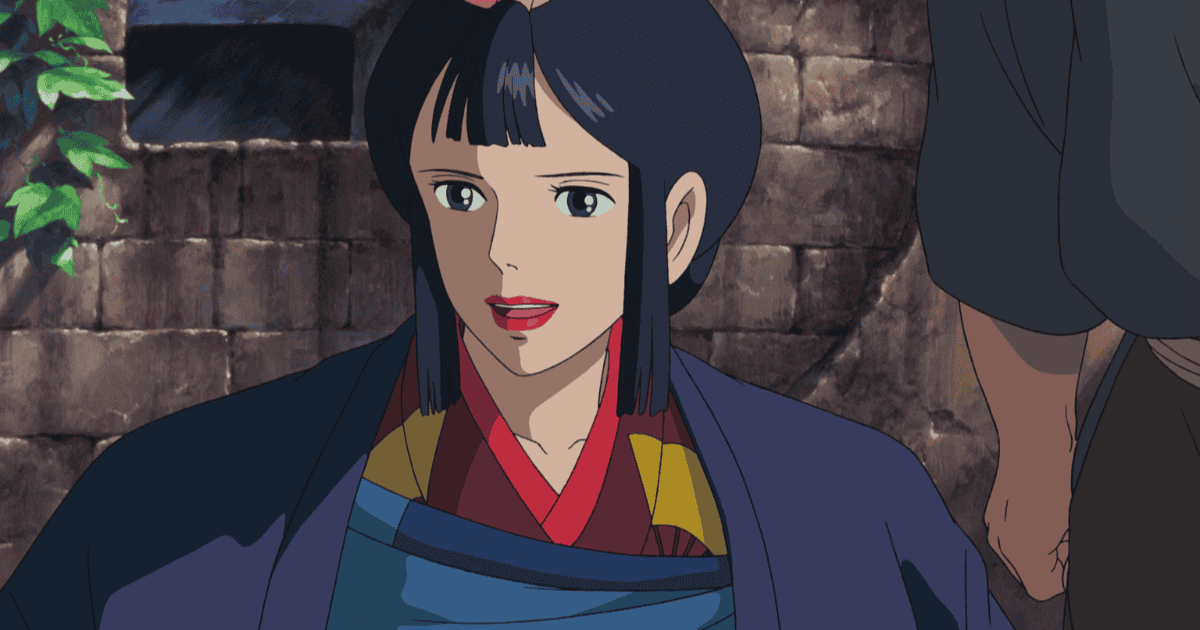
Lady Eboshi says this after Ashitaka places himself between her and San and shouts that they must not surrender themselves to hatred.
If there is one line that defines Eboshi’s voice, this may be it.
The fact that she can produce such a brutally precise insult in the middle of an emergency is magnificent.
More importantly, this is one of the rare moments in the film when the normally controlled Eboshi appears genuinely emotional.
In other words, Ashitaka really irritated her at that exact moment.
Ashitaka has just revealed his terrible curse to the people of Irontown and then, while displaying the physical proof of his suffering, delivers a morally righteous speech about refusing hatred.
It looks heroic.
Eboshi hates it.
If we try to imagine why, her thoughts may have been something like this:
“I could also have spent my life displaying everything terrible that happened to me and demonstrating how nobly I continued to live despite it. Instead, I built this place through action rather than speeches. And now this young man arrives, displays his suffering, and lectures me about how to live?”
Perhaps Ashitaka’s painfully fresh idealism even makes her jealous for a moment.
The Japanese is much more complex than the subtitle.
Sakashira suggests cleverness, knowingness, or self-satisfied wisdom.
Wazukana fuun literally means a “small misfortune.”
Eboshi is therefore dismissing Ashitaka’s fatal curse as merely a minor piece of bad luck that he is showing off while acting morally superior.
The English subtitle simplifies the entire insult to:
“Enough talk of your curse.”
The dub uses essentially the same idea:
“I’m getting a little bored of this curse of yours, Ashitaka. Let me just cut it down.”
The English loses much of the extraordinary cruelty of wazukana fuun, but preserving the whole Japanese nuance in a subtitle would be extremely difficult.
“You want me to kill samurai instead of the Deer God?”
シシ神殺しをやめて侍殺しをやれと言うのか。
Shishigami-goroshi o yamete samurai-goroshi o yare to iu no ka.
You want me to kill samurai instead of the Deer God?
Are you telling me to stop killing the Forest Spirit and go kill samurai instead?
Read the Commentary and Analysis
Ashitaka reaches Eboshi in the Forest Spirit’s woods and tells her that Irontown is under attack and desperately needs her.
Eboshi responds with this wonderfully sarcastic line.
But the line also exposes the central contradiction in her position.
Irontown is more than an ironworks to Eboshi.
In my reading, it is the base from which she hopes to overturn the male-dominated world that made her suffer.
But she does not yet have the power to carry out that ambition.
That would explain her secret agreement with the Imperial Court and her pursuit of the Forest Spirit’s head.
I explore that interpretation in detail here:
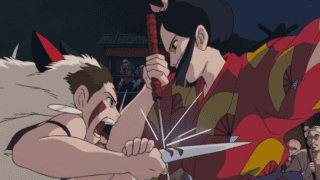
The strange result is that Eboshi is trying to secure her future by killing a god who never personally harmed her while refusing to abandon that mission to fight the samurai who are actually attacking her people.
Perhaps she knows how absurd that is.
But the situation has moved beyond the point where any individual can simply stop it.
In that sense, this short exchange shows how nearly everyone in Princess Mononoke has become a prisoner of circumstances.
The subtitle is almost completely direct.
The dub says:
“So, it’s don’t kill the forest gods. Now you want us to kill samurai instead.”
“We’ll start over. We’ll build a good village here.”
みんな初めからやり直しだ。ここをよい村にしよう。
Minna hajime kara yarinaoshi da. Koko o yoi mura ni shiyō.
We’ll start over. We’ll build a good village here.
We will all begin again from the start. Let us make this a good village.
Read the Commentary and Analysis
This is Lady Eboshi’s final line in Princess Mononoke.
She speaks with an expression that seems almost relieved, yet her voice remains powerful.
It sounds extremely optimistic.
But it can also be interpreted as the moment Lady Eboshi announces the death of her original ambition.
On that reading, her dream of creating a new country has ended.
She will pursue a different goal instead.
That may be a good thing.
But there is also something sad about it.
Throughout Princess Mononoke, almost every major character or faction acts according to some enormous desire.
Yet nobody receives exactly what they wanted.
- A faint trace of Ashitaka’s curse remains.
- San and the forest creatures cannot preserve the Forest Spirit’s woods exactly as they were.
- Jigo fails to deliver the Forest Spirit’s head to the Emperor.
- Eboshi loses the Irontown she had constructed and the political future she imagined.
Nobody receives an ideal present.
And yet they continue living.
Perhaps that is ultimately one of the most important messages in the film:
Even after losing the world you wanted, you still have to live in the world that remains.
The dub is similar:
“We’re going to start all over again. This time, we’ll build a better town.”
Interestingly, “better town” subtly suggests not merely reconstruction but improvement—an acknowledgment that the original Irontown itself contained serious problems.
▼ Read more about Lady Eboshi, her past, and her hidden political ambition
Moro Quotes in Japanese and English
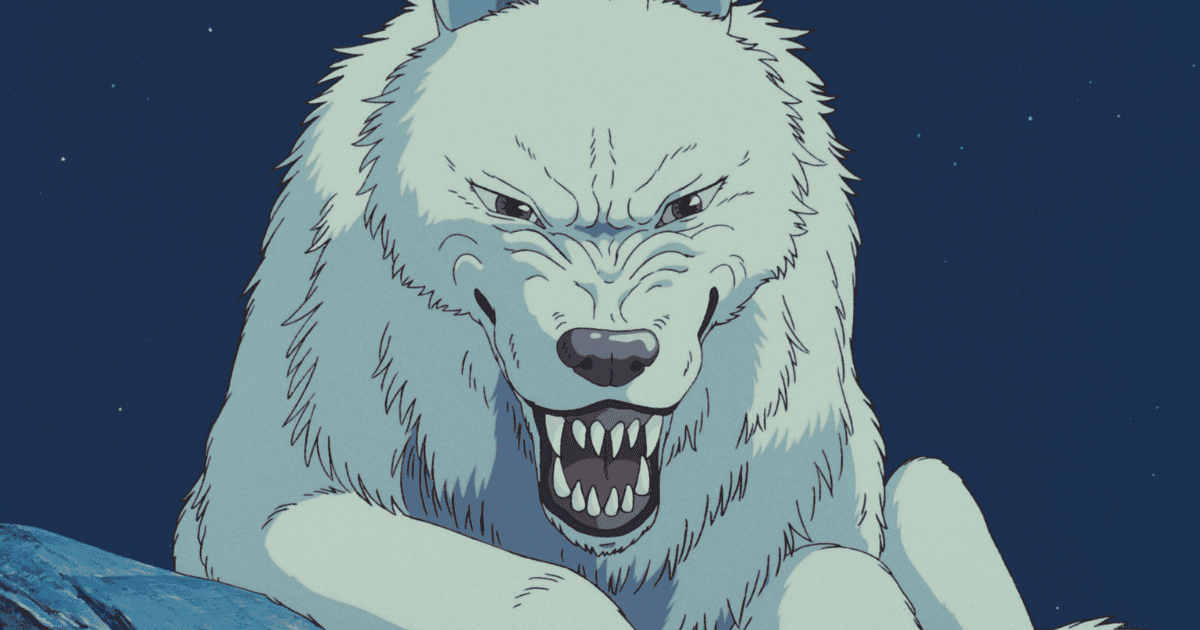
“The Deer God gives life and takes it away.”
シシ神は命を与えもし、奪いもする。そんな事も忘れてしまったのか、猪ども。
Shishigami wa inochi o atae mo shi, ubai mo suru. Sonna koto mo wasurete shimatta no ka, inoshishi-domo.
The Deer God gives life and takes it away.
The Forest Spirit both gives life and takes it away. Have you boars forgotten even that?
Read the Commentary and Analysis
Moro says this after the boars arrive to protect the Forest Spirit’s woods and angrily complain that the god did not save Nago.
Okkoto appears soon afterward, and Moro describes him as someone with whom she can at least have a conversation.
That suggests Okkoto understands the point she is making.
And if that is true, I cannot help thinking that Okkoto and the other boars may have come to the forest for slightly different reasons.
The younger boars seem to believe they can fight humanity, defend the forest, and perhaps regain the favor of the Forest Spirit.
After Moro’s statement, they even complain that the wolf clan may somehow be monopolizing the god’s protection.
The hope beneath that accusation is obvious:
“If we win this war, perhaps the Forest Spirit will support us again.”
But that is not how the Forest Spirit works.
Whether the boars win or lose changes nothing about the god’s nature.
Okkoto seems to understand that already.
That makes me wonder whether he has actually come to protect the forest at all.
Perhaps he has come looking for an honorable place to die.
Victory may no longer matter very much to him.
Perhaps death in a final magnificent battle would even be preferable.
Nago may have entered his own final battle with similar feelings.
But he failed to achieve an honorable death. Instead, he fled in agony, became a Tatarigami, and died far away in Ashitaka’s village.
In that sense, perhaps the Okkoto we see in the film is also a representation of the part of Nago’s story that we never witnessed.
Of course, “an honorable death” sounds easy when turned into words.
When death actually approaches, fear takes over. We run. We cling to anything that might save us.
Moro, who ultimately accepts her approaching death with extraordinary calm, may simply be exceptional.
The subtitle excerpt quoted here leaves out Moro’s final rebuke to the boars and concentrates on the god’s power to give and take life.
The dub uses:
“The Forest Spirit gives life and takes it away.”
“Silence, boy! Can you save her?”
黙れ小僧! お前にあの娘の不幸が癒せるのか。森を侵した人間が、わが牙を逃れるために投げて寄越した赤子がサンだ。人間にもなれず、山犬にもなりきれぬ、哀れで醜い可愛いわが娘だ。……お前にサンを救えるか。
Damare kozō! Omae ni ano musume no fukō ga iyaseru no ka. Mori o okashita ningen ga, waga kiba o nogareru tame ni nagete yokoshita akago ga San da. Ningen ni mo narezu, yamainu ni mo narikirenu, aware de minikui kawaii waga musume da. Omae ni San o sukueru ka.
Silence, Boy! What can you do for her? The humans who violated the forest threw her in my path as they ran from me. Now she is neither human nor wolf. My poor, ugly, lovely daughter. Can you save her?
Silence, boy! Can you heal that girl’s suffering? San is the baby the humans who violated the forest threw to me so that they could escape my fangs. She can become neither human nor fully a mountain dog—my pitiful, ugly, beloved daughter. Can you save San?
Read the Commentary and Analysis
Moro responds with this speech after Ashitaka tells her:
“Set her free. She’s human.”
“Silence, boy!” has become an extraordinarily famous phrase in Japan. It is still occasionally used jokingly in everyday conversation.
I have certainly used it.
But everything that follows “Silence, boy!” is what makes this one of the greatest speeches in the film.
The line:
“She is neither human nor wolf.”
identifies the suffering that San herself can never properly articulate.
Moro understands it completely.
That is why this scene reveals, more than almost any other, that Moro is not merely San’s guardian.
She is, in the deepest and saddest sense, San’s mother.
The English choice “Silence, boy!” is especially good.
A normal contemporary translation might be “Shut up, kid!”
But placing “Silence” at the beginning gives Moro an elevated, almost royal presence.
The dub is also worth quoting:
“Silence, boy! I caught her human parents defiling my forest. They threw their baby at my feet as they ran away. Now my poor, ugly, beautiful daughter is neither human nor wolf. How could you help her?”
The word “defile” means to pollute, desecrate, or violate something regarded as pure or sacred.
The contrast of “poor, ugly, beautiful daughter” also preserves the deeply contradictory tenderness of Moro’s Japanese wording remarkably well.
▼ Read more about Moro, San, and the contradictions in Moro’s attitude toward humans
Toki Quotes in Japanese and English
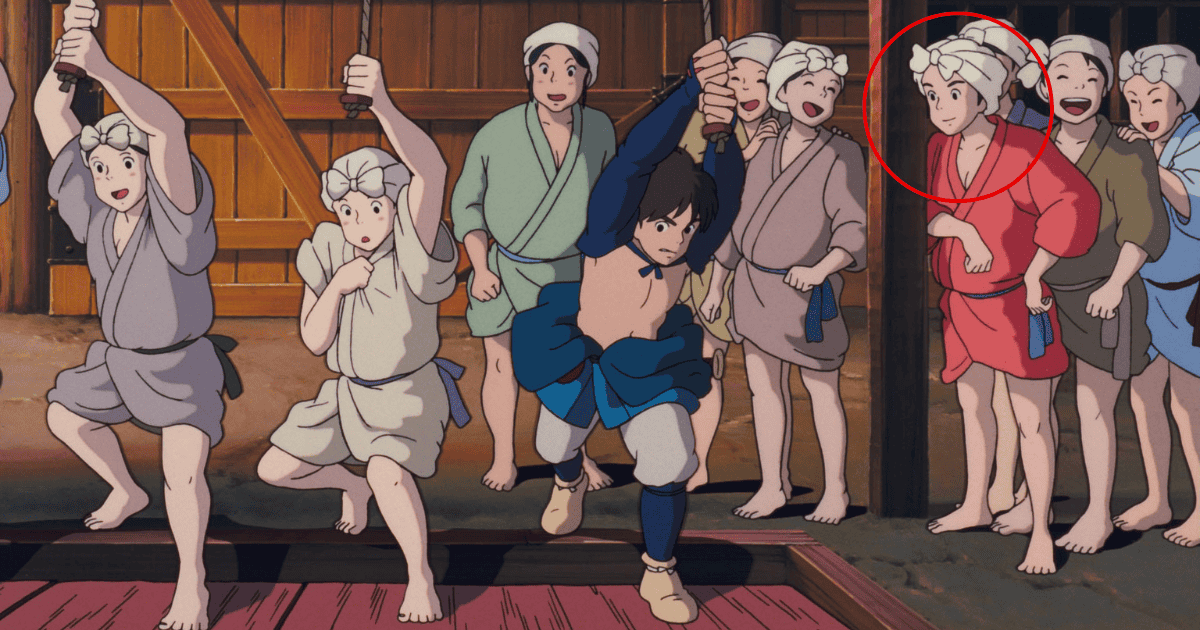
“The wolves should’ve eaten you.”
いっそ山犬にくわれちまえばよかったんだ。そうすりゃあたしはもっといい男を見つけてやる。
Isso yamainu ni kuwarechimaeba yokatta n da. Sō surya atashi wa motto ii otoko o mitsukete yaru.
The wolves should’ve eaten you. Then I could find a better man.
You might as well have been eaten by the wolves. Then I could have gone and found myself a better man.
Read the Commentary and Analysis
Toki says this when her husband finally returns to Irontown after everyone feared that he had been killed during the wolf attack.
Thanks partly to Sumi Shimamoto’s performance, it is immediately obvious that the insult is really relief turned inside out.
But the line performs another important function.
In one sentence, it tells us a great deal about the relationship between men and women inside Irontown.
We already know that Irontown’s leader is a woman.
Toki’s attitude makes it equally clear that this confidence extends throughout the female workforce.
The women who operate the bellows perform extraordinarily hard physical labor, but that work also gives them economic importance and social power.
They are not working merely so that the men can take it easy.
It is a tiny line, but it shapes our impression of Irontown immediately.
The interesting English point is “Then I could…”
Her husband was not eaten by wolves, so the imagined consequence—finding another man—also did not happen.
The sentence imagines a situation contrary to what has actually happened.
The dub makes the counterfactual structure explicit:
“I wish the wolves had eaten you. Then maybe I could have found a real husband.”
“I wish … had eaten” uses the past perfect to express a wish about a past event that did not happen.
“Let him see what it’s like.”
せっかくだから変わってもらいな!
Sekkaku da kara kawatte moraina!
Let him see what it’s like.
Since he’s gone to the trouble of coming, let him take your place for a while.
Read the Commentary and Analysis
This does not look like an especially memorable line on paper.
But the production documentary How Princess Mononoke Was Born reveals that Sumi Shimamoto had considerable difficulty finding the correct tone.
The problem was that her performance naturally sounded too kind and welcoming toward Ashitaka.
When we think carefully about the situation, Ashitaka has simply walked into an extremely demanding workplace and begun inserting himself into the women’s established routine.
For people performing brutal labor according to a precise rhythm, he is basically an obstacle.
Toki would probably prefer him to leave.
Since Ashitaka saved her husband, she cannot simply be rude to him. I read her solution as letting him try the bellows so that he can be on his way as soon as possible.
This is typical of Princess Mononoke.
The characters’ visible behavior is constantly accompanied by an interior motive that is slightly different from what appears on the surface.
The subtitle changes the meaning slightly toward:
“Let him experience what this is like.”
The dub says:
“It’s okay. Might as well let him try.”
The real question is whether English-speaking viewers can hear the hidden message:
“You are actually in the way.”
▼ Read more about Toki and the people of Irontown
Jigo’s Quote in Japanese and English
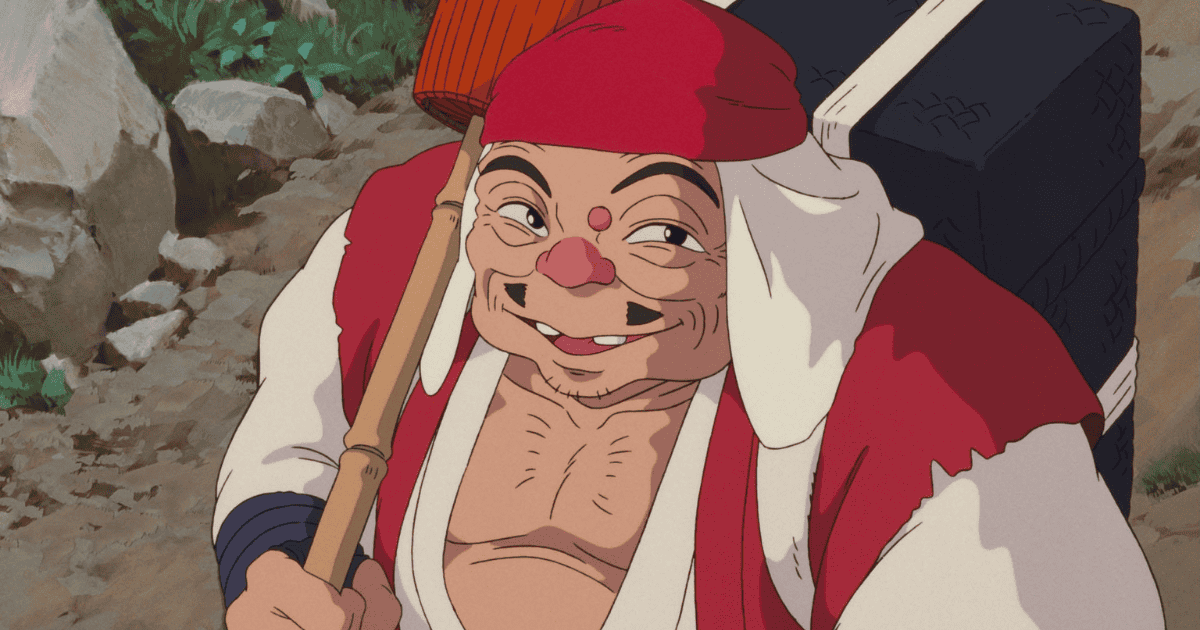
“Far to the west… is a forest where none may tread.”
これよりさらに西へ西へと進むと、山の奥のまた山奥に、人を寄せ付けぬ深い森がある。シシ神の森だ。そこではケモノは皆大きく太古のままに生きていると聞いた。
Kore yori sara ni nishi e nishi e to susumu to, yama no oku no mata yamaoku ni, hito o yosetsukenu fukai mori ga aru. Shishigami no mori da. Soko de wa kemono wa mina ōkiku, taiko no mama ni ikite iru to kiita.
Far to the west, deep in the mountains… is a forest where none may tread. The forest of the Deer God. They say the beasts there are giants, as in ages past.
If you continue farther and farther west, deep beyond the mountains there is a forest that does not allow humans to approach. It is the Forest Spirit’s woods. I have heard that the animals there are all enormous and live as they did in ancient times.
Read the Commentary and Analysis
Jigo says this after Ashitaka gives him the iron bullet and explains that it came from a giant boar who had been mortally wounded.
By this stage, Jigo has probably already understood far more than he reveals.
Yet he gives Ashitaka only one important piece of information:
the Forest Spirit’s woods.
He responds directly to the phrase “giant boar” while carefully avoiding discussion of the bullet itself.
His internal calculation seems obvious:
“You saved my life, so I owe you some information. But I am not going to tell you anything that interferes with my own job.”
That single exchange is enough to establish that Jigo is exactly as slippery as he looks.
Still, giving Ashitaka the Forest Spirit as a destination is enormously important.
Without Jigo, Ashitaka might never have reached Irontown at all.
In that sense, Jigo may be one of the greatest accidental benefactors in Ashitaka’s entire story.
The most interesting English construction is:
“Deep in the mountains… is a forest where none may tread.”
The normal order would be:
“A forest where none may tread is deep in the mountains.”
But English sometimes places an expression of location first and inverts the subject and verb, especially when the subject is long or when the writer wants to create a dramatic sense of revelation.
The famous phrase “Here comes the sun” uses a related structure.
In this scene, the inversion gives the Forest Spirit’s woods an appropriately legendary quality.
▼ Read more about Jigo and his hidden mission
Nago’s Quote in Japanese and English
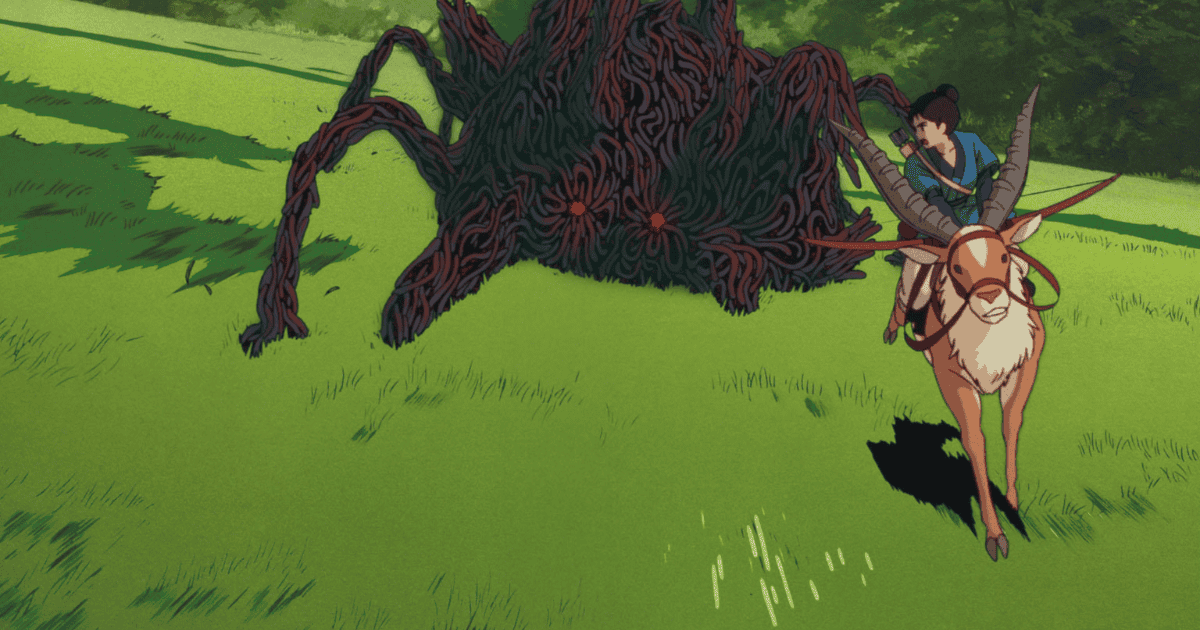
“You shall know my agony and my hatred.”
汚らわしい人間どもめ。わが苦しみと憎しみを知るがいい。
Kegarawashii ningen-domo me. Waga kurushimi to nikushimi o shiru ga ii.
Hear me, loathsome humans! You shall know my agony and my hatred.
You filthy humans. You shall know my suffering and hatred.
Read the Commentary and Analysis
Nago says this at the moment of his death after attacking Ashitaka’s village as a Tatarigami.
One of the themes running throughout Princess Mononoke is the control—or failure to control—hatred.
Nago’s final words express something fundamental about hatred before the story has properly even begun.
As Eboshi later explains, the people Nago originally had reason to hate were Eboshi herself and the inhabitants of Irontown.
Yet after becoming a Tatarigami, Nago does not return to Irontown.
He runs east and attacks an Emishi village whose inhabitants had absolutely nothing to do with his suffering.
Then he curses them with this final declaration.
Hatred expands.
It does not necessarily remain focused on the person who caused the original injury.
It spills outward onto strangers and then onto entire groups associated with the original enemy.
Someone is harmed by one person from another country, and soon they begin hating everyone from that country.
Nago demonstrates exactly that mechanism.
I explore the Tatarigami as a physical embodiment of hatred and irrational calamity here:
Of course, saying “That is simply the nature of hatred” cannot be the conclusion.
If we accept it simply because it is part of human nature, what is the point of living?
Ashitaka spends the entire film fighting against precisely that expansion of hatred.
Humanity has not won that battle yet.
Somewhere today, someone still hates someone else.
Will that battle ever end?
The English vocabulary is appropriately severe.
“Loathsome” means deeply disgusting or hateful.
“Agony” means extreme physical or emotional suffering.
“Hatred” means intense hate.
The dub uses more ordinary words:
“Disgusting little creatures. Soon all of you will feel my hate and suffer as I have suffered.”
▼ Read more about Nago, the Tatarigami, and the film’s depiction of hatred
Kaya’s Quote in Japanese and English
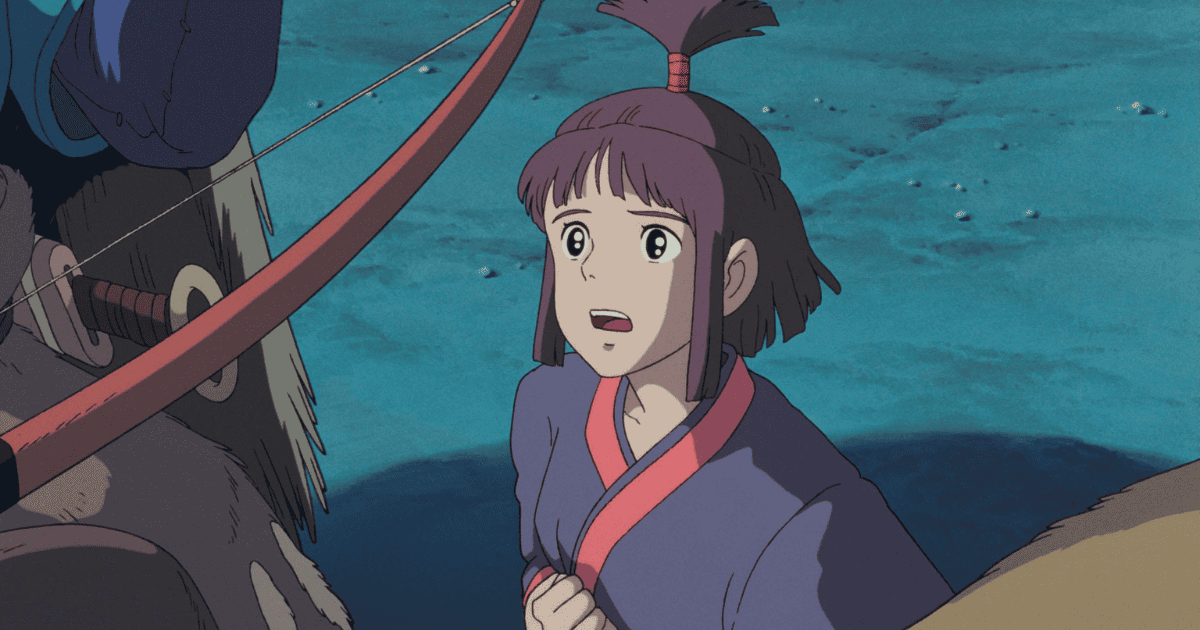
“You’ll always be in my heart.”
いつもいつも、カヤは兄さまを思っています。きっと、きっと。
Itsumo itsumo, Kaya wa ani-sama o omotte imasu. Kitto, kitto.
You’ll always be in my heart. Always, without fail.
Always, always, Kaya will be thinking of you. Certainly. Certainly.
Read the Commentary and Analysis
Kaya says this after giving Ashitaka the crystal dagger as he prepares to leave his homeland forever.
Up until the moment Ashitaka later gives that dagger to San, this is an extraordinarily moving farewell scene.
I saw Princess Mononoke for the first time when I was in elementary school, and even then the later handoff produced an immediate:
“Wait… he’s giving that away?”
My thoughts on that scene have changed over the years, and I explore the dagger problem in detail here. What do you think of it now?
The interesting English phrase in Kaya’s subtitle is “without fail.”
It means certainly, reliably, or without exception.
The dub changes the emotional direction rather dramatically.
Instead of Kaya promising that she will never forget Ashitaka, she asks him not to forget her:
“You must take it with you, please. I want you to have it so you won’t… forget.”
Those two emotional gestures are not quite the same.
The Japanese is Kaya making a promise about her own heart.
The dub makes it a request concerning Ashitaka’s.
The Leper Elder’s Quotes in Japanese and English
“Lady Eboshi wants to rule the country.”
コワヤ、コワヤ。エボシさまは国崩しをなさる気だ。
Kowaya, kowaya. Eboshi-sama wa kunikuzushi o nasaru ki da.
Watch out. Lady Eboshi wants to rule the country.
How frightening, how frightening. Lady Eboshi intends to overthrow the country.
Read the Commentary and Analysis
One of the sick men says this jokingly after Eboshi asks them to make the firearms lighter.
It is delivered as humor.
I nevertheless think Eboshi’s intention to pursue something like kunikuzushi—literally “bringing down the country”—was very real.
In that reading, she makes the secret agreement with the Imperial Court and undertakes the Forest Spirit hunt—even though she does not really want to kill him—to gain the power she needs.
I explore her political goal in detail here:
Why would Eboshi want to overthrow the established order?
Given the world from which she and many of Irontown’s women appear to have escaped, that question may be central to understanding her entire character.
The subtitle translates kunikuzushi as “rule the country.”
That conveys political ambition, although the Japanese has a more explicitly disruptive sense: bringing down, overturning, or destroying the existing order.
“She is the only person who ever treated us as human.”
どうかその人を殺さないでおくれ。その人はわしらを人としてあつかってくださった、たったひとりの人だ。
Dōka sono hito o korosanaide okure. Sono hito wa washira o hito to shite atsukatte kudasatta, tatta hitori no hito da.
I beg you not to kill our lady. She is the only person who ever treated us as human.
Please do not kill her. She is the one and only person who treated us as human beings.
Read the Commentary and Analysis
The elder says this inside Eboshi’s hidden garden when Ashitaka’s cursed arm begins trying to draw his sword against her.
This line may explain more clearly than anything else why Irontown remains so united around Lady Eboshi.
Almost everyone there probably feels some variation of the same gratitude.
That is why the women continue enduring the brutal work of operating the bellows.
It is why the cattlemen do not immediately turn against Eboshi even after she leaves fallen men behind during Moro’s attack.
Irontown is the final refuge of people who had nowhere else to go.
Eboshi did not merely employ them.
She recognized them as people when the surrounding society did not.
Eventually, Ashitaka himself becomes another person who has lost his original home and makes Irontown his new place in the world.
The English translation is direct and particularly effective.
“I beg you” is stronger than simply “please.” It expresses a desperate plea.
▼ Read more about Lady Eboshi and the people who found refuge in Irontown
The Boars’ Quote in Japanese and English
“Why did he not save Nago?”
なぜナゴの守を助けなかったのだ! シシ神は森の守り神ではないのか。
Naze Nago no Kami o tasukenakatta no da! Shishigami wa mori no mamorigami de wa nai no ka.
Why did he not save Nago?
Why did he not save Lord Nago? Is the Forest Spirit not the guardian god of the forest?
Read the Commentary and Analysis
The boars scream this after arriving in the Forest Spirit’s woods and learning that the god saved Ashitaka.
From their perspective, it is a perfectly reasonable question.
Why save a human while allowing Nago, one of the forest’s great gods, to die?
Yet the very fact that the Forest Spirit saves Ashitaka reveals something fundamental.
To the Forest Spirit, the categories that dominate everyone else’s thinking may be completely irrelevant.
Human.
Boar.
Wolf.
Forest creature.
Enemy.
Ally.
The Forest Spirit does not appear to operate according to any of those political categories.
That is an extremely painful reality for the boars, who have crossed the sea to fight and die for what they regard as the god’s forest.
But perhaps a god, in the deepest sense, should be exactly that indifferent to our factional expectations.
The subtitle excerpt shown here is the first part of the Japanese line:
“Why did he not save Nago?”
The dub uses the slightly more conversational:
“Why didn’t he save him?”
The meaning is essentially identical.
My Three Favorite Princess Mononoke Quotes
Those are the 21 lines I personally selected from Princess Mononoke.
If I had to choose only three, they would be:
- “Live… you’re beautiful.”
- “Silence, boy!”
- “I’m a wolf!”
“Live… you’re beautiful” contains Ashitaka’s almost absurdly direct belief in San.
“Silence, boy!” opens one of the most painful and perceptive speeches in the entire film, revealing that Moro understands San’s identity crisis better than anyone.
And “I’m a wolf!” is, for me, the cry at the center of San’s entire life—the desperate declaration of someone fighting against a truth about herself that she cannot yet accept.
Looking at all 21 quotes together also reveals something important about Princess Mononoke.
Nearly every character speaks from inside a contradiction.
Ashitaka demands that others reject hatred while carrying hatred physically inside his own body. San loves Ashitaka while refusing humanity. Moro hates humans while raising a human daughter. Eboshi protects people discarded by society while destroying the world of the forest gods. Even the boars fight for a god whose behavior they fundamentally misunderstand.
No one is perfectly correct.
No one receives the world they wanted.
And yet, when the destruction is over, they continue living.
Perhaps that is why these lines remain so memorable. They do not provide simple answers. They are the words of people trying to survive contradictions that cannot really be solved.
Which quote from Princess Mononoke has stayed with you?
The images used in this article are from the Studio Ghibli Works Still Image Collection.

Reader Comments