
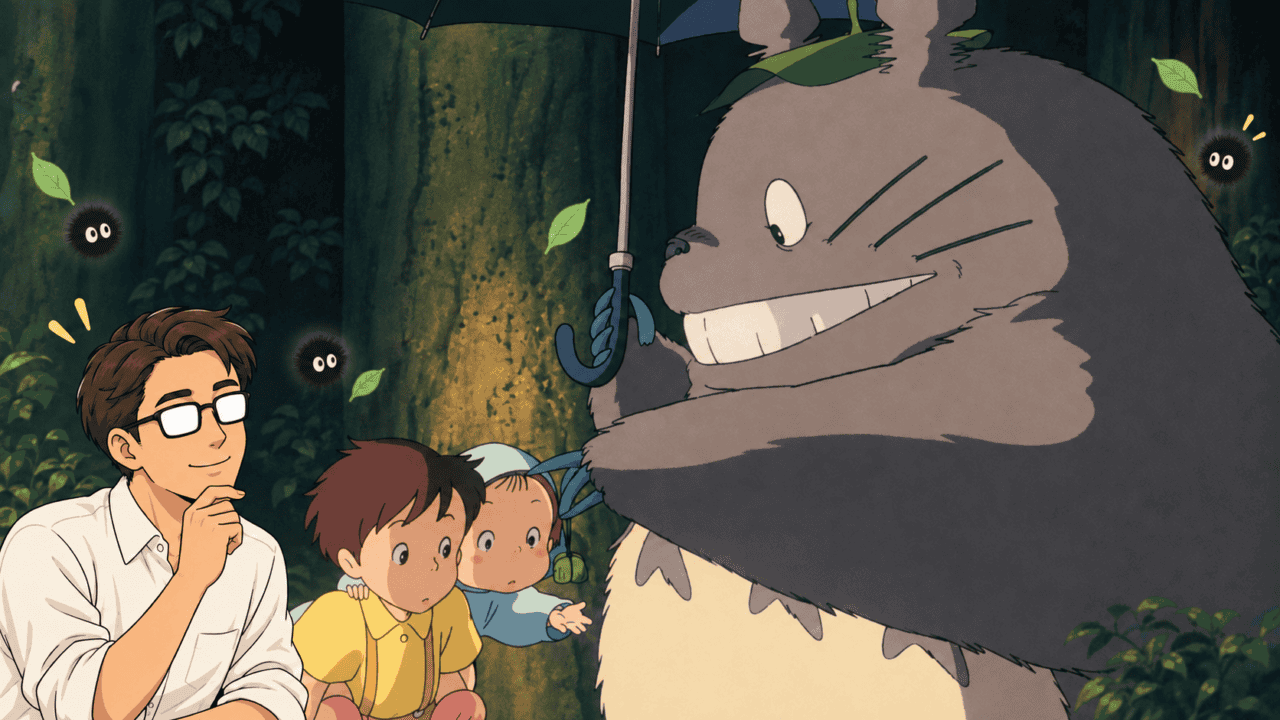
Hayao Miyazaki’s My Neighbor Totoro(Studio Ghibli Official) was released on April 16, 1988. Its Japanese promotional line was: “This strange creature is still in Japan. Probably.”
Many of us have watched this familiar film repeatedly since childhood. Here, I bring together its synopsis and my analysis. The synopsis covers the whole story, including the ending, so expect spoilers. If you have not seen it, read a little and then go straight to the film.
*This is a translated version. The original (Japanese) is available here.
- Detailed Synopsis and Character Map
Sixth-grader Satsuki and her four-year-old sister, Mei, move to the countryside with their father while their mother is in hospital. They encounter Totoro, face their mother’s illness and Mei’s disappearance, and receive help from the Catbus. Below are a short summary, a character map, and a detailed account of the story. - Questions for Further Analysis
I consider the mother’s possible lie, the meaning of Satsuki’s tears, the couple in the farm truck, and why the urban legend arose. Each discussion leads to a more detailed article on this site.
On this pageContents
My Neighbor Totoro (1988): Synopsis with Spoilers
The synopsis follows Satsuki and Mei from their move to the countryside through their encounters with Totoro and the search for Mei.
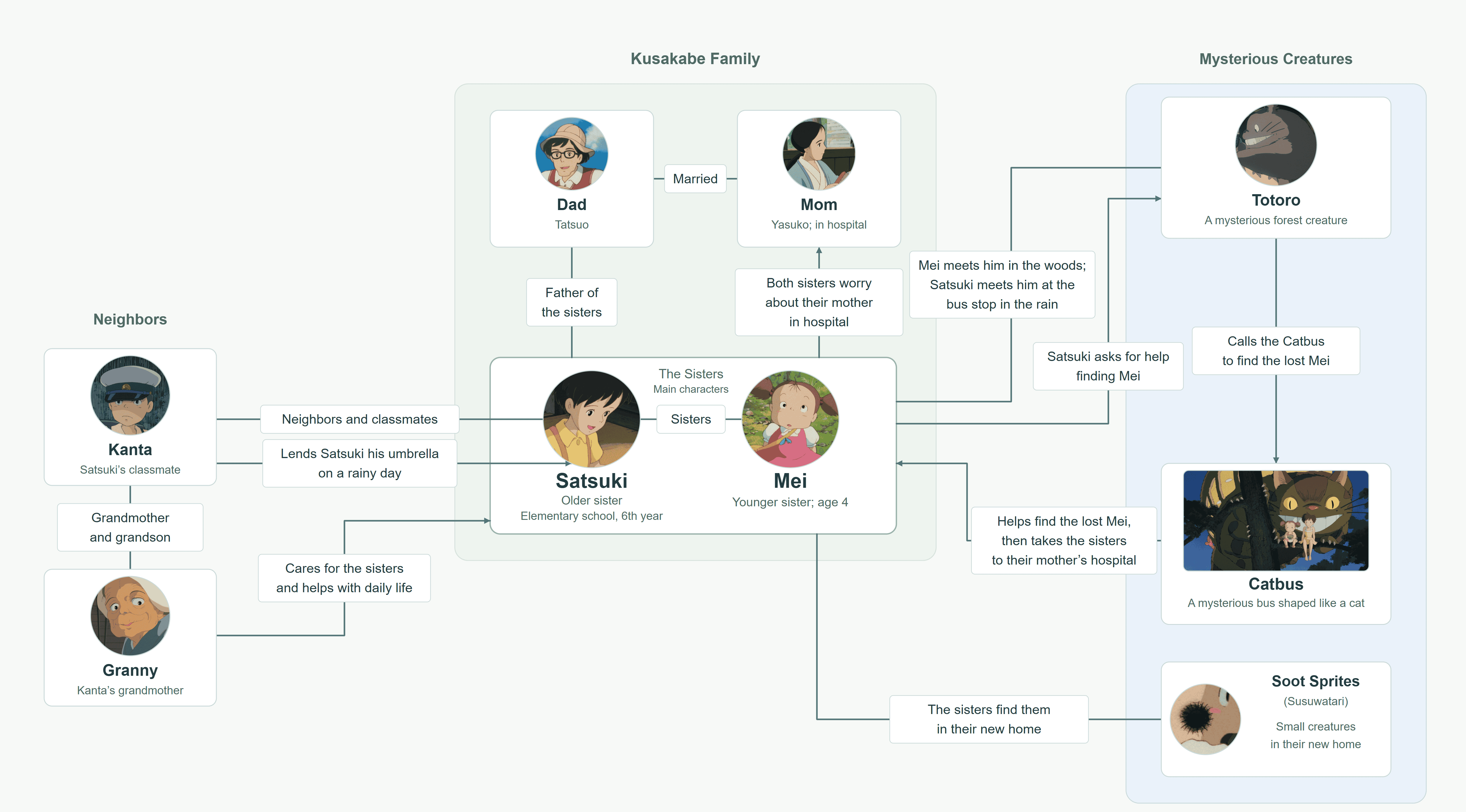
Quick Summary and Character Map
Here are the main points of My Neighbor Totoro:
-
A New Life in the Countryside
The Kusakabe family moves to a rural village to be near the hospital where the girls’ mother is being treated. -
The Appeal of Their New Home
Satsuki and Mei look forward to exploring the garden and woods around their old house. -
Strange Creatures
Mei’s curiosity is stirred by the unfamiliar creatures she encounters around the house and in the woods. -
Meeting Totoro
In the woods, Mei discovers an enormous creature she comes to call Totoro. -
Family Bonds and Anxiety
With her mother in hospital and her father busy, Satsuki helps keep the family going while living with her own worries. -
Comfort in the Forest
Meeting Totoro also gives Satsuki excitement and a moment’s respite from the difficulties of everyday life. -
The Arrival of the Catbus
During the rainy encounter, the girls witness the arrival of the Catbus—a massive, multi-legged, living vehicle that bounds effortlessly across the countryside. -
Mei Goes Missing
Near the end of the story, Mei disappears. Her family and the villagers search for her. -
Totoro and the Rescue
Satsuki asks Totoro for help, and the Catbus takes her to the lost Mei. -
The Sisters Reunited
Satsuki and Mei find each other again and return to everyday life.
Character Map
What Makes the Story So Memorable?
At its simplest, My Neighbor Totoro is a story about girls encountering mysterious beings. Totoro and the Catbus make an especially vivid impression on a child’s imagination.
Surely everyone who has watched it has thought, “I want to ride the Catbus!” Even as adults, many of us find ourselves sensing Totoro in a strong wind. Part of the film’s power lies in animation that speaks so directly to the senses.
The story also has moments of real anxiety. Mei goes missing, and Satsuki fears for their mother. The film makes us feel the danger surrounding children as well as their delight in the mysterious world around them.
Now let’s follow the story from the family’s arrival in the countryside through the encounters with Totoro to the ending.
Detailed Synopsis: A Scene-by-Scene Story Breakdown
Part 1: The Haunted House and the Soot Sprites
The story begins with Satsuki, a sixth-grader, and her four-year-old sister, Mei, moving house with their father, Tatsuo Kusakabe. The three ride in a truck packed with their belongings, greeting people on the way. Their new home is hardly new: it is decidedly ramshackle.
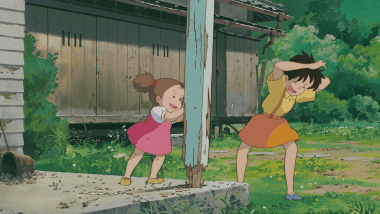
Their father asks them to find the stairs and open the upstairs windows. Delighted, they discover the staircase, but an acorn falls from the darkness above. Hoping to encounter the soot sprites their father has just told them about, they sing, “Soot sprites, come on out! Or we’ll poke your eyes out!”
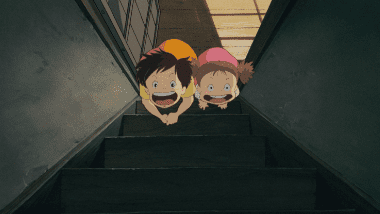
They climb the stairs one step at a time. Sensing something in the dim room at the top, Satsuki runs to open the window. Mei is a little slower and spots a soot-like creature slipping into a crack in the wall. Seeing her father almost stumble while carrying a heavy load, Satsuki hurries downstairs. Mei remains, watching the wall, and carefully puts a finger into the crack. The black creatures burst out.
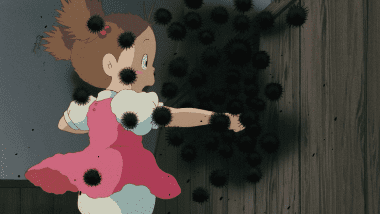
Mei catches one between her hands and runs to show Satsuki. But when she opens them, the creature has vanished, leaving only blackened palms. Granny, who has come to help with the move, explains that these are Susuwatari, or soot sprites. Perhaps the arrival of new residents has set them planning a move of their own.
Part 2: The Hospital Visit and the King of the Forest
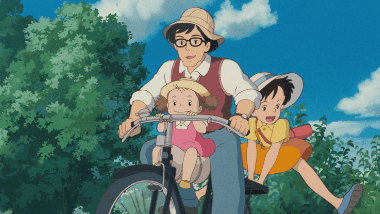
Once they have settled in, all three squeeze onto one bicycle and go to visit the girls’ mother at Shichikokuyama Hospital.
Their father goes to speak with the doctor while Satsuki and Mei enter their mother’s room. She combs Satsuki’s hair. After sharing the housework with her father, Satsuki seems able, for a little while, to be a child again.
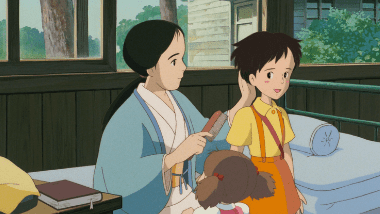
The visit is not long, but both girls are delighted to see their mother. Now they are even more eager for her to come home.
While Satsuki is at school, Mei stays with her father or Granny. On this day, her father is working at home. He is busy with his research and cannot keep playing with her, but Mei devises a way to involve him: she makes him the florist in her game.
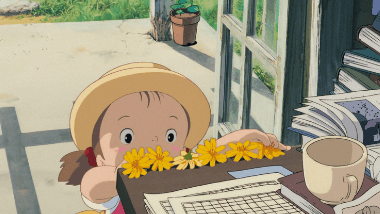
Even so, she is still largely playing alone. Then she finds another acorn. Following the trail, she encounters a strange creature that looks white, or perhaps transparent.
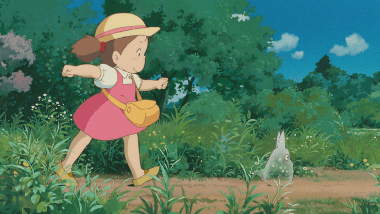
Mei enthusiastically gives chase. She loses the creature for a while, then finds it again—this time with a slightly larger companion. Clearly, these must be chased too.
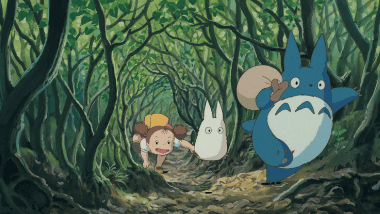
Absorbed in the pursuit, Mei finds herself at the foot of a great tree. The two creatures disappear between its roots, where an acorn lies invitingly. As she reaches for it, she slips and falls into a strange hole below the roots.
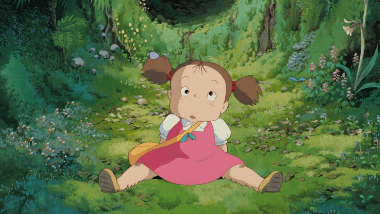
Beyond the hole is an unfamiliar space and a creature far larger than either of the two she has followed. Mei asks its name. It makes a growling sound, which she takes to mean “Totoro.” After all that chasing, she falls asleep.
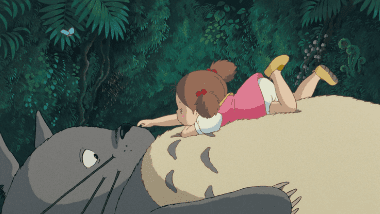
When she wakes, Totoro is gone. Satsuki and her father do not quite believe her account, but her father suggests that she may have met the keeper of the forest. They go to the shrine at Tsukamori to pay their respects. There stands the enormous tree Mei saw earlier, but when she tries to show Satsuki the hole, it is nowhere to be found. Was it a dream?
Part 3: The Bus Stop in the Rain
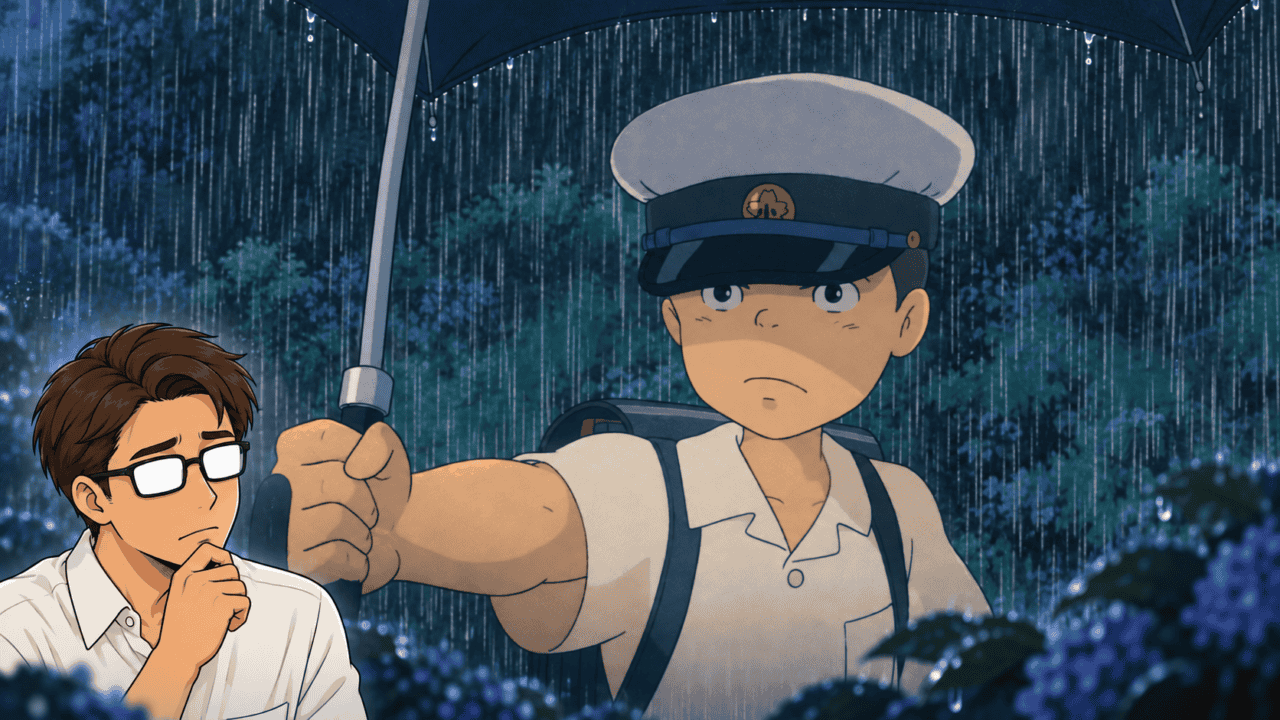
Some time later, the girls go to the bus stop with an umbrella for their father, who is returning from work. He does not arrive, and they find themselves waiting on a dark road, with only the sound of rain around them.
Mei grows sleepy. She refuses to go home ahead of their father, so Satsuki carries her on her back, and she falls asleep. Then a strange shape approaches Satsuki. Looking towards it nervously, she sees Totoro—the creature Mei encountered the other day.
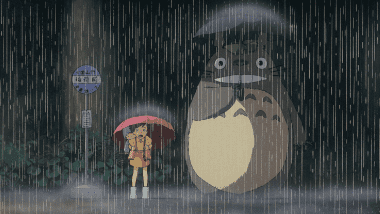
Although surprised, Satsuki lends Totoro an umbrella: the leaf on his head is doing little to keep him dry. He enjoys the sound of raindrops striking it and jumps, bringing down more water from the trees.
Then something that resembles a bus approaches. When it reaches the stop, the girls see that it is a bus shaped like a cat.
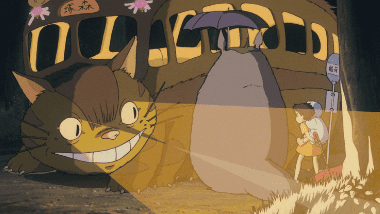
Totoro boards as though this were perfectly ordinary. Before leaving, he gives Satsuki a package of nuts, apparently in thanks for the umbrella. The Catbus departs, the rain stops, and at last the bus carrying their father arrives. The girls tell him excitedly about meeting Totoro. He has little idea what they mean, but all three head home happily.
The girls plant the nuts in the garden. Mei checks for shoots day after day, but nothing happens. One night, they see Totoro and his companions where the nuts were planted, apparently performing a ritual. They rush out to join in. And then—shoots spring up, one after another, and begin to grow.
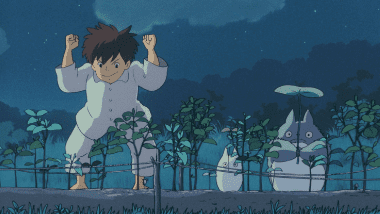
The shoots merge into an enormous tree. Their father, absorbed in his research, notices nothing. The girls go on to fly with Totoro and play ocarinas in the treetop. By morning, the great tree has vanished, but small shoots remain where they planted the nuts. Did the night’s events really happen?
Part 4: The Disappearance and the Miracle
One day, a telegram arrives from Shichikokuyama Hospital, asking the family to get in touch. Fearing that something has happened to her mother, Satsuki borrows a telephone to contact her father at work.
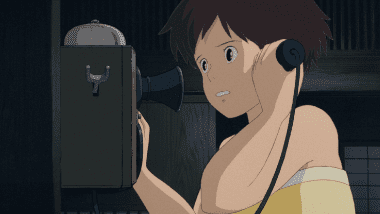
After calling the hospital, he rings back to explain that their mother’s visit home will be postponed. Mei is shocked and starts crying. Ordinarily Satsuki might comfort her, but she has little composure left herself.
Talking to Granny, Satsuki recalls how often their mother’s return has been delayed. She begins to fear that this time her mother might die, and finally bursts into tears. Everything she has been holding in comes out.
Mei sees Satsuki crying and decides to visit their mother on her own. She wants to give her the corn she picked, hoping it will make her well.
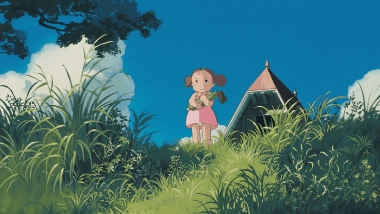
As might be expected, Mei gets lost. The villagers search for her, but she is nowhere to be found. When a sandal is discovered in a pond, Satsuki runs there at full speed. Fortunately, it is not Mei’s. Realizing how much danger her sister may be in, Satsuki turns to Totoro.
Perhaps her plea reaches him: Satsuki finds her way to Totoro’s home and asks him to help her find Mei. Totoro carries her to the top of the great tree and calls the Catbus.
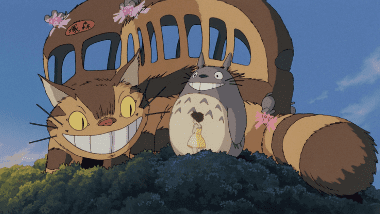
The Catbus’s destination sign keeps changing until it reads “MEI.” With Satsuki aboard, it races over the fields, through the woods, and along power lines. At last, Mei, sitting alone beside some Jizo statues, hears her sister calling. The Catbus really has brought Satsuki to her.
The obliging Catbus then takes both girls to Shichikokuyama Hospital. They leave the corn for their mother without letting her see them, and head home.
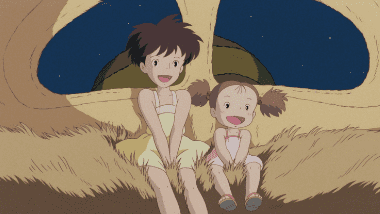
That is the story of My Neighbor Totoro. The still images in the end credits continue it, so look carefully. I also see a question extending beyond the film: as the girls grow older, will their extraordinary experiences fade into memories dismissed as dreams? Their words, “It was a dream, but it wasn’t a dream,” seem to resist that possibility. To me, Spirited Away, released thirteen years later, offers another way of thinking about memory and forgetting.
▼ Explore the film’s memorable dialogue in Japanese and English
Many of the film’s most important emotional moments are expressed through deceptively simple dialogue—from Mei naming Totoro and Satsuki losing her temper to the sisters declaring that their experience “was a dream, but wasn’t a dream.” See the original Japanese, romanization, English subtitles, literal translations, and detailed commentary in 14 My Neighbor Totoro Quotes in Japanese and English, Explained.
Let’s now turn to some questions the film raises for me.
My Neighbor Totoro (1988): Analysis and Questions
The family’s worries, Satsuki’s emotions, and the film’s mysterious atmosphere invite several questions and interpretations.
What Is the Mother’s “Lie”?
One of the film’s most memorable scenes is the mother combing Satsuki’s hair in hospital. For that moment, Satsuki seems happily able to be a child again.
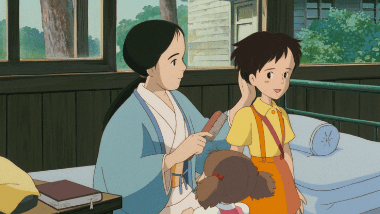
Yet I have long felt something puzzling in the scene: the mother seems to tell a lie. What might it be, and why might she tell it? This may sound far-fetched, but the article below explains how I arrived at that reading.
Read the full analysis: Two Readings of the Mother’s Lie
What Do Satsuki’s Tears Reveal?
When Satsuki cries after learning that her mother’s visit home is postponed, the scene has an emotional force even a child can feel. As a boy with an older brother, I used to think Mei should stop making things difficult for her sister. Now I am older, Satsuki’s tears seem entirely understandable. The two girls’ crying, however, appears to mean something different.
What feelings has Satsuki been holding back?
The article below considers those feelings through Miyazaki and Suzuki’s accounts of the scene. It also touches on Mei’s tears. See how the reading compares with your own.
Read the full analysis: What Satsuki’s Tears Reveal
Why the Couple in the Farm Truck?
One scene has stayed with me since childhood: while searching for Mei, Satsuki encounters a man and a woman in a farm truck.
Why those two? A lone man or woman could have appeared instead. The film shows this pair, followed by Kanta struggling along on his bicycle. I find that sequence intriguing.
My own reading concerns Kanta’s future and his feelings for Satsuki. It may seem a stretch, and there is certainly room to disagree, but the article below explains my reasoning.
Read the full analysis: Kanta, Satsuki, and a Reading of Their Future
Why Did the “God of Death” Urban Legend Arise?
My Neighbor Totoro has a well-known urban legend. Its claims can be summarized as follows:
- The sandal in the pond belonged to Mei; she actually drowned.
- Realizing that Mei is dead, Satsuki asks Totoro, a God of Death, to take her to the underworld to meet her. The name “Mei” is interpreted as an allusion to “Meikai,” or the underworld; Satsuki, too, is dead.
- The mother cannot see the girls at the hospital because both are dead.
- The whole story is a fantasy imagined by a father who has lost his daughters. Scenes in which the girls have no shadows are offered as evidence that they are dead.
- Another claim says that the story is based on the Sayama Incident and takes this as evidence that Mei must be dead.
My concern here is not whether the legend is true, but why it arose in the first place.
The article below presents my reading of its origins: perhaps the danger surrounding children is made unusually vivid by how well the film portrays them. Again, this is a personal interpretation, and there is room for disagreement.
Read the full analysis: Why the Totoro Urban Legend Took Hold
Your Take: The Mood of Totoro
The film brings wonder and comfort alongside moments of worry for Satsuki and Mei. What mood stays with you most?
Reader poll
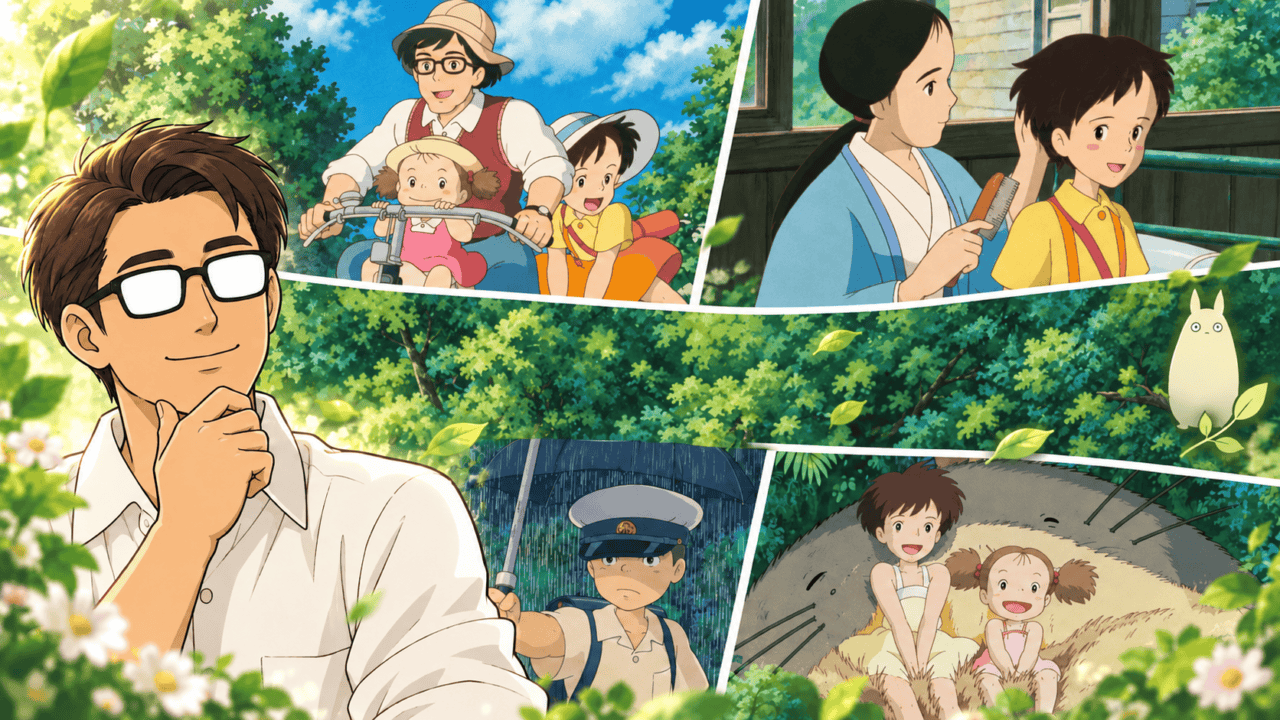
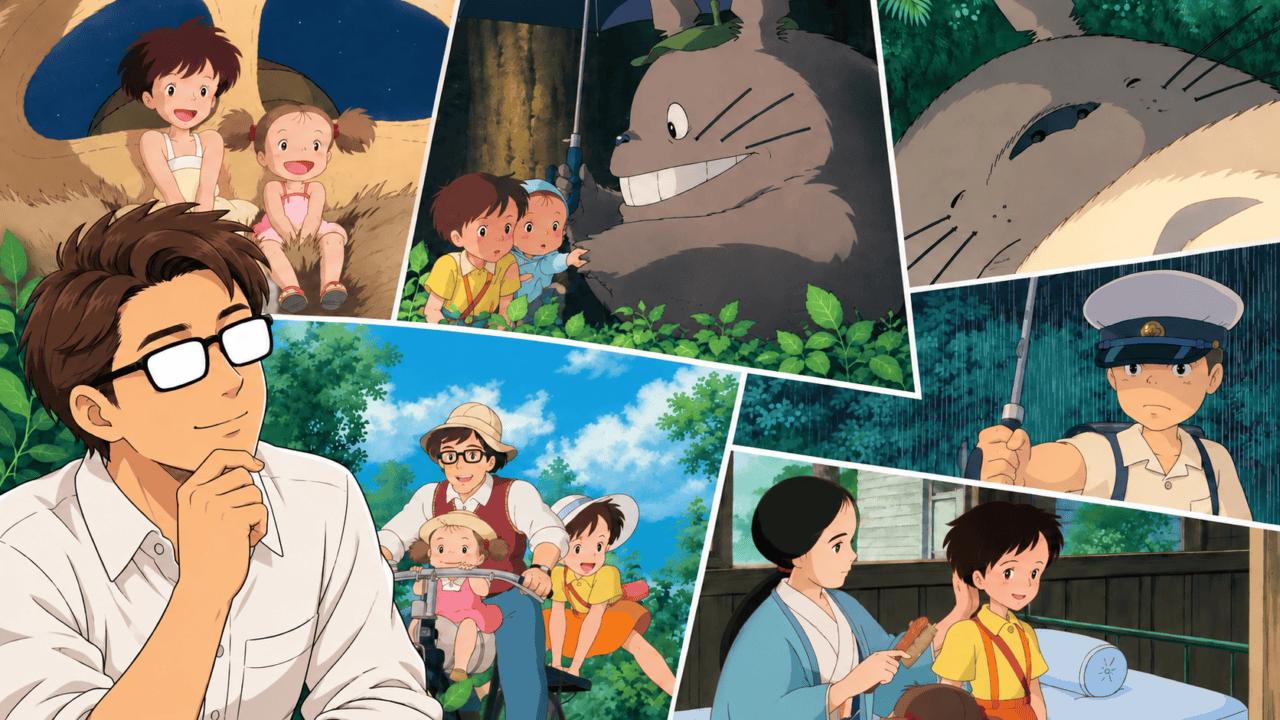
The images used in this article are from the Studio Ghibli Still Images collection.
Can you name the movie before the scene comes into focus?
Put your visual memory to the test with a blurred Studio Ghibli scene.

Reader Comments
Have a thought or interpretation? Leave a comment