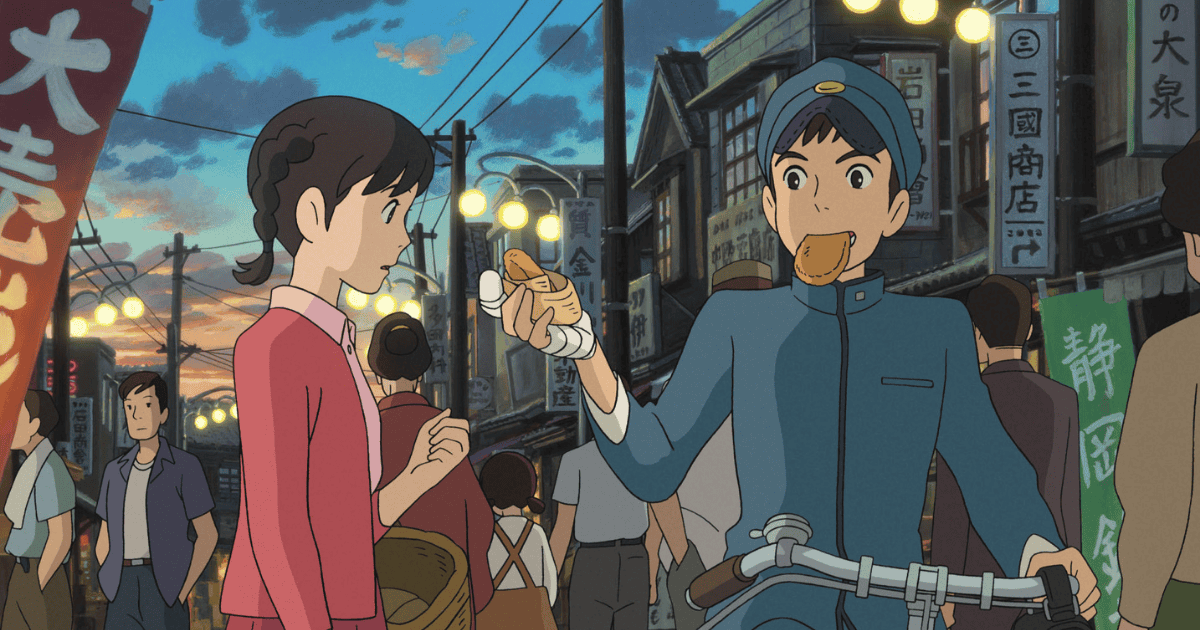
From Up on Poppy Hill (Studio Ghibli Official) is a 2011 animated feature film directed by Gorō Miyazaki.
In this article, I have selected nine of my favorite quotes from the film.
The dialogue in From Up on Poppy Hill often becomes even more interesting when the original Japanese is compared with its English translation. For each quote, I will look at the Japanese line, its romanization, the English subtitle, a literal translation, and what the dialogue tells us about the characters and the story.
These are not necessarily the nine most objectively famous lines in the film. This is a personal selection, and several of them are here simply because they have remained in my memory.
The film’s official English title is:
From Up on Poppy Hill
The Japanese title, Kokuriko-zaka Kara, literally refers to “Coquelicot Hill.” Coquelicot is the French word for a red poppy, while poppy is the broader English term. The flower commonly called hinageshi in Japanese is usually referred to in English as a “common poppy” or “corn poppy.”
Translation note: The English subtitle wording in this article is based on the commercially released Blu-ray available to the author. The English dub is also discussed where its wording creates a meaningful difference. Subtitle and dub wording may vary between releases and territories.
▼ Read the full story and analysis behind these quotes
On this pageContents
Umi Matsuzaki Quotes in Japanese and English
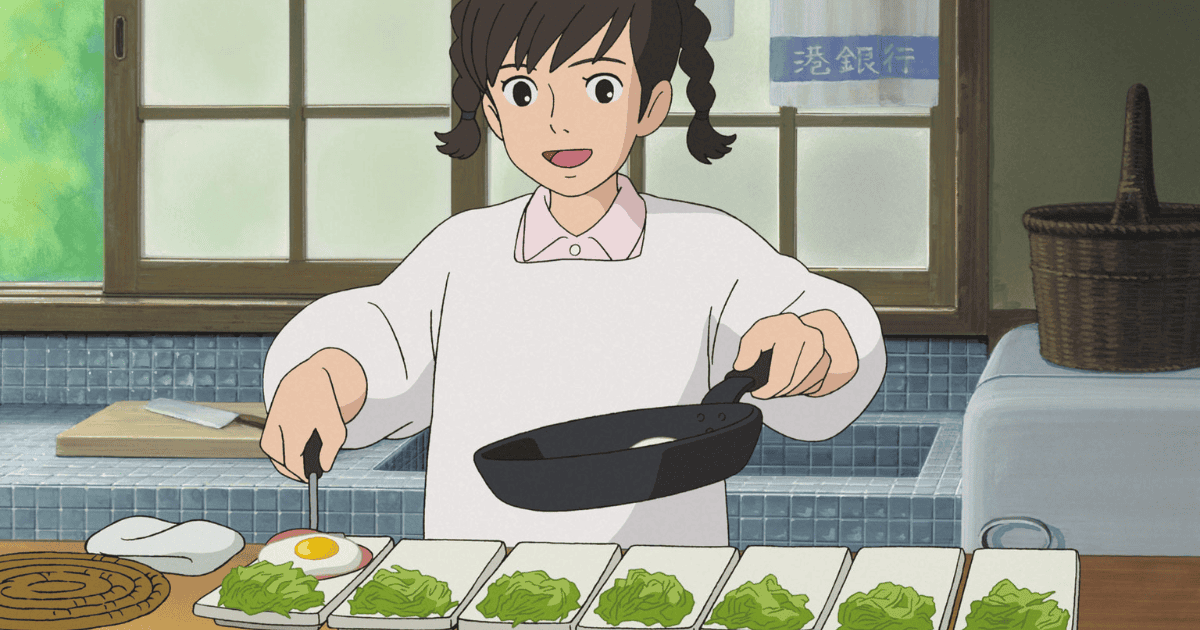
“If you don’t like me, just say so.”
嫌いになったのならはっきりそう言って!
Kirai ni natta no nara hakkiri sō itte!
If you don’t like me, just say so.
If you’ve come to dislike me, then say so clearly!
Read the Commentary and Analysis
Umi says this to Shun after the two of them have very obviously been getting closer, only for him to suddenly begin acting distant toward her.
Of course, I do not think Umi truly believed that Shun had suddenly come to dislike her. Perhaps there was a one-percent possibility somewhere in the back of her mind, but that was hardly the real point.
What she actually wanted to say was something closer to:
“You already like me, don’t you? Then just say that you like me.”
Unfortunately for Umi, Shun’s answer was not a confession of love.
It was that they might be brother and sister.
From Umi’s point of view, Shun’s strange behavior probably seemed like the perfect opportunity to force the relationship into the open. Under normal circumstances, that instinct would have been entirely reasonable.
Instead, it produced the one answer that neither Umi nor the audience could possibly have expected.
Even Shun’s later statement that “there’s nothing we can do” can, in its own extremely difficult-to-understand way, be interpreted as a confession of love.
The Japanese phrase kirai ni natta is slightly stronger and more specific than simply “don’t like me.” It literally means that someone has come to dislike another person, implying a change from the affection that existed before.
The subtitle is shorter, but it preserves Umi’s challenge very naturally.
“I’m in love with you, Shun. Even if we’re related…”
私、風間さんが好き。血がつながっていても、たとえ兄妹でも、ずーっと好き。
Watashi, Kazama-san ga suki. Chi ga tsunagatte ite mo, tatoe kyōdai demo, zutto suki.
I’m in love with you, Shun. Even if we’re related, even if you’re my brother…
I love you, Kazama. Even if we’re related by blood, even if we’re brother and sister, I’ll always love you.
Read the Commentary and Analysis
From the beginning of the film, Umi is portrayed as introspective, restrained, and remarkably controlled.
Here, at last, those emotions burst out.
That alone makes the scene wonderful, but there is another detail that deserves attention:
She says this at a public bus stop.
An ordinary confession of love can take place more or less anywhere.
But shouting “Even if we’re related by blood!” in the middle of town may be approaching a minor violation of the public welfare.
We can only hope that nobody happened to be standing nearby.
The subtitle uses “I’m in love with you,” which is stronger and more explicitly romantic than the Japanese suki taken in isolation.
In this scene, however, there is virtually no ambiguity about what Umi means, so the stronger English expression is entirely appropriate.
The Japanese also ends with zutto suki—“I’ll always love you”—giving the confession an even more absolute quality than the subtitle shown here.
▼ Read more about Umi’s age, voice actor, background, and character analysis
Shun Kazama Quotes in Japanese and English
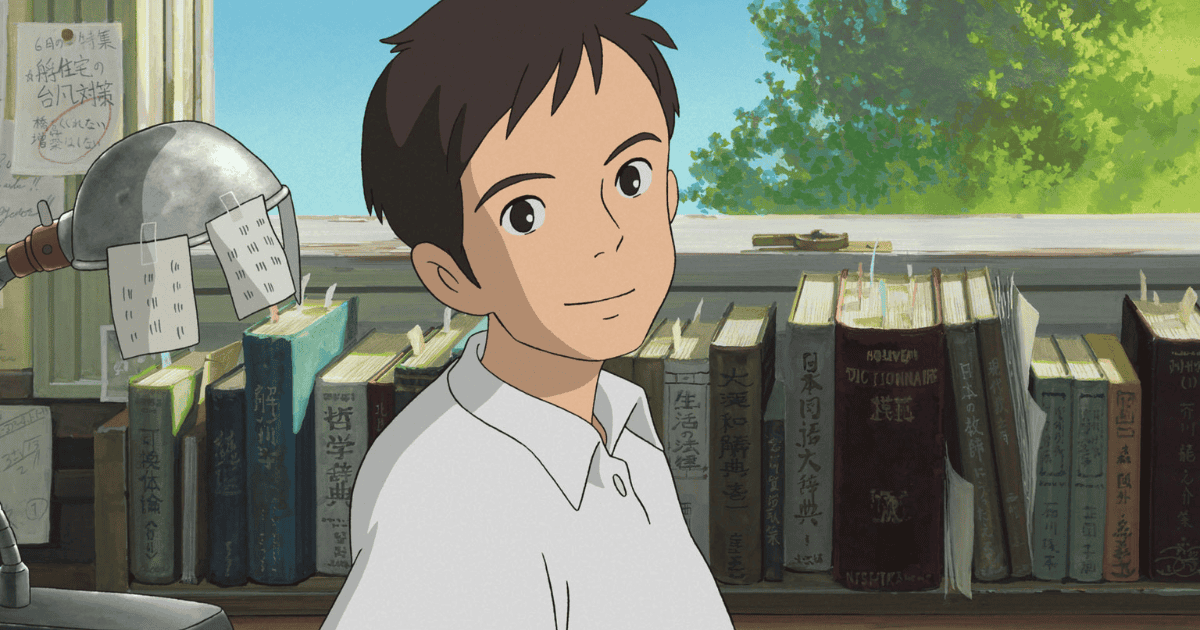
“Destroy the old and you destroy our memory of the past.”
古いものを壊すことは、過去の記憶を捨てることと同じじゃないのか!人が生きて、死んでいった記憶をないがしろにするということじゃないのか!
Furui mono o kowasu koto wa, kako no kioku o suteru koto to onaji janai no ka! Hito ga ikite, shinde itta kioku o naigashiro ni suru to iu koto janai no ka!
Destroy the old and you destroy our memory of the past. Don’t you care about the people who lived and died before us?
Isn’t destroying old things the same as throwing away memories of the past? Doesn’t it mean disregarding the memories of the people who lived and died?
Read the Commentary and Analysis
This line probably expresses one of the central themes of the film.
Shun can say it, and Umi can be deeply affected by it, because both of them carry within themselves memories of people who have died and whom they desperately do not want to forget.
There is, however, another slightly more cynical way to look at the line.
From Up on Poppy Hill was directed by Gorō Miyazaki, but the screenplay was written by his father, Hayao Miyazaki.
By the time Ponyo was released in 2008, Hayao Miyazaki was already 67 years old. It would hardly have been surprising if he had begun to feel that he himself was being regarded as something “old.” He must certainly have been more conscious of his own aging than almost anyone else.
Expressing resentment about that situation directly in one of his own films might have felt rather self-serving.
But this was his son’s film.
Perhaps, as the screenwriter, he simply thought, “Well, here goes,” and put the feeling into Shun’s mouth.
Of course, this is nothing more than my own speculation.
Still, once I remember that Hayao Miyazaki wrote the screenplay, I cannot help hearing something personal behind this line.
The subtitle is not a literal translation of the Japanese rhetorical questions. Instead, it turns the first sentence into the forceful declaration “Destroy the old and you destroy our memory of the past,” which makes Shun sound even more direct.
The second sentence also changes “disregarding the memories of those who lived and died” into “Don’t you care about the people who lived and died before us?” The wording changes, but the emotional accusation remains intact.
“We forget whatever it was we felt about each other.”
どうしようもないさ。知らん顔するしかない。
Dō shiyō mo nai sa. Shiran kao suru shika nai.
We forget whatever it was we felt about each other.
There’s nothing we can do. We have no choice but to pretend nothing happened.
Read the Commentary and Analysis
Shun says this after telling Umi that they may be blood-related siblings and after she asks him what they are supposed to do.
It is an unbearably sad scene, but the precise Japanese wording is excellent.
He does not say, “Nothing will change.”
He says, “There’s nothing we can do.”
Turn that sentence around, and it suggests that somewhere inside him there is very much something he wants to do.
In other words, this may be the most roundabout and difficult-to-understand confession of love in the world.
What an extraordinarily restrained young man.
The subtitle is considerably more interpretive than the Japanese.
Shiran kao suru literally means to “make an unknowing face”—in other words, to pretend not to know, notice, or acknowledge something.
Shun is therefore not saying that their feelings will simply disappear. He is saying that they have no choice but to behave as though those feelings do not exist.
The English subtitle expresses the practical result—“We forget whatever it was we felt about each other”—but the Japanese wording makes the emotional suppression more explicit.
▼ Read more about Shun’s age, voice actor, background, and character analysis
Shirō Mizunuma Quote in Japanese and English
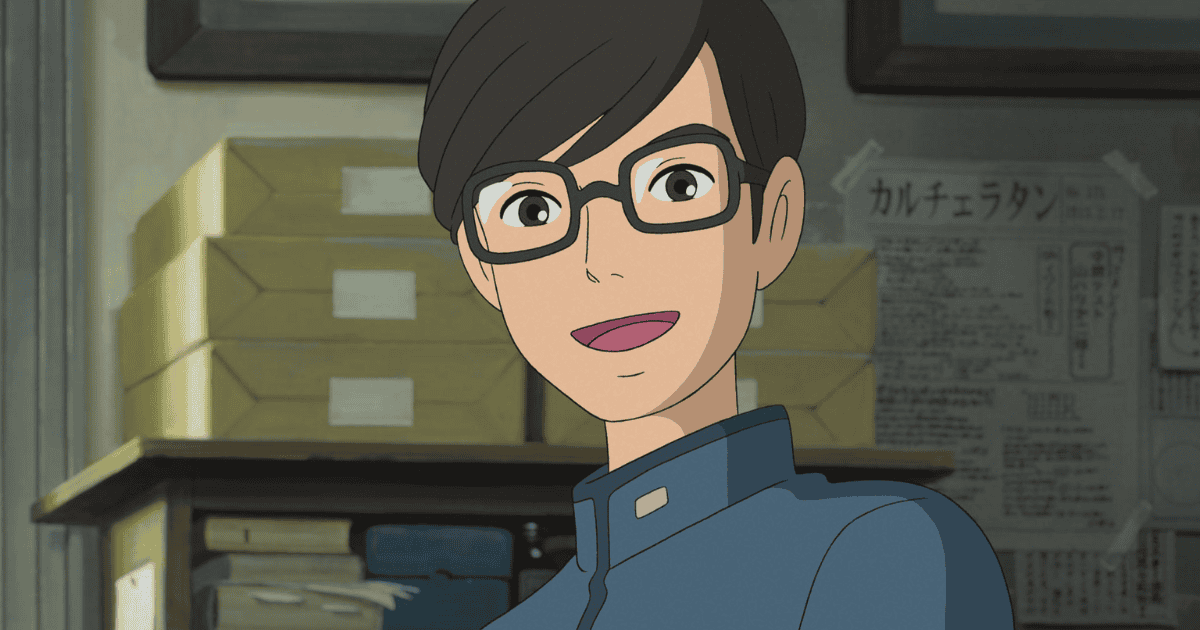
“Something very important is happening to both of them.”
閣下、あの2人に人生上の重大事が発生しました。2人は駆けつけねばなりません。
Kakka, ano futari ni jinseijō no jūdaiji ga hassei shimashita. Futari wa kaketsukeneba narimasen.
Please excuse them, sir. Something very important is happening to both of them.
Your Excellency, a matter of great importance in their lives has arisen. The two of them must hurry there.
Read the Commentary and Analysis
Shirō Mizunuma appears at several crucial moments throughout From Up on Poppy Hill as Shun’s friend—or perhaps it would be more accurate to call him Shun’s best friend.
His actions have already shown us throughout the film that he is an exceptionally loyal friend.
This line is the final confirmation.
If you are going to choose a friend, choose someone like Mizunuma.
And when someone important to you needs a friend, try to be Mizunuma.
Then again, Shun’s own character is probably what allowed him to attract a friend like Mizunuma in the first place.
Perhaps we cannot meet people like that unless we first try to live honestly ourselves.
The humor of the Japanese comes partly from its absurd formality. Mizunuma addresses Chairman Tokumaru as kakka, “Your Excellency,” and describes the situation as a jinseijō no jūdaiji—literally “a matter of great importance in their lives.”
The subtitle naturally reduces that grandiose phrasing to “Something very important is happening to both of them,” but the solemnity of the original is part of what makes Mizunuma so entertaining here.
▼ Read more about Shirō Mizunuma’s voice actor, background, and character analysis
Chairman Tokumaru Quote in Japanese and English
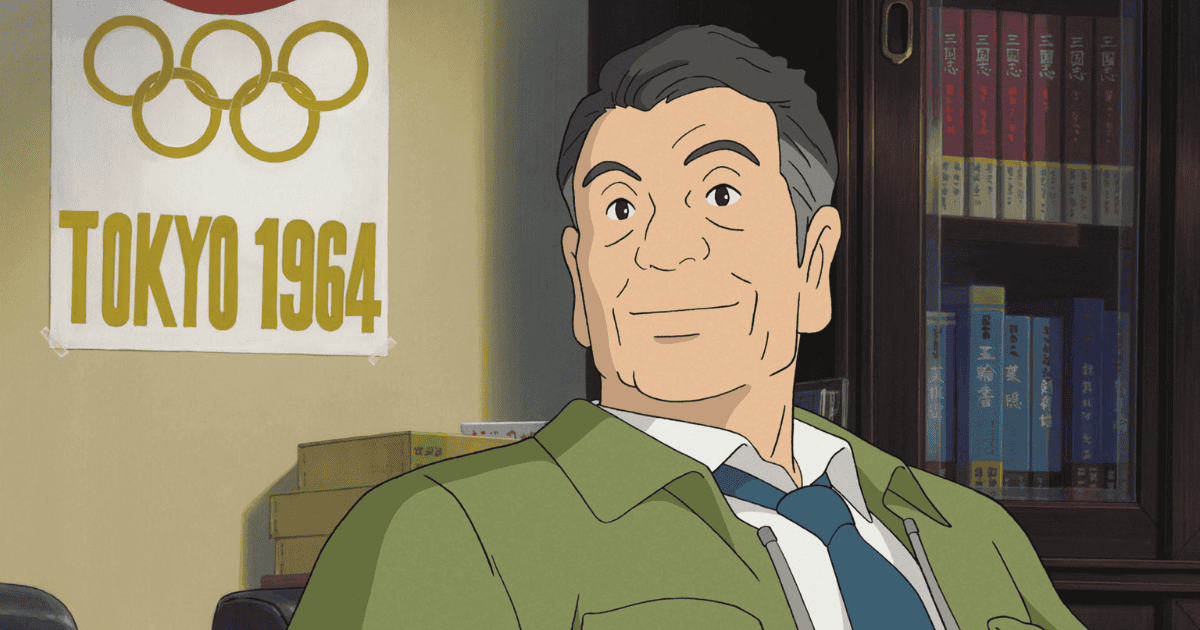
“Escape… It’s great to be young.”
「エスケープ」か、青春だな。
“Esukēpu” ka, seishun da na.
Escape… It’s great to be young.
“Escape,” huh? Ah, youth.
Read the Commentary and Analysis
From Up on Poppy Hill contains an unusually large number of adults who make me think, “I would like to become that kind of person someday.”
And the adult who completely steals the best part may be Chairman Tokumaru.
Still, as the film itself explains, the decision to demolish the Latin Quarter was made by the board.
That means Tokumaru himself had agreed to the demolition.
There was, of course, no mysterious plan to build a new school building that he had been hiding from everyone.
The person who changes Tokumaru’s mind is Umi.
More precisely, perhaps what defeats him is the memory of Yūichirō Sawamura, who died leaving Umi behind, and the sight of Umi having grown into such an admirable young woman while carrying her father’s memory with her.
Tokumaru is moved by that feeling.
And the fact that he is still capable of responding to someone else’s sincere feelings is exactly what makes him the kind of adult one can admire.
The Japanese seishun da na literally means something like “Ah, youth” or “That’s youth for you.”
The subtitle expands it into “It’s great to be young,” which sounds natural in English and captures Tokumaru’s amused affection toward the students.
▼ Read more about Chairman Tokumaru’s voice actor, background, and character analysis
Hana Matsuzaki Quote in Japanese and English
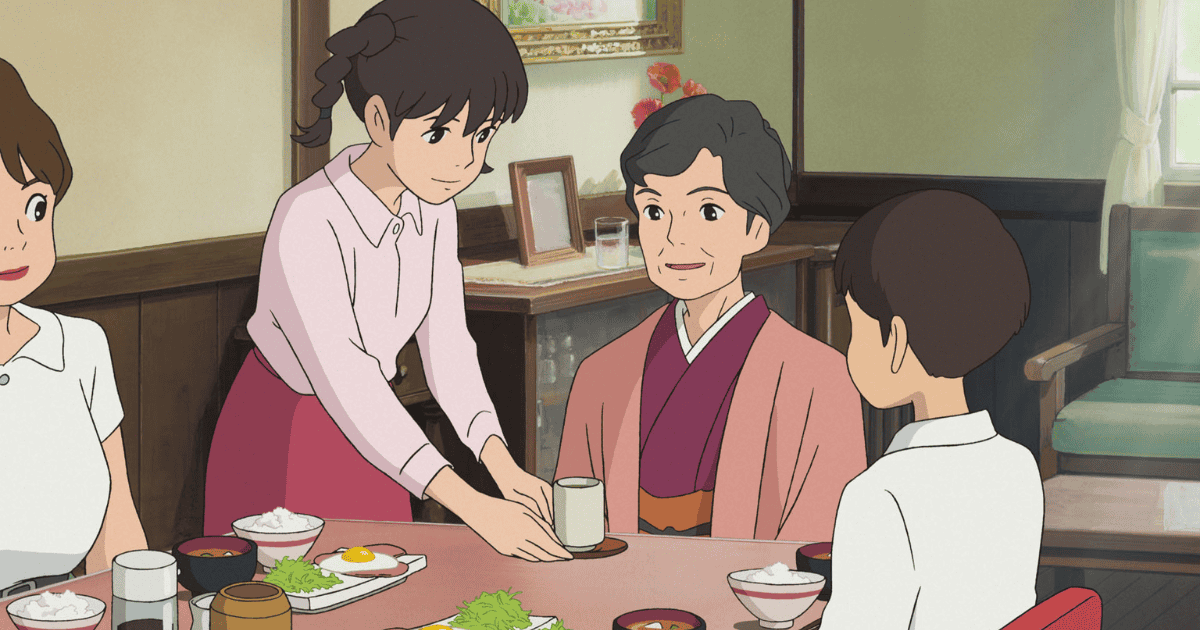
“I hope you find someone wonderful soon.”
素敵な人ができて、あなたが旗を上げなくてすむようになったらいいのにねえ。
Suteki na hito ga dekite, anata ga hata o agenakute sumu yō ni nattara ii noni nē.
I hope you find someone wonderful soon. Then you won’t need those flags anymore.
I hope someone wonderful comes into your life, so that you no longer have to raise those flags.
Read the Commentary and Analysis
Hana says this because she worries about her granddaughter Umi, who continues to raise the signal flags every morning in memory of her dead father.
On the surface, the line appears to foreshadow the ending of the film.
Umi will find someone wonderful, fall in love, and finally stop raising the flags.
Or at least, that is what we expect.
But that is not what happens.
At the end of the film, Umi is still raising the flags.
And yet the act is no longer sad in the same way. Hana probably no longer needs to look at her granddaughter and worry.
At the beginning, Umi raises the flags because she is bound to the past through her dead father. At the end, she can also raise them toward Shun, someone who exists in her present.
Hana’s line looks exactly like conventional foreshadowing, but the film never resolves it in the conventional way.
I think that makes the ending happier, not sadder.
Umi has learned how to live in the present without forgetting the past.
The subtitle is very close to the meaning of the Japanese. The phrase suteki na hito ga dekiru literally means for a “wonderful person” to appear in one’s life, but in context it clearly implies finding a romantic partner.
▼ Read more about Hana Matsuzaki’s voice actor, background, and character analysis
Akio Kazama Quote in Japanese and English
“You’re my son.”
お前は俺の息子だ。
Omae wa ore no musuko da.
You’re my son.
You are my son.
Read the Commentary and Analysis
This may be my favorite line in all of From Up on Poppy Hill.
Akio Kazama is an extraordinarily restrained, almost blunt man—the sort of person who immediately makes you think of the phrase “an old-fashioned man.”
And yet this single sentence makes the depth of his love for Shun unmistakable.
It is the kind of line that makes me think this is the sort of man I would like to be.
In any case, I do not have children.
There is almost nothing to explain linguistically. The Japanese is every bit as short and direct as the English.
Omae and ore are both masculine, blunt pronouns, which fit Akio’s personality perfectly. There is no speech, no explanation, and no emotional ornament.
Just: “You are my son.”
▼ Read more about Akio Kazama’s voice actor, background, and character analysis
Yoshio Onodera Quote in Japanese and English
“Meeting you two is like seeing my old friends again.”
立花と澤村の息子と娘に会えるなんて嬉しい、ありがとう。こんな嬉しいことはない。
Tachibana to Sawamura no musuko to musume ni aeru nante ureshii. Arigatō. Konna ureshii koto wa nai.
Meeting you two is like seeing my old friends again. Thank you both. I’ve never been so happy.
I’m so happy to meet Tachibana’s son and Sawamura’s daughter. Thank you. Nothing could make me happier.
Read the Commentary and Analysis
This is the line that closes From Up on Poppy Hill.
For some reason, I almost always find myself crying when I hear it.
Putting the reason into words is surprisingly difficult.
But I think the root of it lies in what Onodera sees when he looks at Umi and Shun.
Umi and Shun—and, of course, all of us as well—exist because people before us desperately tried to protect life and pass it onward.
And after everything that happened, these two children have grown into admirable young people.
Looking at them, perhaps we feel that all those efforts finally bore fruit.
From Up on Poppy Hill is a story about people who struggled to pass life from one generation to the next.
And that is why seeing the result of those efforts can bring us to tears.
The English subtitle makes an interesting interpretive addition.
The Japanese says directly that Onodera is happy to meet “Tachibana’s son and Sawamura’s daughter.” It does not literally say that meeting them feels like seeing his old friends again.
The subtitle turns the emotional implication into explicit language: when Onodera looks at Shun and Umi, he sees something of Tachibana and Sawamura still alive in them.
It is not a literal translation, but it beautifully expresses the reason his happiness is so overwhelming.
▼ Read more about Yoshio Onodera’s voice actor, background, and character analysis
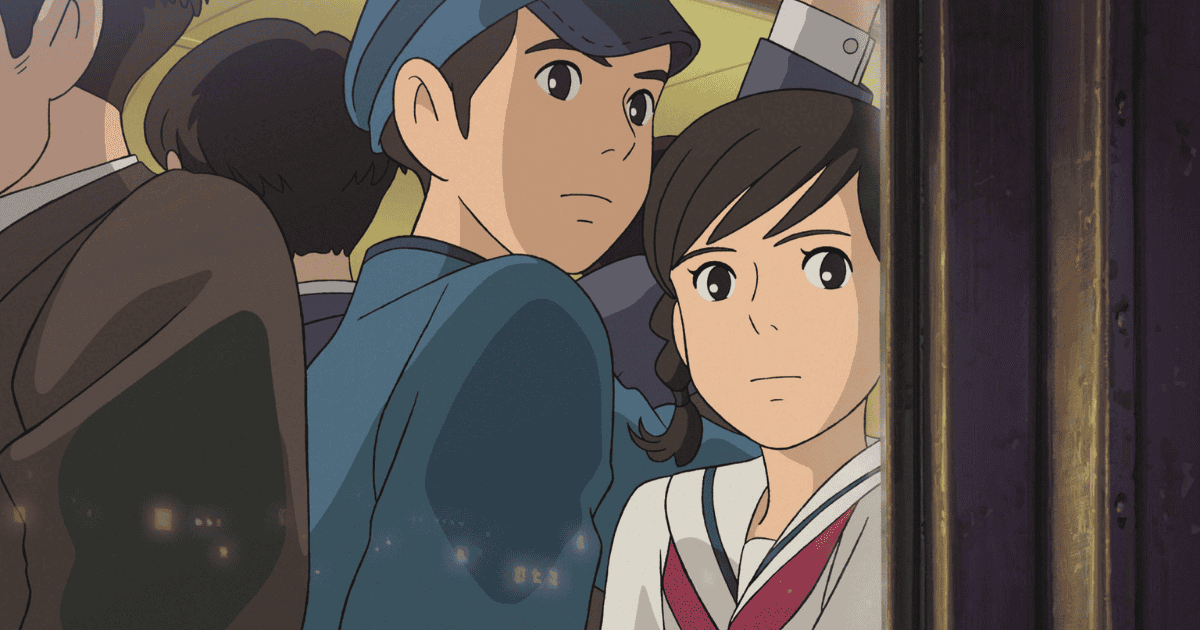
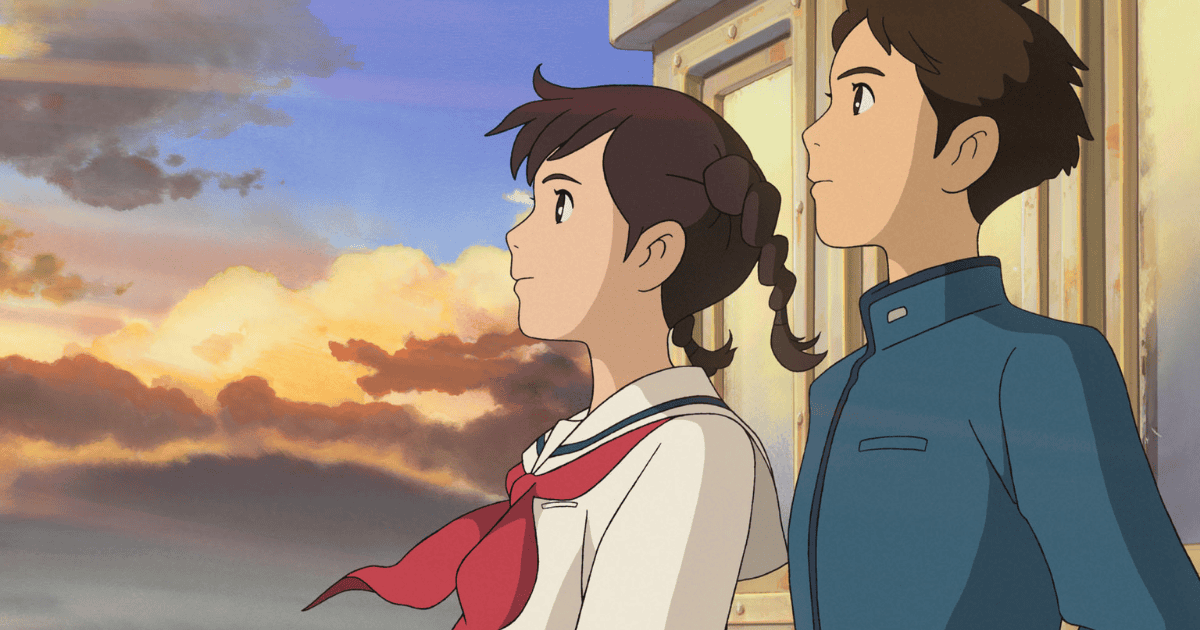
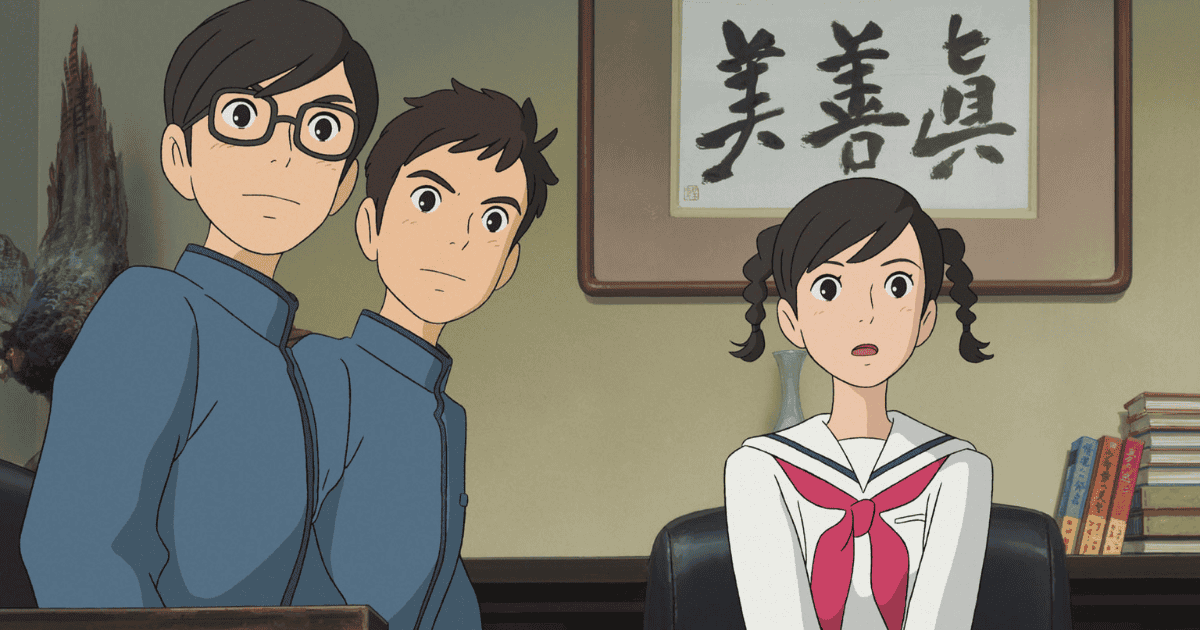
The images used in this article are from the Studio Ghibli Works Still Image Collection.
Can you name the movie before the scene comes into focus?
Put your visual memory to the test with a blurred Studio Ghibli scene.
Reader Comments