
Hideaki Anno’s Evangelion series reached its conclusion with Evangelion: 3.0+1.0 Thrice Upon a Time (Official) in 2021. Hayao Miyazaki’s Princess Mononoke (Studio Ghibli Official), released in 1997, helped establish the Ghibli and Miyazaki names for the general public. Here I want to consider a connection between the two films.
*This is a translated version. The original (Japanese) is available here.
I want to explore one way of viewing the film: perhaps Evangelion: 3.0+1.0 finally reached the place that Princess Mononoke had reached years earlier.
I have already written about the relationship between the two works in this article:
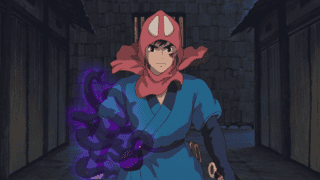
That earlier piece was written before Thrice Upon a Time came out and leaned more toward Mononoke. At the time of writing this article, nearly a year had passed since the Eva finale, so I wanted to return to the comparison. There will be no attempt to avoid spoilers for either film.
For a refresher, see our synopsis and overall analysis of Evangelion: 3.0+1.0.
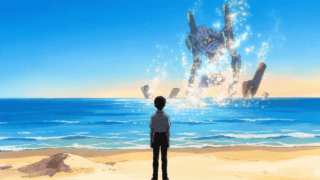
*This is a translated version. The original (Japanese) is available here.
- A Place for Wounded People
Both works show people carrying pain and difficult pasts. I see NERV and Irontown as places where those people can belong. - The Difference: A Form of Salvation
In Princess Mononoke, Ashitaka finds hope in San. To me, Evangelion, through The End of Evangelion and Evangelion: 3.0 You Can (Not) Redo, leaves Shinji without an equivalent source of hope. - Mari as Shinji’s “San”
I read Mari as the “San” who lets Shinji step outside his closed circle. Their running together suggests the beginning of a new life. - Village-3 and Irontown
Both communities live with hardship yet show consideration for others. Perhaps that way of living gives Shinji a model for beginning again. - Megumi Ogata’s “Goodbye”
Ryunosuke Kamiki voices adult Shinji, but I think Ogata’s “Goodbye, all of Evangelion” can be heard as the story’s real ending: Eva begins with her and ends with her.
On this pageContents
NERV and Irontown: Places for Wounded People
Let us begin with what the two works share, thinking first of Shinji and the other characters in Evangelion. Their most important connection may be the suffering of their characters.
NERV: Looking Away from Their Own Wounds
Shinji grows up without his parents’ affection and struggles to find his own worth. When he finally meets Gendo again, his father does not even say, “Sorry I made you lonely, Shinji.” Instead, he orders, “Get in the Eva”—an instruction with an IQ of negative infinity.
Misato and the other adults at NERV carry wounds and frustrations of their own. They have little room to think about the guilt or contradictions of sending a fourteen-year-old to the front line, though they may sometimes gesture toward it. Perhaps placing themselves in the struggle against the Angels lets them look away from their own problems. They have to fight to survive, leaving little room for sympathy, much less care for Shinji’s emotional state.
In a sense, NERV may be a gathering place for wounded people.
This picture of NERV concerns the characters other than Shinji, through Evangelion: 3.0. Shinji himself becomes remarkably positive once: at the end of the TV series. The more I think about it, the more it seems that the story had already ended properly there. If we had accepted that ending, perhaps everyone could have been happy.
Irontown: Choosing How to Live with Pain
Ashitaka in Princess Mononoke is also thrown into a terrible predicament.
He defeats the demon attacking his village, only to receive its curse. Surely his achievement deserves to be remembered forever. Perhaps it is, but he does not get to spend his days enjoying that glory: the village sends him away under its laws because of the curse he had no choice but to receive. Following the elder’s advice, he heads west, with no guarantee that he will find a cure.
Eventually he reaches Irontown, where people live who have nowhere else to go. Like the people at NERV, they carry wounds and frustrations, though they say little about them. Lose Irontown, and they lose their last refuge. The work there is harsh, but more bearable than life elsewhere. Perhaps this suffering they actively take on is their equivalent of fighting the Angels. Being busy may briefly free a person from reality.
The Difference: Is There “Good News”?
Both stories contain people in pain, but they depict them differently. In Evangelion, beginning with Shinji, the characters show their suffering and lash out at others when they hurt.
In Princess Mononoke, by contrast, I see people hiding their own pain and smiling at whoever is in front of them. Eboshi shows some irritation with Ashitaka, but given the hardship I imagine she has endured, perhaps it is understandable that she cannot sympathize with his troubles.
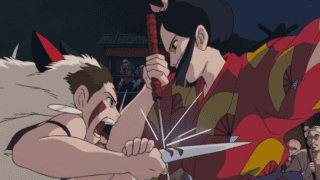
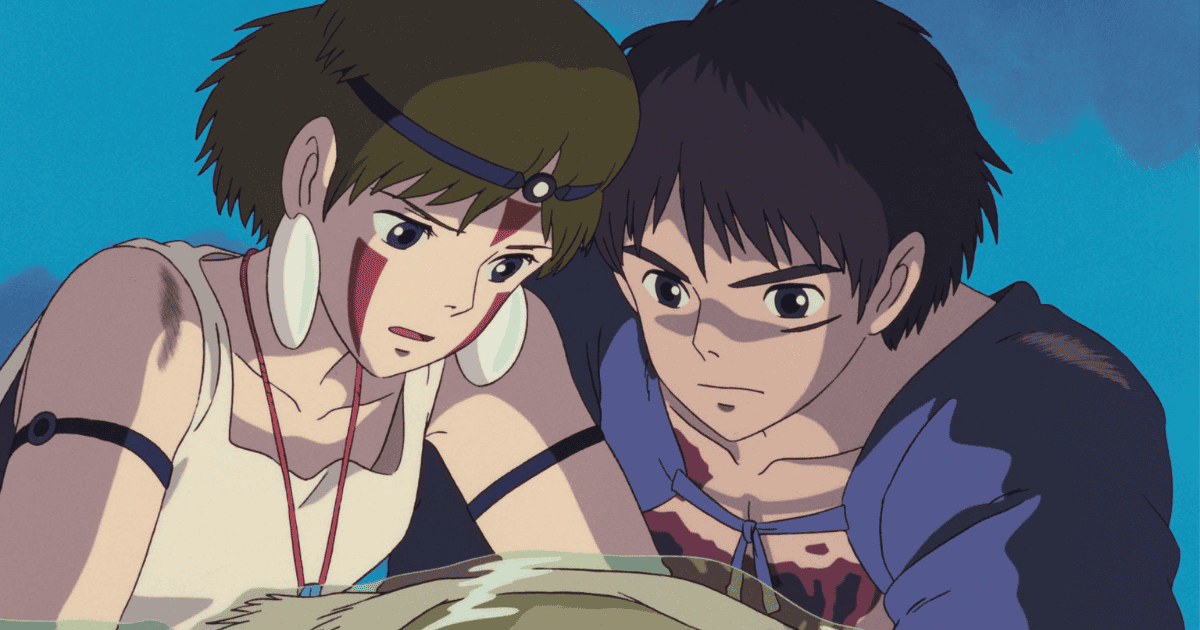
The most important difference may be this: Ashitaka meets San, but even by Evangelion: 3.0, Shinji has not met his “San.”
San: Ashitaka’s “Good News”
Compared with the seemingly hopeless story of The End of Evangelion, Princess Mononoke has San as its “good news.”
Neither work ultimately offers a solution. Perhaps the world was so painful to their creators at the time that a solution was not something they could honestly present. Looking back, that insight is impressive—though we might have been happier if it had been less impressive. Even so, Ashitaka meets San. It is hard to say everything she means, but to me she is his good news.
Ashitaka travels west in search of relief from his curse, and the Forest Spirit Jigo tells him about must seem like a slender thread of hope. But the Forest Spirit does not heal him. At that point, I think Ashitaka accepts his fate and chooses to devote the rest of his life to San. At the end, his curse has faded but remains: perhaps an image of society as a collection of problems that cannot be solved. Even so, his life has been prolonged, and he can spend it for San. She is his good news.
The Old Eva Ending: No Salvation, and “Disgusting”
One of the main reasons we could not graduate from Evangelion was surely that final “Disgusting” in The End of Evangelion.
Many mysteries had already been explained by then: at least Gendo’s aims and what Instrumentality was meant to achieve were clear. Yet we did not feel we had come to terms with the story. The reason, I think, is simple: Shinji chooses reality despite everything, but does not seem to be saved.
We watch the series as Shinji’s story, so being met with “Disgusting” at the end hardly gives us the satisfaction of a conclusion. He needed some form of salvation. In fact, the TV ending had given him one: he finally realized, “It’s okay for me to be here!” Perhaps our inability to accept that led to the old film. Sorry, Director Anno. Shinji had tried hard in the TV series, too. The film then left him apparently without hope. In Evangelion: 3.0, he again sets off on a journey with no destination, like Ashitaka. Asuka being a little kinder than before might count as a faint hope, but the journey remains one of despair.
Mari Makinami: Shinji Finally Meets His “San”
Through Evangelion: 3.0, the story offered little salvation. But in Thrice Upon a Time, I see just such a source of hope: Mari Makinami Illustrious.
I doubt I was the only person puzzled by Mari’s sudden arrival in the Rebuild series. Until the final film, I did not understand why she was needed.
Through this comparison, however, I can see her role: Mari is Shinji’s “San.”
San, someone outside Ashitaka’s previous life, brings his aimless journey west to an end. Likewise, perhaps Shinji needs someone new from outside his existing world to escape the cursed journey called Evangelion. Without that, he might repeat the same pattern forever. Looking back, the loop theories seem natural: Mari was the key to breaking that loop and finding something new for Shinji.
To me, Shinji’s and Ashitaka’s suffering represents something beyond their control and not of their own making. Yet the endings differ. San lets Ashitaka move toward a new future; through Evangelion: 3.0, Shinji remains in a world where nothing can be done about his suffering. In the final scene, running with Mari, he finally runs toward a new future despite everything. It will not all be bright. New kinds of hardship will probably await them. Still, they take a new step together. Perhaps Eva finally arrived, in 2021, at the place Mononoke had reached.
Village-3: Irontown in the World of Eva
The Shinji–Mari and Ashitaka–San comparisons matter, but Village-3 may matter even more. It looks like a new version of Tokyo-3, or of the world surrounding Shinji. To me, it is Evangelion‘s Irontown.
The people of Tokyo-3 and NERV are, in this reading, too occupied with their own problems to spare much thought for others. The people of Irontown are just as overwhelmed, yet smile at whoever stands before them. Life at the bellows is hard, even if it is better than what came before. Village-3 is similar. Trace its hardships back, and Shinji bears responsibility, yet its residents work to live, keep their pain to themselves, and face each day positively.
Perhaps their way of living becomes Shinji’s model and leads him toward the possibility of starting over, however many times it takes. Seen through these pairs—Ashitaka and San, Shinji and Mari, Irontown and Village-3—the finale looks to me like Eva finally reaching Mononoke.
Why Could Eva Reach Mononoke? Marriage and the Creator
The remaining question is why Evangelion could reach this conclusion. Put another way, why could Shinji finally meet Mari?
Racking my rather limited brains, I keep coming back to Anno’s marriage to manga artist Moyoco Anno.
Perhaps Miyazaki and Anno both caught something of the same late-1990s world. Taking a slightly slanted view, perhaps Eva even helped Miyazaki recognize it. Yet their endings were strikingly different. Could marriage have mattered? Miyazaki was already married, with grown children, and could make a film that said, “San is there!”
Anno was hardly incapable of attracting a partner, but he had not yet married or found a lifelong companion. Perhaps that was part of why The End of Evangelion ended with “Disgusting.” Later, experiencing the joy of marriage may have let him bring in Mari, much as Mononoke had San.
Of course, I have no idea what goes on inside Anno’s mind, and what I have written here is probably wrong. Still, I cannot help seeing it that way.
One More Thought: Why Didn’t Megumi Ogata Voice Shinji at the End?
Another point worth considering is that the voice of Shinji in the final scene of Thrice Upon a Time is Ryunosuke Kamiki.
For us in the audience, the change makes sense. It lets us feel, “Ah, things have changed. Evangelion is ending!”
But how might Megumi Ogata, who had voiced Shinji since the TV series, have felt? Why was her voice not the last voice in the work? Perhaps she had at least a question, or some dissatisfaction, about that.
Watching the production documentary and reading her remarks, I get the impression that something remained unresolved for her. That is my impression, though, not proof of how she felt about the casting decision.
Ogata’s last great line is “Goodbye, all of Evangelion.” It plainly expresses the film as a story in which we say goodbye to Eva, but it is not technically the last line.
Part of me wishes the words that closed the series had been Ogata’s, and feels they should have been. Yet there is another way to see it: if Neon Genesis Evangelion ends with that goodbye, then her line really does conclude the story.
Afterward, we are in an entirely different world without Evangelion. From that perspective, one could even argue that having Ogata voice the Shinji of that world would be wrong.
Perhaps, then, our Evangelion began with Ogata and ended with Ogata. I do not know how she herself feels about it.
P.S.
For people other than Hideaki Anno, perhaps the right expression is not that we said goodbye, but that we were made to say goodbye. That might also have something to do with the unresolved feeling I sensed in Ogata.
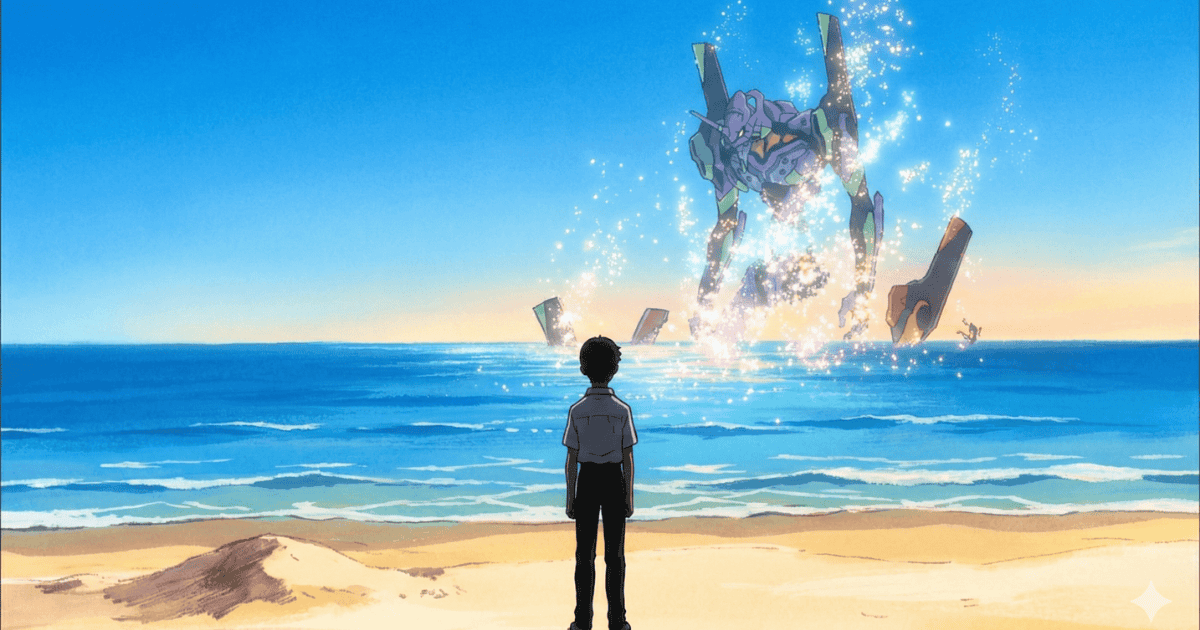
For a closer character study, see our analysis of Asuka’s feelings, using Moro and Okkoto from Princess Mononoke as points of comparison:





Reader Comments