
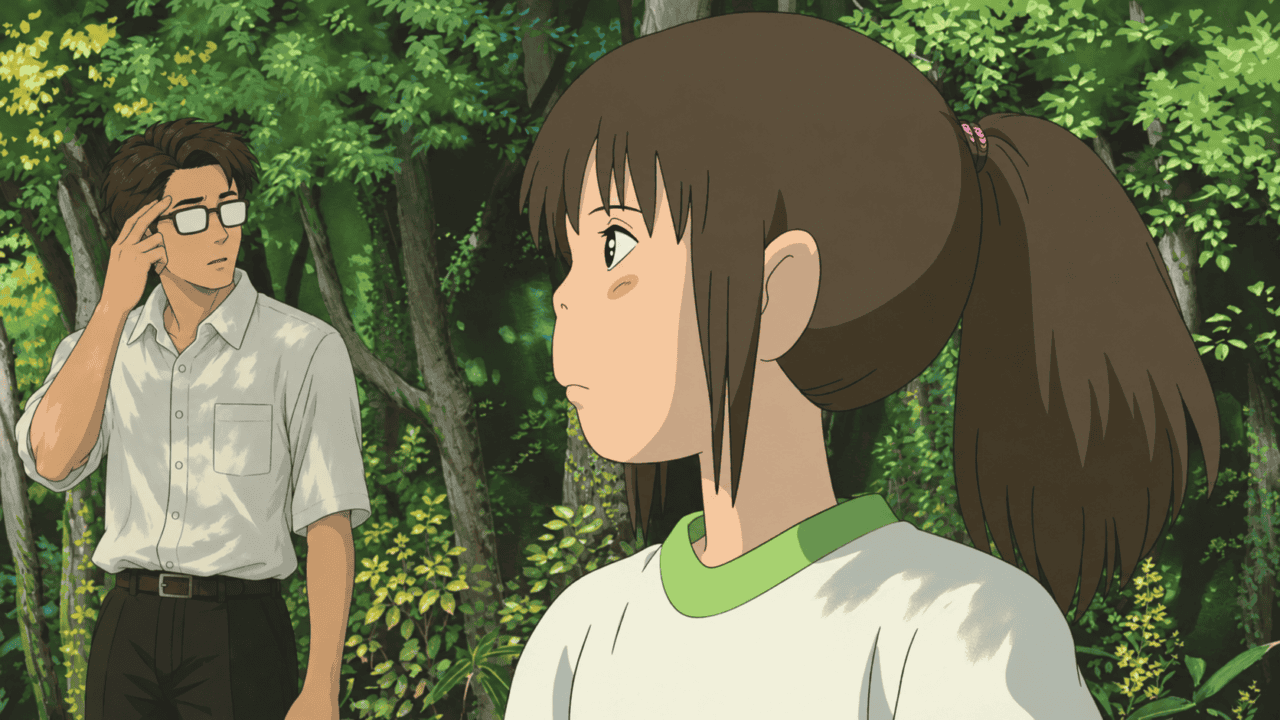
Hayao Miyazaki’s Spirited Away (Official Studio Ghibli Website) was released in 2001. Ghibli’s films attract many urban legends; on this blog, I sometimes write things that resemble them under the name of “analysis.”
Urban legends are usually discussed in terms of truth or falsehood, belief or disbelief. For me, though, the important question is: “Is it interesting?”
By that measure, one Ghibli legend stands out: the “phantom ending” of Spirited Away.
I want to revisit the story and consider what makes it so interesting.
*This article proceeds on the assumption that the “phantom ending” is just that: an ending that does not exist.
*This is a translated version. The original (Japanese) is available here.
- The Phantom Ending
An ending that is not in the film circulates online, prompting people to recall images they seem to remember seeing. - How a Memory Is Assembled
The legend reworks details that do appear elsewhere in the film, including references to the movers and images of a river. The pieces fit together so well that I can picture a scene that does not exist. - My Own False Memories
I have mixed scenes together in my memories of Terminator 2 and Patlabor 2 too. These are personal examples of remembering something I never actually saw. - The Fragility of Memory
For me, the legend’s appeal also lies in what it reveals about memory: how uncertain it can be, and how readily familiar images can be rearranged.
On this pageContents
The Phantom Ending of Spirited Away (2001)
The so-called phantom ending concerns a scene some viewers remember but cannot find in the film. The question is what that remembered scene tells us about the experience of watching.
The Outline of the “Fake” Ending
First, let’s recall the ending we all know so well. It goes something like this:
In the car, Chihiro notices that her old hair tie has been replaced by the one Zeniba gave her. She is puzzled, but cannot remember why.
On the way to the new house, the family sees from a hill that the movers have already arrived. Her mother scolds her father: “The movers are already here!”
When they arrive, one of the movers tells them, “It makes things difficult when you’re late.”
Chihiro wanders alone around her new home and finds a stream surrounded by greenery, with a short bridge across it.
Looking down at the stream from the bridge, she suddenly seems to realize something. Is this Haku reborn, or his new home? The story ends on that suggestive note.
How did that sound? In fact, this is the urban legend known as the “phantom ending.” It seems to come from a 2014 thread on 2channel. I remember reading it on an aggregation site years ago.
The actual ending is much simpler:
Chihiro and her parents leave the tunnel and find their car covered in leaves. Her parents head toward it, while Chihiro looks back at the tunnel as though remembering something. Her father calls, and she seems to come to herself, gets into the car, and drives away with them.
That is the ending: no movers, no stream. It is so simple that I almost find myself wondering, “Was that really how it ended?”
To me, its appeal lies in the sadness of Chihiro seeming to have forgotten what happened beyond the tunnel, alongside the hint of hope in the glint of Zeniba’s hair tie.
So why do I find the phantom ending such an interesting urban legend?
What Makes This Legend So Interesting?
For me, the most striking thing is that I can picture the nonexistent scene perfectly.
The ingenuity lies in how it is put together. It makes clever use of scenes and images that really are in the film:
- The Movers: We never see them, but they are mentioned during the opening car journey.
- The View of the New Home: After a wrong turn, the family looks up toward the place they are moving to.
- The River: There is no river at the end, but one does appear in Chihiro’s memory.
I do not know who first invented this ending. But I think it must have been someone with a deep understanding of memory and a considerable gift for writing.
They have brought familiar pieces together in a new sequence. That, to me, is why the invented scene feels so uncannily recognizable.
I think it has a sophistication quite different from legends such as “Totoro is the god of death.”
That concludes my discussion of the phantom ending. But the subject always brings to mind some memories I have fabricated myself, so I want to share those too.
Memories We Invent
Memories can combine images, expectations, and later retellings. Considering those possibilities helps explain why a scene can feel vivid without matching the film.
Terminator 2: Judgment Day (1991)
Early in Terminator 2, John Connor, worried about his foster parents, phones his foster mother. She has already been copied by the T-1000.
As the T-1000 talks to John in her guise, it kills her husband.
In my memory, the T-1000’s index finger stretches into a sharp needle and pierces the top of his head.
In the actual scene, though, its left arm becomes a blade that passes through his head.
There is a clear source for my mistake. Later in the film, the T-1000 stabs Sarah Connor in the right shoulder with an index finger stretched into a long needle. That image left a strong impression on me too.
The two real scenes had become one in my mind. I had combined them into a convenient new image.
If I asked a fan of T2, “Remember the T-1000’s needle-like finger when it kills John’s foster father?” perhaps they would say, “Yes, that’s right!” Memory is a precarious thing.
Patlabor 2: The Movie (1993)
I was also surprised to discover a scene I had invented in Patlabor 2.
Shinobu Nagumo enters an elevator, and a little girl in yellow hurries in too.
For a long time, I thought the girl held a red balloon. I can still replay that false memory vividly.
In fact, she has no balloon.
The balloon comes from The Snow Rondo, an episode of the Patlabor OVA series. A red balloon is a memorable image there, and a woman is shown holding one. Somehow, I had combined those details with the scene in the film.
Snow is a striking feature of both Patlabor 2 and The Snow Rondo. I suspect that similarity helped bring the two memories together. There must be some reason for the way false memories take shape.
That is my account of the phantom ending of Spirited Away and the thoughts it brings with it. Its appeal lies in how interesting it is, but also in its reminder that memory is precarious and can be manipulated.
My own examples remind me of that too: the images feel clear, even when I know they are wrong.
Let’s take care of our memories. Difficult though that may be.
Your Take
What is your view? Choose the answer that comes closest to your own response.
Reader poll
Can you name the movie before the scene comes into focus?
Put your visual memory to the test with a blurred Studio Ghibli scene.


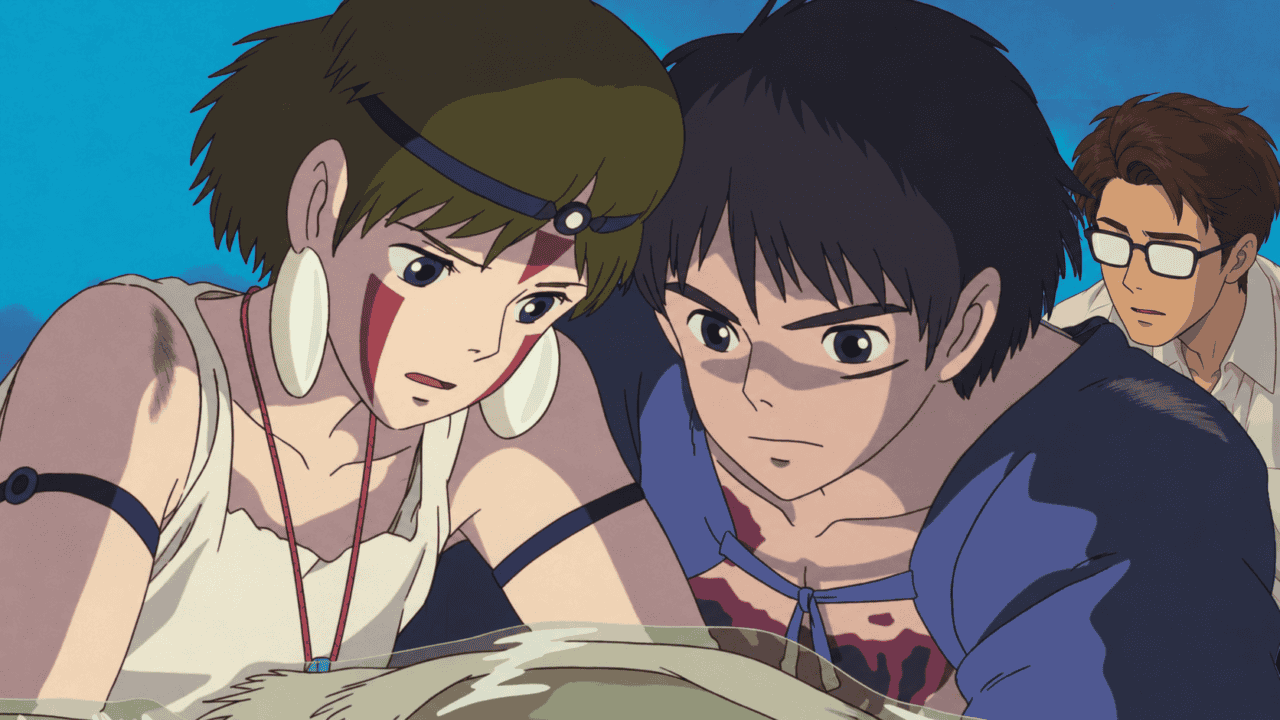
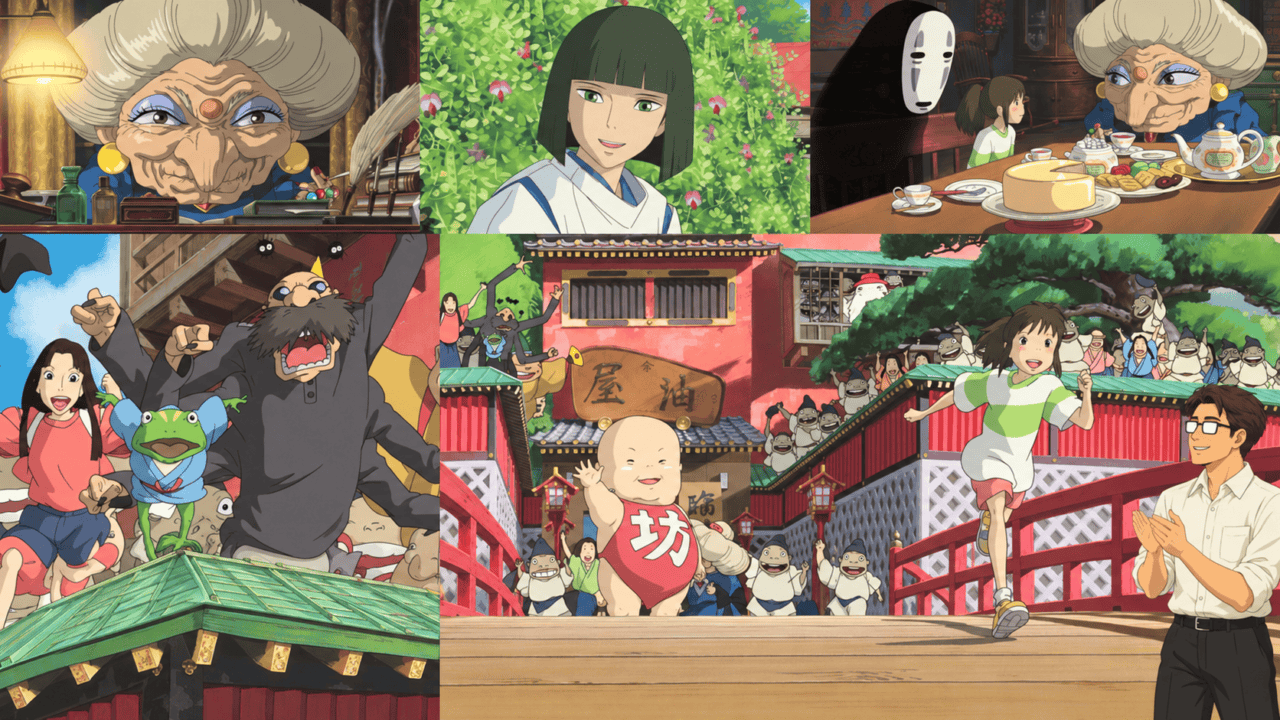
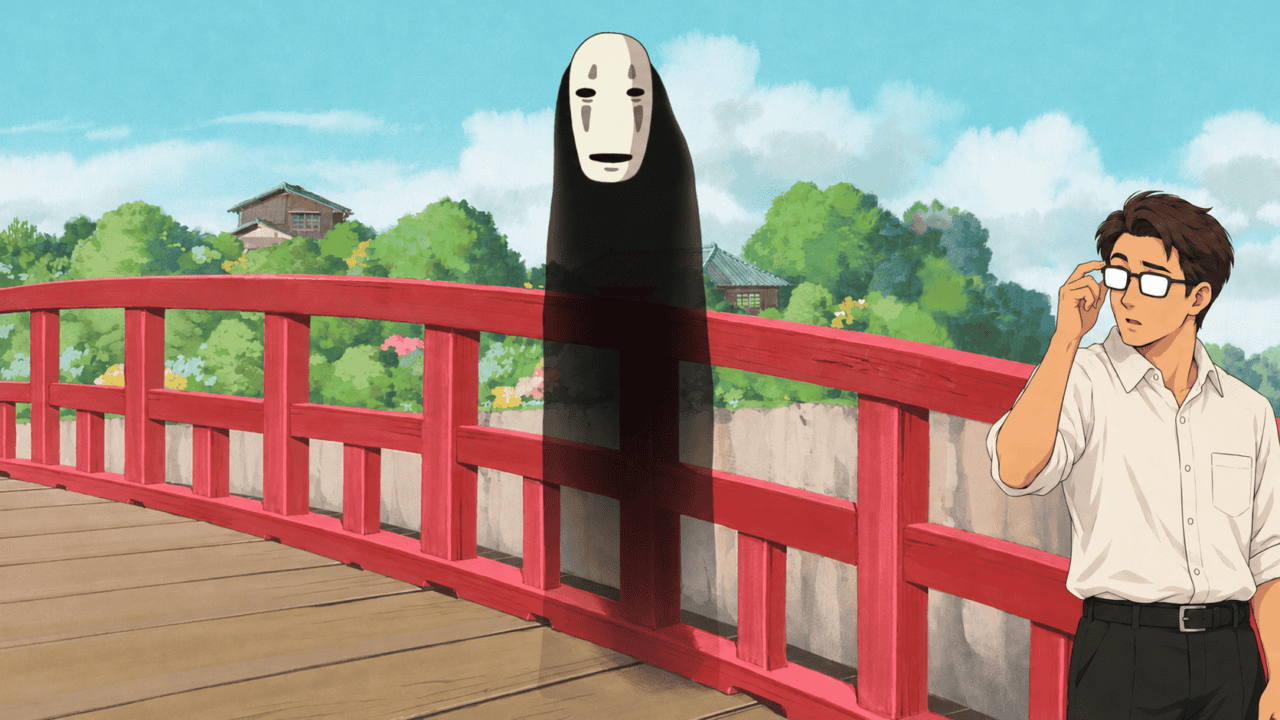
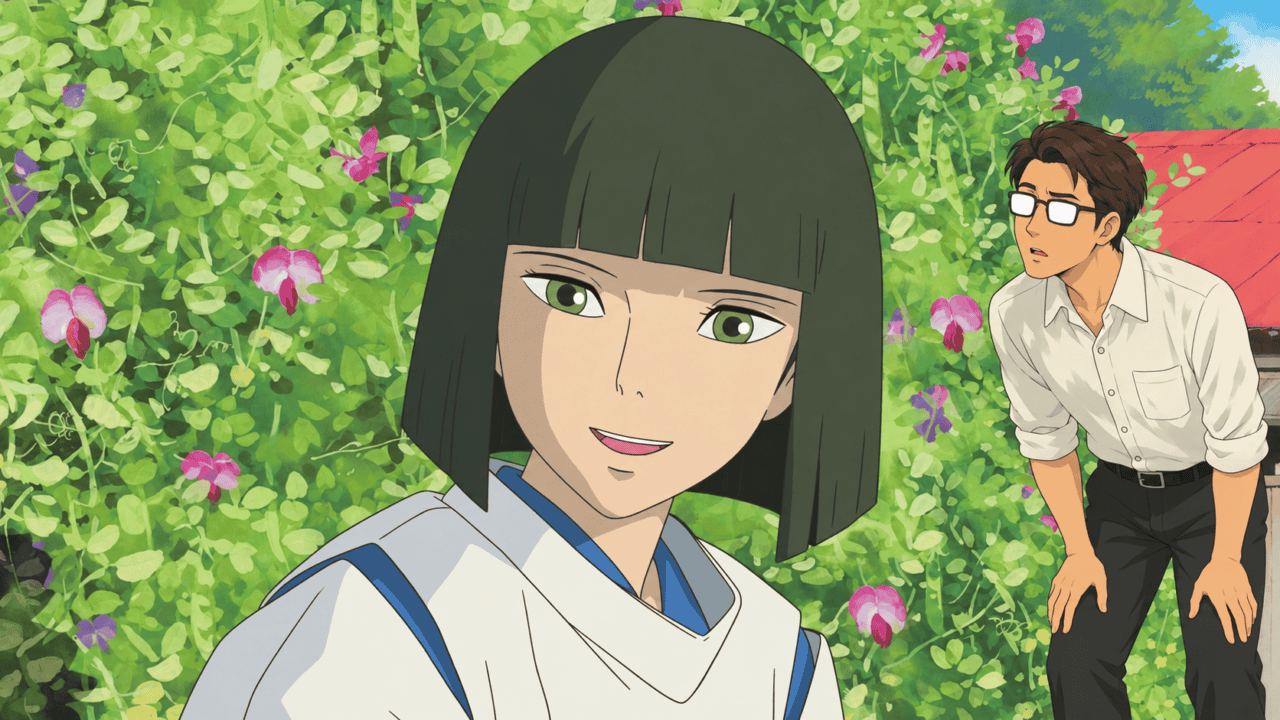
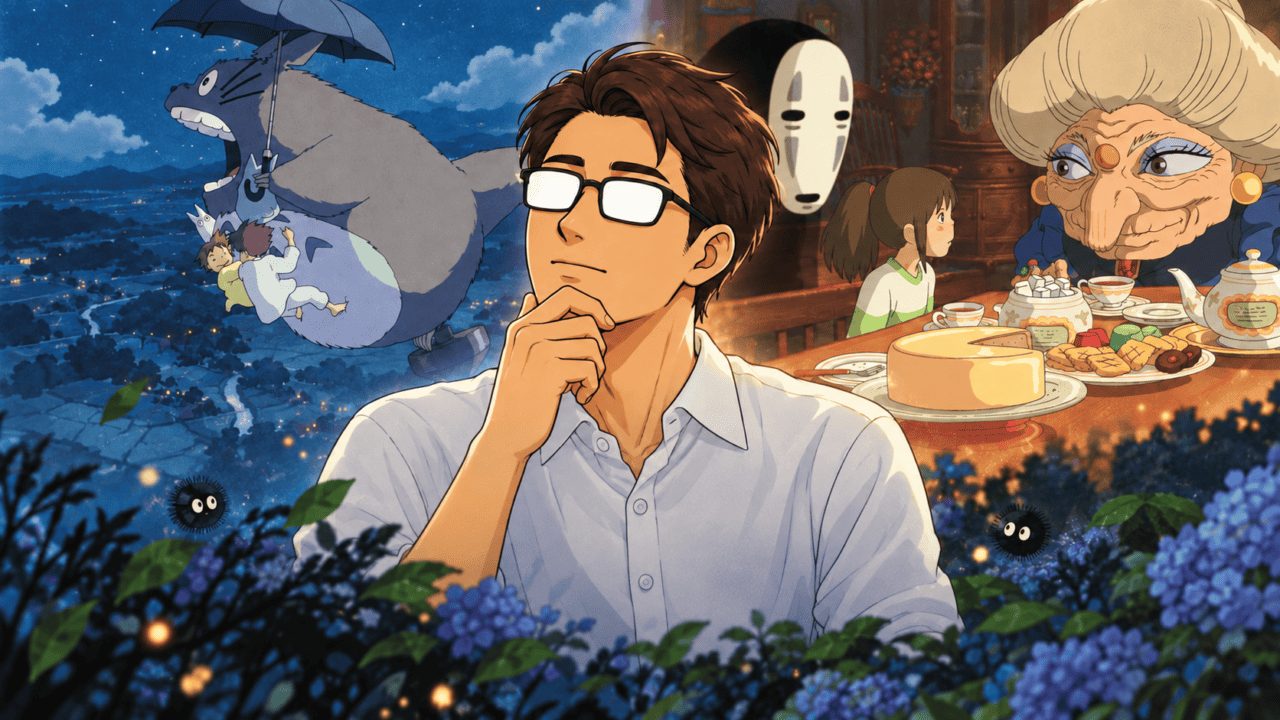
I reproduced it in the illustration on the following website:
ttps://mandelaeffectinfo.blogspot.com/2026/01/spirited-away-phantom-ending-reproduced.html