
My Neighbor Totoro(Official Studio Ghibli Website) is a 1988 animated feature directed by Hayao Miyazaki.
Here, I look back at the characters and voice actors, considering their appeal and their stories. What kind of people inhabit this world? The discussion contains plot spoilers, sometimes without further warning.
*This is a translated version. The original (Japanese) is available here.
On this pageContents
My Neighbor Totoro (1988) Main Characters & Voice Actors List
The table below brings together the main characters and the voice performances covered in this guide.
| Name | Age | Voice Actor (2005 Disney Dub) |
|---|---|---|
 Satsuki Kusakabe |
12 | Dakota Fanning |
 Mei Kusakabe |
4 | Elle Fanning |
 Tatsuo Kusakabe (Dad) |
32 | Tim Daly |
 Yasuko Kusakabe (Mom) |
29 | Lea Salonga |
 Totoro |
1302 (initial concept) | Frank Welker |
 Catbus |
Unknown | Frank Welker |
 Kanta |
12 (Satsuki’s classmate) | Paul Butcher |
 Granny |
Unknown | Pat Carroll |
My Neighbor Totoro (1988) Character Map
The map outlines the relationships discussed in this guide and provides a reference for the character profiles below.
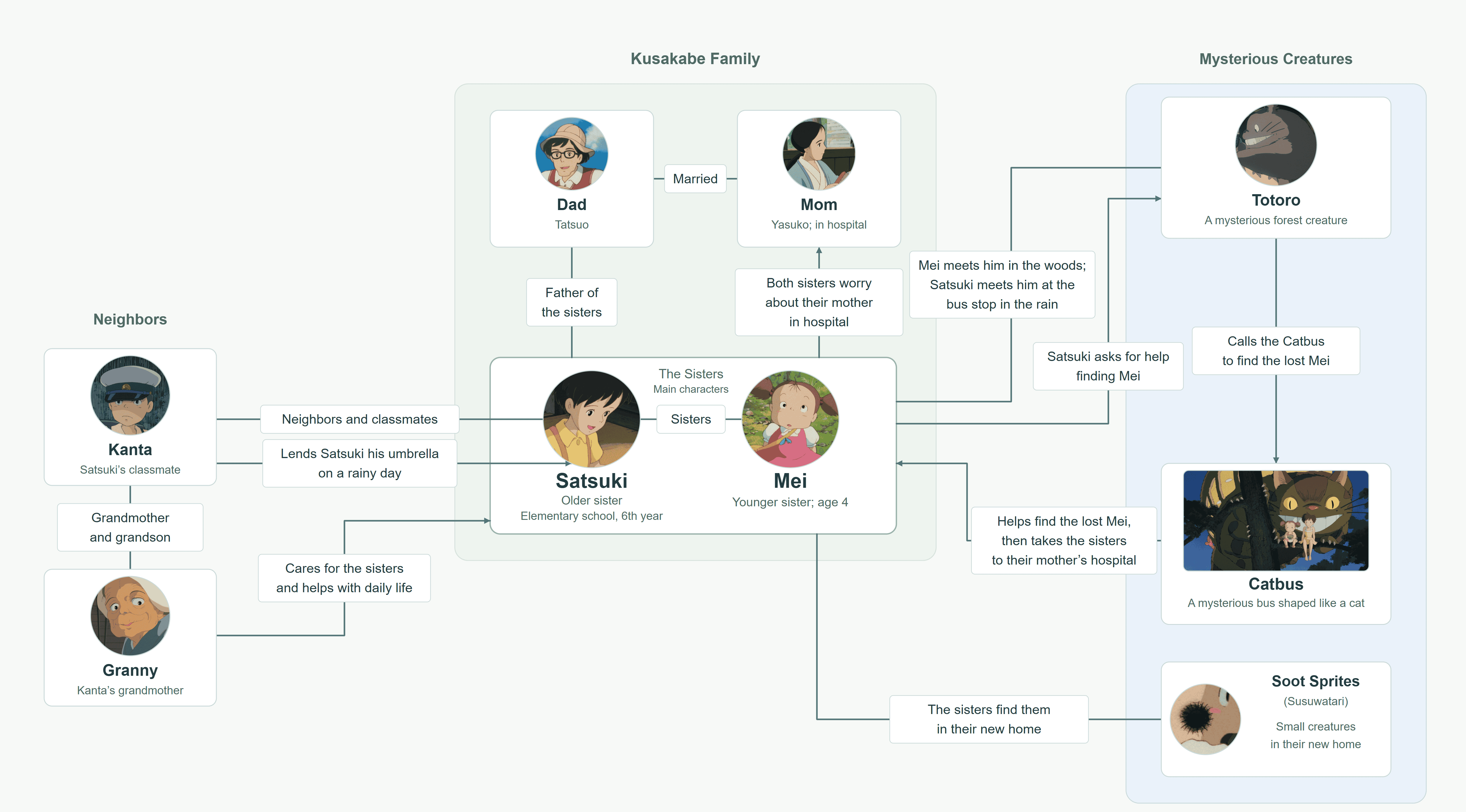
I notice that Satsuki and Mei encounter the Soot Sprites, Totoro, and the Catbus when something interrupts their ordinary lives—loneliness, a crisis, or another departure from the everyday.
▼ Discover the lines that define these characters
Satsuki, Mei, Kanta, Yasuko, and Tatsuo reveal much of their personalities through a handful of memorable lines. You can compare their original Japanese dialogue with the English subtitles and literal translations in our guide to 14 memorable My Neighbor Totoro quotes.
My Neighbor Totoro (1988) Deep Character Profiles and Analysis
The following profiles consider the characters’ motives, relationships, and roles in the story.
Satsuki | Voiced by: Dakota Fanning
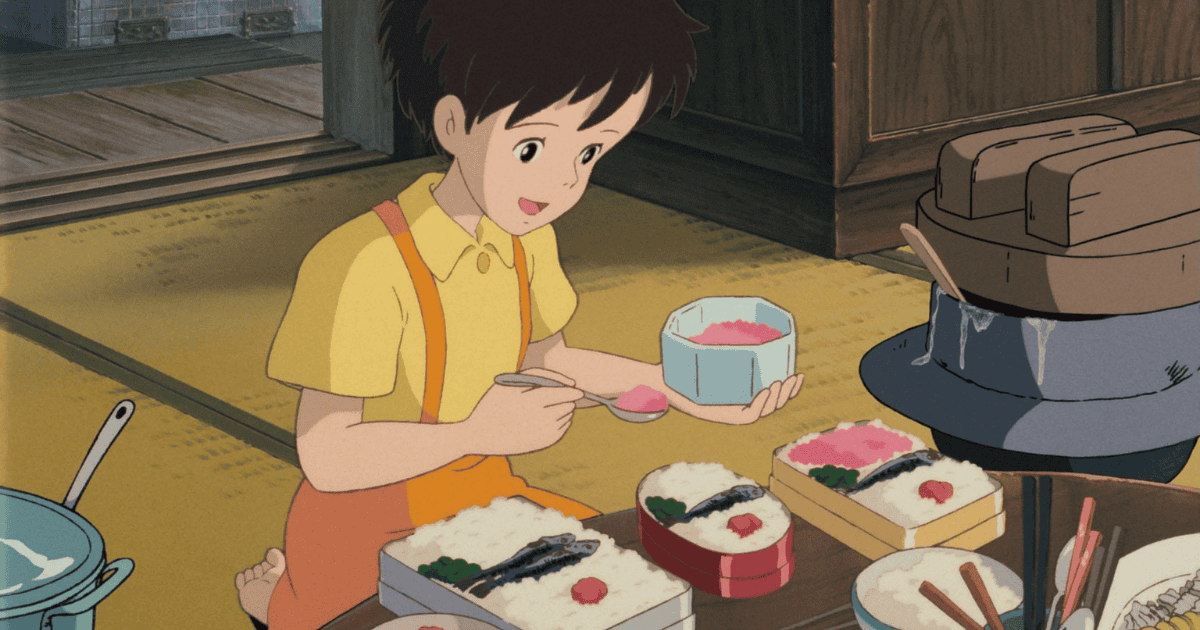
Satsuki’s Basic Information
Her full name is Satsuki Kusakabe. The character setting used here gives her age as twelve; early plans had her at ten.
With her mother in hospital and her father proving little help around the house, Satsuki is the remarkable eldest daughter just about keeping things together. She handles the household chores impressively, particularly for a character initially conceived as ten.
When producer Toshio Suzuki questioned whether a child could be so capable, Miyazaki reportedly replied that such children existed: he had been one himself. Suzuki recounts this in The Studio Ghibli Workplace. Miyazaki’s own mother was ill, and he too had done housework as a child.
Originally, There Was Only One Girl
My Neighbor Totoro was paired with Grave of the Fireflies, and both were initially planned to run for sixty minutes. As Grave of the Fireflies grew longer, Miyazaki devised a way to extend his own: split the original single girl into Satsuki and Mei.
He need not have competed, but his stubbornness resulted in an 86-minute Totoro, two minutes shorter than Grave of the Fireflies. Suzuki recalls Miyazaki saying, “If it’s even two minutes shorter, they have to praise it, right?” in Ghibli Textbook 3—although Suzuki apparently did not understand what he meant either.
It is an odd way for the sisters to have come into being. Still, I feel that Miyazaki’s thinking finds a subtle expression in Satsuki. I explore that in another article.
Read the full analysis: Why Does Satsuki Break Down in Tears?
Mei | Voiced by: Elle Fanning
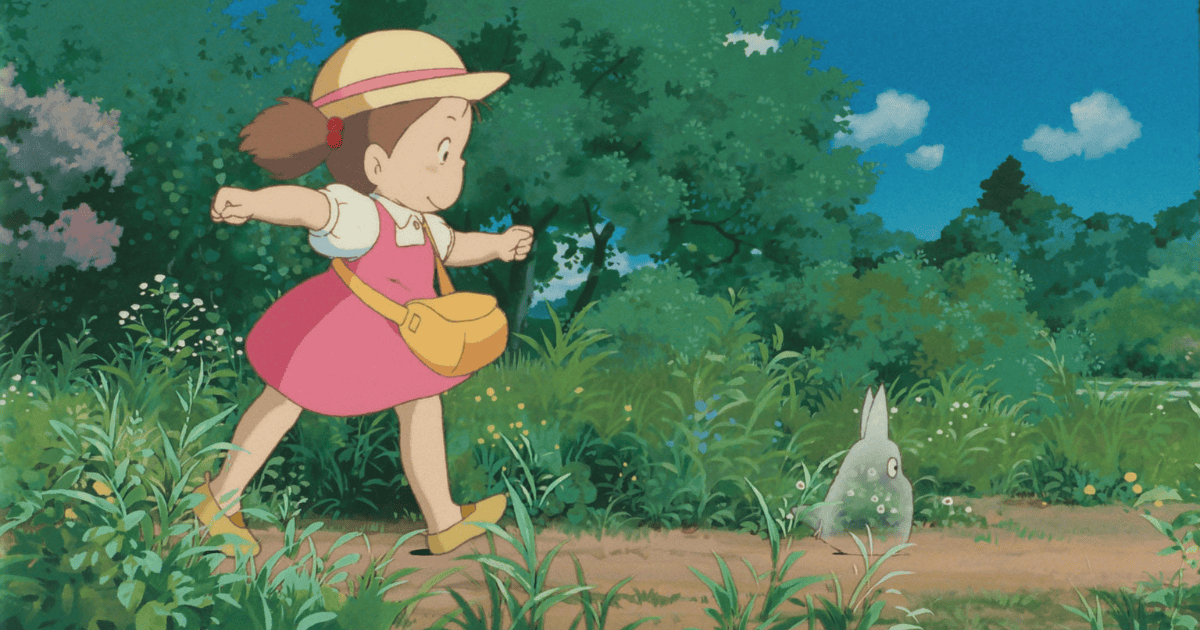
Mei’s Basic Information
Her full name is Mei Kusakabe. She is four.
She goes missing twice and is fortunate enough to be found both times.
For all her liveliness, she seems to live with the same hidden loneliness as Satsuki: their mother is not nearby.
To put it unkindly, she is the least useful member of the household during her mother’s absence. Perhaps her attempt to deliver corn to the hospital reflects a dim awareness of that helplessness.
What if the Protagonist Was Never Split?
As mentioned above, Miyazaki originally envisioned a single girl for the story. What would the movie look like if Satsuki and Mei had remained one character?
She might have been about ten, somewhere between the two sisters, and probably would have handled chores as Satsuki does. Otherwise, if her father did them properly, she would have had less frustration to build up. There would be only the loneliness of her mother’s absence and greater dependence on her father. To me, that would make it harder for this story to unfold.
Most importantly, the core catalyst for meeting Totoro would change.
I see loneliness as the main reason Mei meets Totoro. Her father is home but absorbed in research, leaving her to play alone. Totoro offers the embrace her father ought to give her—well, she is really just sitting on him.
With one girl, she might still run off to deliver corn to her mother. But the lead-up would change. In the film, Mei cries when the visit home is postponed; later Satsuki cries, and seeing her sister’s tears prompts Mei to act. She seems to want to help the sister who has never let herself show weakness.
A single girl would skip that middle step and run off more impulsively, from loneliness alone. Mei’s childish plan—corn will make her mother well—also carries a wish to help Satsuki. Dividing the girl into two sisters gives her inner life more layers and the film more depth. And if Takahata set all that in motion, what an extraordinary man.
Dad | Voiced by: Tim Daly
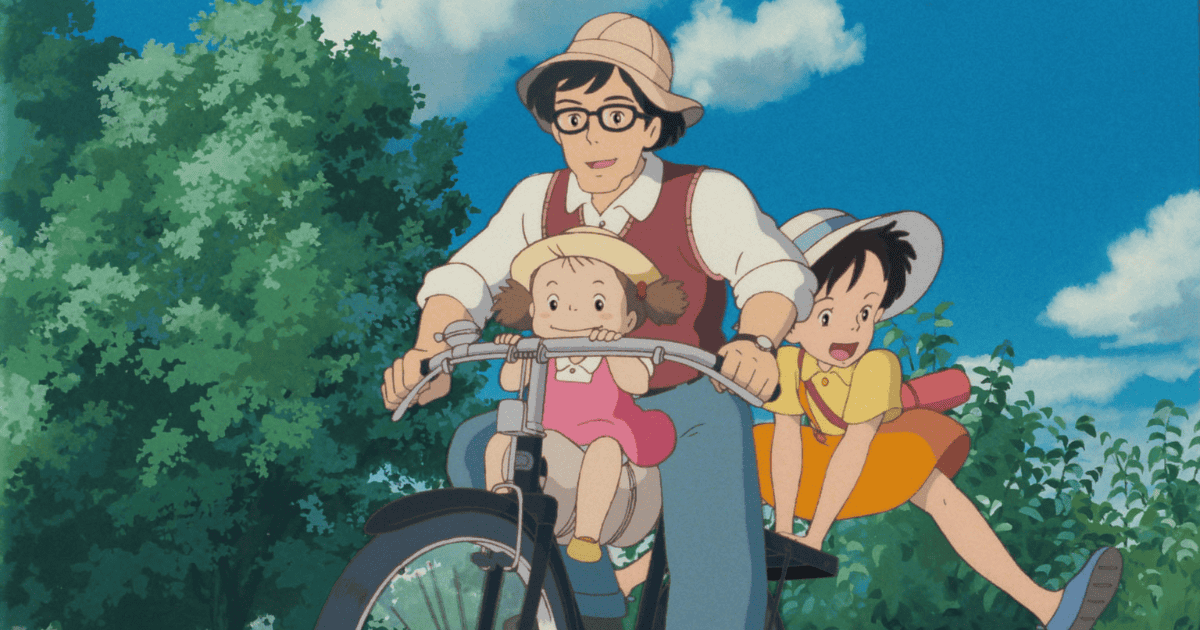
Tatsuo’s Basic Information
Tatsuo Kusakabe is thirty-two, an archaeology researcher and part-time university lecturer.
With his wife in hospital, we might expect him to be running around doing housework and caring for the children. Not quite. Research takes priority, and even chores he ought to do fall to Satsuki. Written down like that, it sounds awful.
It did not bother me as a child. As an adult, I find myself wishing he would make just a little more effort. Is Tatsuo now being talked about as the embodiment of evil?
Room for Sympathy
Still, simply condemning his choices seems rather one-sided.
His work is presumably the household’s main source of income. Having his research recognized and advancing his career must matter a great deal.
Research also demands absorption. Perhaps we can make some allowance for his absent-mindedness: on the night before he forgets his share of the chores, he may have been wrestling with important work.
I still think he bears responsibility for Mei’s first disappearance. But the underlying cause may be the crisis facing the family rather than his carelessness alone. We should perhaps not be too hard on him.
Mom | Voiced by: Lea Salonga
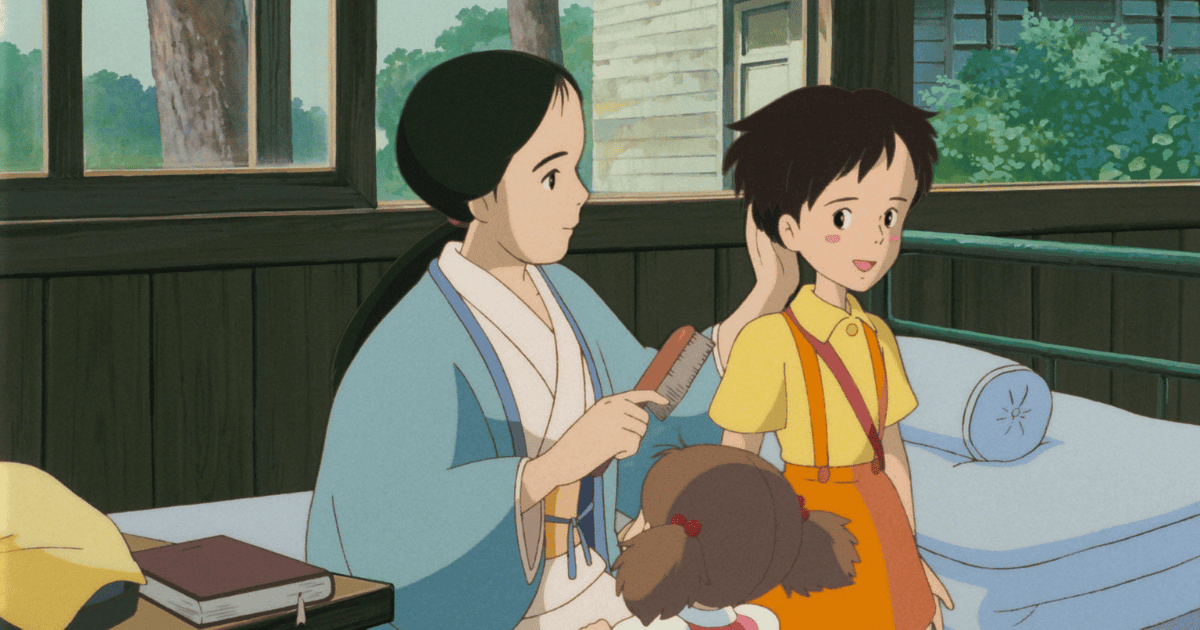
Yasuko’s Basic Information
Her full name is Yasuko Kusakabe. Her age is not stated in the story; she is in hospital with an illness.
She appears only briefly, but is loved by the whole family. Her kindness in those few scenes is moving.
We naturally want to know what becomes of her illness. The illustrations behind the closing credits show her back home, sharing a futon with Mei and Satsuki. What a relief.
Those illustrations are lovely: Mei has become a little more of a big sister, able to care about younger children, while Satsuki becomes a little more of a child. With their mother home, she can act her age again.
The Mother Combing Satsuki’s Hair
Yasuko combing Satsuki’s hair is one of the film’s great scenes.
It is a warm reunion, and starting with Satsuki rather than Mei shows a thoughtful mother. Yet I believe she tells a lie here.
Depending on how we read it, that lie might be beautiful or rather troubling. I discuss my interpretation below.
Read the full analysis: The Lie I Think Satsuki’s Mother Tells
Totoro (O-Totoro) | Voiced by: Frank Welker
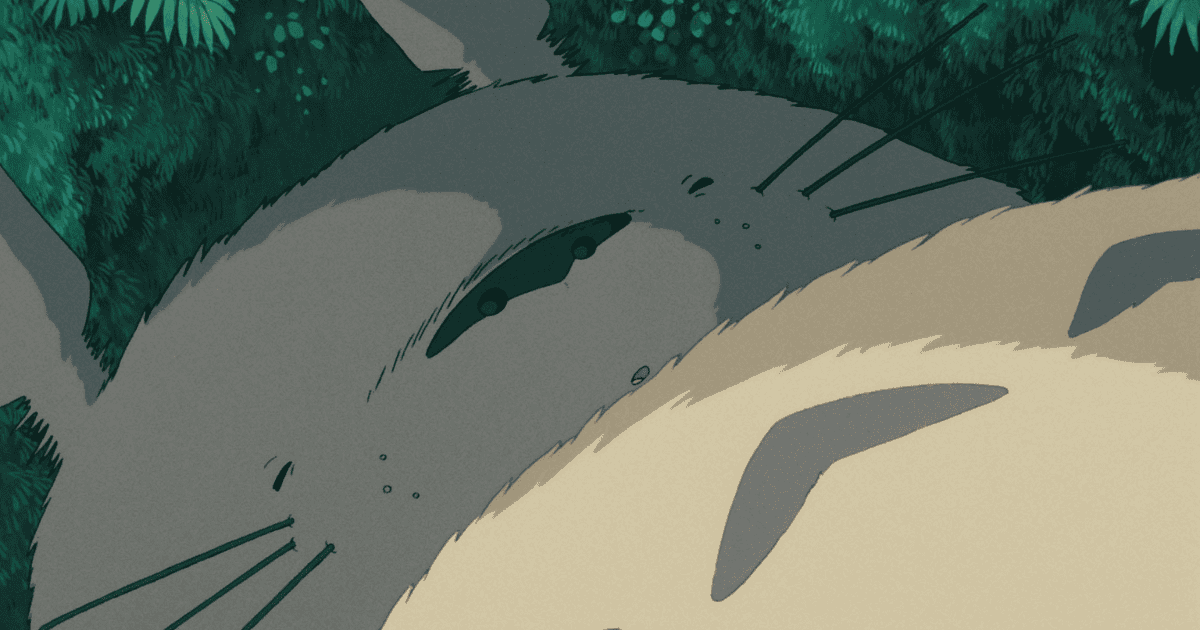
Totoro’s Basic Information
A creature who has lived in this world since ancient times.
He has supernatural powers, growing plants and flying on a spinning top, but is still a living creature—think of the tanuki in Pom Poko.
In the early settings, discussed in The Art of My Neighbor Totoro, he was called Miminzuku and was 1,302 years old. If the story takes place in the early 1950s, that places his birth in the Asuka period, around the reigns of Empress Saimei and Emperor Tenji, when the Yamato polity suffered defeat at Baekgang.
In Mei’s first disappearance, the other two Totoros lead her to him; perhaps finding him keeps it from becoming a worse incident. In her second, he is a superhero who summons the Catbus and helps find her. For someone with such a long sense of time, though, it might have been a passing whim.
Kodama and Totoro
At 1,302, Totoro would already have existed in the Muromachi period of Princess Mononoke. There might have been others like him too. Yet none appears in Mononoke.
Miyazaki seems to have given this a little thought. The production documentary How Princess Mononoke Was Born records a discussion of it.
An animator suggests that the surviving kodama could eventually become a Totoro, and Miyazaki agrees to go with it. That may conflict with Totoro’s age, but perhaps it can work if we think of the kodama as a juvenile form of his kind.
Catbus | Voiced by: Frank Welker
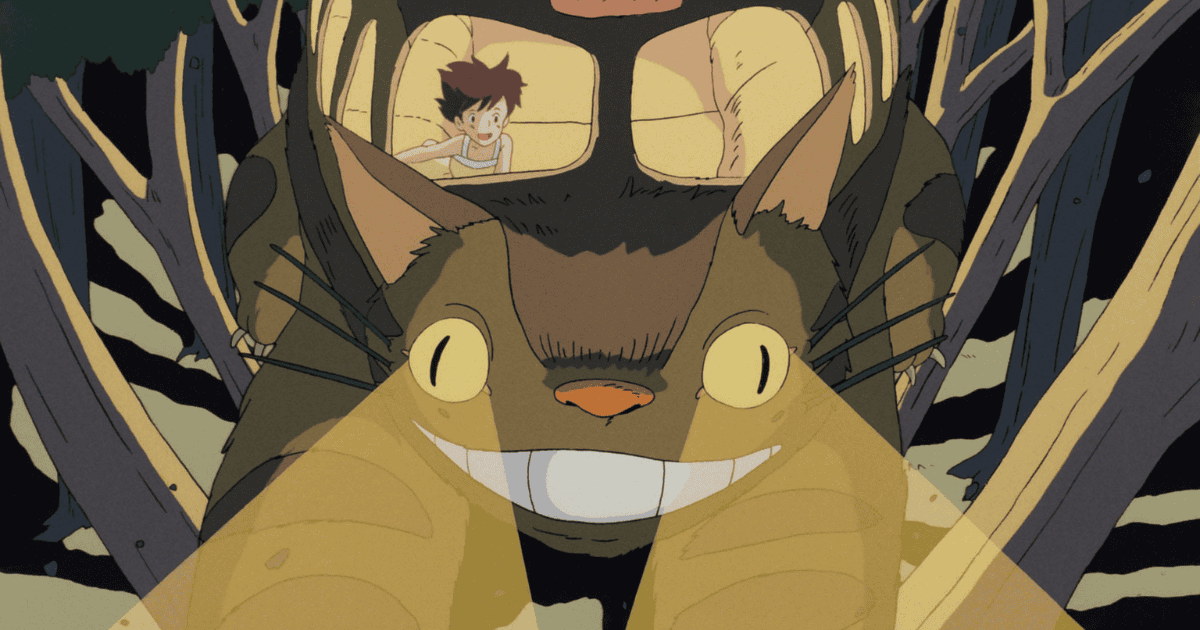
Catbus’s Basic Information
The Catbus has almost more presence than Totoro. As a child, I felt sorry for it, as though its only purpose was to carry him. But its bus shape is incidental: fundamentally, it is a bakeneko, a supernatural cat.
The visible testicles suggest this Catbus is male. To me, that also suggests these creatures reproduce sexually.
In Mei and the Kittenbus, shown at the Ghibli Museum, we meet many Catbuses. Presumably they have family lives, rather than spending every hour ferrying Totoros around.
Kanta | Voiced by: Paul Butcher
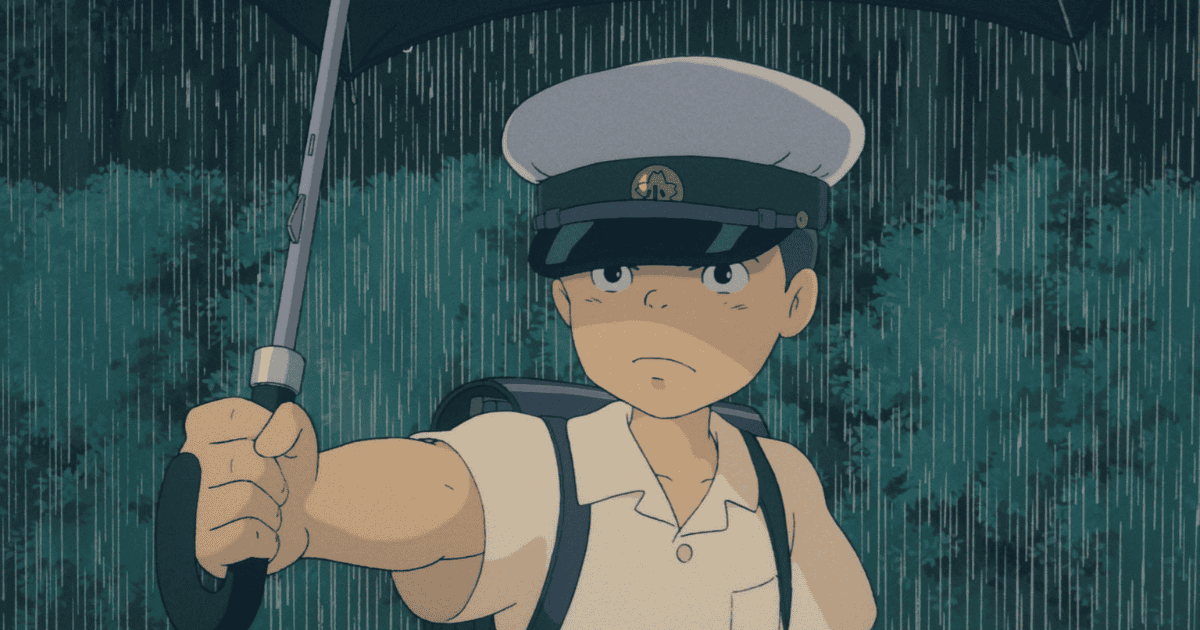
Kanta’s Basic Information
Kanta Ōgaki is Satsuki’s classmate.
His teasing cry that her house is haunted is unforgettable. I suspect he fell for Satsuki at first sight while helping in the fields. His behavior is wonderfully transparent; any boy can understand why he hides when she comes to return the umbrella.
Apart from lending her a broken umbrella, he initially seems little use. His desperation after Mei disappears is striking, though. The whole village searches for the newcomers’ child, and Kanta does what he can. His appearance on a bicycle he can barely pedal seems to embody everyone’s determination.
Granny | Voiced by: Pat Carroll
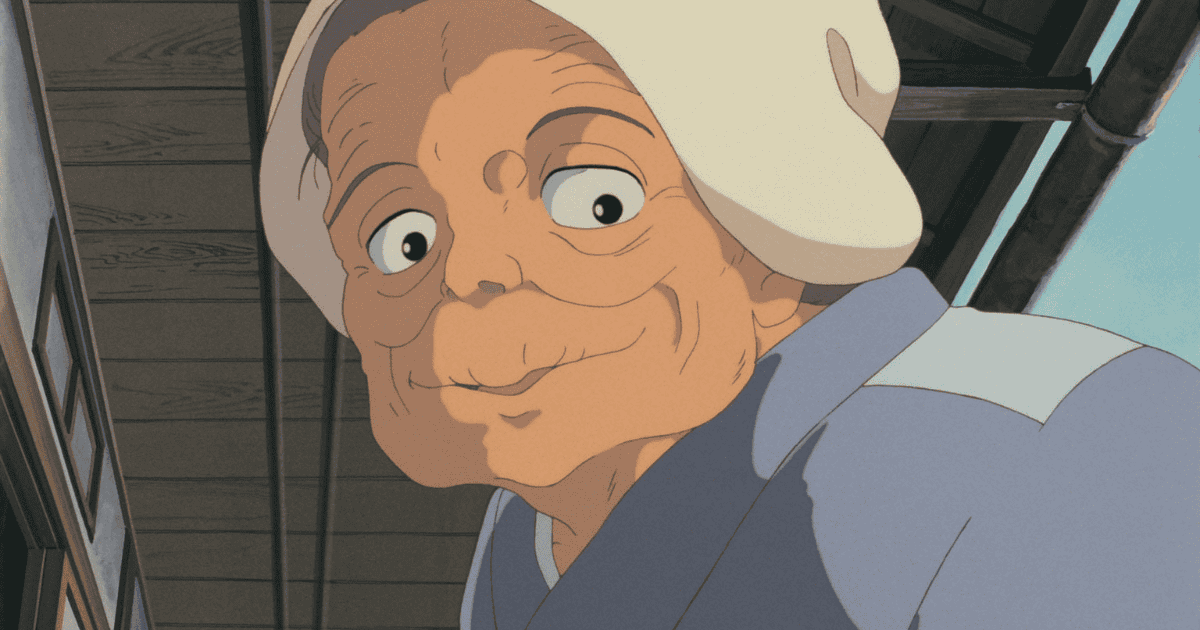
Granny’s Basic Information
Kanta’s grandmother looked after the house the Kusakabes move into.
So kind that she must have given children across Japan the mistaken idea that grandmothers are invariably nice to children. Her cries of ‘Mei!’ by the pond are heartbreaking. Part of her desperation may come from having been nearby when Mei vanished.
She must have felt an immense responsibility. Yet she had needed to comfort Satsuki at the time; what else could she do?
And then there is Tatsuo, calmly entrusting his children to somebody else’s grandmother. We do not know when he first met her, but could she have been one reason he chose the house? Perhaps he uses whatever is available to keep his situation going. What a calculating fellow.
Other Characters and Voice Actor Information
Kanta’s Mother | Voiced by: Kath Soucie
She briefly appears when the girls visit Kanta’s house to return his umbrella.
School Teacher (Reiko Moriyama) | Voiced by: Tress MacNeille
Her decision to let the lonely Mei stay in class with Satsuki is inspired. A good teacher.
Michiko (Micchan) | Voiced by: Ashley Rose
Satsuki’s classmate and friend. She reassures us that Satsuki is getting on well at school. Her ringing call of ‘Satsuki!’ is memorable too.
Man Cutting Grass | Voiced by: Peter Renaday
A man Satsuki questions while searching for Mei.
Main House Granny | Voiced by: Russi Taylor
The woman who lends Satsuki a telephone after the hospital telegram arrives. Her appearance is brief, but she has such poise and presence.
Man on the Farm Vehicle | Voiced by: Matt Adler
One of the couple Satsuki meets while looking for Mei. Something about him annoys me. Must you drive around with your girlfriend beside you?
Woman on the Farm Vehicle | Voiced by: Bridget Hoffman
The other half of that couple seems kind. But really, are you sure about that man? He looks like trouble. That is my entirely uncharitable reaction.
Postman | Voiced by: Robert Clotworthy
He delivers the telegram that sets the search in motion. He is simply doing his job, but does he know that his delivery leads to an incident involving the whole village?
For some reason, his call of ‘Kusakabe! A telegram for you!’ has stayed with me. Perhaps it is because it includes the family’s name. Strange, isn’t it?
Bus Conductor | Voiced by: Kath Soucie
The conductor of the ordinary bus that briefly raises the girls’ hopes while they wait for their father.
That false alarm makes the loneliness of waiting more palpable. When we wait for someone, the smallest thing can raise our expectations.
Chu-Totoro & Chibi-Totoro
The other two Totoros in the film. In the early settings, the blue medium Totoro was 679 and the small white Totoro was 109.
They lead Mei towards her first disappearance: visible to children, enticing them just a little towards danger. In a way, they may be the scariest creatures here.
Soot Sprites (Makkuro Kurosuke)
The soot-like somethings living in the Kusakabes’ new house.
Totoro and the Catbus seem like living creatures despite their strange powers. These little things, by contrast, remain a mystery. They may be the film’s most inexplicable beings. What on earth are they?
Your Take
What is your view? Choose the answer that comes closest to your own response.
Poll results
Which kind of support feels most important to Satsuki and Mei?
- A parent who takes their fears and discoveries seriously.0%
- Practical care from neighbors.0%
- Quiet help from another child.0%
- Comfort from their encounters with Totoro.0%
- Several of these together.0%
- Something else.0%
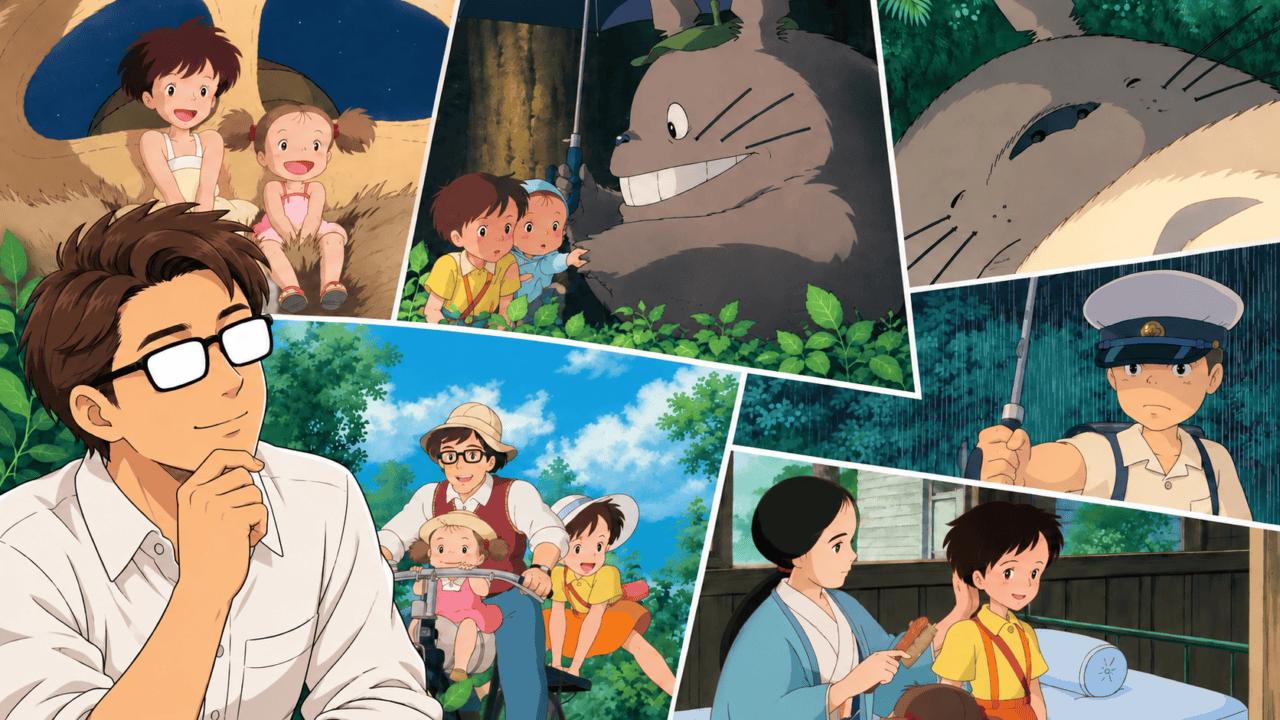
The images used in this article are from Studio Ghibli Works Still Images.
Can you name the movie before the scene comes into focus?
Put your visual memory to the test with a blurred Studio Ghibli scene.

Reader Comments
Have a thought or interpretation? Leave a comment