
The original Godzilla (1954), Shin Godzilla (2016), and Godzilla Minus One (2023) each offer something different. Serizawa’s final moments in the original break my heart. In Shin Godzilla, I am drawn to the people carrying out their respective jobs. And in Godzilla Minus One, above all, I am glad that Shikishima comes home alive. They are all stories of confronting the same monster, yet watching their endings leaves me with very different feelings.
Still, I think these three films share something important: Godzilla’s destruction is connected to another character’s suffering and destructive impulses. That character is Daisuke Serizawa in the original, Goro Maki in Shin Godzilla, and Koichi Shikishima in Godzilla Minus One. The defeat of Godzilla overlaps with another story: how each of these people confronts his own pain.
Comparing the films through that connection reveals a kind of progression: a man seals away his own anger; another entrusts others with sealing it away; and finally, people whose pain would once have been sealed away begin to build a future they can share.
The discussion below includes spoilers for all three endings. The connections between Godzilla and the characters’ inner lives are my own interpretations of what the films depict.
*This is a translated version. The original (Japanese) is available here.
- What the three films share: Godzilla’s destruction can be seen as echoing the suffering and destructive impulses of Serizawa, Maki, and Shikishima. The battle with the monster is also each man’s story.
- Godzilla (1954)—sealing it away himself: Carrying wounds from war and sorrow in love, Serizawa quiets his own anger and leaves others a future. Respect for that decision coexists with the wish that he had come home alive.
- Shin Godzilla—entrusting the task to others: Perhaps Maki leaves clues to a countermeasure because he wants people to stop the destructive impulses born of his wife’s suffering. The beauty of the professionals who accomplish that task is another of the film’s strengths.
- Godzilla Minus One—overcoming pain and living: Godzilla is both Shikishima’s enemy and an echo of his destructive impulses. With Tachibana’s forgiveness, he begins to forgive himself and choose life.
- What connects the films: Earlier generations, evoked by Serizawa, sealed away their anger and left a world in which a story of wounded people living into the future became possible. In Shikishima’s survival, I see the return Serizawa was denied.
On this pageContents
Three Films Connected by Godzilla’s Destruction and Human Suffering
Godzilla destroys cities and takes lives, making him a threat that humanity must eliminate. In these three films, however, the story of dealing with the monster does not unfold separately from the stories of the people involved. In these three films, human anger and grief seem to find expression through the gigantic presence of Godzilla.
Serizawa carries wounds from the war and the sorrow of losing the woman he loves. Maki has lost his wife to an injustice he cannot accept. Shikishima feels guilty for having survived when others did not. For each man, the world has ceased to be a place where he can simply accept happiness. When that suffering turns against other people—or against himself—Godzilla’s destruction begins to echo his inner life.
This does not mean that Serizawa or Shikishima controls Godzilla, or that the monster’s appearance can be explained entirely through a character’s psychology. But if the monster and the man express the same suffering, the ending of the battle also becomes an ending that determines how that person will live. That is one reason I find these films so compelling.
Godzilla (1954): Serizawa Seals Away His Own Anger
In the original film, Godzilla is defeated by the Oxygen Destroyer, Serizawa’s invention. Serizawa intends to take its secret to his grave to prevent the terrifying discovery from becoming a weapon. Yet looking at him only as a scientist does not fully account for the sadness of his departure with Godzilla.
The Wounds of War and His Love for Emiko
Serizawa’s eyepatch marks an injury sustained in the war. The war’s end has not made that wound disappear. He also loves Emiko, whom he has known since childhood. She, however, is already looking toward a life with Ogata.
When Serizawa shows Emiko his secret experiment, I sense more than a scientist’s desire to display his achievement or a man’s feelings for the woman he loves. There is also an aggression in wanting her to see the suffering he carries. As Emiko moves toward a happy life, perhaps he wants her to know the ugliness of the world as he sees it. I suspect that feeling is mixed into the horrifying demonstration.
I explored this in my earlier article on Dr. Serizawa’s love and his death with Godzilla. He is not a fully formed saint who can give up everything for humanity from the outset. He is a wounded man who loves someone and wants her to see him. Turned outward, Serizawa’s anger and grief could become a force that destroys the world. To me, the Godzilla devastating the city echoes that part of him.
He Leaves for the Sea, Wishing Happiness for Those Who Remain
Even so, Serizawa does not try to destroy the world in which Emiko and Ogata will live. His final words to Ogata express a wish for their happiness: he tells them to live happily together. That brief farewell stays with me more deeply than any declaration of victory over Godzilla could. Rather than make the woman he loves carry his suffering, he wishes her happiness and departs into the sea with Godzilla.
To me, Serizawa chooses to seal away his own anger and destructive impulses. The wounds inflicted by the war and the sadness of a life that did not turn out as he hoped were real. Carrying those feelings, he nevertheless tries to leave a future for those who will go on living.
The important point is that he makes this choice himself. I do not want to take the story as saying that wounded people should quietly disappear so they do not obstruct anyone else’s future. Anger at injustice has its reasons, and those reasons must not be forgotten. What moves me is Serizawa’s resolve to quiet his anger while still wishing happiness for others.
At the same time, I wanted Serizawa to come home alive, too. Even if his love for Emiko could never be fulfilled, he should have had a life beyond it. Whenever I consider the wounds and anger of war that Serizawa embodies in the original film, respect for his decision and the wish to have seen him find happiness remain inseparable for me.
Shin Godzilla: Maki Entrusts Those Alive Today with Sealing Away His Anger
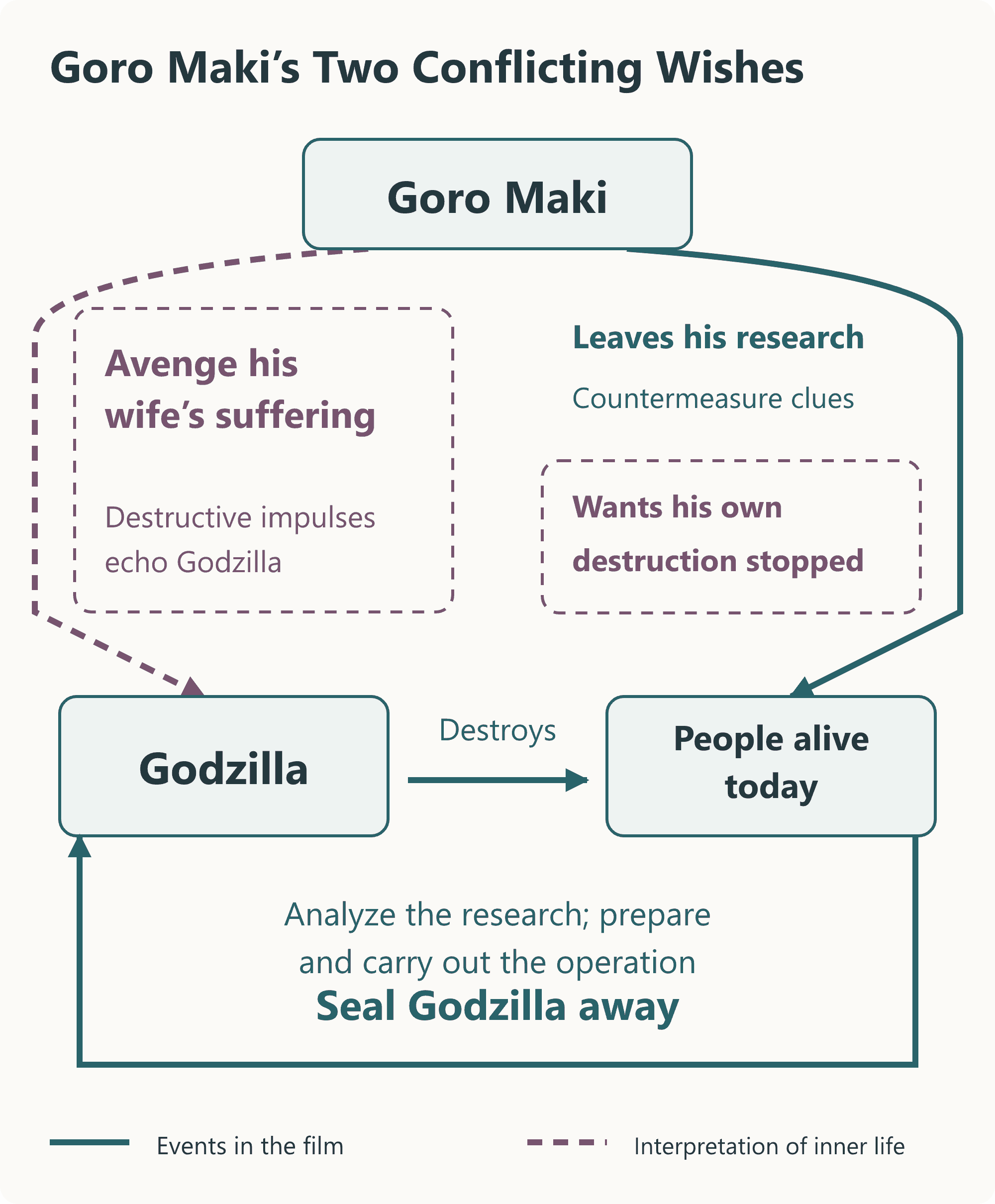
In Shin Godzilla, Goro Maki makes the connection between Godzilla and a human being feel even stronger. I interpret the film as a story in which Maki becomes Godzilla and returns to avenge his wife’s suffering. No transformation is shown onscreen. But considering Godzilla as an embodiment of Maki’s anguish brings the significance of what he leaves behind into focus.
He Could Not Take Revenge as a Human Being
We are told that Maki lost his wife to the effects of radiation and came to hate Japan. Yet attacking the people living in Japan today as revenge for the injustice that took her life would itself be unjust. Was Maki incapable of understanding that?
I think he understood it. Not everyone alive today could have been responsible for his wife’s suffering. He knew there was no justification for dragging uninvolved people into his revenge. Understanding that intellectually, however, did not mean he could forget what had happened to her.
Perhaps Maki had to become Godzilla because his remaining humanity kept him from taking revenge on innocent people as a man. On this interpretation, he does not become Godzilla simply because he has lost his humanity. A scientist’s ethics and a bereaved husband’s anguish remain within the same person. That contradiction is what interests me about him.
The Clues He Leaves: A Wish for Someone to Stop Him
Maki leaves research on Godzilla that eventually helps people develop a countermeasure. In my earlier article on what Maki chose to do as he pleased in Shin Godzilla, I described his leaving a means of resistance alongside the destruction as a form of fairness.
I do not think that fairness is merely a matter of giving the targets of his revenge a chance to win. He leaves clues because he understands the injustice of attacking people alive today and has not entirely lost his trust in humanity. Perhaps those clues also express a wish for someone to stop his own destructive impulses.
Serizawa seals away his own anger himself. Maki, by contrast, releases the anguish he cannot contain as Godzilla and entrusts those alive today with sealing it away. He cannot forget his wife. Even so, he wants someone to stop him from turning the injustice she suffered into a new injustice. Those two wishes seem to emerge through the destructive Godzilla and the research Maki leaves behind.
Of course, none of this is remotely welcome to the people under attack. Understanding Maki’s circumstances does not justify his revenge. They must stop Godzilla to protect their own lives, rather than perish along with the anguish he cannot let go of.
The Beauty of People Doing Their Jobs
Unlike Serizawa’s story, however, Maki’s personal drama does not move me emotionally. What moves me in Shin Godzilla is the collective effort of people doing their jobs to bring the final operation about. Put rather bluntly, it comes down to everyone working hard together.
Some people decipher the research. Others prepare the necessary chemicals, devise the operation, or carry it out on the ground. They do not all perform the same task. Each uses the knowledge and skills they have to fulfill the responsibility they have taken on. There is a beauty in that professionalism: their combined work stops an enormous monster.
The clues Maki leaves cannot save anyone merely by existing. They become a force capable of stopping the destruction only because people interpret them, turn them into a workable operation, and see it through in dangerous conditions. This is how Maki’s story of entrusting the task to others connects with the work of the people who actually accomplish it.
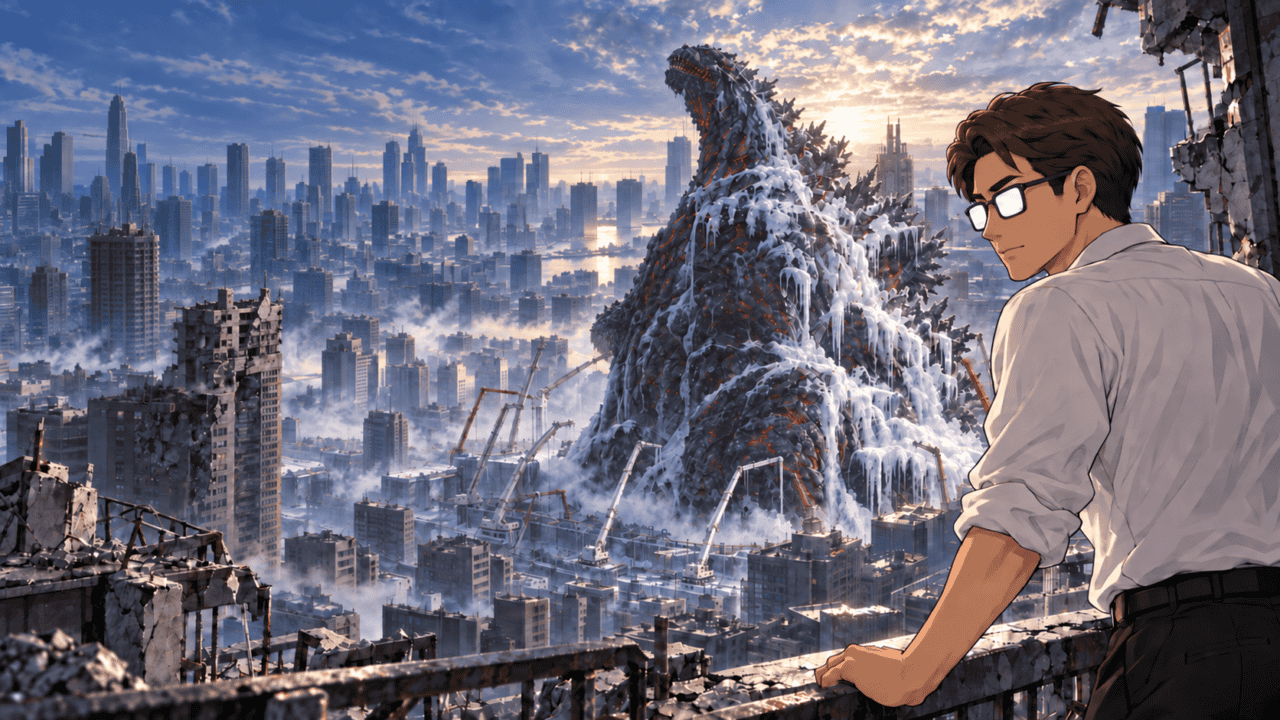
And the frozen Godzilla remains where he stands. As I wrote in my article on why Godzilla could not be killed in Shin Godzilla, people do not get to begin their next lives only after the problem has completely disappeared. They must bring things to a point where life can continue, while carrying what remains. The people who accomplish that are what make this film so compelling.
Godzilla Minus One: Those Whose Pain Was Sealed Away Begin to Build a Future
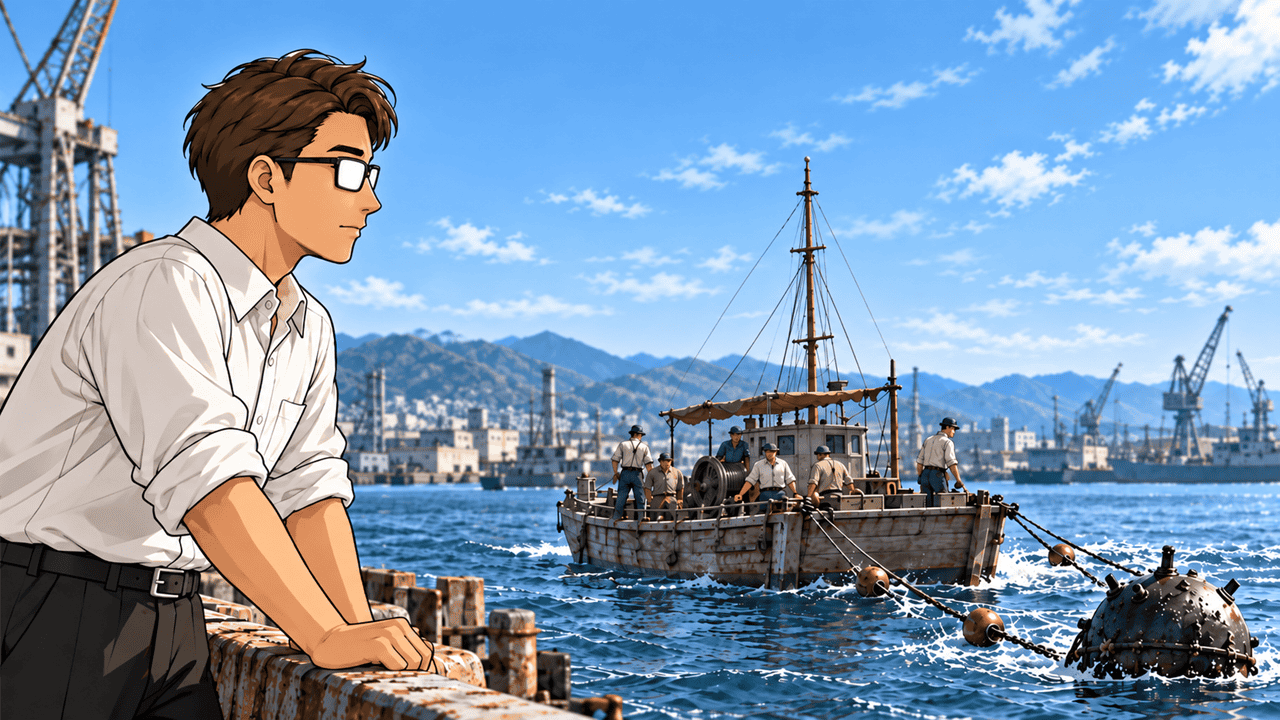
In Godzilla Minus One, Shikishima remains tormented both by returning alive from a kamikaze mission and by his failure to fire the aircraft’s gun on Odo Island. Even after the war ends and he begins living with Noriko and Akiko, he cannot simply be glad that he survived. His battle with Godzilla overlaps with the question of how he can accept his own life.
He Loves Them, but Cannot Allow Himself to Be Happy
Shikishima clearly loves Noriko and feels a parent’s affection for Akiko. His refusal to marry Noriko is unlikely to stem from a lack of love. He believes he should not be allowed to become happy when others have died.
He can permit himself to work to support the two of them. Working for others and being useful can serve as atonement, as well as a justification for living another day when he has survived. Marrying Noriko and building a family with Akiko, however, would mean more than supporting them: it would mean accepting happiness for himself. Perhaps Shikishima cannot allow himself the happiness of a family with Noriko and Akiko.
The world has ceased to be a place that welcomes his existence. There are people he loves and a life he wants to protect, yet he feels he has no right to be happy within it. In that contradiction, it would not be surprising for him to feel that it might be easier if everything were destroyed, himself included. He does not explicitly wish for the world’s destruction; this is the destructive impulse I infer from his attitude toward his own life.
Godzilla Causes His Suffering—and Is a Self He Must Overcome
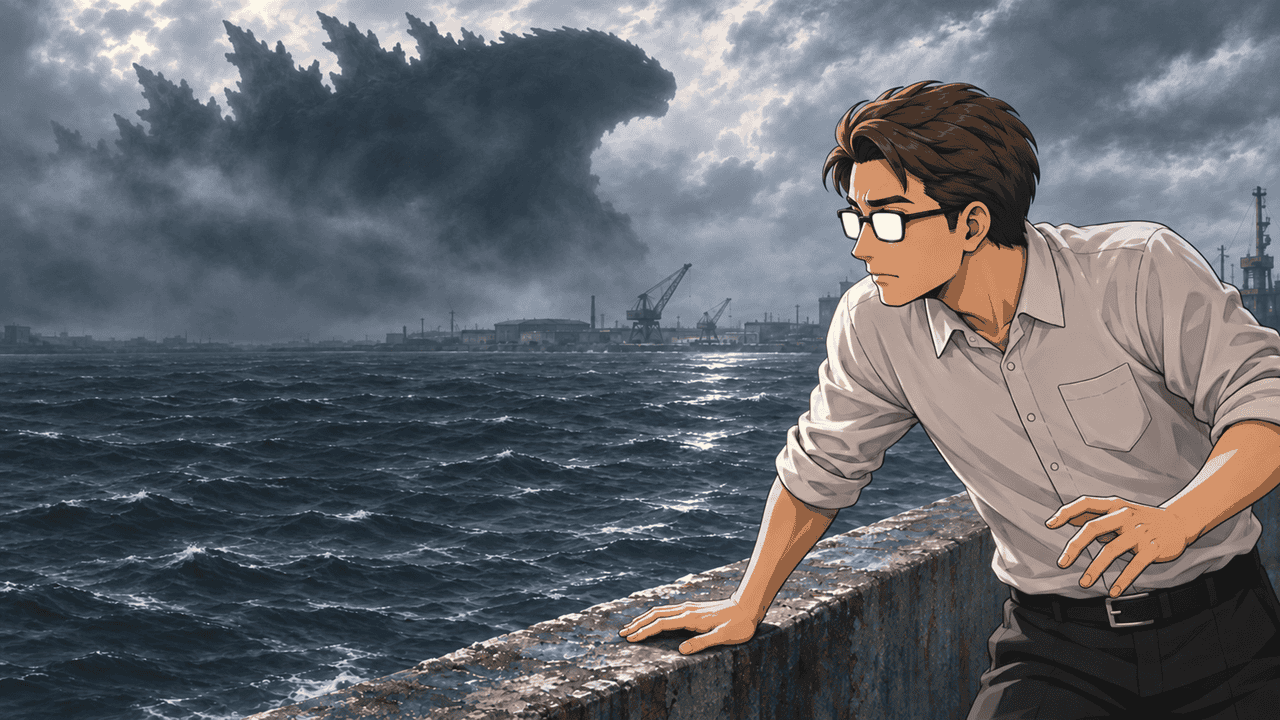
That impulse connects with the Godzilla destroying the city. But Godzilla does more than express Shikishima’s inner life. By killing his comrades on Odo Island and then taking Noriko from him in Ginza, the monster also causes his suffering.
He may feel that a world that torments him might as well be destroyed, yet Godzilla’s destruction of that world brings him still more pain. Precisely because he has things he wants to protect, he cannot bear to see them destroyed. I think this duality distinguishes Godzilla Minus One. Godzilla is both Shikishima’s external enemy and an echo of his wish to destroy everything, himself included.
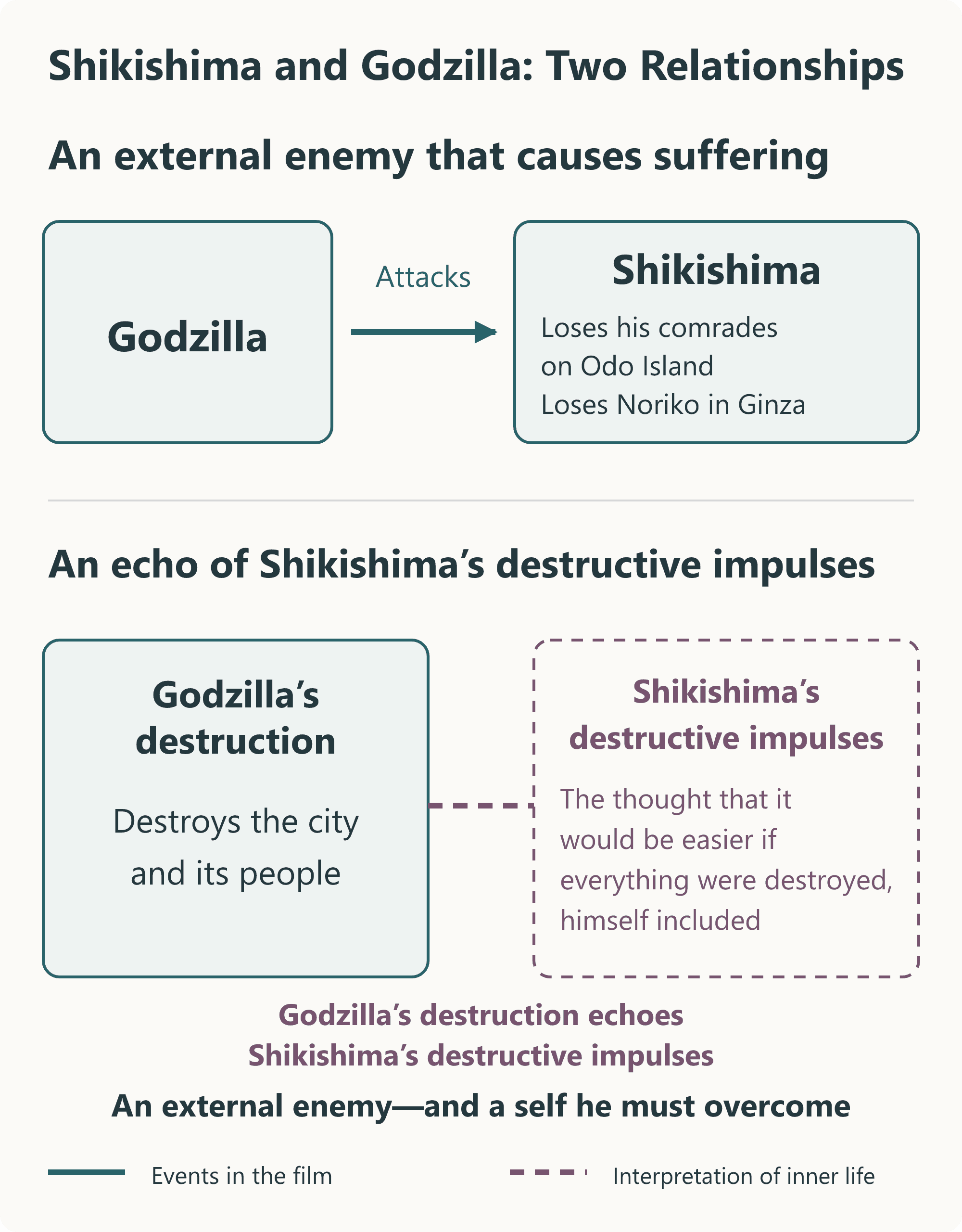
Godzilla thus appears to Shikishima as a self he must overcome. If he takes revenge on Godzilla but tries to atone by ending his own life, he still has not accepted his right to live. How can he choose both to protect the people he loves and to live alongside them? Tachibana becomes central to that question.
Tachibana Forgives Shikishima, Helping Him Forgive Himself
Tachibana lost his comrades on Odo Island and has continued to blame Shikishima for failing to fire. But can we say that the tragedy would not have happened if Shikishima had pulled the trigger? The film does not establish whether the gun could have killed Godzilla at that stage, or whether his comrades would have survived.
Perhaps Tachibana has kept himself going by directing that unanswerable grief at Shikishima. Just as Shikishima remains bound to the past by blaming himself, Tachibana carries his feelings for his lost comrades by continuing to blame Shikishima. He, too, is caught in suffering he cannot overcome.
In the end, that same Tachibana tries to keep Shikishima alive. He makes sure the Shinden’s ejection mechanism is ready, leaving Shikishima a way to return. To me, this is more than a kindhearted mechanic helping the hero. By forgiving Shikishima, Tachibana also moves beyond a state in which he could keep living only by directing his anger at someone else.
That change reaches Shikishima, too. Perhaps Tachibana’s acceptance of Shikishima’s right to live finally helps Shikishima forgive himself. The man who has continued to blame him now allows him to live. That forgiveness helps him overcome the destructive impulse he has directed toward himself. Shikishima’s survival is not the result of one person finding inner strength entirely on his own.
Shikishima ejects and is able to return to Akiko. He also reunites with Noriko, who has survived. A future opens before him in which he can live with them, rather than sacrifice himself for them. My first reaction was simple: I was glad he was alive. That happiness also includes the joy of seeing him finally able to begin his own life.
Shikishima’s Survival and the Return Serizawa Was Denied
Seen this way, the three films’ similarities and differences become clearer. Each connects Godzilla’s destruction with human suffering, but the person carrying that suffering relates to the future differently.
- Godzilla (1954): Serizawa seals away his own anger and destructive impulses, leaving others a future.
- Shin Godzilla: Maki places his faith in those alive today, entrusting them with sealing away his destructive impulses.
- Godzilla Minus One: People whose pain would once have been sealed away overcome their suffering and begin to create the next era themselves.
This does not mean that Shikishima is right to choose life while Serizawa is wrong to choose death. The pain and sorrow Serizawa carries in the original echo the feelings of many people directly wounded by the war.
There are legitimate reasons to be angry at what has caused you suffering. But turning that anger into destruction of the surrounding world would also destroy the future of people trying to begin new lives. In Serizawa’s departure with Godzilla, I see earlier generations who sealed away their own anger and left a world for those who followed.
Both we and director Takashi Yamazaki live in the world they left us. I do not think Godzilla Minus One could tell its story of a wounded protagonist finding a new way to live independently of all that came before.
Shikishima’s survival feels to me like the return Serizawa was denied in the original film. Serizawa’s decision still moves me. Yet I wanted him to have a fulfilling life, too. Watching Shikishima defeat Godzilla and come home alive, I felt I had finally witnessed the return that the original could not give us.
To me, Godzilla Minus One depicts a first step toward a future in which a person carrying such pain remains to help build it, rather than departing for its sake. Living in the future left to us by those earlier generations whom Serizawa evokes, we can now wish that Serizawa, too, had come home. Following the destruction and its containment through these three films leaves me with that joy.
Bonus: Why I Left The Return of Godzilla (1984) Out of This Comparison
I have focused on three films, but in a comparison about returning Godzilla to his roots, The Return of Godzilla (1984) would ordinarily deserve a place, too. It occupies an important position in the series, and I am very fond of it. Let me finish by explaining why I have nevertheless left it out of the main comparison.
The series had come to center on battles between monsters—something like monster wrestling—and the 1984 film brought Godzilla back as a threat to humanity. That attempt alone makes it important. By putting nuclear issues in the foreground and depicting Japan confronting Godzilla, the film sought to restore a terror connected to the original.
Still, Godzilla’s appearance retains traces of the preceding Showa films. To me, he still looks just human enough to have a certain charm alongside his monstrous terror. Including scenes such as Tetsuya Takeda’s appearance, the film never quite commits entirely to its serious tone. It tries to return to the beginning while carrying the Godzilla audiences had come to love. Perhaps that transitional quality was inevitable.
What makes the film difficult to include here, however, is the connection between Godzilla and a person’s inner destructive impulses. Dr. Hayashida lost his parents to Godzilla, and his feelings toward the monster are complicated. Prime Minister Mitamura’s tears at the end also move me deeply. But I do not see those feelings or that suffering echoing Godzilla’s destruction as destructive impulses within the characters themselves.
The ending, in which Godzilla is sealed within Mount Mihara, could certainly be connected to the idea of containment. The comparison here concerns human anger and destructive impulses, rather than simply trapping a monster somewhere. More specifically, it concerns how those feelings, echoing Godzilla’s destruction, are dealt with. Applying that comparison to the 1984 film felt forced.
Leaving it out of the main comparison does not mean I consider it an inferior film. It remains an important return to the series’ roots and a Godzilla film I love.
Each film leaves its characters with a different future after the battle with Godzilla.
Poll results
Which ending stays with you most: Godzilla, Shin Godzilla, or Godzilla Minus One?
- Godzilla (1954): Dr. Serizawa’s sacrifice.0%
- Shin Godzilla: the frozen Godzilla and lingering uncertainty.0%
- Godzilla Minus One: Shikishima coming home alive.0%
- I can’t choose just one.0%

Reader Comments
Have a thought or interpretation? Leave a comment