
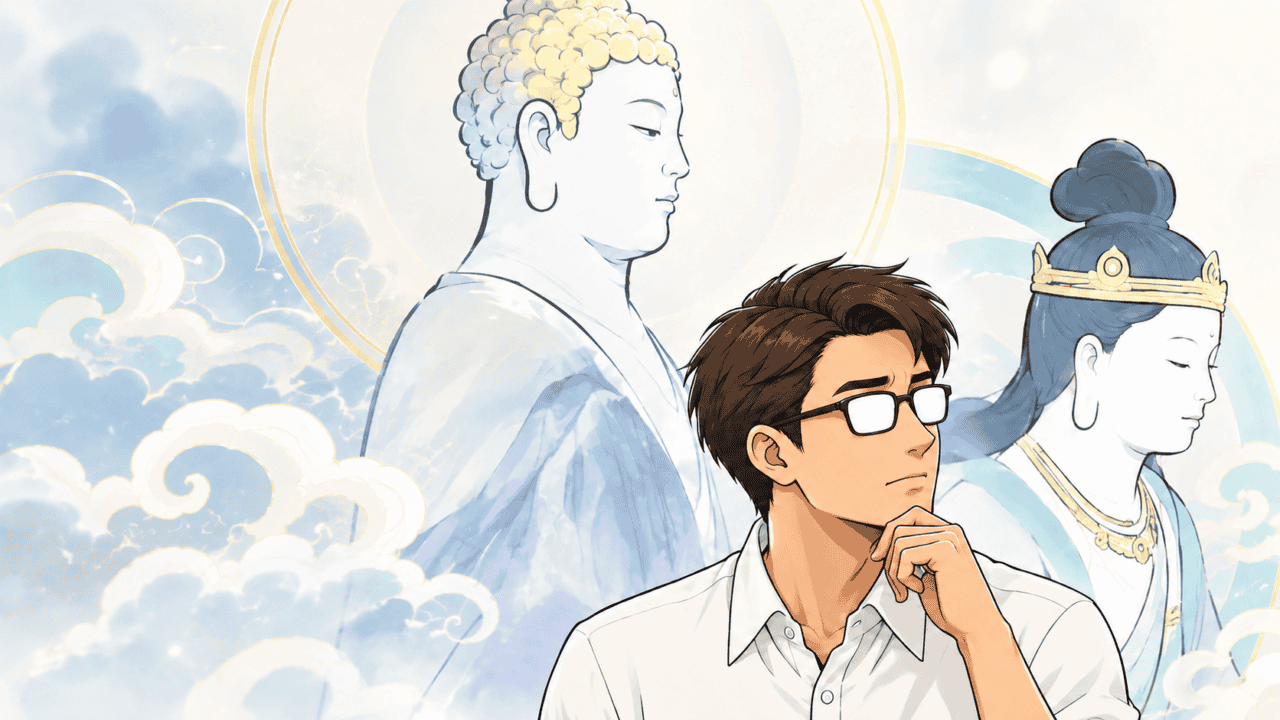
In my previous article on The Tale of the Princess Kaguya, “The Princess’s Crime and Punishment”, I worked from the premise that Kaguya really had committed a crime and was being punished. By connecting her story with the cruelty of the Hagoromo legend, I may have suggested a way of making an already painful film unnecessarily hard to watch.
This time, I want to go deliberately to the opposite extreme.
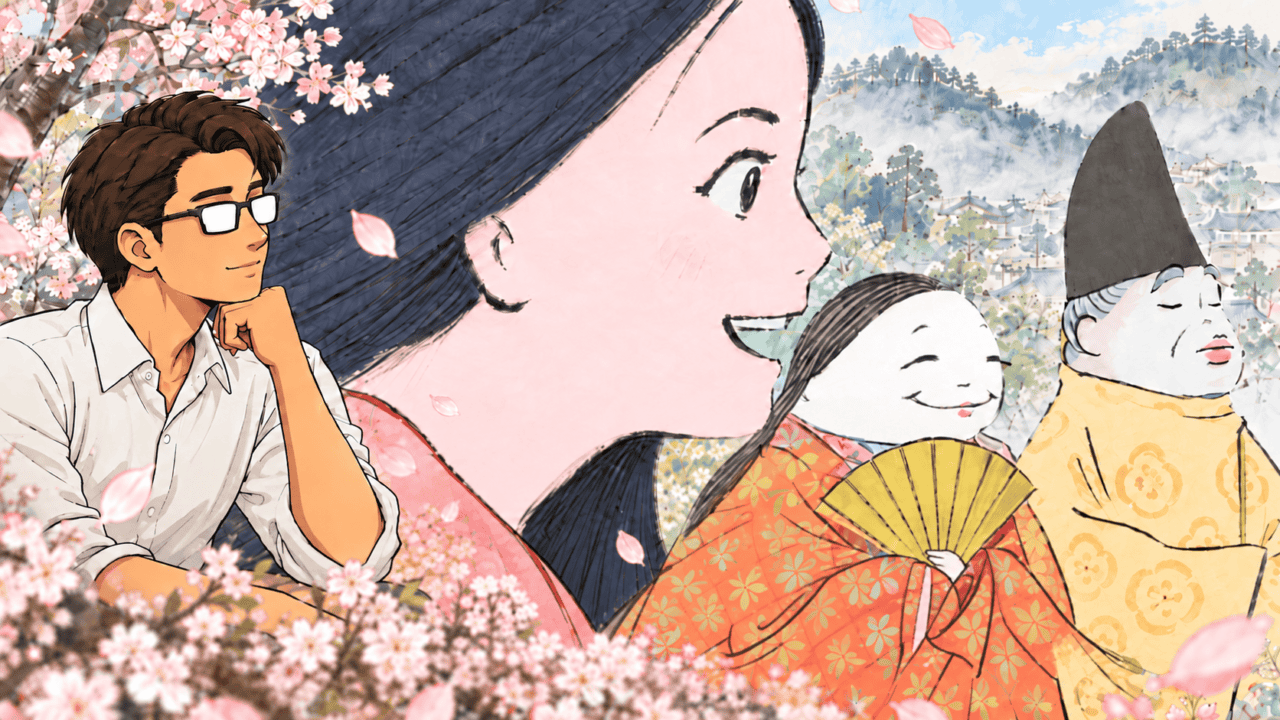
I want to consider the possibility that Kaguya committed no crime and received no punishment. My starting point is that I can find no reason for the Moon’s inhabitants to punish her. While writing the previous article, I began to think that the Moon was not the kind of world that would punish anyone.
What happens in The Tale of the Princess Kaguya if we look at it from the Moon’s perspective?
*This is a translated version. The original (Japanese) is available here.
- The Moon: A Carefree World Without Worries
In The Tale of the Princess Kaguya, Takahata’s request for “carefree,” “idiotic” music suggests beings who are innocent but insensitive, without emotional ups and downs. They seem indifferent to human suffering: beyond us, for better or worse. - Life on Earth: A Journey She Asked to Take
Kaguya herself calls it punishment, but the Moon’s inhabitants do not seem to regard it that way. They arrive when she wishes to go home. We can read her time on Earth as a temporary visit she wanted, rather than a sentence. - A Speech the Moon’s Inhabitants Cannot Understand
Kaguya’s final appeal moves an earthly audience. To those from the Moon, it may look like baffling, overblown theater. I read the scene as expressing the emotional gulf between the two worlds.
On this pageContents
The Tale of the Princess Kaguya from the Moon’s Perspective
Considering the Moon’s inhabitants raises a different possibility: that Kaguya’s journey was neither a crime nor a punishment.
The Moon in The Tale of the Bamboo Cutter
As I mentioned in the previous article, The Tale of the Bamboo Cutter briefly describes the Moon’s world. The passage comes near the end, when its inhabitants arrive to fetch Kaguya:
…As soon as [the celestial beings] draped the celestial robe over her, Kaguya’s pity and affection for the old man disappeared. Wearing the robe, she no longer felt troubled. She boarded the carriage and ascended with around a hundred celestial beings.
(Original Text, in classical Japanese)
・・・・・・ふと天の羽衣うち着せ奉りつれば、翁を「いとほし、愛し」と思しつることも失せぬ。この衣着つる人は、物思ひなくなりにければ、車に乗りて、百人ばかり天人具して、昇りぬ。
訳:・・・・・・(天人が)かぐや姫にさっと天の羽衣を着せると、翁に対して「気の毒だ、愛おしい」と思っていたかぐや姫の思いもなくなってしまった。羽衣を着ることによって思い悩むことがなくなってしまったかぐや姫は、車に乗って百人ほどの天人を連れて月の世界に帰ってしまった。
The Moon, then, is “a world without worries.” To have nothing to worry about would presumably mean having no emotional ups and downs in one’s judgments. It is a world without what Buddhism calls earthly desires, or bonnō.
But that creates a problem. The wish to punish someone for their behavior comes from some kind of attachment: it is itself an earthly desire. Why would the Moon’s inhabitants, who supposedly have none, punish Kaguya?
They would not.
So far, that argument rests only on the original tale. Yet there is also a hint that the Moon’s inhabitants in The Tale of the Princess Kaguya lack emotional fluctuations. Unfortunately, it comes not from the film itself but from a scene in its production documentary, Isao Takahata: Making The Tale of the Princess Kaguya (高畑勲、『かぐや姫の物語』をつくる).
The First Request for “The Procession of Celestial Beings”
Around ninety minutes into the documentary, the discussion turns to the film’s music. After various developments, Joe Hisaishi is asked to compose the score. The team shows him the footage completed so far to give him a sense of the film. His first response is, unsurprisingly, to the extraordinary running scene. Then he asks what will happen when Kaguya returns to the Moon. Takahata replies:
Here is how he describes the music:
For the music, one thing I definitely want you to keep in the back of your mind is… [omitted: reference to Director Kon Ichikawa’s The Tale of the Bamboo Cutter]… On the other hand, for our version, when doing this, I thought… you know the ‘Amida Raigo-zu’ (Descent of Amida Buddha)? Amida is in the center riding on a cloud, leading a band of musicians. (To this, Joe Hisaishi asked, “Is it heavenly music?”) It’s not heavenly music. Should I just say it? I’ll say it. It’s a band. It’s extremely carefree, with a rhythm. They come down swaying their bodies, chaka-chaka. Pure music, how should I put it, is pure and free of worries, and somehow weird, isn’t it? I think the word ‘carefree’ (noutenki) fits perfectly. If I had to describe the musical image, it’s like a botched Indian musical, kind of idiotic music. (Joe Hisaishi replied, “Oh, there is one. What was that movie called again?”) Muthu (Odoru Maharaja). Stuff like that. And also, um, samba. Brazilian samba. There’s a bit of that in there too, right? They are completely empty-headed, playing chaka-chaka, but if they want to bring out pathos (sorrow) occasionally, they can. That kind of… yeah, riding on a cloud going chaka-chaka, fading in. Nobody is expecting them.
(Original Text, in Japanese)
音楽も 頭の隅にぜひ置いて頂きたいのは ・・・中略(市川崑監督の「竹取物語」についての言及)・・・ それに対してこっちは これをやる場合 思ったんだけど 「阿弥陀来迎図」って 雲に乗って阿弥陀さんが真ん中にいて みんな楽隊を引き連れているんですよ (これに対して久石譲さんが「天の音楽ですか」と聞くと) 天の音楽じゃないです 言っちゃおうかな 言います 楽隊なんです 極めて能天気で リズムがある チャカチャカ体を揺すって 降りてくる感じで 清浄な音楽ってね なんていうかな 悩みがなくて清らかで なんか変じゃないですか 能天気っていう言葉がぴったりだと思うけど 音楽的なイメージで言うと インドのミュージカルの出来損ないみたいな なんかアホみたいな音楽ですね (久石譲が「ありますね 何だっけあの映画」と返して) 「踊るマハラジャ」 ああいうやつとか それからあの えっとサンバですね ブラジルの ああいうのも そういう所あるんじゃないですか 頭がパーッとすっ飛んじゃってね チャカチャカなってるんだけど 時々ペーソス(哀愁)を出そうと思えば出せる そういう ああいう チャカチャカ雲に乗ってね フェードインしてくる 誰も期待してないですから
Leaving this article’s argument aside, what matters is that Takahata already had a clear image of the ending, even if it had not yet taken musical form. And Hisaishi deserves admiration for turning such a difficult brief into that remarkable piece—though, of course, there must have been further discussions afterward.
Kazumi Nikaido’s theme song is wonderful too. This film really was fortunate in its music.
For my argument, the important words in Takahata’s description are “carefree,” “idiotic music,” and “completely empty-headed.” Apparently, the Moon’s inhabitants are a carefree bunch whose heads have gone altogether empty.
What might that mean for The Tale of the Princess Kaguya?
The Journey Kaguya Wanted
Judging from Takahata’s musical brief, the celestial beings in this film are basically easygoing. It is extremely difficult to imagine the inhabitants of a “world without worries.” Still, their world need not be a silent, empty place resembling death.
Starting from that premise, we might describe The Tale of the Princess Kaguya this way:
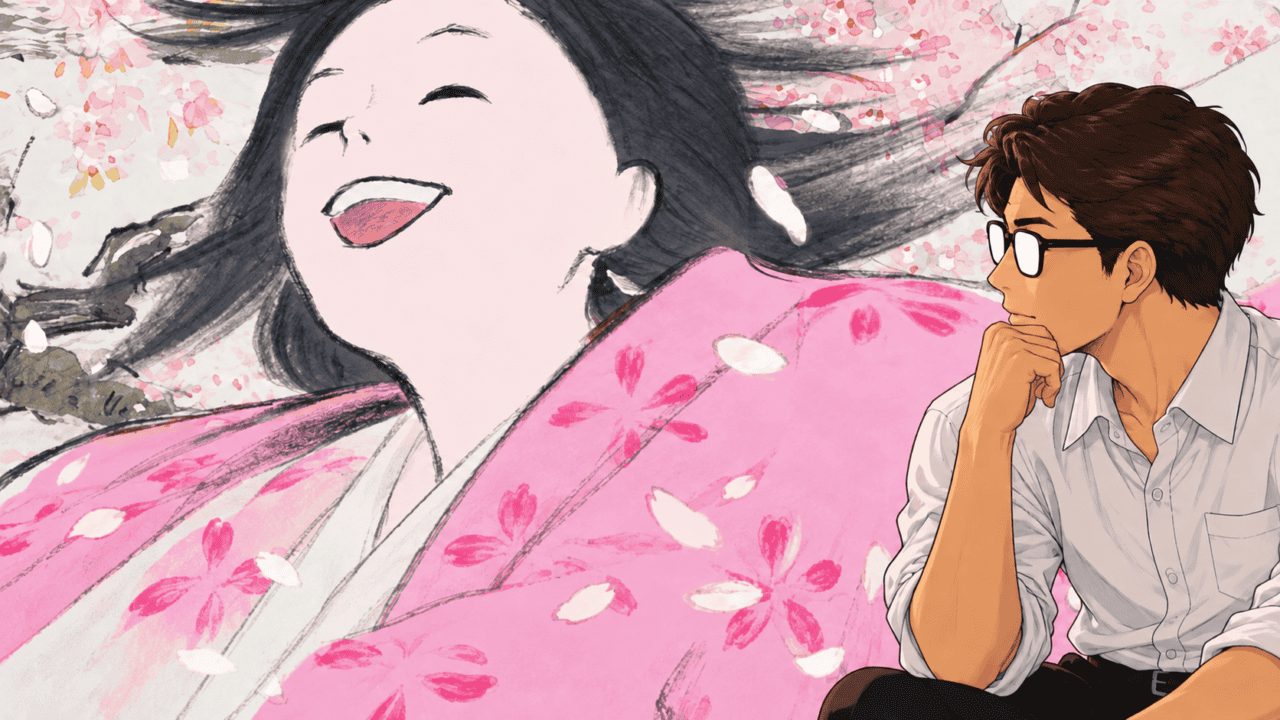
Kaguya wished to go to Earth and was sent there; she wished to go home and was returned to the Moon.
Could that be the story we are watching?
In The Tale of the Bamboo Cutter, a celestial being does explain that Kaguya committed a crime and was sent to Earth as punishment. But that explanation is absent from the film. Kaguya alone insists that it is punishment.
This reading also makes the Moon’s behavior seem quite natural.
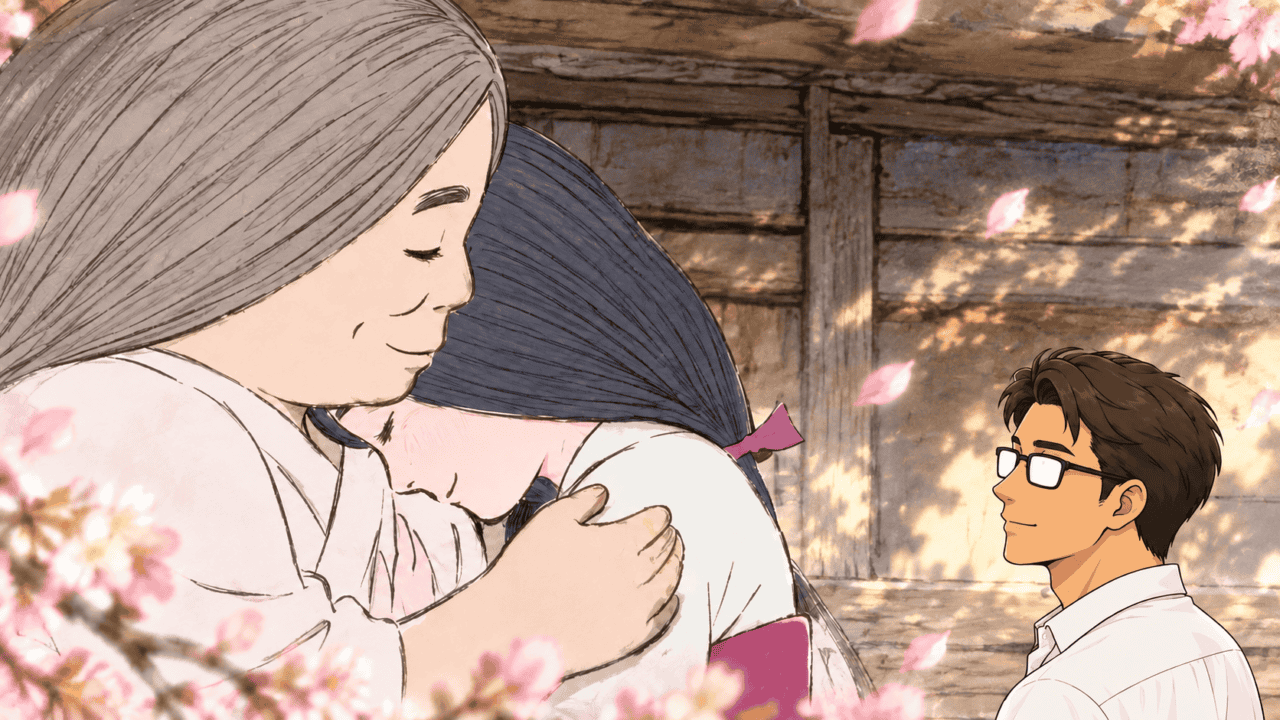
Perhaps they send clothes and gold through the bamboo because she needs them to live. Perhaps they return her to the mansion after her flight because she is about to die in the snow. And perhaps they come merely because she wishes to return, not because a sentence has ended, but because they never intended a punishment at all. What a carefree bunch, with no understanding of anyone else’s feelings.
That would explain their puzzled expressions when she rejects the celestial robe.
Even they must be confused when someone who asked to go home resists their arrival. “You’re the one who called us!”
While writing “The Princess’s Crime and Punishment”, two questions kept bothering me. Why would inhabitants of a world without worries punish Kaguya? And if her crime warranted exile, why would merely wishing to go home earn her forgiveness?
For me, the idea that she committed no crime and received no punishment makes things somewhat easier to understand.
As for why she wished to visit Earth, I still think the explanation in the previous article applies. Ironically, the celestial maiden’s tragedy in the Hagoromo legend may have intensified Kaguya’s interest in Earth.
In any case, the Moon’s inhabitants probably thought nothing of her days on Earth. They really are an easygoing lot.
An Aside: Kaguya’s Final Speech
Near the end, Kaguya gives us a speech that feels theatrical—in a bad sense. This is the scene:
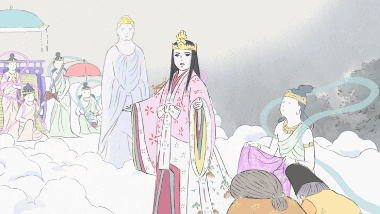
Quoting the children’s song—“Birds, bugs, beasts, grass, trees, flowers!”—she performs with grand gestures, as though she has been given the finest stage of her life.
Having identified with Kaguya and the old couple, we feel nothing strange about it. Looking more coolly, though, there is something slightly jarring. Kaguya has tended toward broad gestures throughout the film, but here they seem to erupt.
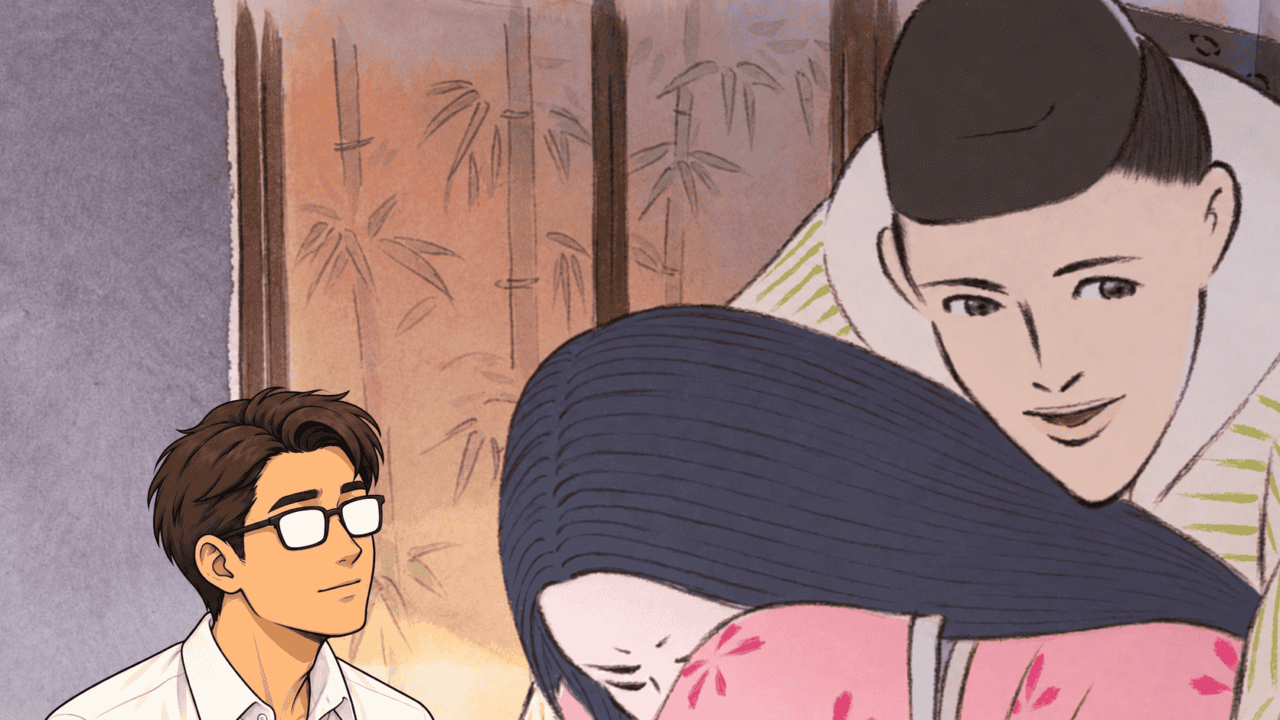
Why is the scene so theatrical? Perhaps that is how it looks to the Moon’s inhabitants. Look at their “What on earth are you talking about?” expressions:
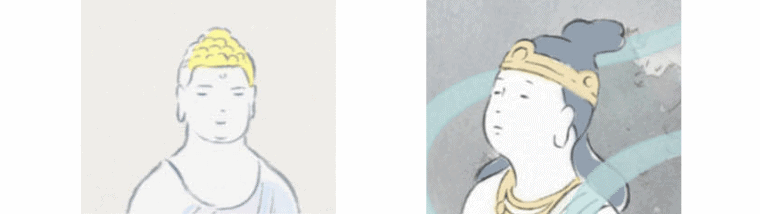
They have come to fetch her, only to find her overcome with emotion and making a speech. They must be thoroughly bewildered. We on Earth understand the feeling behind her words, but they live in an entirely different context. They do not understand her feelings—and could hardly be expected to. That is the sort of people they are.
Your Take: Kaguya’s Life on Earth
Kaguya’s days on Earth bring joy as well as suffering. What do they mean to you?
Poll results
How do you see Kaguya’s time on Earth?
- A punishment.0%
- A gift: a chance to experience life.0%
- Both a punishment and a gift.0%
- Neither—I see it differently.0%
- I’m not sure.0%
The images used in this article are provided by the “Studio Ghibli Works Still Images” repository.
Can you name the movie before the scene comes into focus?
Put your visual memory to the test with a blurred Studio Ghibli scene.


Reader Comments
Have a thought or interpretation? Leave a comment