
Tite Kubo’s Bleach ran in Weekly Shonen Jump from 2001 to 2016. I wasn’t following the manga as it came out, but I watched the anime from the start. It ended with the story still unfinished. Then in 2022, the final arc, Bleach: Thousand-Year Blood War, finally made it to the screen.
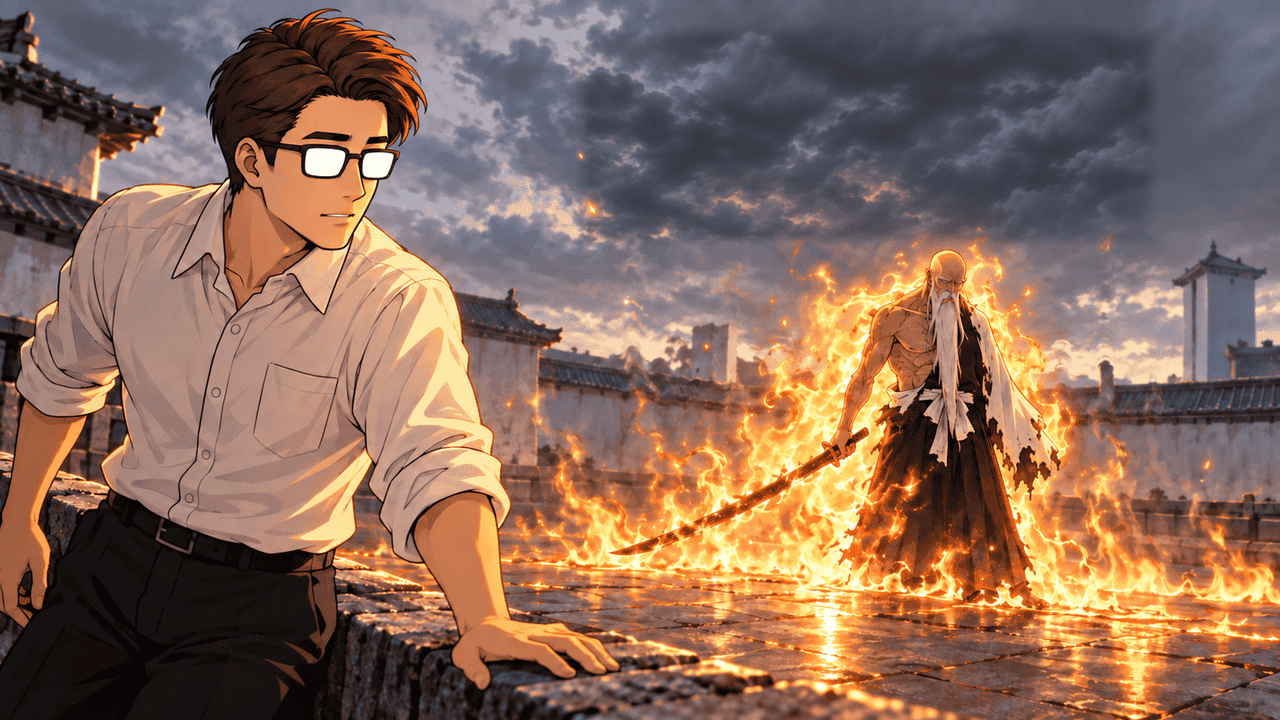
By then, the manga had been over for years. I’d heard enough to have some idea of what was coming, but when I actually watched it, the adaptation was so good I couldn’t look away. Two scenes in particular stuck with me: finally getting to see old man Yamamoto’s Bankai, Zanka no Tachi, and watching Retsu Unohana fight Kenpachi Zaraki.
Spoilers follow for Bleach: Thousand-Year Blood War and the Chimera Ant arc of Hunter × Hunter. The dialogue quoted here is translated from Japanese.
*This is a translated version. The original (Japanese) is available here.
- Yamamoto’s four forms of Zanka no Tachi. Each one is spectacular. If I’d seen them as a kid, I’d have spent ages arguing with my friends about which one was best.
- The war and the World of the Living. Yamamoto gives his heat a number. That got me wondering what would happen if ordinary people ever got drawn into the fighting.
- Unohana and Kenpachi’s duel. Watching the two finally fight again after centuries, I could practically see them declare their love for each other.
- The cruelty of Minazuki. Unohana’s Bankai seems to heal Kenpachi as well as herself, keeping their fight going each time it seems about to end.
On this pageContents
Yamamoto’s Bankai, Zanka no Tachi
Yamamoto’s Bankai has an East, West, South, and North form. Just watching him move from one to the next was the kind of thing that would have put me and my friends at odds as kids. Then he said how hot his Bankai gets, and I found myself thinking about the people in the World of the Living, most of whom have no idea a war like this is even going on.
The Four Forms of Zanka no Tachi
I’ve always had a soft spot for ridiculously powerful old men in fiction: Yoda in Star Wars, Master Roshi in Dragon Ball, Chairman Netero in Hunter × Hunter. Bleach kept hinting that Genryusai Shigekuni Yamamoto, the old man at the head of the Soul Reapers, belonged in that company. We’d even seen flashes of what he could do, but we’d never seen him go all out.
When Thousand-Year Blood War was animated, I finally got to see his Bankai. Zanka no Tachi has four forms:
- East: Kyokujitsujin
- West: Zanjitsu Gokui
- South: Kaka Jūmanokushi Daisōjin
- North: Tenchi Kaijin
I remember South getting the most attention when the manga was still running. Having seen the anime, I’d pick East. If I’d been in elementary school, my friends and I would have argued endlessly over which form of Zanka no Tachi was best.
What Yamamoto’s Heat Made Me Wonder
What really got me thinking was what Yamamoto says after activating Zanka no Tachi, West:
“The heat reaches fifteen million degrees. You can’t even touch me. Think of it as though, in Bankai, I’ve wrapped my body and blade in the sun itself.”
“If I don’t finish this quickly, you, I, and the whole Soul Society will burn away.”
Taking Yamamoto at his word sent me down a strange train of thought. If even someone like him can describe his power in terms we recognize, could something like chemical weapons from the human world pose a threat to the Soul Reapers? It feels almost obvious once I’ve asked it. It’s also the kind of question I tend to forget when I’m reading a battle manga.
An ordinary person would stand no chance against someone like Yamamoto one on one. In a war on the scale of Thousand-Year Blood War, though, I can imagine humanity having a real chance. That would be a miserable fight to watch. The thought does bring out something interesting about the story we actually get. The Soul Reapers’ war with the Quincies is fought as though the World of the Living were on the other side of a wall. Even a war that could have enormous consequences for the living goes on largely out of their sight.
I always think of the Chimera Ant arc of Hunter × Hunter here. Meruem, the Ant King, seems impossible for any fighter to defeat. What finally brings him down is the Poor Man’s Rose, a weapon made by humans. I still find it startling that a manga so recognizable as a battle series makes a weapon of mass destruction decisive.
Even by Thousand-Year Blood War, most people in Bleach have no idea the Soul Society or the other realms exist. A few people do know, and that knowledge could get out. If enough people came to fear the Soul Reapers, I can imagine that fear turning into a war of their own. The deciding force might be the sort of weapon humans already fear, and there would be very little pleasure in watching it go off.
I doubt Bleach would ever choose to tell a story that grim. Still, I like that the divide between its worlds feels precarious enough for me to wonder about it.
Unohana vs. Kenpachi
The other scene I couldn’t get out of my head was Unohana’s duel with Kenpachi. As the Soul Reapers prepare for another clash with the Wandenreich, their new head captain sends Unohana to teach Kenpachi swordsmanship. The two have already fought once, when Kenpachi was a child. What happened back then explains why an order to train him ends with both of them fighting for their lives.
How They First Met
Maybe Bleach had already dropped a hint I missed. Retsu Unohana, the captain I associated with healing, was the first Kenpachi. She led Squad 11 when the Thirteen Court Guard Squads were founded and had been one of the Soul Society’s most notorious criminals. An extraordinary swordswoman who loved fighting, she killed person after person in search of someone who could satisfy her.
Then she came across Kenpachi Zaraki when he was still a boy. He was as weary of easy fights as she was. At last, crossing swords with someone gave her joy.
I love the Japanese word used here, umu, which means growing bored or weary. I might use the related aguneru when I’m at a loss with something. On its own, umu is far less familiar, but the scene makes the meaning clear. That one unusual word tells you how thoroughly fighting had worn out its appeal for Unohana. That’s the sort of style I love about Bleach.
Kenpachi felt that same joy. He was so afraid it would end that he picked up a habit he couldn’t even recognize in himself. Even as a boy, Kenpachi was stronger than Unohana and unknowingly held himself back to keep their fight going. Unohana realized it, and the shame of it stayed with her. She’d found the person who should inherit the name Kenpachi. She also understood that bringing him to his full strength would cost her life.
A Duel That Looked Like a Love Scene
After the Wandenreich strike and the Soul Reapers lose Yamamoto and many others, Shunsui Kyoraku orders Unohana to train Kenpachi. She takes him down to Muken for a duel to the death, intent on breaking the habit he picked up as a child. It’s easy to see what the Soul Society needs from the two of them. What they say to each other in the middle of the fight is what makes the scene something else for me.
Kenpachi Zaraki
- “So you’re using tricks like that just to land a cut? You’ve changed a hell of a lot from the woman I looked up to!”
- “Fighting you was the first time I felt fear. The first time I found a fight fun. I wanted to fight the way you did. Am I going to die here without ever beating you?”
- “Is that it? Hey, are you dying? Don’t die. I’m not done yet. It’s still not enough. Please. Don’t die!”
Retsu Unohana
- “You won’t die. Each time you come close to death, you grow stronger. That is the mistake you imposed on yourself. And my sin.”
- In the flashback: “I never imagined I would find such joy in crossing swords with a child.”
- “I’m stronger than anyone. Except you.”
- “Goodbye, the only man in the world who ever gave me joy.”
How is that anything but a declaration of love? After centuries of longing for each other, Unohana and Kenpachi finally got to embrace. With their Zanpakuto! I found it ferocious, heartbreaking, and impossibly romantic.
I wanted to shout, “Bravo, Tite Kubo!” for getting a scene this wild into Shonen Jump of all places. I was just as thrilled that the anime did it justice. I can see why someone would call it a pure, sad fight between two people who only feel alive in battle. But tell me they don’t look like they’re embracing. To me, it’s the fiercest, most heartbreaking love scene in shonen manga.
What Makes Minazuki So Disturbing
As much as I saw a love scene, the details are ugly. Unohana puts it plainly: “I learned to heal myself so I could enjoy fighting forever.” I’d always thought of Captain Unohana as a master of healing. Learning why she took it up in the first place changed the way I saw her.
She heals herself as she fights. When that no longer seems fast enough, she finally releases her Bankai, Minazuki. The anime never spells out exactly what it can do, but the healing looks much more powerful, and Kenpachi seems to be recovering, too. Minazuki seems to heal both Unohana and her opponent so she can keep fighting the one person who can match her.
Even before she releases it, Kenpachi repeatedly blacks out and comes to in the middle of the fight. Unohana tells him she’ll kill him a hundred times or a thousand, and heal him each time until he’s himself again. If those blackouts are what they seem, the sword lesson is brutal. She lands a mortal blow, heals him, and gets him back on his feet to fight her again. She must have been having the time of her life.
There’s one line that makes me less sure. Kenpachi says he usually has fun fighting without losing himself or blacking out. The only other time it happened was the day he first fought Unohana.
That matters because, as I understand their first encounter, Kenpachi was already stronger. It’s hard for me to imagine her mortally wounding him and healing him back then. What if the moment when everything goes black is Kenpachi seeing what’s about to happen? He sees a fatal blow coming, and by the time he’s back in the fight, he’s already used what he saw to avoid it.
I still don’t quite know what to make of it. The fight in Muken may remain somewhere between a dream and reality for me. Either way, what a scene.
There were plenty of other moments worth talking about, but these were the ones that stayed with me. I’d love to know which scene was your favorite, and how you saw Unohana and Kenpachi’s duel.
Reader poll
Official story and episode guide.


Reader Comments
Have a thought or interpretation? Leave a comment