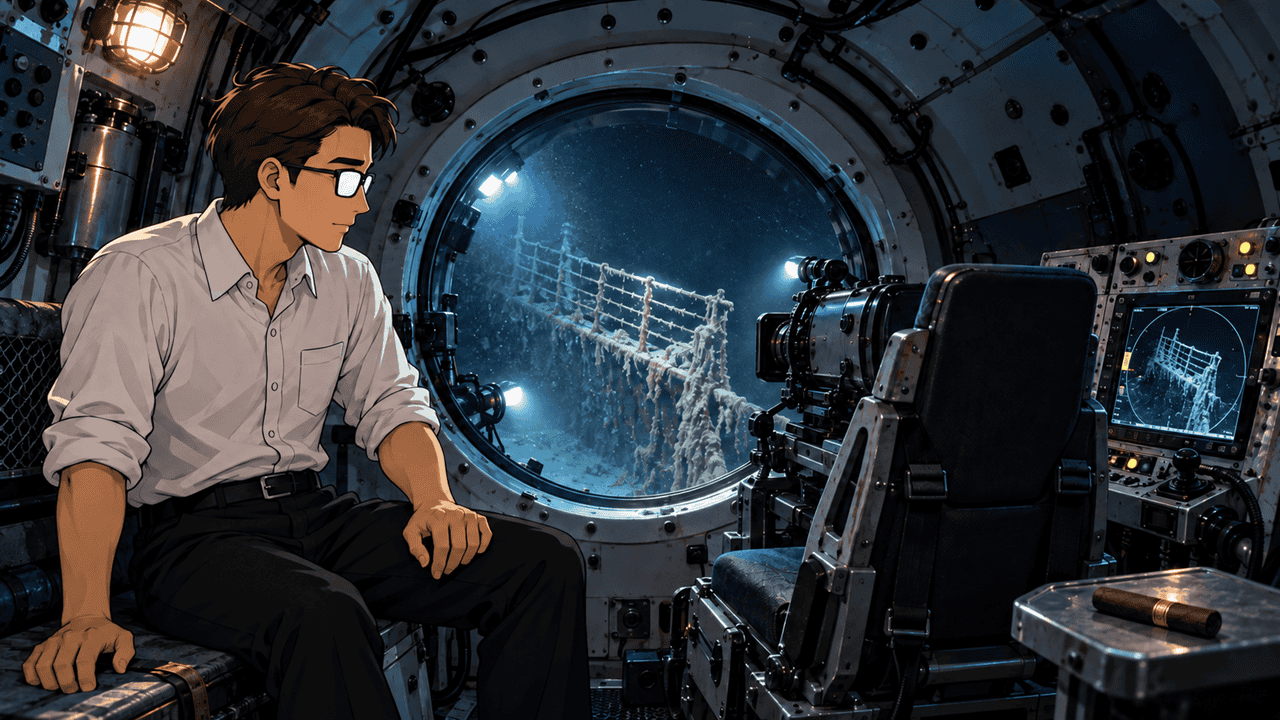
In Titanic, the elderly Rose recalls events from 84 years earlier, and her story takes us back to 1912.
Yet the film routinely shows us things Rose could never have witnessed. We see Captain Smith talking to Ismay, the wireless room, the engine room, and the lookout post where the iceberg is spotted. Rose could hardly know what it looked like when seawater began pouring into the bottom of the ship.
That might lead some viewers to wonder whether Jack was someone the elderly Rose invented.
But if we are going to imagine that someone is creating this Titanic in their mind, my attention turns to someone other than Rose.
The treasure hunter Brock Lovett.
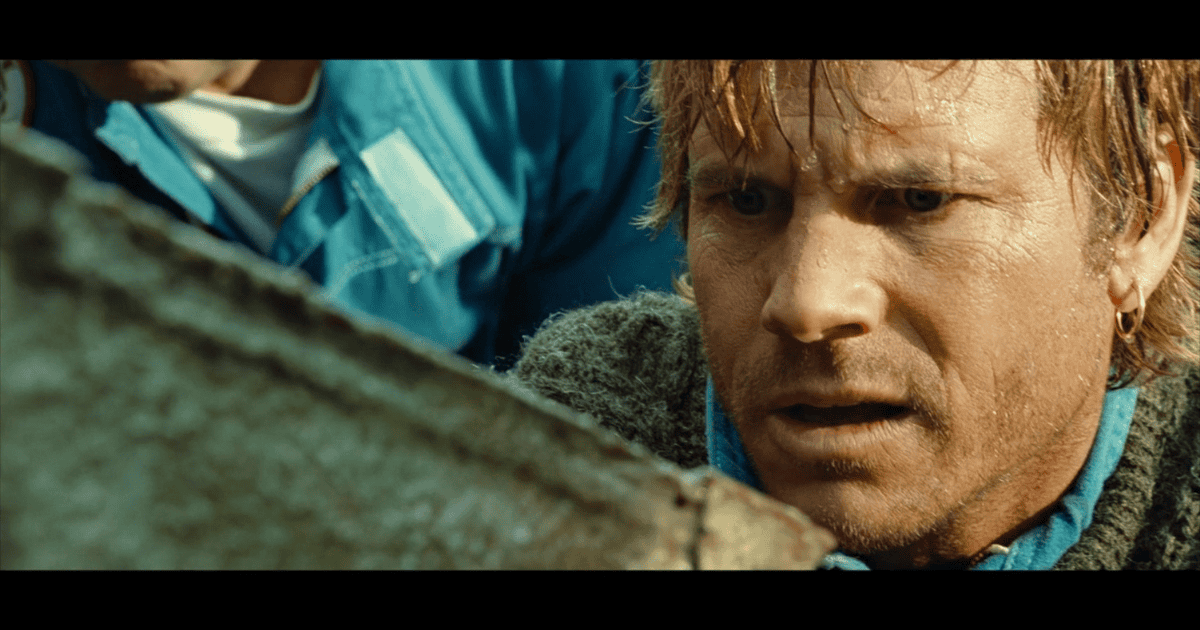
And I mean something more radical than the idea that Rose invented parts of her account. What if even the elderly Rose who arrives on his ship 84 years later existed only in his imagination?
It sounds like a far-fetched interpretation. But return to the beginning of the film, and it starts to look surprisingly plausible to me.
*This is a translated version. The original (Japanese) is available here.
- Lovett fails to find the diamond: Rose’s story can be read as a way for him to accept that, although he never found the Heart of the Ocean, coming to Titanic mattered for another reason.
- Was Rose someone Lovett needed? One possible reading is that Lovett imagined the elderly Rose herself to give his unsuccessful treasure hunt a different meaning.
- Why show scenes Rose never witnessed? The film can be understood as Rose’s story layered onto the knowledge of Titanic that Lovett has spent years assembling, rather than Rose’s memories alone.
- Lovett echoes James Cameron: Cameron’s journey from diving to the real wreck to a changed understanding of the ship and its victims closely resembles Lovett’s transformation.
- The final cigar and the Heart of the Ocean: Lovett discarding his cigar and Rose then discarding the diamond can be read as two parts of one gesture: letting go of the excitement of treasure hunting and exploration.
On this pageContents
Rose Appears When Lovett Cannot Find the Diamond
Brock Lovett’s reason for coming to Titanic is straightforward. He is looking for the Heart of the Ocean.
He is delighted when the remotely operated vehicle enters the wreck and finally locates Cal’s safe. He has even saved a cigar for the moment he finds the diamond. But when the safe is opened, the one thing he wants is missing.
That leaves Lovett in an awkward position. This is about more than his own disappointment: a research ship, submersibles, and a large team have all been mobilized for the search. After the safe proves empty, his backers contact him, and he has to insist there is still a chance and ask them to trust him.
Meanwhile, a television interviewer asks whether he is a grave robber. Lovett explains that his team includes museum-trained specialists who preserve and document recovered objects properly. He even argues that recovering artifacts from Tutankhamun’s tomb was not called grave robbing.
His argument has merit. Preserving objects recovered from Titanic and studying the wreck do have historical value.
But this is the same man who was making such a fuss about finding a safe a moment ago.
He had even brought a cigar.
It is hard to believe his only aim from the start was to preserve historically valuable material for future generations. He wanted the blue diamond. He came to find it, and he failed.
To me, that discomfort lies beneath Lovett’s behavior at the beginning of the film.
He has not achieved what he came for. But he wants to believe that coming to Titanic meant something else.
And then the elderly Rose appears.
She is almost too perfect for his needs. She is the woman in the drawing recovered from the safe, and she knows about the Heart of the Ocean. She can also tell him about Titanic as someone who was actually there, bringing life to a ship he has known only through records and computers.
By the time he has heard her whole story, Lovett is no longer lamenting his failure to find the diamond. Instead, he realizes that, despite thinking about Titanic for three years, he had never really understood it.
For Lovett, isn’t this a remarkably comforting—and convenient—story?
He has not come away with nothing. There was no diamond, but he learned something more important. That would mean his journey here, and even the empty safe, had not been a waste after all.
What if Lovett had created that story himself?
What if he invented Rose and let her tell the story of Titanic 84 years earlier so that he could tell himself he had not found the diamond, but that it was all right?
Seen that way, the elderly Rose begins to feel strangely close to Lovett himself.
Why Do We See Parts of Titanic That Rose Never Knew?
That brings us back to the question at the beginning.
If the long story set in 1912 were literally Rose’s memories, it would be odd to see places where she was never present. She did not overhear Ismay talking to Captain Smith about speed. She would not know what passed between the wireless operators. The same applies to the lookouts who spotted the iceberg and the engine room immediately after the collision.
For a comparison of these scenes with the historical record, I examine the 1912 inquiries and other evidence in a separate article on fact and fiction in Titanic.
There is nothing unusual about any of this as filmmaking. But if we imagine that this Titanic is being created in Lovett’s mind, those scenes take on a different significance.
Because Lovett would know about them.
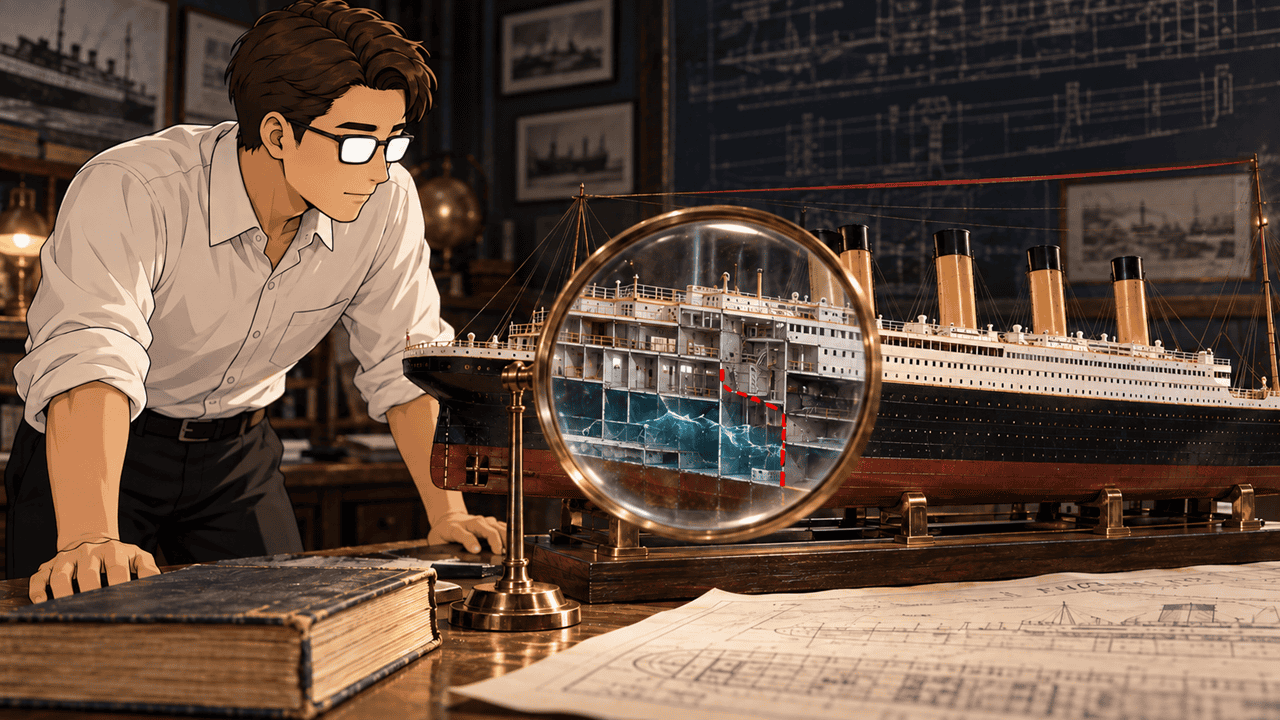
He and his team have spent a long time researching Titanic. They know the ship’s layout and have made a computer reconstruction of how it flooded, broke apart, and sank. Early in the film, he even shows that animation to Rose herself and proudly talks her through it.
Lovett’s team knows how Titanic sank. What they do not know is what it meant to the people who lived through it.
Then Rose begins her story.
Imagine placing Jack and Rose inside the knowledge Lovett has spent years collecting. Captain Smith, Ismay, the engineers, and the wireless operators are all part of the Titanic he knows. Jack and Rose run through that world, fall in love, and are finally thrown into the sea.
Perhaps the film we are watching is the Titanic Lovett knows, overlaid with the story of Rose that he needed.
That is one way of looking at it.
Read this way, the cigar and the Heart of the Ocean at the end acquire another, slightly stranger meaning. I explored those two objects in the previous article on why Rose throws away the diamond.
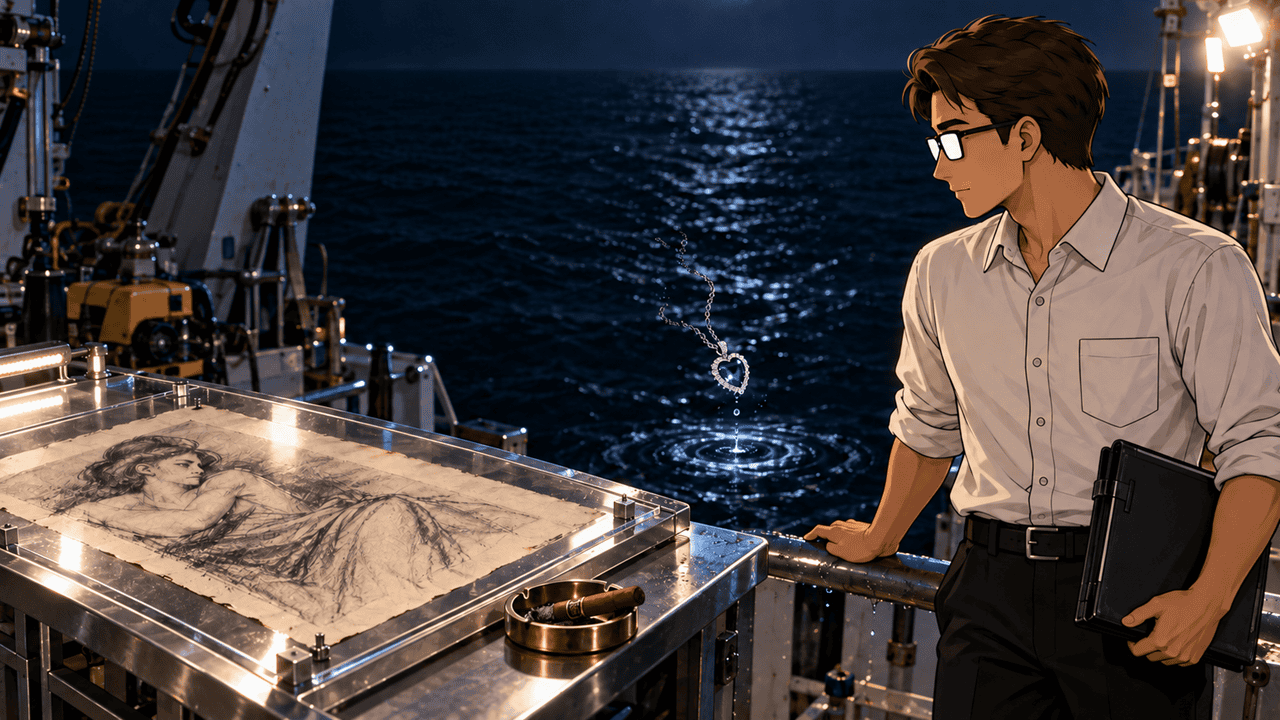
After hearing Rose’s story, Lovett throws his still-unsmoked cigar into the sea—the one he had saved for finding the Heart of the Ocean. Rose then drops the actual Heart of the Ocean into the water.
In that earlier interpretation, I suggested that both characters stopped needing the diamond on the same night. Lovett no longer needed to find it, and Rose no longer needed to keep it.
By discarding the cigar, Lovett says goodbye to the version of himself who was going to discover the diamond and celebrate a great success. But he cannot throw away the Heart of the Ocean itself. He never had it.
Rose seems to perform that final act for him—the one thing he cannot do himself.
Although they are separate characters, they begin to look almost like two parts of the same person. Could it be that, once Lovett’s treasure hunt has ended within him, even the diamond in Rose’s hand is no longer needed?
And once I follow that thought this far, another person begins to emerge behind Brock Lovett.
Is Brock Lovett James Cameron’s Alter Ego?
Thinking about Lovett inevitably brings me back to James Cameron himself.
The film does not, of course, explicitly say that Lovett is modeled on Cameron. But reading Cameron’s own account of why he began making Titanic makes me wonder whether the resemblance is a coincidence.
Cameron Made Titanic Because He Wanted to Dive to the Wreck
In a 2004 essay for WIRED, Cameron wrote:
“I made the movie Titanic because I thought I could talk the studio into letting me dive and film the real ship.”
Source: James Cameron, “The Drive to Discover” (WIRED, 2004)
He describes filmmaking as secondary to his fascination with wreck diving. Titanic was the ultimate wreck. In September 1995, he made 12 dives using Russian Mir submersibles.
In other words, the film did not lead him to the wreck.
He wanted to dive to Titanic, so he set out to make a film.
In 2003:
“I was trying to figure out a way to dive the Titanic wreck”
Source: James Cameron interview (The Guardian, 2003)
His offer: a film in exchange for expedition funding.
Their objectives are different: Lovett wants the Heart of the Ocean, while Cameron wanted to see the real Titanic. Still, both are drawn to an extraordinary shipwreck, bring advanced equipment into the deep sea, and want to see what lies there with their own eyes.
At the start of the film, Lovett is absorbed in treasure hunting before he grasps the ship’s historical meaning. Cameron’s starting point likewise included an explorer’s intense curiosity about reaching the real Titanic.
Seeing the Real Titanic Changed Cameron
But that is not the only reason Lovett makes me think of Cameron.
After the dives, Cameron’s understanding changed.
A 1998 WIRED article recounts how he returned to his cabin after the early dives and cried as he recalled what he had seen.
“That’s the moment my technical guard got let down and I got kind of overwhelmed by it.”
Source: “Lunch on the Deck of the Titanic” (WIRED, 1998)
He had already written the treatment and researched the people, lifeboats, and events. Seeing the actual ship nevertheless changed his perspective.
In the same account, he says:
“I realized I was approaching it wrong”
Source: “Lunch on the Deck of the Titanic” (WIRED, 1998)
He came to value the ship’s human and emotional significance beyond simply obtaining footage.
Reading that, I cannot help thinking of Lovett at the end of the film.
Lovett knows a great deal about Titanic. He knows the interior layout and can explain the sinking with a computer animation. Yet after hearing Rose’s entire story, he realizes that three years of thinking about the ship did not mean he truly understood it.
Cameron’s starting point seems similar: a desire to reach the real wreck, see something few people had seen, and film it. But once he is there, what he encounters is more than an impressive sunken ship.
Many people actually died there.
The Cigar Lovett Throws Away: Cameron’s Excitement at the Adventure
That is why I keep coming back to the cigar Lovett discards at the end.
He had saved it to smoke when he found the Heart of the Ocean. It was meant for that triumphant moment when he could celebrate finally getting the diamond.
Might that cigar also hold something of Cameron’s own excitement at the adventure?
The desire to dive to the real ship, capture unprecedented images, and try new deep-sea filming techniques is hardly wrong in itself. Without that curiosity, would Cameron ever have undertaken those 12 dives?
But then he saw the wreck for himself.
And, by his own account, his defenses fell away.
After that, sheer excitement about a spectacular wreck or remarkable footage could no longer be enough. The knowledge that people had died in the very place he was so eager to explore would weigh heavily.
To me, Lovett throwing away that cigar also looks like James Cameron letting go of his own exhilaration at the adventure of exploring Titanic.
Was Rose Someone Cameron Needed, Too?
And then Rose throws away the Heart of the Ocean.
In the previous article, I suggested that Lovett loses his need to search for the diamond while Rose loses her need to keep it. In this interpretation, though, the two are closer still.
Rose lets the man who failed to find the diamond believe that coming to Titanic mattered all the same.
If Lovett is Cameron’s alter ego, Rose seems to do the same thing for Cameron.
Even if it began with a desire to dive to the real wreck, it did not end there. Making a film about what happened aboard that ship—how people lived and how they died—gave the undertaking another meaning.
Perhaps Rose was created to teach that to Cameron himself as well as to Lovett.
That makes her almost excessive convenience for Lovett more interesting to me, rather than less.
Rose is someone Lovett needed to exist. If he is Cameron’s alter ego, perhaps she is someone Cameron needed to exist, too.
That brings us back to the far-fetched idea I began with: that the film itself could be Lovett’s imagined story.
In this reading, the elderly Rose is not simply remembering events from 84 years ago. Lovett, having failed to find the diamond, imagines her so he can discover what coming to Titanic meant.
And behind Lovett stands James Cameron, whose film began with a wish to reach the real shipwreck.
I am not proposing a hidden plot twist in which Rose never existed. The film contains no such revelation.
But knowing Cameron’s account of the film’s origins, and of how encountering the wreck changed him, makes it difficult for me to see Lovett as merely the treasure hunter in the present-day framing story.
Lovett comes looking for the Heart of the Ocean, stops needing it, and throws his saved cigar into the sea. Then Rose, who seems almost to have appeared for his sake, throws away the actual diamond as well.
Outside the film, a director drawn to the real wreck ends up creating the human story of Jack and Rose.
Perhaps Brock Lovett is not the only person throwing that cigar into the sea.





Reader Comments