
The opening of Detective Conan: One-eyed Flashback shows a phone conversation between Koji Sametani and Kogoro Mouri. At first it seems like an ordinary exchange between old friends about a recent case. But if we look closely at how the scene works, doesn’t something seem distinctly unnatural?
*This is a translated version. The original (Japanese) is available here.
The conversation goes roughly like this. Sametani asks, “Do you know Inspector Kansuke Yamato of the Nagano Prefectural Police?” Kogoro replies, “We solved a case together once.” Sametani then asks whether he knows about the avalanche on Mt. Miho in Nagano about ten months earlier, in which Yamato was caught.
Kogoro replies:
“I’ve heard about that. He was caught in an avalanche while chasing someone, right?”
Sametani’s expression immediately changes and becomes serious. Rather than pursuing the details over the phone, he suddenly decides he needs to meet Kogoro in person.
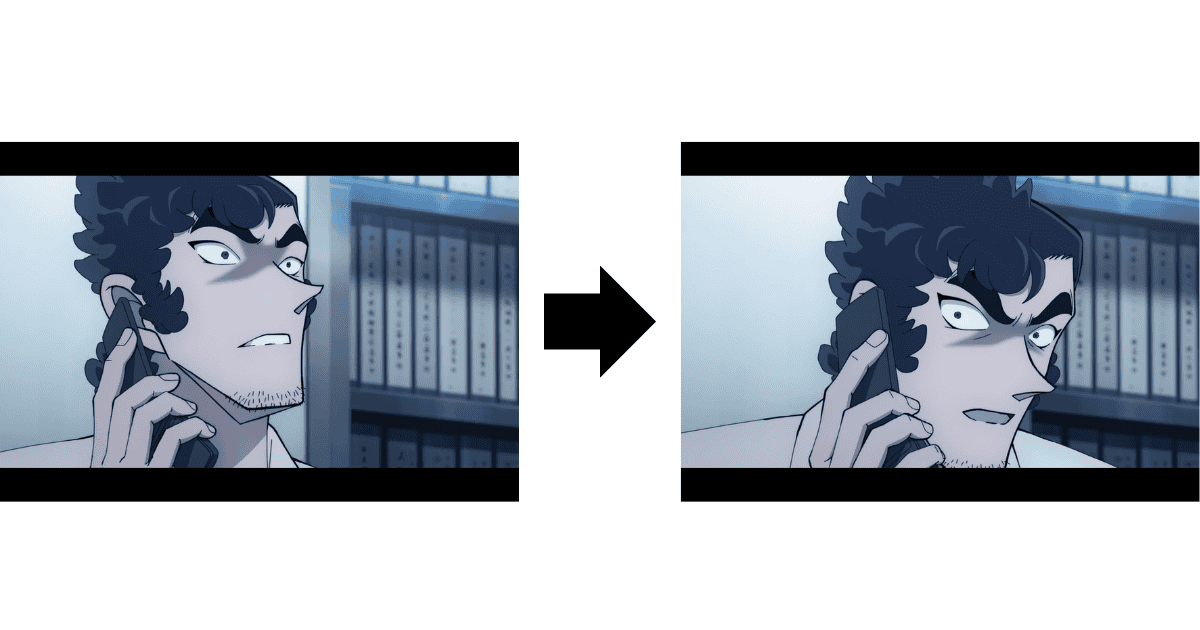
Starting from this unsettling moment, I want to consider why Sametani looked so serious and why he wanted to meet Kogoro directly. Following that thought may also help explain why Atsuhiko Hayashi killed Sametani.
My conclusion is that Sametani was not surprised by a new fact about the case. Rather, he may have been alarmed that Kogoro naturally knew information that should not have been public.
- Why did Sametani look so serious after Kogoro’s reply?
- What was so shocking about Kogoro’s words?
- Why did Sametani want to meet immediately rather than ask more over the phone?
- Why did Hayashi risk killing Sametani in broad daylight instead of targeting Yamato?
I will work through these implied intentions to consider the tension between Sametani and Kogoro, and what Hayashi may have been thinking.
- Kogoro May Not Have Seemed Important at First
When Sametani called, perhaps he had no strong conviction about Kogoro’s role. His name was in the case file, so this may have been a casual inquiry to an old friend. - The Danger Revealed by Kogoro’s Reply
Sametani may have expected “I saw it on television” or “I’ve met Yamato.” Instead, Kogoro casually mentioned the pursuit behind the accident. That suggested he had access to deeper information than Sametani expected. - Concern for a Friend—and the Possibility of Help
Sametani may have felt both alarm that his friend was too close to a dangerous case and hope that the still-active “Sleeping Kogoro” might help if needed. - The Possibility Hayashi Feared
Hayashi’s killing of Sametani makes sense if what he feared most was not the amnesiac Yamato, but Sametani meeting Kogoro, comparing information, and opening up a new line of inquiry.
On this pageContents
Why Kogoro’s Answer Changed Sametani’s Expression
The most striking detail in the call is Sametani’s reaction. Since he was investigating the Mt. Miho incident himself, it seems natural that he already knew Yamato had been caught in the avalanche while pursuing someone.
In other words, Kogoro’s statement should not have given Sametani any new information. Yet his expression clearly changes. The point cannot simply be that he has learned a new fact about the case.
Kogoro casually mentions more than an accident: Yamato was caught in the avalanche while chasing someone. If Sametani already knew that, what else in the answer could have surprised him?
We can only speculate, but suppose the accident involving a police officer had been reported, while the details of the investigation or pursuit had not. That would make Sametani’s reaction somewhat understandable. I know this inference is a little strained, but “while chasing someone” seems to be the only phrase he could have reacted to.
On this reading, Sametani is shocked that Kogoro knows information that should not be public and has a route by which it reaches him. That does not mean Kogoro knows the heart of the case, but Sametani may think his friend is connected to a deeper line of information than expected.
Sametani’s Two Feelings About Kogoro
Two conflicting feelings may have arisen in Sametani at that moment. One is straightforward concern.
Sametani knows Yamato was shot during the avalanche incident, and that the culprit behind it is dangerous enough to threaten the country. Hearing Kogoro mention information that should not be public may have made him feel an urgent need to find out how close his friend has come to that dangerous case.
Kogoro is also an old friend. Surely the wish not to draw him into danger is part of what makes Sametani look so serious.
At the same time, Kogoro’s assured answer may remind Sametani that “Sleeping Kogoro” is still active. He is not merely an old acquaintance: he is a celebrated detective who has solved many cases—all thanks to Conan, of course. He could be someone worth asking for help.
We cannot say that Sametani decides then and there to seek his full cooperation. But perhaps he now sees Kogoro as someone he must at least meet to sort through the information, and whose help he might need. He can no longer leave him entirely outside the case.
Why Sametani Wants to Meet Rather than Question Kogoro by Phone
What is also interesting is what Sametani does not do. He does not ask Kogoro who told him or how much he knows.
Perhaps this is because, while outwardly investigating the avalanche, Sametani is secretly working for Public Security on a much larger case behind it. A superficial conversation followed by a careful assessment in person would allow him to avoid revealing his real work or the underlying case. He may have judged the phone unsuitable for that.
Above all, his urgency seems less about extracting information than about telling Kogoro something directly: knowing this may mean he is in more danger than he realizes. Perhaps Sametani feels he must meet his friend and confront him with the seriousness of the situation.
How This Connects to Hayashi’s Killing of Sametani
The phone conversation also casts a shadow over what follows: Hayashi’s killing of Sametani.
Like Sametani, Hayashi belongs to Public Security. Yamato may have witnessed his crime, yet Hayashi does not immediately kill the amnesiac inspector. Instead, he risks shooting Sametani in broad daylight in Tokyo. That is a troubling choice. Could Kogoro be the key to it?
Perhaps what Hayashi most fears is not simply that Public Security is investigating, but Sametani’s decision that he needs to meet Kogoro and his attempt to make contact.
If they met, they could establish how close Kogoro had come to the dangerous case, what Sametani was pursuing, and how their fragments of information connected. A new line of inquiry might emerge that would be fatal to Hayashi.
That produces an ironic possibility: Hayashi’s greatest threat is not Yamato, incapacitated by memory loss, but “Sleeping Kogoro,” who has happened upon a deeper thread of the case, joining forces with Sametani. Seen that way, Hayashi’s need to silence Sametani quickly, despite the risk, becomes much more convincing.
What the Phone Conversation Reveals About Kogoro’s Importance
On this reading, the brief call is more than exposition or idle conversation between old friends. It is an important turning point in the story.
The interpretation above comes down to four points:
- Sametani reacts not to a new fact, but to Kogoro’s casual knowledge of a pursuit that should not have been public.
- He may feel both urgency to keep his friend away from danger and hope that the detective could help when needed.
- As a covert Public Security officer, he avoids careless questioning by phone that could reveal the larger case, and hurries to warn Kogoro in person about his dangerous position.
- Hayashi’s risky daylight shooting of Sametani may likewise reflect his fear of a meeting with Kogoro that would open a new line of inquiry, rather than fear of the amnesiac Yamato.
I would therefore read the scene as the moment Sametani realizes he can no longer leave Kogoro entirely outside the case.
Paying attention to the implied psychology in this conversation and to Kogoro’s unexpectedly dangerous position may bring Hayashi’s urgency, and the tension surrounding Detective Conan: One-eyed Flashback, into sharper focus.





Reader Comments