
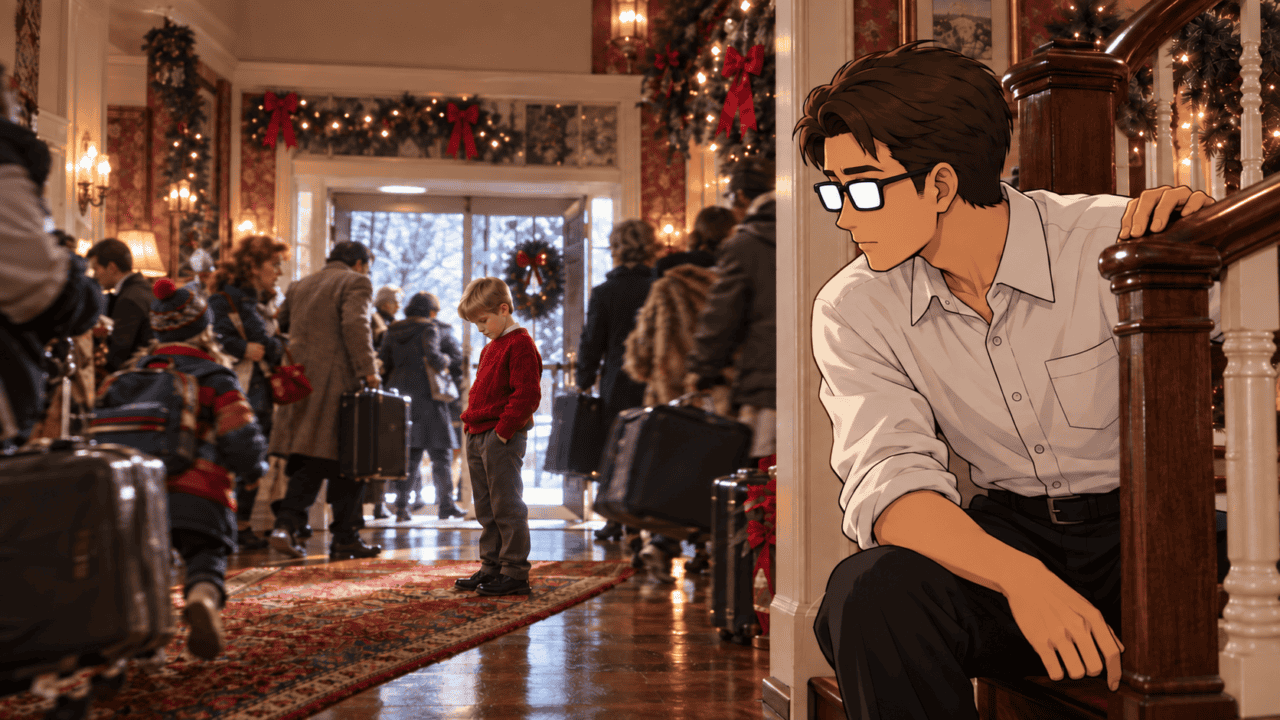
Home Alone, directed by Chris Columbus, was released in 1990. Its sequel, Home Alone 2: Lost in New York, followed in 1992 with the same director.
For people of my generation, these are unforgettable films. I loved them as an elementary school student and watched them again and again.
The series now extends to five numbered films and a sixth, the Disney+ original Home Sweet Home Alone. But the films that live in my memories are the first two, starring Macaulay Culkin.
Here, I want to explore why I found the Culkin-led Home Alone films so entertaining. This means mixing memories of what I thought as a child with what I think now that I am a middle-aged man.
First, let’s revisit the stories. These synopses go right through to the endings, so if you dislike spoilers, stop partway through and watch the films first.
*This is a translated version. The original (Japanese) is available here.
On this pageContents
Home Alone (1990): Full Synopsis & Ending (Spoilers Ahead)
The first film follows Kevin from wishing his family away to defending the house and wanting them home again. The synopsis includes the ending.
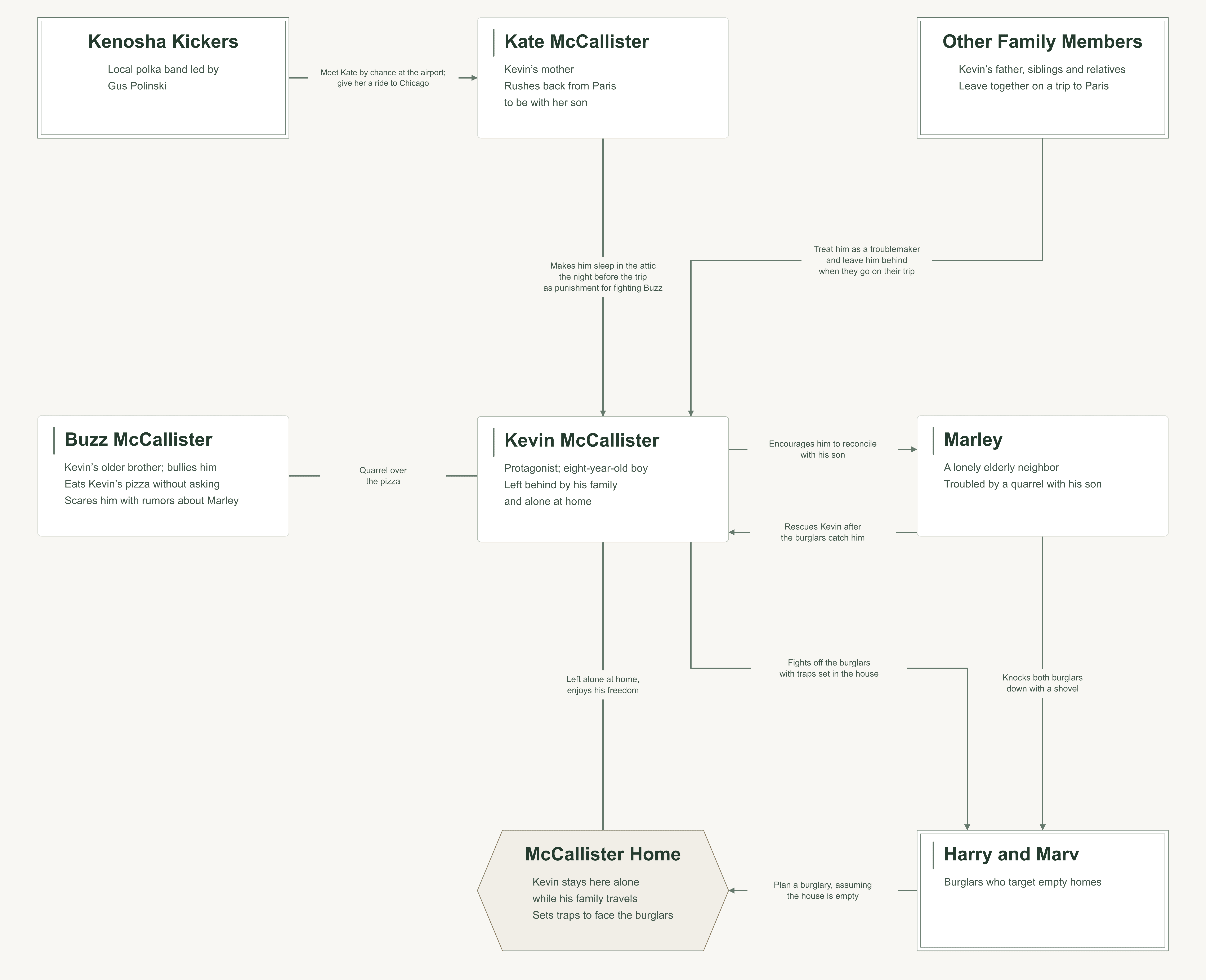
Summary of Key Points and Character Map
- The Family Leaves Kevin Behind
In the rush to catch a Christmas flight to Paris, the McCallisters leave eight-year-old Kevin asleep in the attic. His mother, Kate, realizes the mistake on the plane and tries to get back to him. - Kevin’s Kingdom
Kevin delights in having the house to himself. But freedom brings responsibilities: he must shop and do the household tasks himself, learning to look after his own needs. - The Burglars and Marley’s Help
Harry and Marv target the house, and Kevin fights back with elaborate traps. When they finally corner him, Marley, the neighbor he once feared, comes to his rescue. - A Christmas Reunion
Kevin’s wish comes true. His mother returns on Christmas morning, followed by the rest of the family, who recognize how much he has grown. Then Buzz discovers what Kevin has done to his room, and the peace does not last.
Character Map
[Setup] The McCallisters Prepare for Paris
Eight-year-old Kevin McCallister’s family is preparing to spend Christmas with his uncle in Paris. Another uncle’s family has joined them, bringing the household to 15 people. That evening, Kevin fights with his older brother, Buzz. Buzz started it, but everyone blames Kevin, who is sent to sleep alone in the attic. Angry with them all, he wishes they would disappear.
The next morning, the family oversleeps and rushes to the airport, forgetting Kevin in the attic. Only once they are on the plane does Kate realize they have left him behind.
[Development] Kevin’s Kingdom
Kevin wakes to an empty house. At first he is puzzled, but then he thinks his wish has come true. Rather than feeling lonely, he throws himself into life in his own kingdom. Soon, however, he realizes that cooking, laundry, and buying food are now his responsibility. Knowing where Buzz keeps his savings, he helps himself to them and buys the things he needs—doing a little damage to Buzz’s room in the process.
In Paris, the family contacts the police but cannot establish whether Kevin is safe. Kate decides to return to America immediately, though the Christmas rush makes it difficult to find a way home. She eventually gets a ride with a polka band.
Spoilers ahead (The Battle for the House ~ Ending). Click to read
[Twist] Defending the House
Harry and Marv have their eyes on the house. Harry knows the family is away, but Kevin’s quick thinking keeps them out three times. Eventually they discover that he is alone. When Kevin learns they plan to return at nine that night, he prepares traps throughout the house.
The traps are the stuff of a child’s dreams: an elaborate circus of devices to outwit the adults. Harry and Marv endure one after another, but eventually catch Kevin. Marley, the neighbor Kevin has been afraid of, intervenes with his shovel, and the burglars are arrested.
[Conclusion] A Christmas Miracle
That night, Kevin wishes for his family back. On Christmas morning, Kate arrives, having fought her way home through the holiday travel rush. The rest of the family soon follows. They see how much Kevin has grown in their brief absence, and even Buzz jokingly praises him for not burning the house down. Then Buzz discovers the wreckage in his bedroom, and Kevin gets another scolding.
Marley is part of that growth. Buzz has told Kevin he is a murderer, but as Kevin’s view changes, he discovers an old man with family troubles. Kevin’s simple advice helps Marley reconnect with the family from whom he has become estranged; Marley, in turn, helps him against the burglars. Learning to see another person without the distortion of fear is part of Kevin’s growing up.
Home Alone 2: Lost in New York (1992): Full Synopsis & Ending (Spoilers Ahead)
Kevin’s second adventure takes him to New York, where freedom, danger, and unexpected companionship take new forms. The synopsis includes the ending.
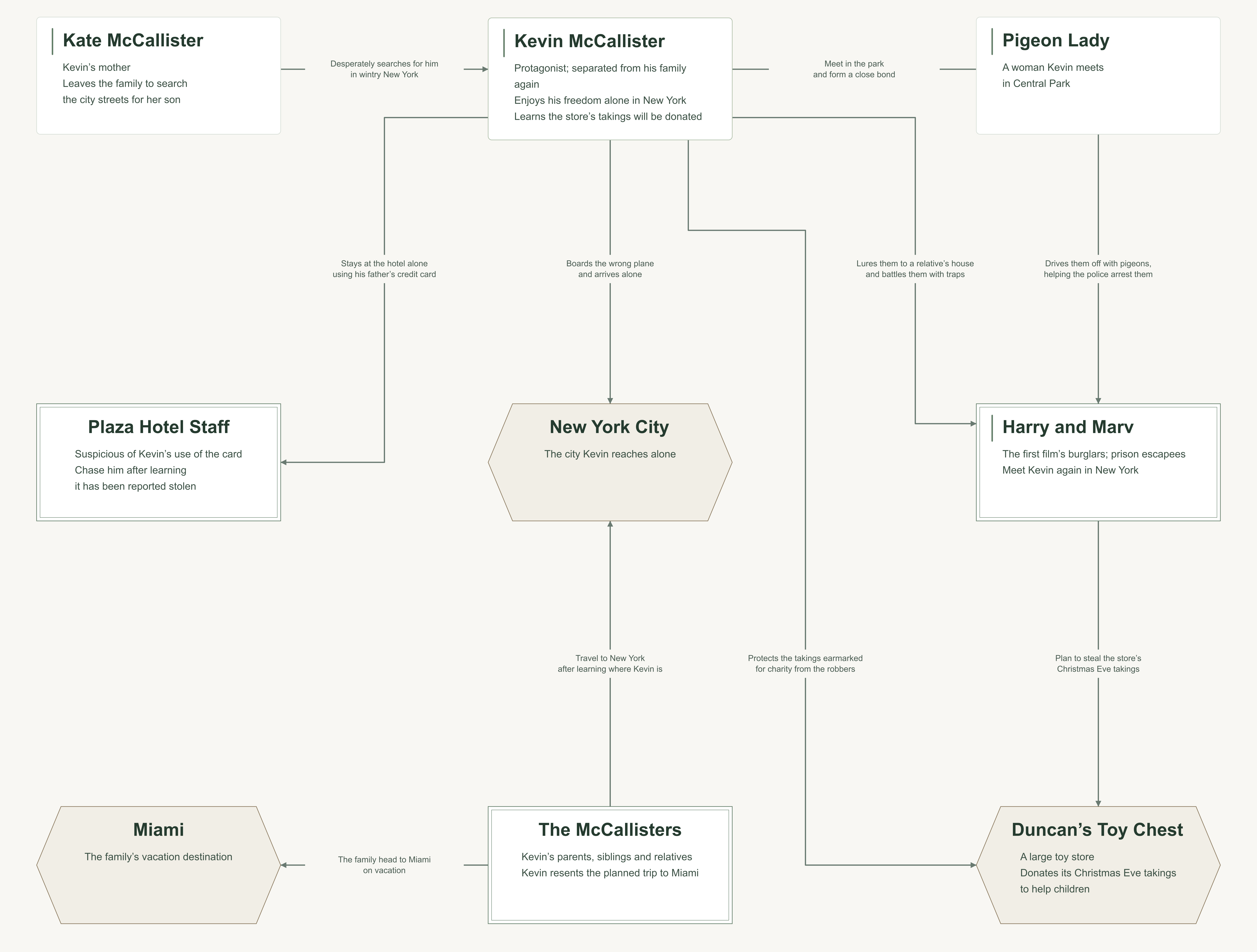
Summary of Key Points and Character Map
- Another Mix-Up, This Time at the Airport
A year later, the family prepares for Christmas in Florida. After another clash with Buzz, Kevin chooses to sleep in the attic. This time he gets to the airport, but becomes separated from the others and boards a plane to New York. - A Grand Holiday at the Plaza—and an Escape
With his father’s credit card, Kevin checks into the Plaza and enjoys New York in a limousine. But the card is reported stolen, and the hotel staff pursue him. He escapes into the city. - Harry and Marv Return
The burglars have escaped from prison and plan to rob Duncan’s Toy Chest. They catch Kevin, but Marv lets their plan slip, and Kevin manages to get away. - Another Battle with the Burglars
To protect the toy shop’s charity proceeds, Kevin lures Harry and Marv to his uncle’s house, which is being renovated. More vicious traps await them, and they eventually end up in police custody. - A Reunion—and the Bill
Kevin wishes for his family at the Rockefeller Center Christmas tree, where Kate finds him. They enjoy Christmas at the Plaza, until his father discovers the $967 room-service bill.
Character Map
[Setup] From a Florida Holiday to New York
A year later, the McCallisters are again in a rush, this time preparing for Christmas in Miami. At the school Christmas pageant, Buzz humiliates Kevin, yet Kevin is the one who gets blamed. He chooses to sleep in the attic. The family oversleeps again, but this time remembers to take him to the airport. There he becomes separated from them and boards a flight to New York. His family reaches Florida before realizing he is missing.
[Development] Making the Most of New York
Kevin realizes his mistake, but he never wanted to go to Florida anyway. With his father’s wallet and credit card in his backpack, he decides to enjoy New York instead. He tricks the staff at the Plaza into giving him a room and explores the city by limousine. Meanwhile, his parents contact the police. Learning that Kevin has the card, an officer suggests tracing its use. It is reported stolen, and the hotel staff treat Kevin as a thief. He escapes and ends up wandering the city.
Spoilers ahead (The Toy Store Heist ~ Ending). Click to read
[Twist] The Burglars Return: Another Christmas Battle
As luck—or a miracle—would have it, Harry and Marv have escaped from prison and arrived in New York too. Their target is Duncan’s Toy Chest, where the Christmas takings remain while the banks are closed. They catch Kevin as he flees the Plaza, and Marv blurts out the plan while they contemplate their revenge. Kevin escapes. Once the family learns what happened at the hotel, they head to New York and obtain a room at the Plaza, while Kate searches the streets alone. Kevin, meanwhile, decides to stop the robbery: he knows the toy shop’s Christmas proceeds will help disadvantaged children. He lures the burglars from the shop to his uncle’s house, currently being renovated while his uncle lives in Paris. Kevin has prepared a new set of traps there, and the confrontation ends with the burglars arrested, helped along by the Pigeon Lady in Central Park. His task complete, Kevin is alone in the city again.
[Conclusion] A Christmas Reunion
Kevin stands before the Christmas tree at Rockefeller Center, wishing to see his family again. Kate appears: she knew to look for him beside the tree he loves. Reunited, the family can finally enjoy their unexpected New York holiday at the Plaza. Kevin also gives a turtle-dove ornament to the Pigeon Lady as a sign of their friendship. All seems well—until the $967 room-service bill reaches his father, and Kevin gets a fierce scolding.
The Pigeon Lady takes a role similar to Marley’s in the first film. Kevin’s fear of Marley came from Buzz’s stories; his fear of her comes from his own prejudice. They reconcile and become lifelong friends. What looks like a repeat of the same story therefore shows his growth from a different angle: this time, he must confront a fear that began within himself.
Home Alone: Loneliness, Unfairness, and Childhood Fears
Kevin’s adventures turn ordinary childhood frustrations and fears into extravagant fantasies. His encounters with lonely adults also change what being alone means.
- Childhood Unfairness and Loneliness
Kevin’s unfair treatment and loneliness set the stories in motion. Reversing that loneliness draws us in, especially if we remember feeling the same way as children. - Growing Beyond Imagined Fears
The furnace, Marley, and the Pigeon Lady embody Kevin’s fears, but those fears turn out to be creations of his imagination. He must overcome both the unfairness imposed on him and his own irrational judgments. - Violent Comedy: Appeal and Unease
The traps are a child’s fantasy turned into a circus. Their violence may trouble viewers today, yet the story gives us a reason to laugh: the men being punished are burglars. - A Sequel That Almost Goes Too Far
The second film escalates the violence to the point of apparent danger to life. Yet its careful plotting and the way it pays off earlier details make that headlong excess part of its appeal.
The Unfairness and Loneliness That Pull Us In
Trying to remember my childhood, I think what drew me most strongly to Home Alone was Kevin’s unfair treatment at the start, and the loneliness that came with it. Perhaps having an older brother helped. Buzz eats the pizza without remorse, then Kevin gets blamed for the trouble Buzz caused. I felt intensely for him and saw myself in him: why would nobody understand? With all those people at home, Kevin was still alone.
The films turn that loneliness around, making Kevin alone at home and then alone in New York. It is a lovely piece of storytelling. Of course, tricking the Plaza’s staff as a child alone in the city takes the second film into the territory of myth or a heroic adventure; the two stories are not quite the same. Still, both understand the unfairness and loneliness a child can feel. I suspect that is what captured me.
The World of Imagined Fears
Alongside loneliness and unfair treatment, I see another theme: fear created by a child’s imagination. Across the two films, the main objects of that fear are:
- The basement furnace.
- Marley, the supposed “Shovel Slayer.”
- The “Pigeon Lady.”
Marley’s reputation is Buzz’s lie, and Kevin’s fear of the Pigeon Lady comes from her appearance. The furnace makes the nature of these fears especially clear. I remember doors and staircases that frightened me as a child. I could not say why; they were simply scary. Kevin’s furnace seems much the same. The only explanation is a child’s imagination. Living alone helps him grow beyond these fears: a furnace is just a furnace, Marley is not a murderer, and the Pigeon Lady becomes his friend. The fears Kevin invents are as irrational as the unfair treatment he receives at the start. The stories begin with other people’s unreasonable behavior, then turn to his own unreasonable judgments, and show him overcoming both. It is a beautifully constructed film.
Violent Comedy That Is Hard Not to Enjoy
Structure matters, but so does the fact that Home Alone is funny. Perhaps that was really why I watched it as a child. I wanted to fool people with a movie’s soundtrack, or trick hotel staff and live in luxury. The battles with Harry and Marv were a circus of contraptions full of a child’s dreams. Today, that laughter may raise questions because it comes with violence—and because the film is plainly for children. The story supplies a justification: the burglars are the bad guys. Kevin is defending himself, not simply acting on anger or desire; the punishment is framed almost as divine retribution. If it seems excessive, the film can fall back on his being a child. But, honestly, setting all those complications aside, wasn’t it funny watching him find new ways to punish Harry and Marv? Comedy is being forced to change, especially on television. Could we give films that already exist a little leeway?
Home Alone 2: As Though There Were No Plans for a Third
I generally defend the violent comedy in these films, but even I may not be able to defend all of Home Alone 2. Surely you thought it too: a brick dropped from that height would kill someone. Harry even retaliates by throwing a brick at Kevin. What a film to show children! Watching the burglars’ ordeal now, I find myself thinking, “They had no intention of making another one, did they?” If Culkin had starred in another sequel, Harry and Marv would surely have died. Otherwise, how could that escalation make any sense?
As a story, the first film is stronger. It did not really need a sequel: it had already taken Kevin through the unfairness imposed by others, his own irrational judgments, and his growth beyond both. I imagine that made the second film difficult to devise. Even so, Home Alone 2 is just as carefully plotted. Details introduced early return later without going to waste. Its main leap in logic is Kevin’s failure to contact his family in Florida when he reaches New York. A boy clever enough to fool the Plaza staff should be able to do that. Disliking a Florida Christmas without a tree hardly explains using his father’s card to live it up in New York. But without that leap, there would be no second film—and I am glad there is one. Its headlong excess is part of the fun.
After all that, my point is simple: Home Alone is fun.
For more behind-the-scenes stories from the first two films:
Home Alone: Trivia and Behind-the-Scenes Stories
Home Alone 2: Trivia and Behind-the-Scenes Stories
Your Take
What is your view? Choose the answer that comes closest to your own response.
Reader poll


Reader Comments
Have a thought or interpretation? Leave a comment