
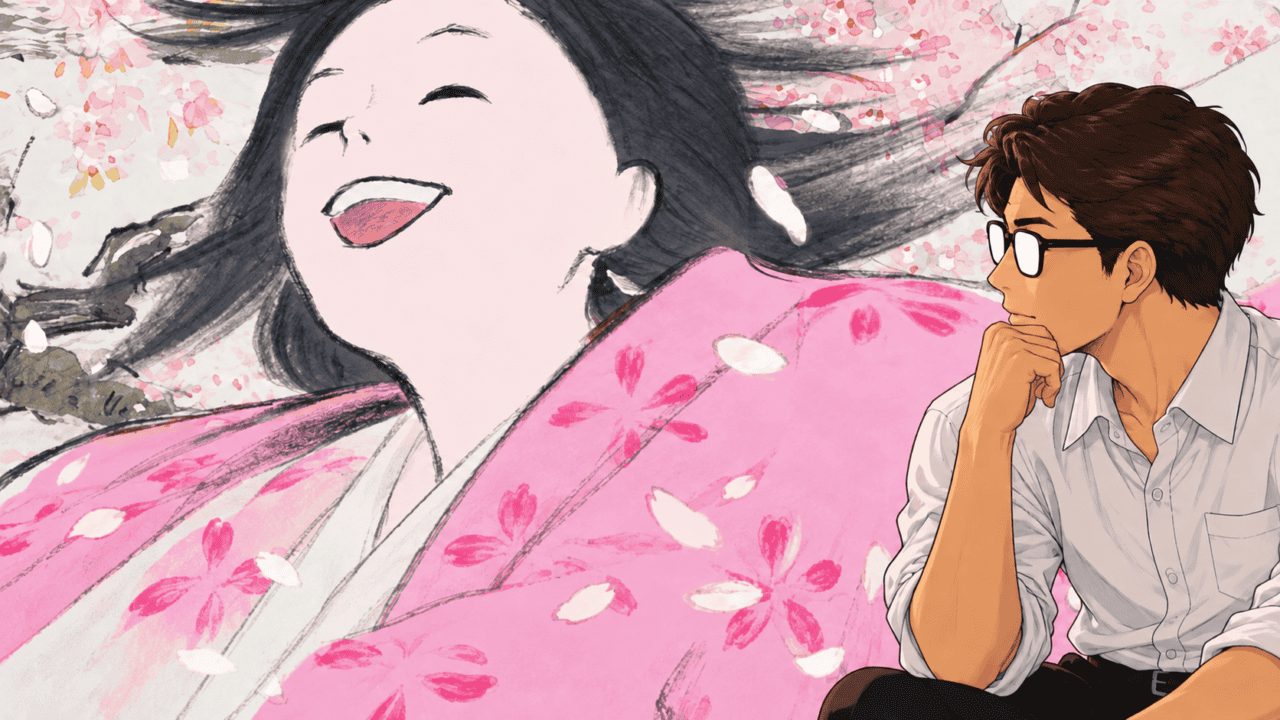
Isao Takahata’s The Tale of the Princess Kaguya (Official) opened in 2013. Sadly, it became his final film. I am very glad I saw it at the cinema. Here I want to consider its intriguing tagline: ‘The crime and punishment of the princess.’
The original The Tale of the Bamboo Cutter also mentions crime and punishment: Kaguya came to Earth as punishment for a crime on the Moon. The punishment is understandable to some extent, but the crime is barely explained.
At least in its early conception, the film was intended to answer what crime Kaguya committed and why she was sent to Earth, as producer Yoshiaki Nishimura has said at press conferences. On close viewing, it does seem to offer answers, though they are easy to miss, and I may still be overlooking much. Here is my current reading. Let us begin with the original tale.
*This is a translated version. The original (Japanese) is available here.
- The Original Tale Leaves the Crime Unclear
In The Tale of the Bamboo Cutter, Kaguya speaks of a bond from a former life. The celestial beings say they sent her to Earth for a crime, but never specify what it was. - The Human World as Punishment
I read the unwanted attention, her loss of freedom, and her return to the mansion after fleeing as forms of punishment. The power to attract men is a curse she did not ask for. Her wish to return to the Moon finally releases her. - A Longing for Earth—and the Crime of Being Born
A weeping celestial maiden seems to awaken Kaguya’s interest in Earth. I connect the woman with the Hagoromo legend and propose that Kaguya may have been born from the earthly blood she carried back to the Moon.
On this pageContents
Crime and Punishment in The Tale of the Bamboo Cutter
How does the original The Tale of the Bamboo Cutter explain Kaguya’s arrival on Earth? First, she says:
I am not a person of this land. I am of the Capital of the Moon. Because of ties from a former life, I have come into this world.
(Original Text, in classical Japanese)
おのが身は、この国の人にもあらず。月の都の人なり。それをなむ、昔の契ありけるによりなむ、この世界にはもう出来たりける。
That leaves the nature of the earlier connection unclear. Near the end, the celestial beings who come to fetch her say:
Princess Kaguya committed a crime, and so stayed for a while with a lowly person such as you. Her term of punishment has ended, and we have come to fetch her, yet you weep and lament.
(Original Text, in classical Japanese)
かぐや姫は、罪を作り給へりければ、かく賤しきおのれがもとに、しばしおはしつるなり。罪の限りはてぬれば、かく迎ふるを、翁は泣き嘆く。
It seems Kaguya was sent to live with the ‘lowly’ bamboo cutter as punishment. But the crime is never described, though her own words suggest some connection to a former life. Another passage may offer a clue:
…As soon as they draped the celestial robe over her, Kaguya’s pity and affection for the old man disappeared. Wearing the robe, she no longer felt troubled. She boarded the carriage and ascended with around a hundred celestial beings.
(Original Text, in classical Japanese)
・・・・・・ふと天の羽衣うち着せ奉りつれば、翁を「いとほし、愛し」と思しつることも失せぬ。この衣着つる人は、物思ひなくなりにければ、車に乗りて、百人ばかり天人具して、昇りぬ。
The robe removes Kaguya’s worries. This suggests a world whose inhabitants do not suffer the troubles of the heart.
Putting the original tale’s descriptions together:
Crime and Punishment in the Original: Kaguya belonged to a lunar world without the emotional fluctuations of worry. She committed a crime and was sent to live with a ‘lowly’ person. Both the crime and her descent seem closely tied to a bond from a former life.
Summarizing it does not solve the mystery. The Tale of the Bamboo Cutter does not explain it, leaving room for the reader’s interpretation. What does Takahata do with that space? Let us turn to the film.
Crime and Punishment in The Tale of the Princess Kaguya
The film offers clues to both Kaguya’s suffering on Earth and the reasons she may have been sent there.
Kaguya’s Punishment
Let us start with the punishment, which is easier to see.
In the original, the punishment is living with a ‘lowly’ person. In the film, I read it as being sent into the human world itself.
Since it is the world we live in, that may be difficult to see as punishment. But the various devices the Moon puts in place make it punishment for Kaguya, at least. The first person whose behavior is distorted by them is the bamboo cutter.
Kaguya, still called Takenoko, lives contentedly with the old man and woman in the countryside. Yet the old man charges ahead with his plan to give her a better life. We may feel irritated by his disregard for her wishes, though his thinking is understandable for the time. What drives him is the treasure and fine clothing that keep appearing in the bamboo—and, above all, his attachment to Kaguya.
Treasure also appears in the original tale, which seems oddly inconsistent with her being sent down as punishment. In the film, I see it as the first device that makes human life a living hell for her. She is drawn unwillingly into aristocratic life. Despairing that she can never return to the fields and hills, she runs toward somewhere that is not here.
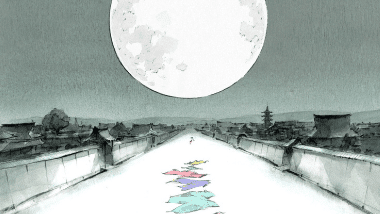
An enormous Moon looms over her flight: the Moon is watching. She runs until she collapses—has she died?—but the next moment finds her back where she began, despite her desperate wish to escape.
I read the implication as Kaguya not being allowed to die on Earth. Her punishment is to suffer in the human world.
Later, as in the original tale, men seek her hand and she deflects them with impossible demands. But why has this happened to her in the first place?
I suspect this is another device of the Moon’s punishment: Kaguya has been given a power that drives men wild. Some might call it a gift, but the point is that she never wanted it.
Read this way, The Tale of the Princess Kaguya becomes more than an adaptation of an old tale. It is a contemporary drama about the painful conditions women face. No one chooses to be born a woman, yet that unchosen nature subjects her to unwanted male attention. However hard she tries to escape, she is forced to live in that world, just as Kaguya’s flight returns her to the mansion.
This overlaps with Frozen. Elsa hides her magic. It sounds enviable, but she has never wanted it. For her, it is a curse: a quality she possesses without having chosen it. Kaguya similarly suffers from the Moon’s unwanted gift. A woman given the power to attract men and dropped into a male-dominated society faces hell—that is how I read the film’s argument.
When the Emperor makes advances, Kaguya finally wishes to return to the Moon, ending her punishment. Perhaps the Moon’s response is, ‘See? Isn’t it better up here?’ What crime could have required such a punishment?
Kaguya’s Crime and the Connection to a Former Life
What Crime Did Kaguya Commit?
To infer her crime, the crucial point is that wanting to return to the Moon brings release from punishment.
Working backward, might her original crime have been thinking that Earth was better than the Moon? Why would that be a crime?
In the original tale, the robe frees her from worry. The Moon is a world without troubled feelings, enviable in one sense. Yet, without those troubles, perhaps there is no joy or pleasure either: its inhabitants exist in a state of enlightenment. They may play instruments or drink, but without feeling happy about it; the actions simply take place. We, full of earthly desires, cannot truly understand that pure world. We can only describe it as lacking emotional rises and falls.
Kaguya expresses a contrast between joy and sorrow near the end. I discuss that line in Japanese and English in my guide to The Tale of the Princess Kaguya quotes.
On this reading, Kaguya’s crime is bringing emotional fluctuation into the Moon’s world—perhaps joy, perhaps pleasure.
Its source must be Earth’s rich complexity. But there is an important distinction: Kaguya may love Earth itself without loving human society. What she loves is the world in the nursery rhyme:
…Birds, bugs, beasts, grass, trees, flowers. Though they bloom, bear fruit, and scatter; though they are born, grow, and die. The wind blows, the rain falls, the waterwheel turns, and life is reborn, one after another…
(Original Text, in Japanese)
・・・鳥 虫 けもの 草 木 花 咲いて実って散ったとて 生まれて育って死んだとて 風が吹き雨が降り水車まわり せんぐりいのちがよみがえる・・・
That is Earth’s way of being: a world in flux. In contrast, the Moon would be a world without flux, a world standing still.
My Reading of Her Crime: Kaguya brings joy and pleasure into a lunar world without emotional fluctuation. Those feelings arise from Earth’s ever-changing life. To the inhabitants of the static Moon, her rich emotions disrupt their order and merit punishment.
But there are contradictions already. Punishment itself seems an emotional fluctuation; the moment the Moon decides to punish her, it no longer looks very static. And if her feelings threaten its order, why forgive her merely for wanting to return? Permanent exile would make more sense. There is much more to consider; this is as far as I can currently go. Another question remains: others on the Moon could see Earth, so why was only Kaguya captivated? That opens a different aspect of her crime, though the story grows heavier still.
Kaguya’s Earlier Connection and the Hagoromo Legend
The original tale speaks of a bond from a former life, though its connection to punishment is difficult to grasp. The film gives that connection a more concrete form.
Near the end, singing the rest of the nursery rhyme to the old woman, Kaguya says:
Long ago, in the Capital of the Moon, I heard someone who had returned from this land humming this song.
(Original Text, in Japanese)
遠い昔 この地から帰ってきた人が この歌を口ずさむのを 月の都で聞いたのです
Kaguya says the celestial robe had erased this person’s earthly memories, yet she wept whenever she hummed the song. We see her looking sadly at Earth, her arms seeming to cradle an absent baby. She has forgotten what she lost, but somewhere deep down remembers holding something, and weeps. Who is she?
The images surrounding Kaguya’s words suggest the maiden from the Hagoromo, or celestial-robe, legend. Mount Fuji and the pine trees point, I think, to the version from Miho no Matsubara in Shizuoka. Versions of the legend survive in many places and differ subtly.
The Miho no Matsubara version goes roughly like this:
The fisherman Hakuryo finds a beautiful robe hanging on a seaside pine. As he takes it to carry home, a celestial maiden appears and begs him to return it: without it, she cannot fly back to heaven. He asks for a heavenly dance in exchange. She explains that she needs the robe to dance. Suspecting she will leave as soon as he returns it, he hesitates, but trusts her assurance that there are no lies in heaven. He gives it back, and she performs a magnificent dance before ascending.
(Original Text, in Japanese)
三保の村の漁師である伯梁(白龍、はくりょう)は、ある日、海岸にある一本の松に美しい羽衣がかかっていることに気がつく。その美しい羽衣を手にとり持ち帰ろうとすると、どこからともなく美しい天女が現れて「その羽衣は天女の羽衣、それがないと天に帰れません。どうかお返しください」と頼んだ。それを聞いた伯梁は「それでは天女の舞を舞ってください、そうすればお返ししましょう」と答えたが、天女は「その羽衣がなくては天女の舞は踊れません、どうかお返しください」と更に懇願する。伯梁は羽衣を返したらそのまま帰ってしまうのではないかと疑いを掛けたが、「天の世界には嘘というものがございません。どうか信じてお返しください」という天女の言葉を信じ羽衣を返すと、天女は見事な舞を披露してくれた。そうこうしている内に、天女は空へと帰っていった。
Elsewhere, versions tell of the maiden marrying a man and having children, or becoming an old couple’s child only to be abandoned. There are many variations.
When I wrote this article in July 2021, I had not read the storyboards. In October 2023, I learned that they specify the version used in the film:
There are several Hagoromo legends. A maiden descends, leaving her robe on a pine while she plays. A fisherman secretly hides it. Unable to return, she marries him and has a child. One day, she finds the robe hidden in a closet, realizes his betrayal, and in a sudden rage puts it on and returns to heaven. This is the version adopted.
(Original Text, in Japanese)
羽衣伝説にはいろいろあるが、天女がまいおりる。あそぶめに羽衣を松にかける。漁師がそれをこっそり隠す。帰れなくなった天女は漁師と夫婦になり、子までもうける。が、ある日、押し入れに隠されていた羽衣を見つけ、夫の裏切りをしり、ついかっとなって羽衣をまとい、天に帰ってしまう-というのを採用。
The note makes the argument below rather strained, though I still think it approaches something interesting about Kaguya’s crime. Please enjoy it as a reading based on the images alone. The adopted legend may be the Lake Yogo version. In any case, I identify the woman humming on the Moon with the maiden who once descended among the pines. The robe erases her earthly memories, but deep down she cannot forget the child she lost. Kaguya senses a pain beyond words and becomes intensely interested in Earth.
But hang on—others on the Moon must also have seen her weeping. Why is only Kaguya moved? Returning to the pine-grove version, I wonder why a dance alone would satisfy Hakuryo. It must have been magnificent, but perhaps ‘dancing’ is a discreet way to describe something else. Perhaps something rather better happened. And perhaps, as a result, the maiden carried earthly blood back to the Moon despite losing her memories.
In my theory, that bloodline is Kaguya.
I propose that the baby the maiden has forgotten is Kaguya herself. With her own origins on Earth, Kaguya would naturally feel drawn to it.
That raises another problem—one question chasing another. In the film, the apparent fisherman and a child pursue the departing maiden. Ordinarily, we would take the child to be hers. But I originally thought the forgotten child was Kaguya. First, the pine-grove legend I associated with the scene leaves no child on Earth. Second, consider everyone’s favorite, Sutemaru. This is where things get uncomfortable.
Sutemaru spends time with Kaguya in the hills as a child, seemingly loving her without reciprocation. When he returns there with his family and reunites with her, she responds passionately—and he instantly decides to abandon his family and run away. People online have teased him as the man who throws his family away. Given the nobles’ fascination with Kaguya, perhaps this is unsurprising; unlike them, his feelings are returned. Might something similar have happened to Hakuryo? Perhaps he already had a family when he found the maiden, but was so captivated that he forgot them and used the robe as a hostage. What an awful story. Maybe the child was with him because they discovered her during a walk together. What are you doing with your child right there, Hakuryo?
As the storyboard note above explains, we must instead take the fisherman’s child to be the maiden’s. That undermines my Sutemaru parallel, though I still find the image-based reading interesting. There: my excuse. Even abandoning that parallel, I remain convinced that Kaguya is the maiden’s child—this is still my interpretation. In this version of the theory, they had two children, but the maiden returned to the Moon before giving birth to Kaguya. The storyboards make my parallel wrong; I still think the story is more interesting if the child on Earth is not hers. Sour grapes, of course.
Read this way, the maiden’s tears change meaning: she yearns to fill the gap left by the forgotten Kaguya and mourns the tragedy on Earth. Even the robe cannot heal that wound. Yet Kaguya grows increasingly drawn to that same tragic world.
Might the Moon’s inhabitants feel two kinds of hatred at this sight? Hatred of the earthly tragedy, and an unjust hatred of Kaguya, whose blood connects her to the humans responsible. Her presence might even remind the maiden of what happened.
On this reading, her crime becomes having been born at all.
Perhaps the Moon is not truly pure, but struggling to preserve its purity. Kaguya, a source of hatred in such a world, becomes an unwanted presence. She is sent to Earth to relive the maiden’s tragedy. Yet in forgiving her at the end, perhaps the inhabitants accept her as one of them again: half her blood is lunar too.
For me, The Tale of the Princess Kaguya is much more than an animated adaptation. Takahata unearths a perspective left unspoken in an old story and puts a forceful question to the present. Like Grave of the Fireflies, it is not a film one can watch lightly. And it deserves to be seen at least once.
Those are my current thoughts on the princess’s crime and punishment. Perhaps taking the Hagoromo legend’s injustice so seriously has made this film unnecessarily heavy, though I do not think my reading is entirely off. Denying that the child among the pines is the maiden’s was probably a stretch. Still, we should not ignore how thoroughly the legend favors humans, while bringing the maiden nothing but misfortune.
Perhaps Takahata wanted to depict something consistently overlooked in old stories such as The Tale of the Bamboo Cutter and the Hagoromo legend.
One point still troubles me: why would a pure world’s inhabitants punish anyone? I explore that question further in Did Kaguya Commit No Crime and Receive No Punishment?.
Perhaps Kaguya neither committed a crime nor suffered punishment. What do you think?
Your Take: Kaguya’s Life on Earth
Kaguya’s days on Earth bring joy as well as suffering. What do they mean to you?
Poll results
How do you see Kaguya’s time on Earth?
- A punishment.0%
- A gift: a chance to experience life.0%
- Both a punishment and a gift.0%
- Neither—I see it differently.0%
- I’m not sure.0%
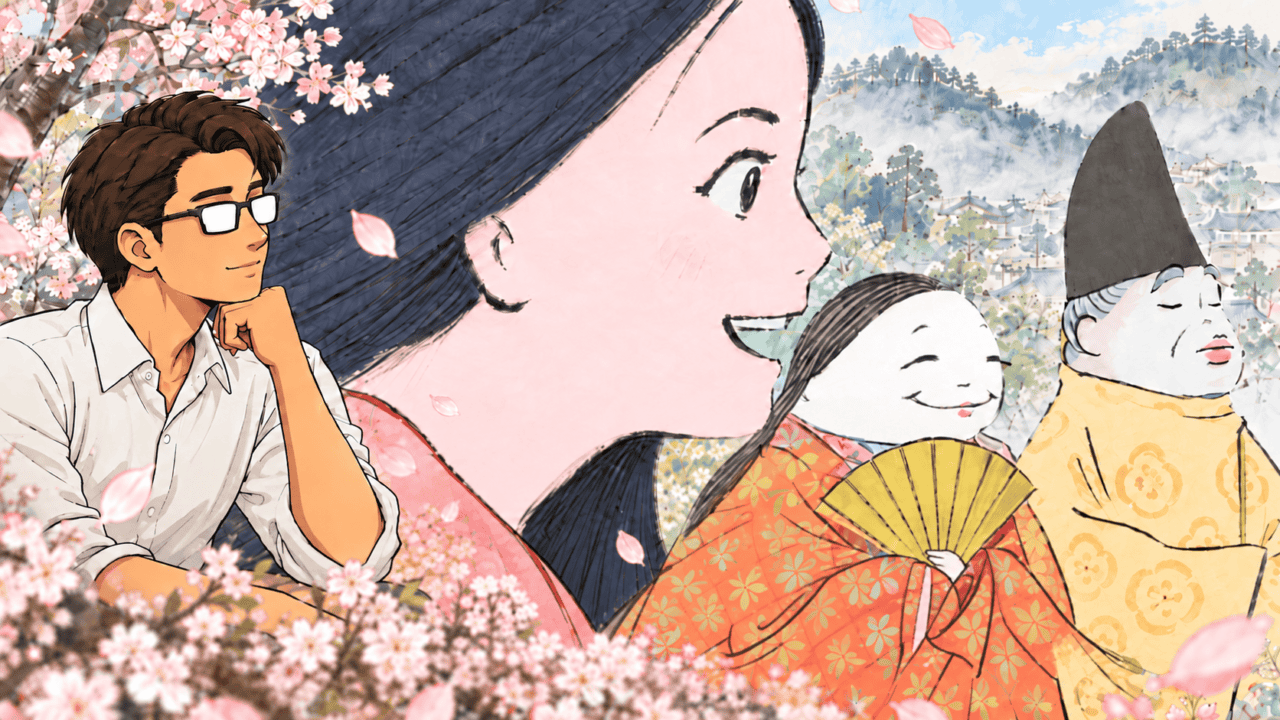
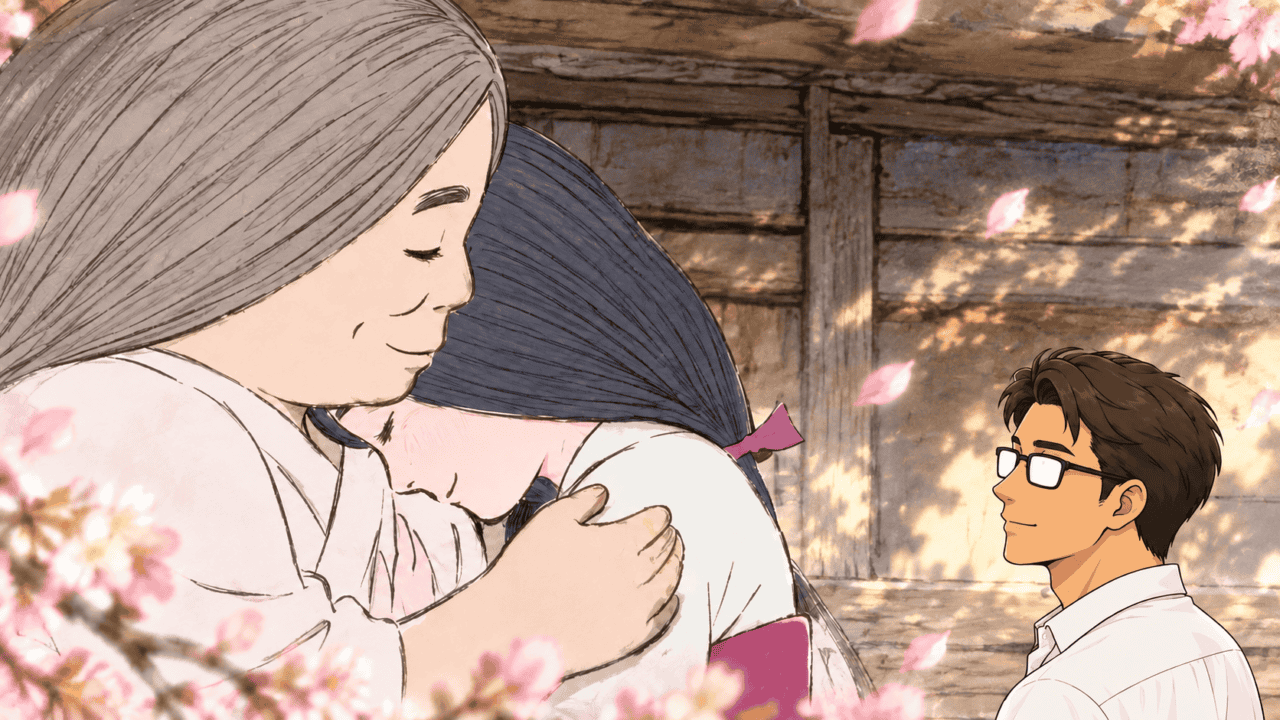
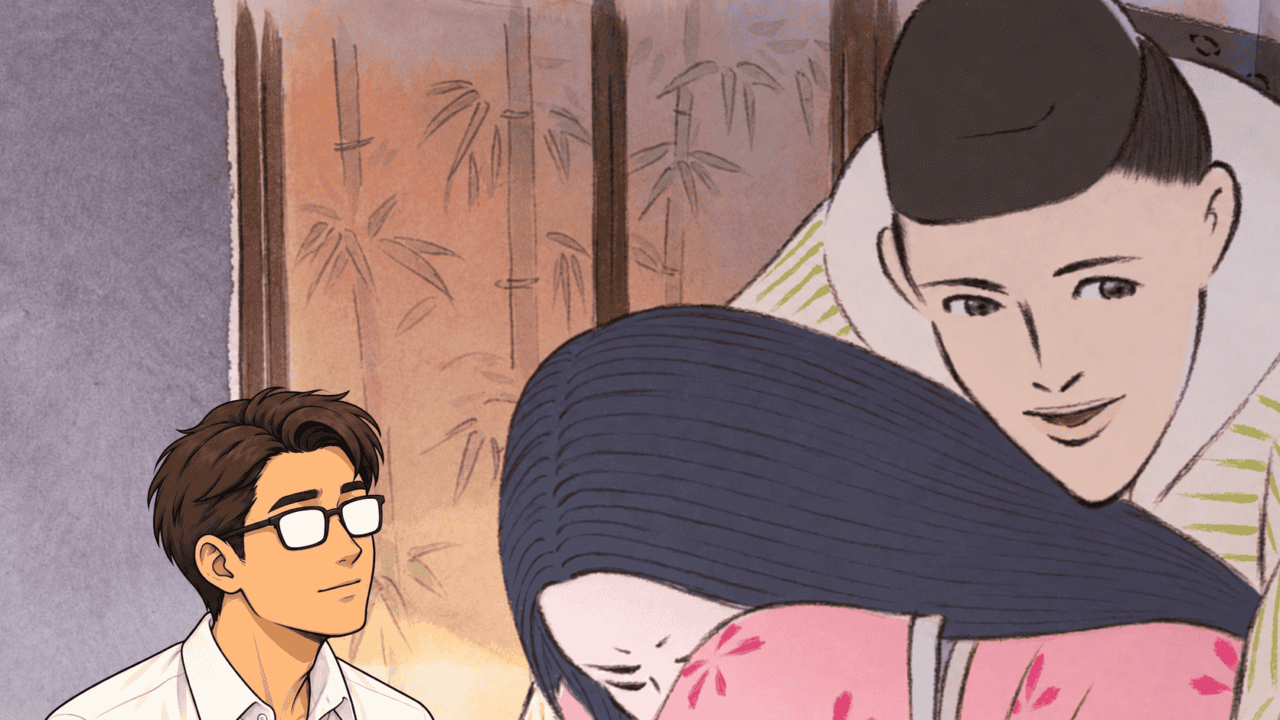
The images used in this article are from “Studio Ghibli Works Still Images”.
Can you name the movie before the scene comes into focus?
Put your visual memory to the test with a blurred Studio Ghibli scene.


Reader Comments
Have a thought or interpretation? Leave a comment