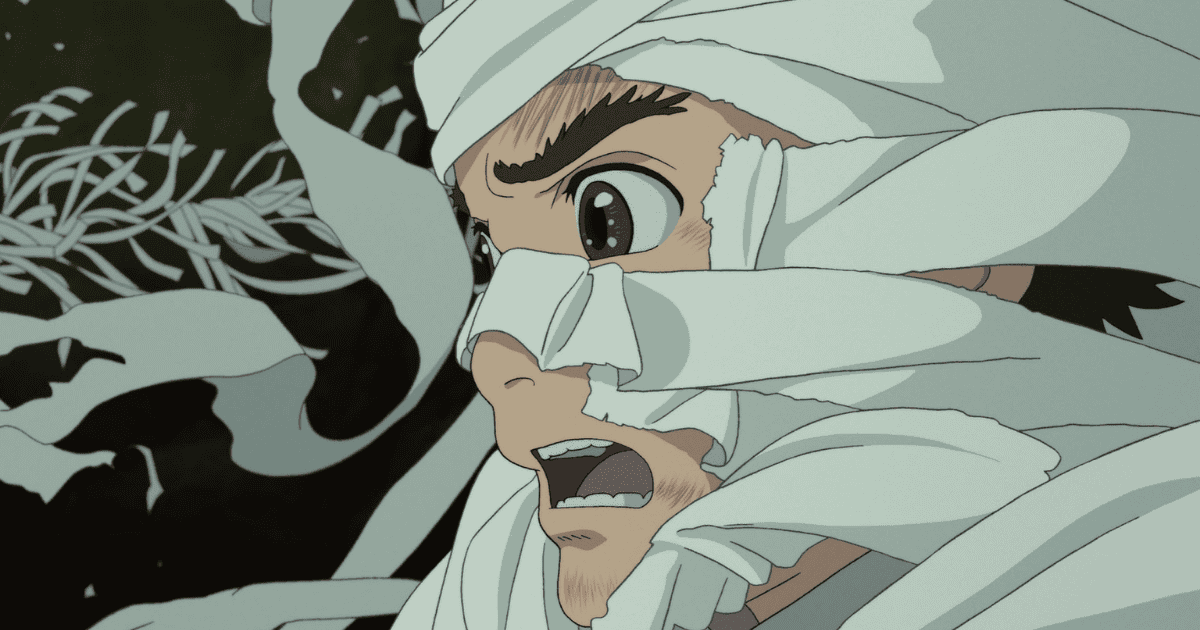
The Boy and the Heron (Studio Ghibli Official) is a 2023 animated feature film written and directed by Hayao Miyazaki. It was released in Japan on July 14, 2023.
In this article, I have selected nine of my favorite quotes from the film.
The dialogue in The Boy and the Heron often becomes even more interesting when the original Japanese is compared with its English translation. For each quote, I will look at the Japanese line, its romanization, the English subtitle, a literal translation, and what the dialogue tells us about the characters and the story.
These are not necessarily the nine most objectively famous lines in the film. This is a personal selection, and several of them are included simply because they have remained strongly in my memory.
The film’s official English title is:
The Boy and the Heron
Translated literally back into Japanese, that would be something like “The Boy and the Heron.” When the English title was first announced, I remember thinking, “That title is much better!”
Now, however, I feel that the Japanese title Kimitachi wa Dō Ikiru ka—How Do You Live?—fits the film extraordinarily well.
What do you think?
Translation note: The English subtitle wording in this article is based on the commercially released Blu-ray available to the author. The English dub is also discussed where its wording creates a meaningful difference. Subtitle and dub wording may vary between releases and territories.
▼ Read the full story and analysis behind these quotes
On this pageContents
Mahito Quotes in Japanese and English
“Natsuko… Mother!”
母さん!夏子母さん!
Kāsan! Natsuko-kāsan!
Natsuko…Mother!
Mother! Mother Natsuko!
Read the Commentary and Analysis
Mahito finally finds Natsuko in the world below. Even after she screams that she hates him, he responds with this line.
The relationship between Natsuko and Mahito is one of the crucial forces driving the entire story, and it is also responsible for some of the film’s most emotionally unsettling moments.
Looking back at Miyazaki’s earlier works, we naturally expect their relationship to reach some kind of positive conclusion.
Even so, the film keeps us trapped in the anxiety of wondering, “What on earth is going to happen to these two?”
This one line sweeps that anxiety away.
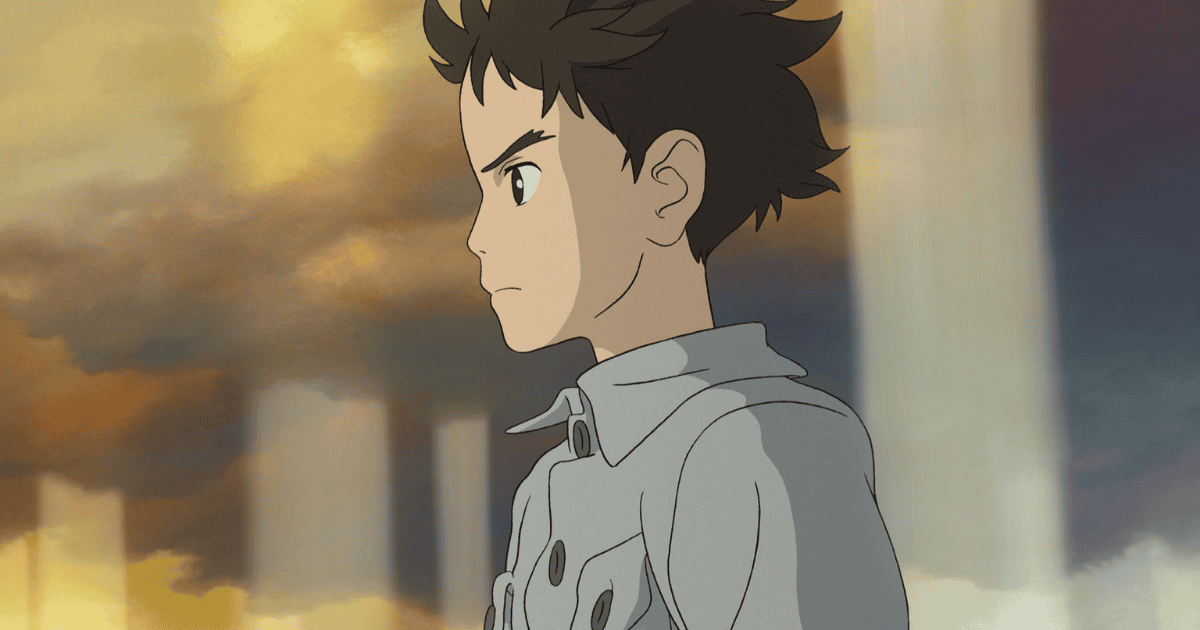
At this moment, Mahito finally becomes the protagonist of his own story.
Until this point, Mahito has largely been a slave to circumstances. Almost nothing in his life has been the result of his own choice, even if he clearly had a strong desire to choose for himself.
The war, his mother’s death, his father’s remarriage and Natsuko’s arrival all occur outside Mahito. None of them care what he thinks or what he wants.
But after reading the book his biological mother left for him, Mahito appears to acquire the strength to accept the circumstances into which he has been thrown.
Seen from that perspective, the Japanese title Kimitachi wa Dō Ikiru ka—How Do You Live?—feels almost inevitable.
The English title is The Boy and the Heron. When I first heard it, I thought, “Isn’t that a much better title?”
Now I am glad the Japanese title remained How Do You Live?
There is nothing particularly difficult about the English subtitle here.
The dub reverses the order of the two words and says:
“Mother… Natsuko.”
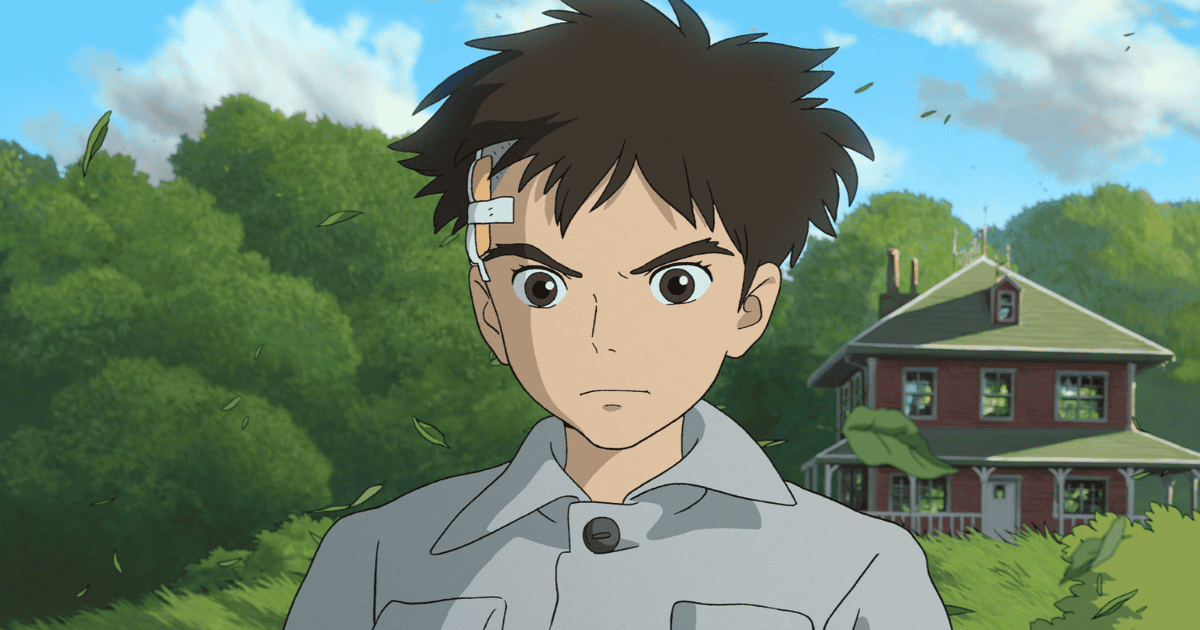
“I made this scar myself. It’s a sign of my malice.”
この傷は自分でつけました。僕の悪意の象徴です。
Kono kizu wa jibun de tsukemashita. Boku no akui no shōchō desu.
I made this scar myself. It’s a sign of my malice.
I gave myself this wound. It is a symbol of my malice.
Read the Commentary and Analysis
Early in the story, Mahito gets into what might be called either a fight or bullying with boys from his new school.
On the way home, covered in mud, he deliberately strikes himself in the head with a stone.
Later, he explains the resulting wound to his Granduncle with this line.
The scene in which Mahito injures himself is unusually graphic, with an almost excessive amount of blood, making it one of the most unforgettable moments in the film.
Even without this later explanation, we can more or less understand the impulses behind what Mahito did.
But the fact that he himself uses the word “malice” makes his motives much clearer.
- He does not want to return to a school where he knows he will be bullied.
- He wants to rebel against his father, who has placed him in this situation.
- He takes advantage of the situation to cause trouble for Natsuko as well—an act of “malice.”
In one sense, it is an extremely childish act.
But Mahito is an eleven-year-old boy. Of course it is childish.
At the same time, the extraordinary amount of blood pouring from his head can be seen as a physical symbol of the pain Mahito is carrying after his mother’s death and the violent changes in his life.
He was already bleeding internally.
What matters later is that Mahito is able to stand before his Granduncle and openly admit that what he did came from malice.
That confession itself is evidence of his growth.
The important English word here is malice.
As the Japanese line suggests, it means a desire or intention to harm another person, and can be translated as “ill will,” “hostility,” or “spite.”
The dub also uses malice:
“I gave myself this scar on my head. It’s a sign of my malice.”
“It’s stone for making tombs. It’s malicious.”
それは木ではありません。墓と同じ石です。悪意があります。
Sore wa ki de wa arimasen. Haka to onaji ishi desu. Akui ga arimasu.
Those aren’t wooden. It’s stone for making tombs. It’s malicious.
Those are not made of wood. They are the same kind of stone as graves. There is malice in them.
Read the Commentary and Analysis
Mahito finally meets his Granduncle in the world below.
The Granduncle asks him to become his successor and to add another stone to the tower of blocks that maintains the world.
Mahito responds with this line.
According to the conventional rules we have accumulated from countless stories, it feels perfectly natural for the protagonist Mahito to reject the rather obviously suspicious offer of the Granduncle.
And yet something about the scene remains strangely unsatisfying.
Ultimately, we have to answer the question:
Who, or what, is the Granduncle?
I discuss my interpretation in detail here:

In the NHK production documentary 2399 Days with Ghibli and Hayao Miyazaki, we are shown that Isao Takahata served as the model for the Granduncle.
And yet, no matter how many times I watch the film, the character does not look purely like Takahata to me.
My current interpretation is that Miyazaki tried to draw the Takahata who existed inside himself and, in the process, ended up drawing a great deal of himself as well.
The article above examines this line from that perspective.
How did you interpret the Granduncle?
As in the previous quote, the key word is again malice, this time appearing in the adjective malicious.
The dub phrases the line somewhat differently:
“Those aren’t made out of wood. They look like gravestones. I sense their malice.”
“I’ll make friends. Like Himi, Kiriko, and the heron man.”
友だちを見つけます。ヒミやキリコさんや青サギのような。
Tomodachi o mitsukemasu. Himi ya Kiriko-san ya aosagi no yō na.
I’ll make friends. Like Himi, Kiriko, and the heron man.
I’ll find friends—people like Himi, Kiriko, and the Gray Heron.
Read the Commentary and Analysis
Near the end of the film, Mahito makes two important choices.
One is to choose warm wood rather than cold stone.
The other is to choose to make friends.
The Boy and the Heron is almost openly autobiographical in the way it reflects Hayao Miyazaki’s own life.
If we accept that premise, then the “cold stones” can be understood as representing Miyazaki’s previous approach to animation, filmmaking and perhaps even Studio Ghibli itself.
They belong to the past.
Making friends, on the other hand, belongs to the future.
Placed alongside the image of “warm wood,” the line can therefore be read almost as a declaration from Miyazaki himself.
He has made an autobiographical film called How Do You Live?, and then, through Mahito, answered:
“This is how I intend to live from now on.”
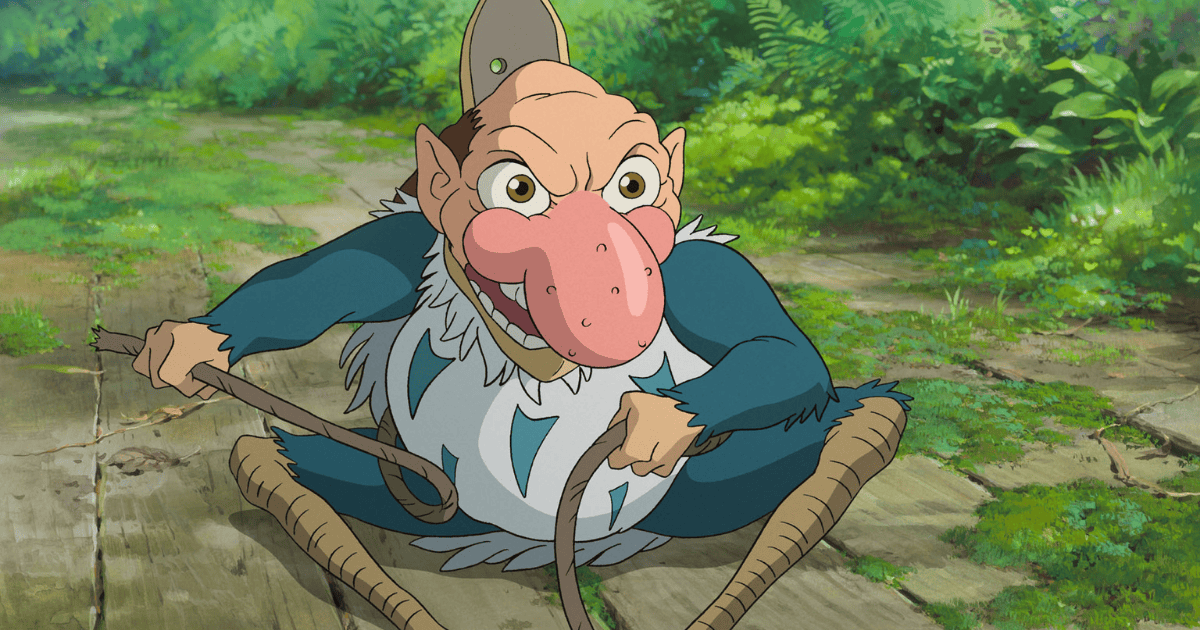
Most important of all is the fact that Mahito calls the Heron Man his friend.
The production documentary explicitly connects the Heron Man with Studio Ghibli producer Toshio Suzuki.
Miyazaki has walked alongside Suzuki for decades as a business partner.
And now, through Mahito, he calls him a friend.
For me, this is one of the most moving moments in The Boy and the Heron.
There is nothing especially unusual about the English subtitle.
The dub is very similar:
“I’ll find my friends there, like Himi, and Kiriko, and the heron man.”
▼ Read more about Mahito’s age, voice actor, background, and character analysis
The Gray Heron / Heron Man Quote in Japanese and English
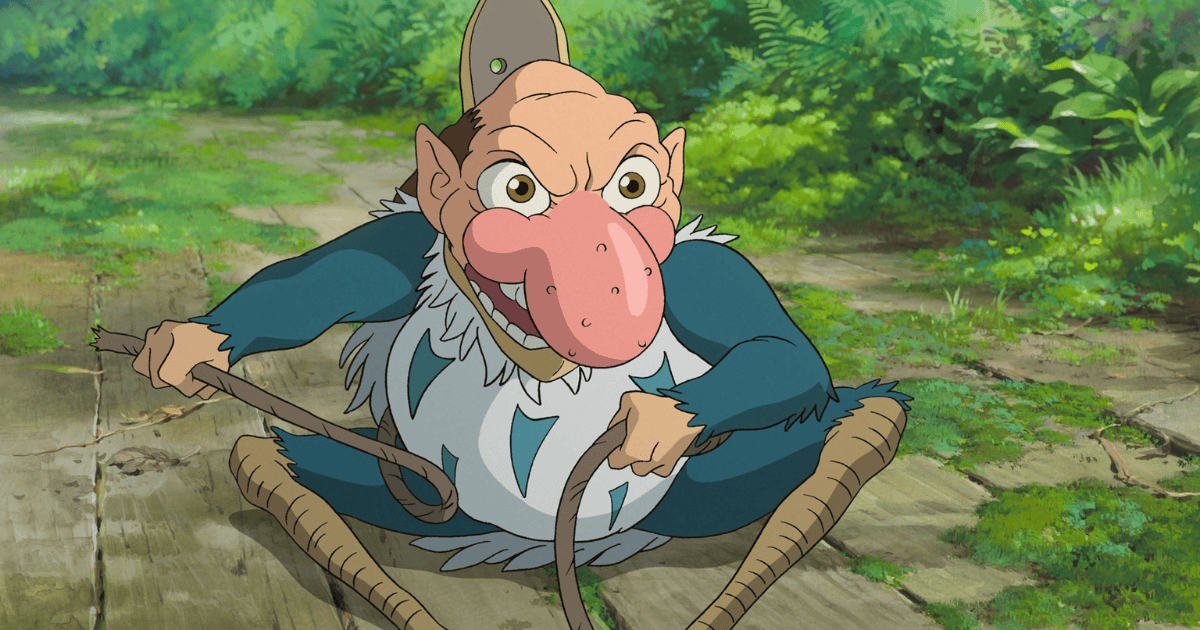
“So long, friend.”
あばよ、ともだち。
Abayo, tomodachi.
So long, friend.
See you, friend.
Read the Commentary and Analysis
After returning to the upper world, the Gray Heron says this to Mahito as they part ways.
As discussed above, the character who served as the model for the Gray Heron is producer Toshio Suzuki.
One of the most moving moments in the film is Mahito—Miyazaki’s avatar—calling the Heron Man his “friend.”
Seen in that context, this final reply almost sounds like Miyazaki saying to Suzuki:
“Suzuki-san, please think of me as your friend too.”
Hayao Miyazaki and Toshio Suzuki have known one another since before the founding of Studio Ghibli.
Their relationship has fundamentally been that of business partners, but it has never been a simple relationship.
Books and documentaries have repeatedly described major conflicts between them—for example during the production of Pom Poko, and again over Miyazaki’s retirement after The Wind Rises.
Against that long and complicated history, simply calling the other man a “friend” feels surprisingly powerful.
Perhaps this willingness to say, “Think of me as your friend,” is itself part of the change Miyazaki expresses through the movement from cold stone to warm wood.
There is nothing especially difficult about the English subtitle.
But the small difference in the dub is interesting.
The dub says:
“So long! My friend.”
It adds my.
Personally, I think that small addition makes the farewell even better.
▼ Read more about the Gray Heron’s voice actor, background, and character analysis
Kiriko Quote in Japanese and English
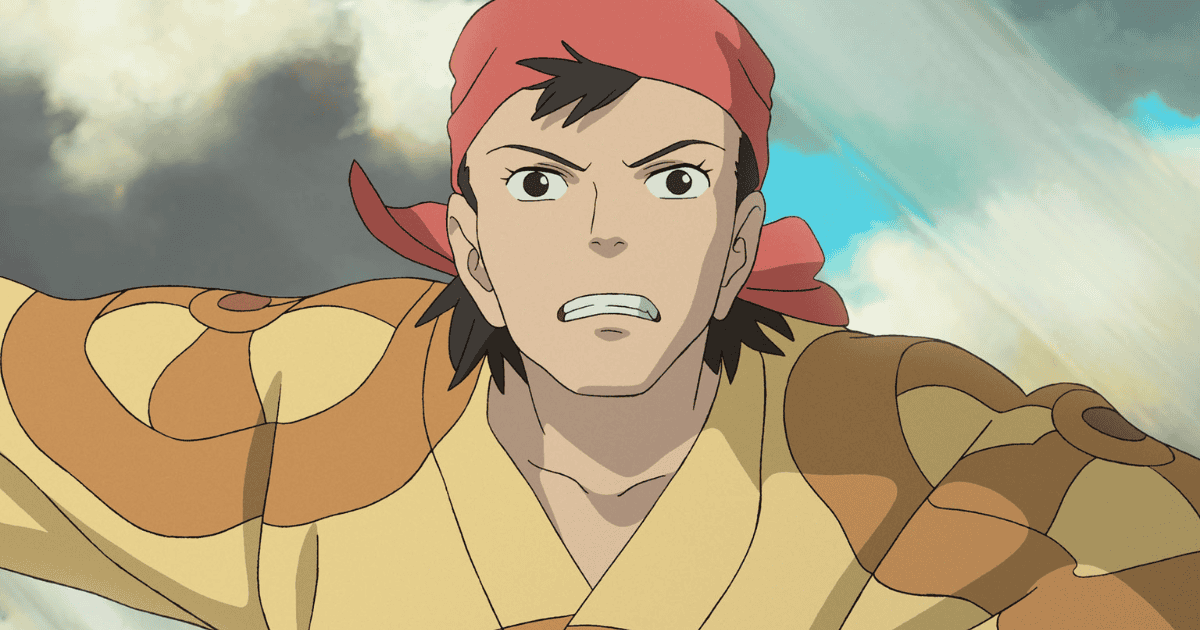
“In this world, the dead are the majority.”
この世界は死んでるやつの方が多いんだ。
Kono sekai wa shinderu yatsu no hō ga ōi n da.
In this world, the dead are the majority.
In this world, there are more dead people than living ones.
Read the Commentary and Analysis
Kiriko says this in the world below while looking at the many ships visible across the sea.
This may be the first truly incomprehensible line in The Boy and the Heron.
Even if we interpret the lower world as “Hayao Miyazaki’s world of images” or simply “the inside of Hayao Miyazaki’s mind,” the line is still difficult to explain.
But something begins to come into focus when we start from the autobiographical side of the film.
Kiriko is the first person Mahito meets after entering the world below.
I believe she represents the late Michiyo Yasuda (April 28, 1939–October 5, 2016), the legendary color designer who worked alongside Miyazaki from their Toei Animation days.
The production documentary briefly shows material suggesting this connection, and the structure of the story points in the same direction.
Yasuda had been Miyazaki’s comrade long before he met Toshio Suzuki, the figure represented by the Gray Heron.
If the film traces Miyazaki’s own path through life and animation, then perhaps the “dead people” visible beyond the sea are the countless people who disappeared along the way in the world of animation and filmmaking.
In creative industries, there are always far more people whose careers disappear than people who manage to survive and make their names known.
Perhaps that is what Miyazaki is saying here.
The English subtitle is quite close to the Japanese and uses the word majority.
The dub instead says:
“This world is filled with the dead.”
Personally, I think the subtitle preserves the original nuance more accurately, because the Japanese specifically makes a comparison: the dead outnumber the living.
What do you think?
▼ Read more about Kiriko’s voice actor, background, and character analysis
Natsuko Quote in Japanese and English
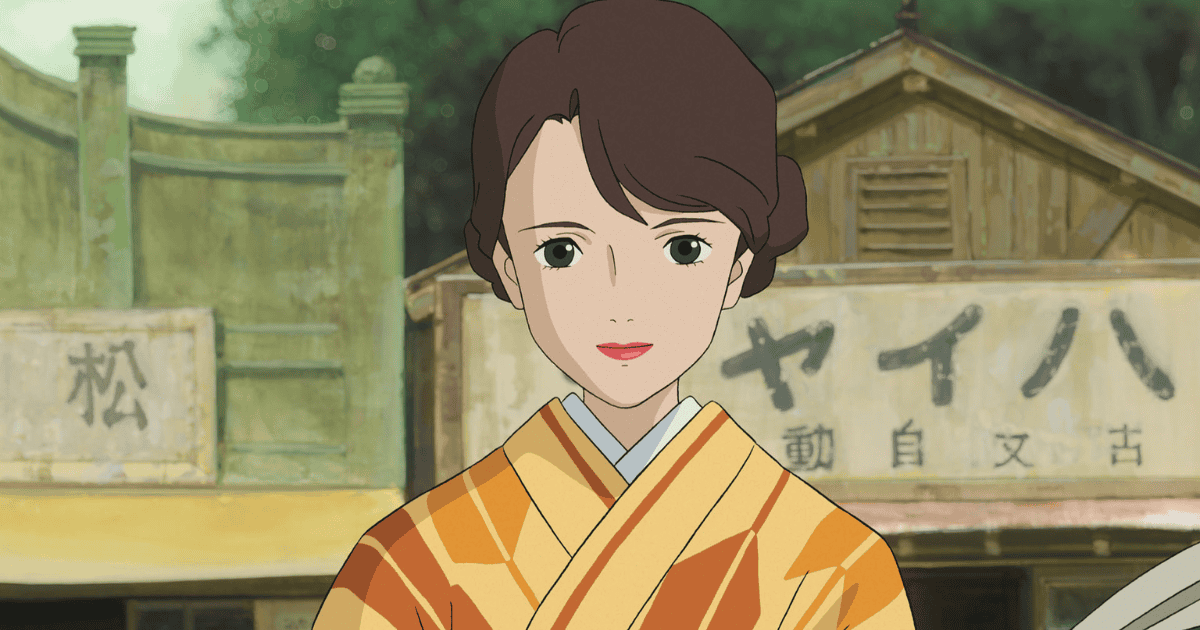
“I absolutely hate you! Get out!”
あなたなんか大嫌い!出ていって! 帰りなさい!早く!
Anata nanka daikirai! Dete itte! Kaerinasai! Hayaku!
I absolutely hate you! Get out! Go back! Now!
I hate someone like you! Get out! Go back! Hurry!
Read the Commentary and Analysis
Natsuko says this to Mahito after he comes all the way into the world below to find her.
To say that these words are harsh for a stepmother to direct at a child would almost be an understatement.
They are extraordinarily violent words to direct at anyone.
And yet their very intensity accomplishes two important things:
- We realize that Mahito has already grown enough to withstand hearing them.
- The unspoken tension between Natsuko and Mahito is finally dragged into the open, allowing it to begin dissolving.
By this point, both characters have already sensed that something is wrong between them.
Natsuko must understand perfectly well that Mahito cannot simply accept his mother’s younger sister as his new mother.
And Mahito, from the moment Natsuko takes his hand and presses it against her pregnant belly during their first meeting, must realize that she is carrying emotions toward him that are far from simple.
Her explosive “I hate you” finally confirms that those feelings exist.
In real life, saying something this severe could easily destroy a relationship completely.
But Mahito, who has grown through reading How Do You Live?, responds with the word:
“Mother!”
And instead of destroying their relationship, the confrontation finally melts the wall between them.
In that sense, Mahito’s words become Natsuko’s own answer to the question “How do you live?”
Both Natsuko and Mahito are finally able to take a new step forward because of what Hisako left behind.
The development may be somewhat predetermined dramatically, but it makes more sense if we think of the scene as an exaggerated, almost caricatured version of a parent-child quarrel.
Speaking generally, a parent-child fight is not necessarily a bad thing.
Sometimes a relationship becomes healthier only after both sides have actually said what they truly feel—although, of course, that is certainly not always the case.
A similar situation appears in Makoto Shinkai’s Suzume:
There, too, a woman who is effectively a foster mother unleashes intense resentment toward the girl she has raised.
The fact that two major animated films depict such similar scenes may reflect something about the emotional demands of our time.
Perhaps everyone is carrying around words that they are afraid to say because saying them might end everything.
The notable English word here is, of course, hate—made even stronger by the adverb absolutely.
The dub says:
“I’m not going anywhere with you. I hate you! Just go! Leave!”
In some ways, hearing the blunt English word hate makes the violence contained in the Japanese daikirai even more apparent.
▼ Read more about Natsuko’s voice actor, background, and character analysis
Shoichi Quote in Japanese and English
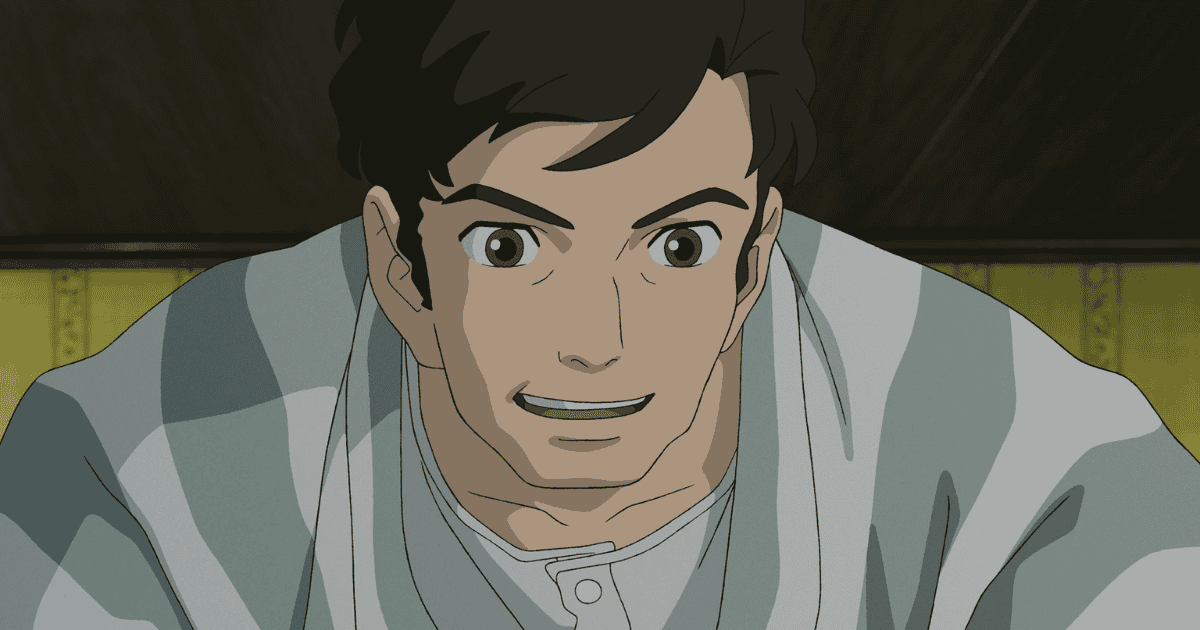
“I won’t let them get away with this!”
大事な息子を傷付けられて黙ってられるか!
Daiji na musuko o kizutsukerarete damatterareru ka!
I won’t let them get away with this!
How could I stay silent when someone has hurt my precious son!
Read the Commentary and Analysis
On Mahito’s first day at his new school, he returns home with a serious head injury.
Mahito stubbornly refuses to say who injured him, and Shoichi begins gently—but persistently—questioning him.
When Natsuko tries to stop him, Shoichi responds with this line.
Throughout much of the film, Mahito is dragged around by his father’s decisions whether he likes them or not.
But this line, together with the later sight of Shoichi charging toward the Granduncle’s tower fully armed, makes it much easier to realize:
“Ah. He really did all of this because he loves his son.”
I suspect many viewers actually came to like Shoichi considerably more because of those moments.
A father openly doting on his son appears briefly in Ponyo, but I cannot think of another Miyazaki film in which this kind of intense paternal affection plays such a central role in the story.
That may be one of the distinctive features of The Boy and the Heron.
There is not much to discuss in the subtitle itself.
The dub, however, uses a more elaborate expression:
“I won’t let them get away with doing this to my own flesh and blood.”
The phrase one’s own flesh and blood means one’s biological family—especially one’s own child or close blood relative.
What makes the phrase especially interesting is that Shoichi says it in front of Natsuko.
Perhaps that exposes a little of Shoichi’s extraordinary lack of sensitivity.
It also creates a certain irony in a family where biological and non-biological relationships are already painfully complicated.
▼ Read more about Shoichi’s voice actor, background, and character analysis
Himi Quote in Japanese and English
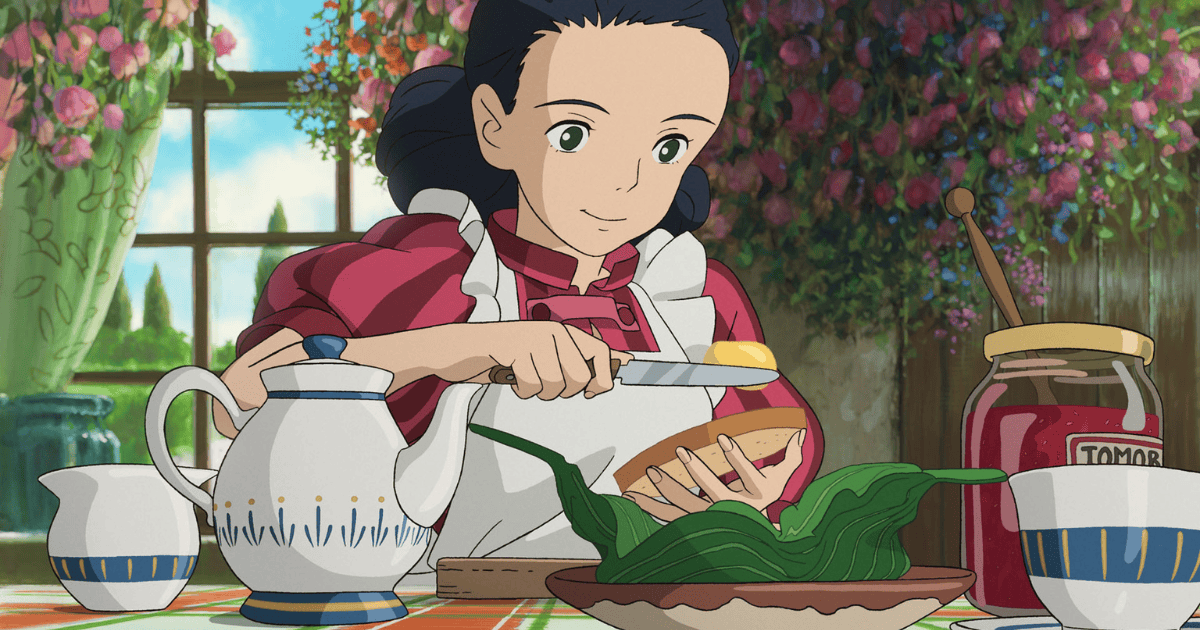
“I’ll be so happy to have you.”
素敵じゃないか。眞人を産めるなんて。
Suteki janai ka. Mahito o umeru nante.
I’ll be so happy to have you.
Isn’t it wonderful? To think that I’ll get to give birth to Mahito.
Read the Commentary and Analysis
These become the final words Mahito ever receives from his mother.
At the same time, they are the first expression of love Himi gives to the child she will one day have.
Perhaps, in the end, a human being needs nothing more fundamental than being able to believe:
“My mother was happy that I was born.”
If we were speaking about a father, perhaps the equivalent would be:
“I was happy that I got to meet you.”
Such a belief does not guarantee a happy life.
But unless a person possesses some basic awareness that their parents were glad they existed—an awareness so deeply rooted that they can almost forget it is there—it may be extremely difficult to build a life upon anything else.
On the other hand, if we understand Mahito as an avatar of Hayao Miyazaki, then it is difficult to imagine a more powerful story of self-affirmation.
During Miyazaki’s childhood, his mother was seriously ill, and he was not able simply to depend upon her in the way a child normally might.
Miyazaki himself has spoken in documentaries and elsewhere about the fact that his feelings toward his mother were never simple.
That history clearly influenced the mother-daughter relationship in My Neighbor Totoro, and its influence can also be felt throughout Ponyo.
At the beginning of The Boy and the Heron, the relationship between mother and child is again presented as something painfully unresolved.
But this time, the story eventually arrives at something very close to a complete reconciliation.
Perhaps, inside Miyazaki himself, the figure of “the mother” has finally become something he can completely accept and integrate.
Maybe that is why he was finally able to create a scene in which his mother looks directly toward his avatar and effectively says:
“I am happy that I will give birth to you.”
The most interesting point in the English subtitle is the expression “have you.”
If I were translating the Japanese directly, I might instinctively want to use a verb such as bear.
But in natural modern English, “I’m happy to have you” is far more idiomatic and carries the emotional meaning without sounding unnaturally formal.
This is one of those nuances that is difficult for a non-native speaker to fully derive from grammar alone, so perhaps it is best simply to remember it as an example.
The dub uses a very similar expression:
“You know I’m really lucky to have you as a son.”
▼ Read more about Himi’s voice actor, background, and character analysis
Those are the memorable lines from The Boy and the Heron that I personally selected.
If I had to choose just one favorite quote from the film, it would be:
“I’ll be so happy to have you.”
What is your favorite quote from The Boy and the Heron?
The images used in this article are from the Studio Ghibli Works Still Image Collection.
Can you name the movie before the scene comes into focus?
Put your visual memory to the test with a blurred Studio Ghibli scene.
Reader Comments