
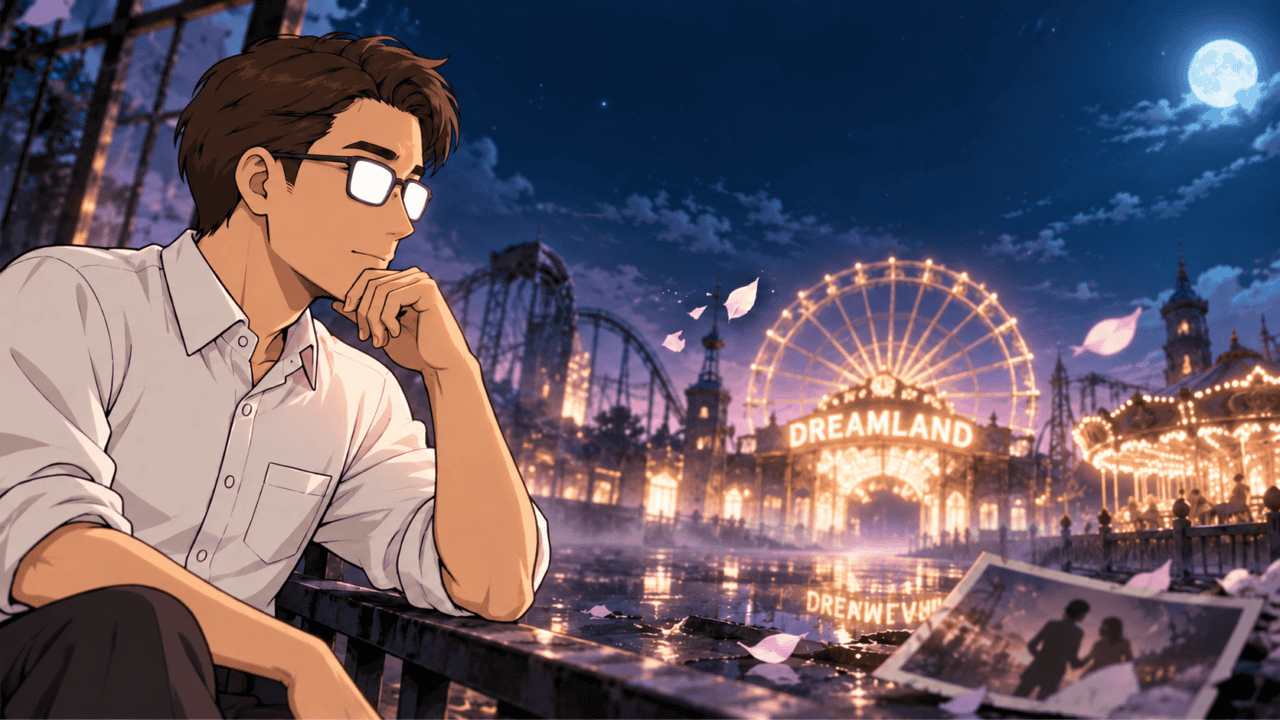
In Detective Conan: The Private Eyes’ Requiem, Suehiko Ito’s apparent motive is revenge against the police for driving Reiko Shimizu to suicide. He seems to want private detectives to uncover the truth and expose the police’s failure. But that explanation alone does not account for several unsettling details in the film.
Here, I connect the armored-car robbery, the shooting of Masaharu Nishio, and the scheme that draws the detectives into the film’s events to consider Ito’s true motive. My conclusion is that what he could not let go of was neither money nor revenge, but the wish for proof that Reiko Shimizu had loved him.
The following questions are important to that interpretation:
- Why did Ito not simply turn himself in to the police?
- Could Ito really have failed to grasp what happened in the shooting of Nishio?
- Why was the final password “Suehiko Ito,” rather than “Reiko Shimizu”?
I will work through these troubling details to explain how I arrived at that conclusion.
*This is a translated version. The original (Japanese) is available here.
- Revenge Alone Does Not Explain the Case
Ito’s apparent motive is retaliation against the police for Shimizu’s death. Yet he does not simply confess; he makes the detectives pursue the truth. That suggests an attachment beyond revenge. - The Three Crimes Connect Through Their Relationship
The robbery, Nishio’s shooting, and the scheme involving the detectives initially seem separate. If we assume Ito and Shimizu were already lovers, however, they form a continuous story: she guides him, and he acts while believing in their relationship. - Protecting a Secret Between Them
On this reading, Ito’s immediate motive is to protect the secret of Shimizu’s involvement in the earlier crimes. For him, that secret also sustains their relationship. - Wanting Proof of Her Love
Ito may dimly suspect that Shimizu has used him. Even so, perhaps he wants someone to prove she loved him too. The final password and Dreamland symbolize his wish to hold on to that romantic fantasy.
On this pageContents
Detective Conan: The Private Eyes’ Requiem (2006): An Analysis
Ito’s plan can be considered through both the crime and his attachment to the world he has lost. The analysis below asks how those personal motives connect with Dreamland.
Why the Apparent Motive of Revenge Feels Incomplete
Ito’s stated reason for forcing the detectives to solve the case seems straightforward: retaliation for the suicide of Reiko Shimizu, who had been questioned voluntarily about Nishio’s shooting and driven into a corner. By having well-known private detectives reveal the truth, he intends to embarrass the police. Something about that explanation troubles me, though.
If embarrassment were his goal, it would be enough to establish that Ito was the culprit and that an uninvolved woman had killed herself after police questioning. Put simply, he could turn himself in. Mascara on the rifle suggests Shimizu may have looked through the scope, but hardly provides decisive proof, on its own, that she committed the crime.
Nor did the police regard the blood on Nishio’s chair and the floor as conclusive. That is why Shimizu was being questioned voluntarily.
If Ito turned himself in and confessed, with circumstantial evidence supporting his account, I would expect the case to be referred to prosecutors with him identified as the real culprit. If the media picked it up, the story would be that an innocent civilian had died because of a police mistake. That would be embarrassing enough.
Instead, he assembles several detectives, sets a time limit, and takes hostages to make them reach the “truth.” There seems to be more at stake for him than merely clearing Shimizu’s name.
Ito’s Romanticism: The Shared Secret Connecting Three Crimes
The film presents three incidents:
- The armored car robbery
- The shooting of Masaharu Nishio
- The scheme coercing the detectives
The incidents are separate, but Ito’s own idea connects them: sharing a secret deepens the bond between a man and a woman. For him, crime has meaning beyond money or self-display; it becomes a secret shared with the woman he loves.
That idea raises another question. Why does he want to share a secret with her? Would he feel this way about someone he merely admired from afar?
Did Shimizu Also Set the Robbery in Motion?
Looking only at the robbery, we might read Ito as showing off his abilities to attract Shimizu. But that feels a little strained. He describes her as the person he loves. Would he use that phrase for someone he merely had feelings for? He could, certainly, but his attachment seems more specific than that. In other words,
it seems more natural to suppose that Ito and Shimizu were already lovers.
On this reading, the relationship involved deep affection for Ito, but was only a means of using him for Shimizu. Unless we understand it as a profound connection in his eyes, his later loss of control is difficult to explain.
Following that thought, could Shimizu also have been the one who instigated the armored-car robbery?
Ito liked boasting, had considerable pride, and was intoxicated by the perfection of his plans. Telling him something like “You could pull off the perfect crime” would have been an easy way to spur him into action. For Shimizu, the benefit would have been financial; for Ito, the robbery would have been an important ritual for deepening his bond with his beloved.
Nishio’s reckless behavior would therefore have meant more to Ito than a ruined plan. It would also have disrupted a ritual meant to deepen his bond with the woman he loved. That perspective may help us understand both Nishio’s shooting and the elaborate scheme in the film.
Nishio’s Shooting: What Should Have Been “Our Secret”
Ito’s stated reasons for trying to kill Nishio are either to keep the stolen money for himself, as Conan and Heiji deduce, or to punish Nishio for ruining his perfect plan, as Ito claims. Neither feels quite sufficient to explain a decision to kill.
Shimizu planned the “perfect crime” surrounding Nishio’s shooting, with Ito set up to take responsibility for the killing. But perhaps her proposal to him was something like this: “Let’s get rid of Nishio, who ruined what should have been our perfect plan, and keep the money for ourselves.”
That would surely have been an attractive proposition to Ito. It would satisfy his inflated self-regard while seeming to make their complicity more intimate. In his eyes:
- The first crime creates a secret they share as accomplices.
- The second creates a secret for just the two of them.
Seen this way, the film’s central scheme may follow the same pattern. Alongside revenge against the police, Ito may be acting to protect their private secret: that Shimizu was involved too.
The Troubling Details of Nishio’s Shooting
Assuming Ito and Shimizu were lovers makes his actions and motive easier to understand. Yet if he truly believed in their complicity, why was the answer to the final question—“The name of the person you love most?”—Suehiko Ito, rather than Reiko Shimizu?
The troubling details of the shooting and Ito’s subsequent accident may hold the key. First, the plan to shoot Nishio was extraordinarily careless. Ito was an amateur, so the chance of his succeeding seems very low. Did he really believe his shot had killed Nishio?
Ito also saw that Nishio barely reacted to being shot repeatedly. He insisted he had killed him because Nishio fell sideways with his chair, but even if he was panicking at the time, might he not have noticed something unnatural once he calmed down?
The tampering with Ito’s car matters too. Did he really dismiss the accident as bad luck? Had he thought it through, he might have realized that the shooting scheme was intended to leave his fingerprints and gunshot residue behind, placing all responsibility on him.
He may, of course, have remained unaware of the whole picture. But taken together, these details make complete ignorance seem less natural to me. Might he have dimly understood that he was being used and was about to be discarded?
That interpretation may explain the password and the motive beneath his actions.
Protecting His “Dreamland”: Who Does “You” Mean?
If Ito recognized the inconsistencies in Nishio’s shooting, he would have to reach a conclusion he did not want to believe: Shimizu had merely used him.
Then perhaps his real reason for making the detectives pursue the truth was not simply revenge or concealing Shimizu’s involvement. He wanted outsiders to affirm the romantic story he believed in. He wanted proof that Shimizu had loved him. He wanted someone to say it was not merely his private fantasy, an assumption confined to his own closed world.
That would also explain why the final password was his name rather than hers.
We naturally take “you” in “The name of the person you love most?” to mean Ito, suggesting he can love only himself. But if his motive is to prove Reiko’s affection, could “you” instead mean Reiko Shimizu?
The password would then be the very conclusion he desired: “The person Reiko Shimizu loves is Suehiko Ito.”
His hiding place, Dreamland, becomes symbolic too: a refuge within the fantasy that Shimizu had loved him.
Perhaps his motive could be described as protecting his own “Dreamland.” What a fragile wish.
Drawing the Motives Together
The reading above suggests three motives:
- To have the detectives reveal the truth and embarrass the police in revenge.
- To protect the secret of Shimizu’s involvement in Nishio’s shooting.
- To have someone prove that Shimizu had loved him too.
The third seems central, but that does not mean only one of these is his truth. Perhaps all three are true for him, tangled together even in his own mind.
This analysis depends on the assumption that Ito and Shimizu were lovers. Thinking through the case, I find much that is difficult to explain unless Ito believed she had feelings for him. The film does not state this explicitly, so it remains a hypothesis, but I think it is a plausible one. It also seems natural to me to imagine similar relationships with Nishio and Miyama. Perhaps a Detective Conan film intended to be watched by children could not depict that openly. That, too, is a supposition, rather than a confirmed explanation of the filmmakers’ choices.
Whatever the case, the motive seems empty and poignant. What do you think drove him?
Your Take
What is your view? Choose the answer that comes closest to your own response.
Reader poll




Reader Comments
Have a thought or interpretation? Leave a comment