
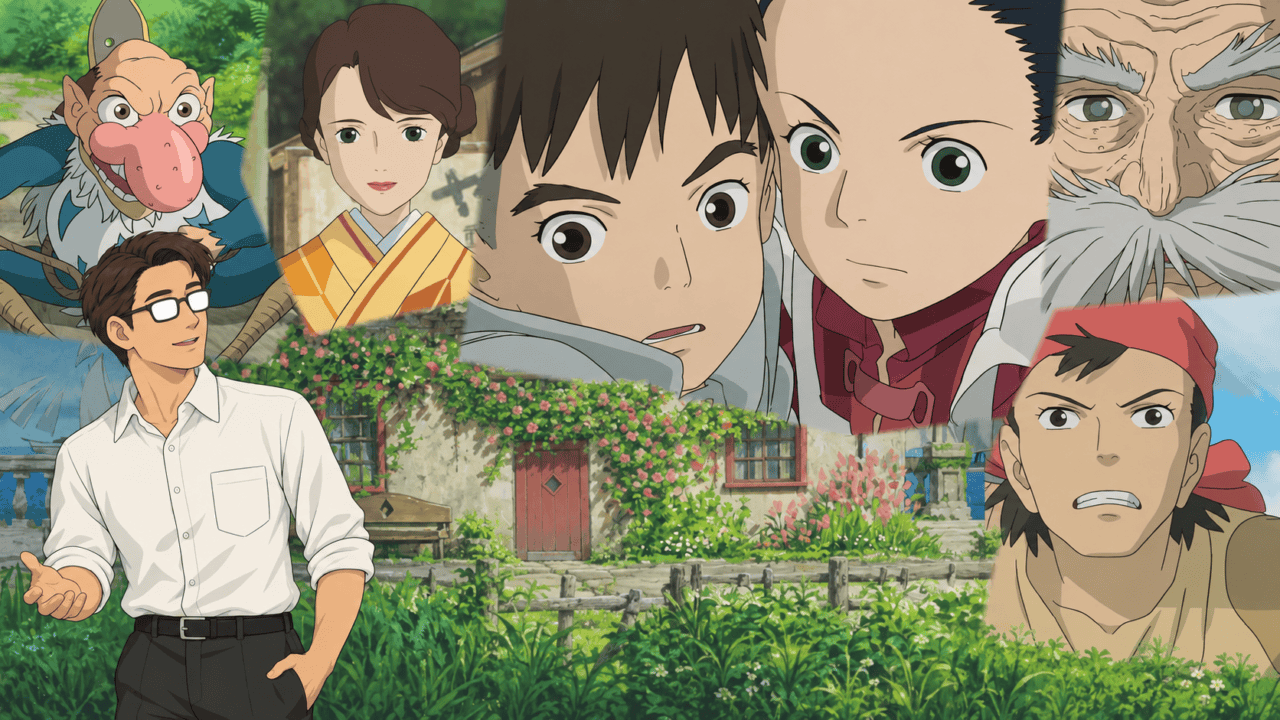
Hayao Miyazaki’s The Boy and the Heron (Official Studio Ghibli Website) is an animated feature released in Japan on July 14, 2023.
With a policy of virtually no publicity, almost nothing beyond the title and a poster image was known before the Japanese release. Even the characters’ names and appearance remained a mystery.
The same was true of the Japanese voice cast. There had been a few hints on social media from Takuya Kimura, who played Mahito’s father Shoichi, and Masaki Suda, who played the Gray Heron. But until we saw the film, we did not know who was voicing whom. Suda’s performance was so good that even watching it did not give him away—or so it seemed to me. In fact, I thought everyone was excellent. The English cast, listed below, is a separate production.
Here, I will look back at the characters and voice actors in The Boy and the Heron, considering their appeal and their place in the story.
Please note that this character analysis includes spoilers, sometimes without further warning.
*This is a translated version. The original (Japanese) is available here.
On this pageContents
The Boy and the Heron (2023) Main Characters & English Voice Actors
| Name | Age | Voice Actor |
|---|---|---|
 Mahito | 11 | Luca Padovan |
 The Gray Heron / Heron Man | ? | Robert Pattinson |
 Kiriko | ? | Florence Pugh |
 Himi | ? | Karen Fukuhara |
 Natsuko | ? | Gemma Chan |
 Shoichi | 37 | Christian Bale |
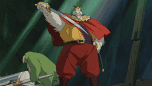 The Parakeet King | ? | Dave Bautista |
 Granduncle | ? | Mark Hamill |
The Boy and the Heron (2023) Character Map
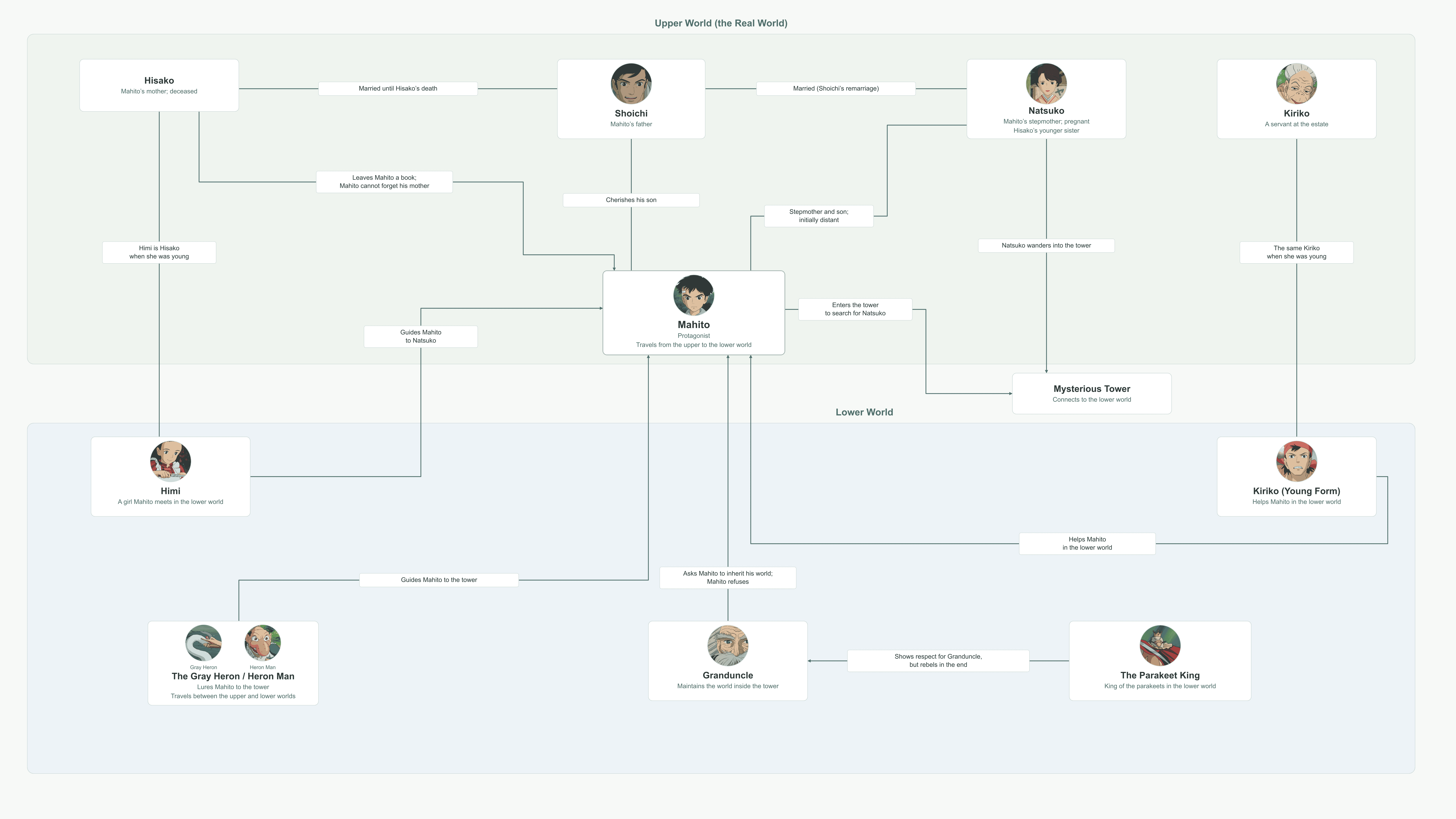
Mahito’s mother, Hisako, left him Genzaburō Yoshino’s How Do You Live?. Reading it helps him come to terms with her death.
Hisako and Natsuko’s granduncle was captivated by a fallen meteorite. He built a tower around it and then disappeared inside. Mahito and Natsuko find their way into the world below that he created.
Hisako had also disappeared into the tower as a child. Himi, the girl Mahito meets there, is his mother from that period, and he encounters a younger Kiriko too.
Character Profiles, Voice Actors, and Analysis
Mahito|Voiced by: Luca Padovan
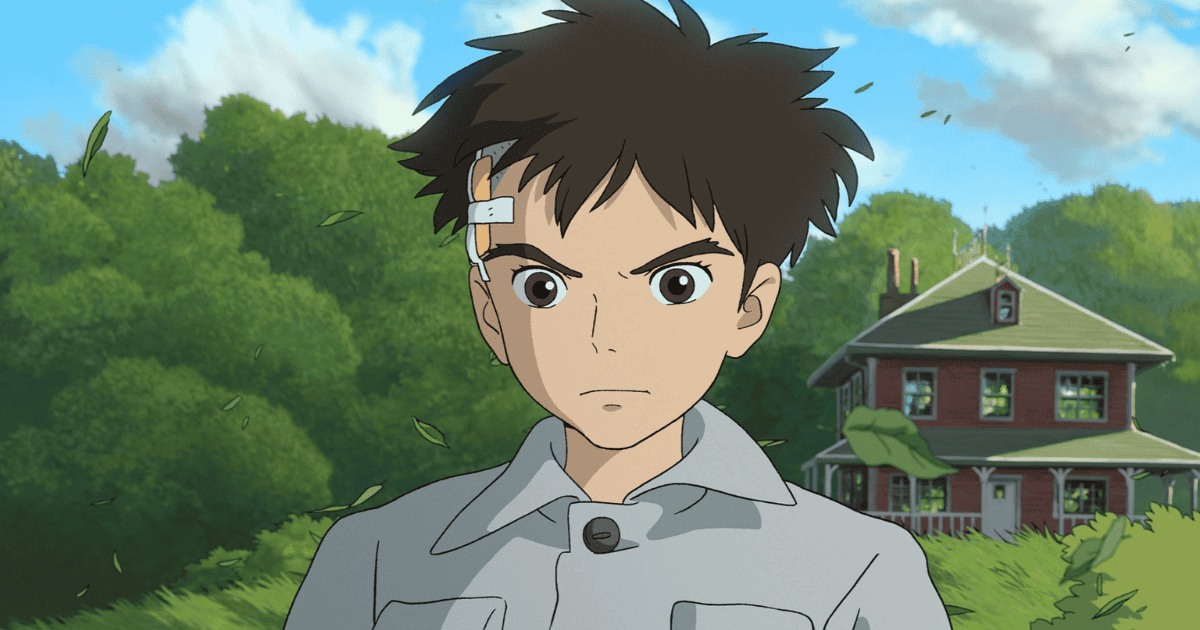
Mahito’s Profile and the Loss of His Mother
The protagonist is eleven-year-old Mahito Maki, a sixth-grade student. At the beginning of the story, he loses his hospitalized mother in a fire.
As the war intensifies, he and his father move to his mother’s hometown. By then, her younger sister Natsuko is pregnant with his father Shoichi’s child.
Alienation and the Mysterious Tower
Shoichi continues to show Mahito affection after the move, though somewhat one-sidedly. Still, I think Mahito feels deeply alienated in the “Aosagi Yashiki” (Blue Heron Mansion), where his mother grew up.
His father has begun a new life with Natsuko, and she is expecting his child. On paper, it is three against one. Mahito probably cannot see the mansion as somewhere he belongs.
When the gray heron nesting in the grounds draws his attention to the strange tower, I think Mahito is looking for “somewhere other than here.” He does not want to be at the mansion.
The Heron’s Invitation and Mahito’s Resistance
If Mahito wanted to leave the mansion, “Your mother is alive” should have been an irresistible invitation. In a film by someone other than Miyazaki, those words alone might have sent him straight to the tower.
Instead, he stubbornly resists and even makes a bow and arrow to drive the heron away.
My reading is that he is drawn to the promise that his mother is alive, yet by resisting the Heron’s denial of the sad reality he is trying to accept, he struggles with that reality itself. This inner conflict may help explain why the film takes so carefully judged a time to enter its fantasy world.
The Turning Point: How Do You Live?
Just before entering that world, Mahito reads How Do You Live?, the book his mother left for him. In that sense, it is her last message.
Reading it finally enables him to accept her death and feel ready to take another step.
In my view, after reading the book, Mahito would not have gone to the tower however persistently the Heron invited him.
He enters because Natsuko has gone there: to save his mother. I think it matters that his decisive action is not prompted by the Heron’s words.
Mahito’s Malice and His Final Choice
After traveling through Miyazaki’s fantastic world, Mahito rejects it and refuses to succeed the Granduncle. One of his explanations is that he is already tainted by malice.
He points to the scar on his head as its symbol. This is not easy to make sense of, but I can think of a few possible motives behind his self-inflicted injury:
- Perhaps admitting that he did not want to go to school felt like defeat, so he injured himself badly to use his father instead.
- Perhaps he was testing Natsuko, trying to see how she would treat him when he was badly injured.
In either reading, he uses his position as a child to conceal his resentment of the situation. That, I think, is why he calls it malice.
Mahito later describes that wound in one of the film’s most revealing lines. I examine the original Japanese, English subtitle, and the meaning of his use of “malice” in my guide to The Boy and the Heron quotes in Japanese and English.
Yet he accepts the malice within himself. Rather than an egocentric world he could control by inheriting the Granduncle’s stones, he chooses the disorderly world where things will not always go his way. In that sense, The Boy and the Heron might be described simply as a boy’s earnest attempt to accept his circumstances.
Mahito as a Reflection of Miyazaki
Mahito’s father runs a factory producing parts for military aircraft, which makes it hard for me not to see Mahito as Miyazaki’s alter ego. Miyazaki’s father, Katsuji, was a director of Miyazaki Airplane.
But Mahito is not the only character who seems to reflect Miyazaki, and Miyazaki is not the only person reflected in Mahito. For me, these overlapping identities are part of the film’s interest.
Read the detailed analysis: The Three Miyazakis: Mahito, Shoichi, and the Granduncle. How do you see them?
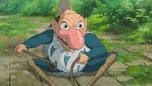
The Gray Heron / Heron Man|Voiced by: Robert Pattinson
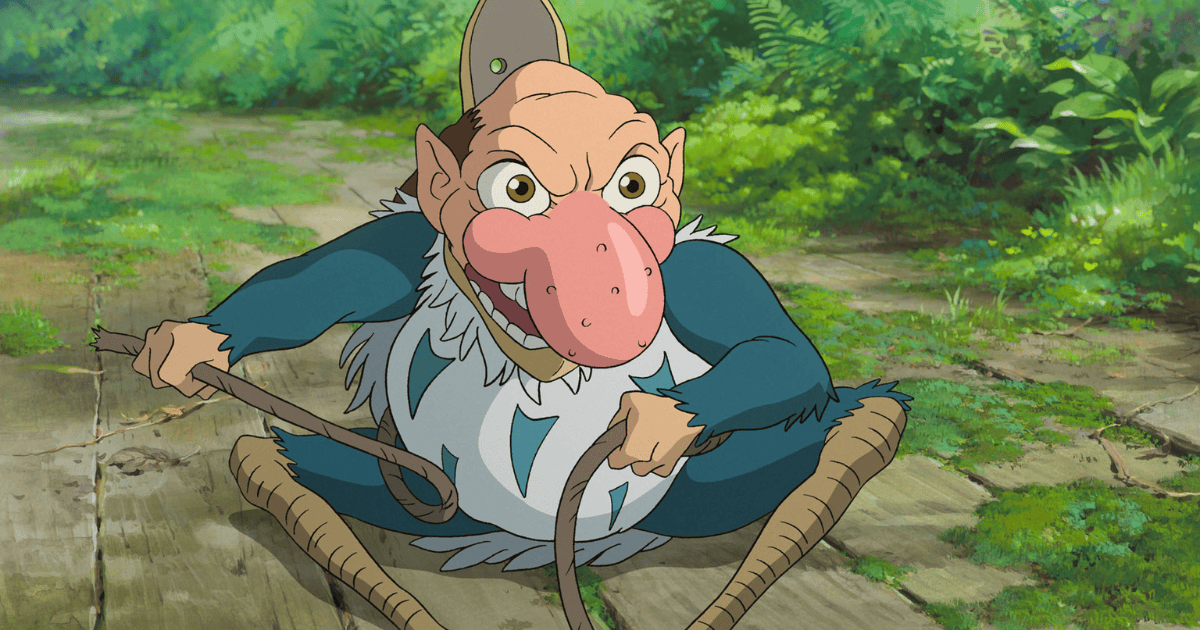
The Gray Heron’s Profile
The gray heron nesting in the mansion’s grounds uses clever words to draw Mahito toward the Granduncle’s tower. It has an unnerving presence, but its true form turns out to be a little middle-aged man with an enormous nose.
At first, it confronts Mahito with clear malice. That gradually becomes an exchange of barbs, until the two make a splendid pair.
The Heron provides wonderful comic relief in a fairly severe story. Robert Pattinson’s English performance brings out that comic side too.
The Heron Man as Producer Toshio Suzuki
If Mahito is Miyazaki’s alter ego, who is the Heron that confuses him yet stays beside him as a companion to the very end?
For me, there is only one answer: Ghibli producer Toshio Suzuki.
Suzuki knew Miyazaki and Takahata before Ghibli was established and continued making animation alongside them. He has spoken of fierce clashes, yet they kept working together with an intensity that is difficult for us to imagine.
If the Granduncle’s strange world represents Miyazaki’s creative world, the story could also be read as a look back at the road Miyazaki and Suzuki have traveled together.
Why, then, portray Suzuki as a sagi, a word that means both “heron” and “fraud”? Perhaps Miyazaki simply wanted to. Still, looking back at Suzuki’s work, I find the Heron Man an oddly convincing choice.
Enjoy his resourceful bluffs here: Toshio Suzuki’s “Sagi” Stories and the History of Ghibli.
Kiriko|Voiced by: Florence Pugh
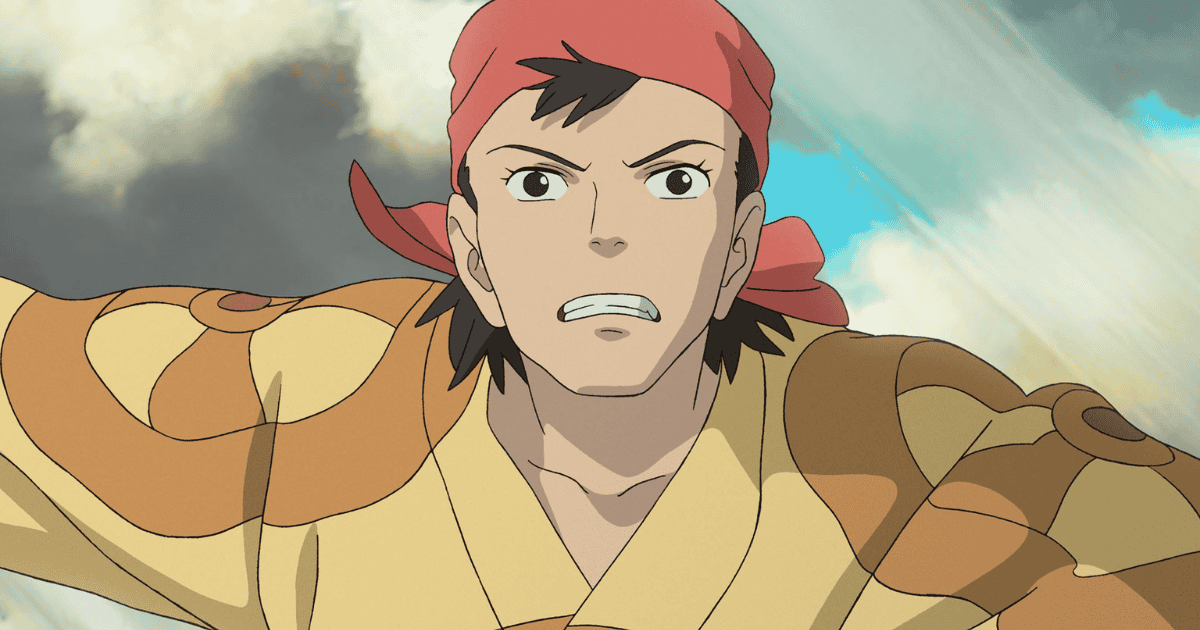
Kiriko’s Profile: A Puzzle of Time
Kiriko is one of the seven elderly maids at the mansion. She follows Mahito into the tower as he searches for Natsuko and ends up in the Granduncle’s world. There, a younger Kiriko appears before him.
She is the character who makes the film’s time and space particularly difficult to understand.
Where did this younger Kiriko come from? Perhaps the old woman who entered with Mahito became young again, but that seems strange: she knows this world too well and already has magical powers. When did she acquire them? I think we should consider the possibility that the Kiriko already living there is not the one who came in with Mahito.
The clue is that she leaves through the same door as Himi at the end. The explanation that makes most sense to me is that she entered the tower’s world with Himi, or Hisako, when they disappeared in the past.
Himi returned after a year in the outside world, so both she and Kiriko would have spent some time below. Perhaps the Granduncle gave Kiriko her powers during that period.
But the ages still do not quite add up: Kiriko seems to have grown too old by the time Hisako’s son Mahito meets her. Perhaps she aged considerably in the tower and the Granduncle then made her young enough to act again. Even that is only an attempt to make sense of the film’s unusual chronology.
Is Kiriko Actually Michiyo Yasuda?
The more I think about Kiriko, the more confusing she becomes. But why include such a complicated character? One possibility is that Kiriko represents Michiyo Yasuda.
Yasuda worked with Miyazaki from their Toei Animation days, overseeing painting and color design at Ghibli. Painting colors onto the backs of animation cels so they look right from the front is demanding work, as is specifying the right colors for a film’s visual design. Even with digital tools, the scale of that work is daunting. Her contribution helped give those worlds the natural-looking colors we take for granted.
Yasuda died in October 2016. The film’s pamphlet dates Miyazaki’s proposal to July that year, before her death. I do not know whether he had this idea from the beginning, or whether learning of his old colleague’s death later affected the film’s tangled treatment of time and space.
Kiriko is the first to help Mahito in the world below, followed by the Heron. That sequence seems to echo Yasuda’s position as Miyazaki’s senior colleague at Toei, long before he met Suzuki. Kiriko does not cease to be Mahito’s companion when the Heron returns: he keeps her doll. I see in that the way Yasuda remained Miyazaki’s comrade throughout their working lives.
I know the evidence for the Yasuda reading is thin. Still, it offers a way to understand why Himi and Kiriko leave through one door, while Mahito and the Heron leave through another. If Himi is Miyazaki’s mother and Kiriko is Yasuda, both have died; if Mahito is Miyazaki and the Heron is Suzuki, both are living. The chronology remains unresolved, but could Kiriko be Yasuda after all?
Himi|Voiced by: Karen Fukuhara
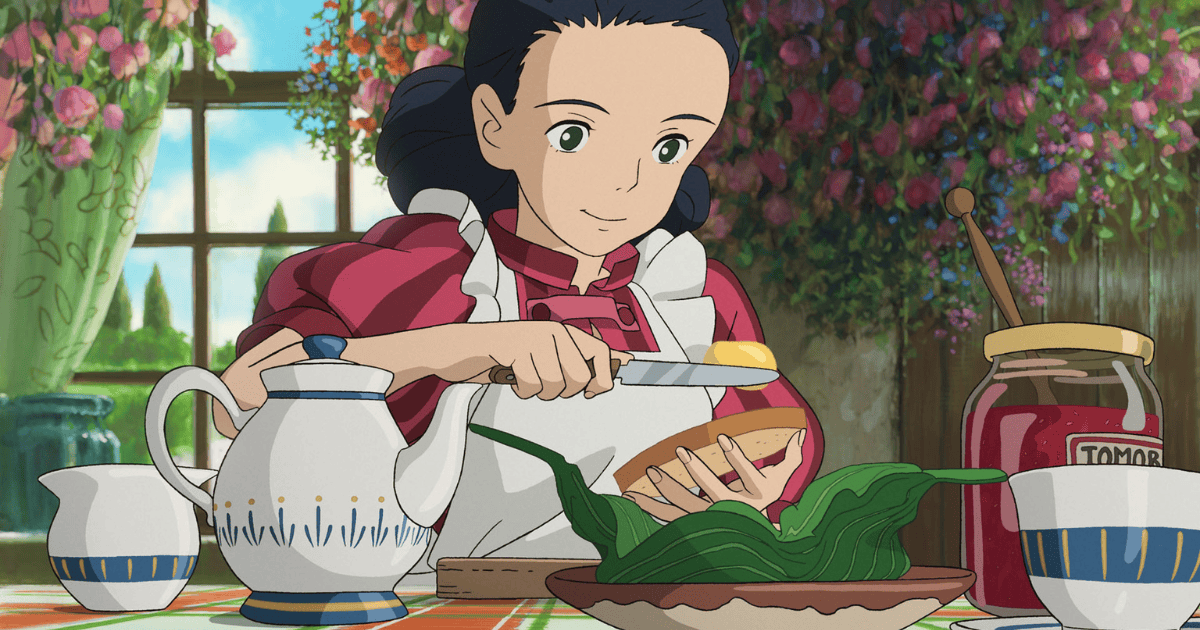
Himi’s Profile
Himi is the mysterious girl Mahito meets in the world below. She is Hisako, his mother, as a child, from when she too wandered into the Granduncle’s world.
She has a magical power over fire and uses it to help Mahito search for Natsuko.
At the end, she returns to her own world to become Mahito’s mother.
Himi as Miyazaki’s Mother
If we see Mahito as Miyazaki’s alter ego, Hisako—and therefore Himi—would seem to reflect Miyazaki’s mother.
I think Miyazaki had previously portrayed his mother most openly in Ponyo on the Cliff by the Sea. Here, she seems to be present just as openly, but in a rather different way.
How does this film’s portrayal of the mother differ from earlier ones? And why does Himi wield fire? These are questions well worth considering.
Explore this reading: The Three Miyazakis: The Father, the Mother, and the Granduncle.
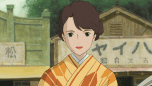
Natsuko|Voiced by: Gemma Chan
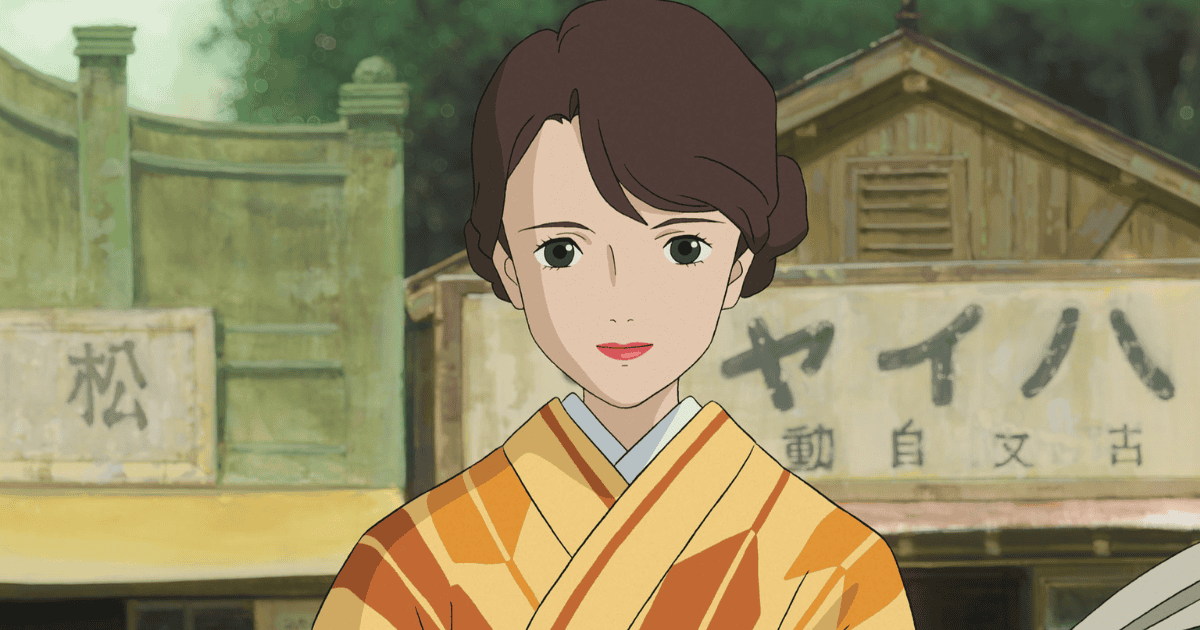
Natsuko’s Profile: Becoming Mahito’s Mother
Natsuko is Mahito’s stepmother and his late mother Hisako’s younger sister. Marriages within a bereaved spouse’s family were not unusual in prewar Japan, but what society considered ordinary could still be difficult for a child. Mahito faces precisely that problem.
We tend to identify with or pity Mahito as the protagonist. Yet accepting him into her life is a major undertaking for Natsuko too.
She is an adult, but making this situation work still requires Mahito’s cooperation. He is a child who lost his mother before he could spend enough time with her. Natsuko tries hard to become his mother while pregnant herself; Shoichi comes home late, leaving her to care for a boy who is not her own child.
It would not be surprising if she began to think only of her own needs and longed for somewhere she could give birth in peace. I suspect those feelings led her into the tower. Like Mahito, she wanted “somewhere other than here.”
Mahito goes to bring her back. Reading his mother’s book has helped him accept Natsuko as his mother, but she does not know that; she has already left for the other world. I think what finally changes her feelings is his calling her “Mother.” In the end, she responds to that word.
Children are not the only ones who suffer. I think Natsuko carries much of the parents’ pain in this film. Yet she too ultimately chooses the present. For me, The Boy and the Heron is a film that affirms living here and now.
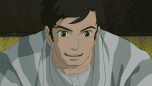
Shoichi|Voiced by: Christian Bale
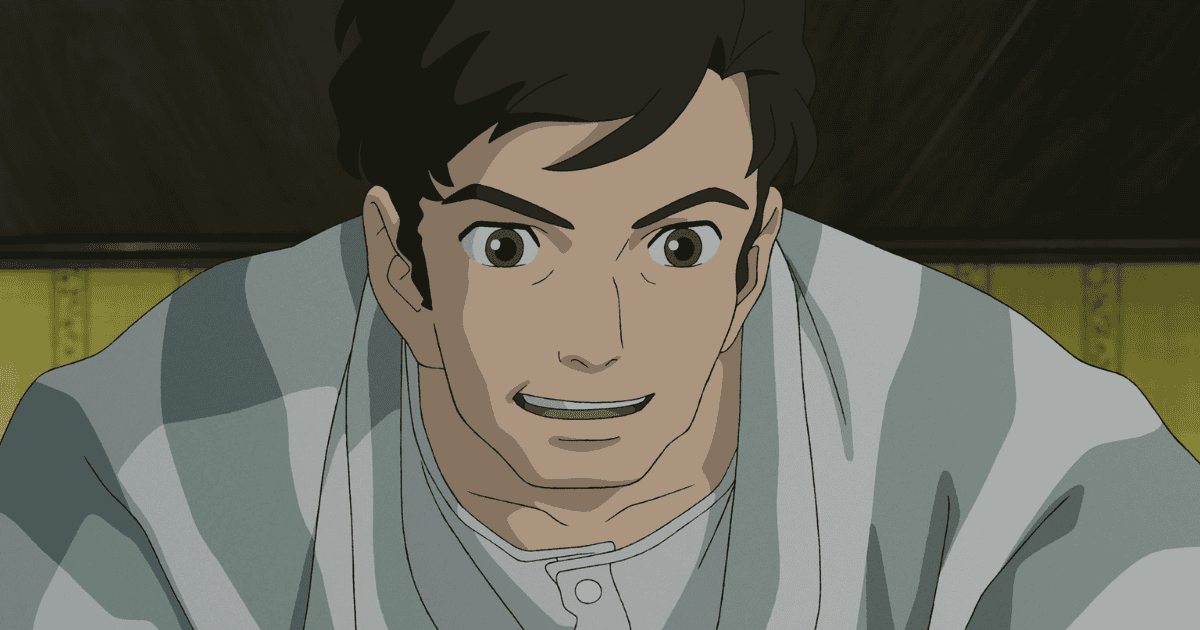
Shoichi’s Profile
Shoichi is Mahito’s thirty-seven-year-old father. He runs an aircraft manufacturing company.
He seems to pour affection into Mahito, though his efforts sometimes miss the mark. Watching him, I felt the same anxiety I felt watching the old man in The Tale of the Princess Kaguya.
But seeing him wield a sword to protect Mahito changes that impression: what a good dad.
Shoichi as Katsuji, and as Hayao Himself
Shoichi runs an aircraft company, as Miyazaki’s father Katsuji did. That makes it hard not to see Katsuji reflected in him.
At the same time, I think Shoichi is also another Miyazaki. One character can reflect several people; for me, that is a distinctive feature of the film. I discuss it here:
Read the detailed analysis: The Three Miyazakis: A Father’s Message.
Warawara|Japanese Voice: Karen Takizawa
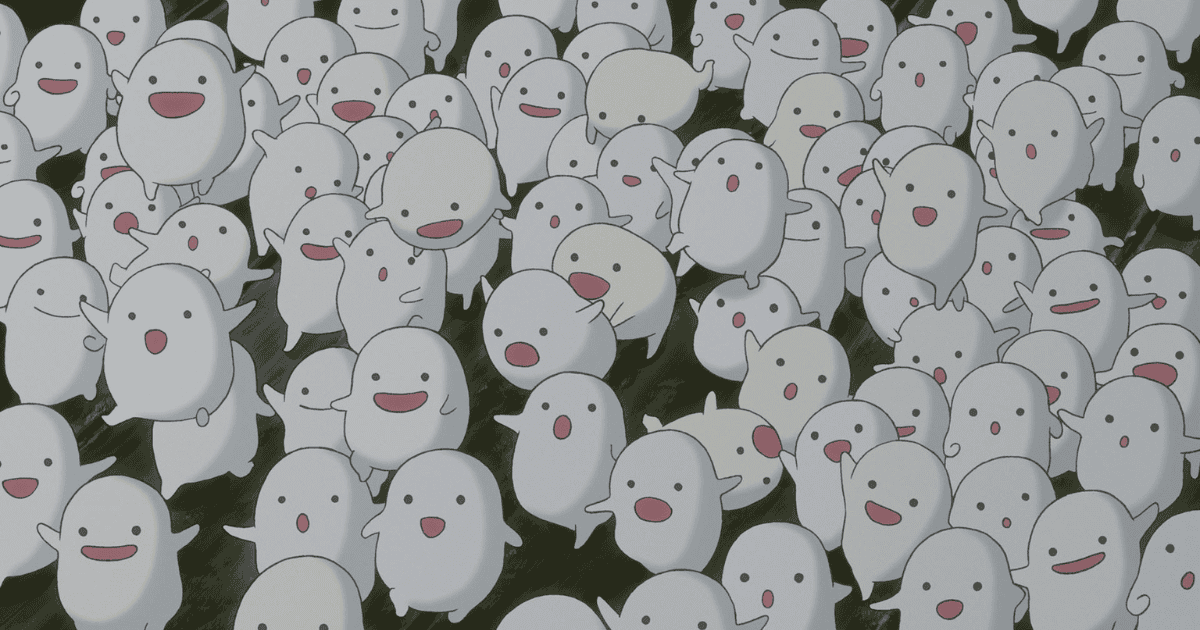
The Warawara’s Profile
These small, endearing beings live in the world below. Kiriko says they go to the world above to be born as humans.
Miyazaki’s films have a way of overwhelming us with cuteness, from the fox squirrels in Nausicaä to the soot sprites in Spirited Away. The Warawara have done it again.
Yet the world below is the Granduncle’s creation. In that sense, I think even the idea of Warawara as humans before birth is a fiction within the film’s world. Since the film itself is fiction, we have a fiction within a fiction—the parakeets and pelicans seem to occupy the same position.
This peculiar structure is another feature of The Boy and the Heron. I think it makes a complete understanding of the film very difficult.
The Parakeet King|Voiced by: Dave Bautista
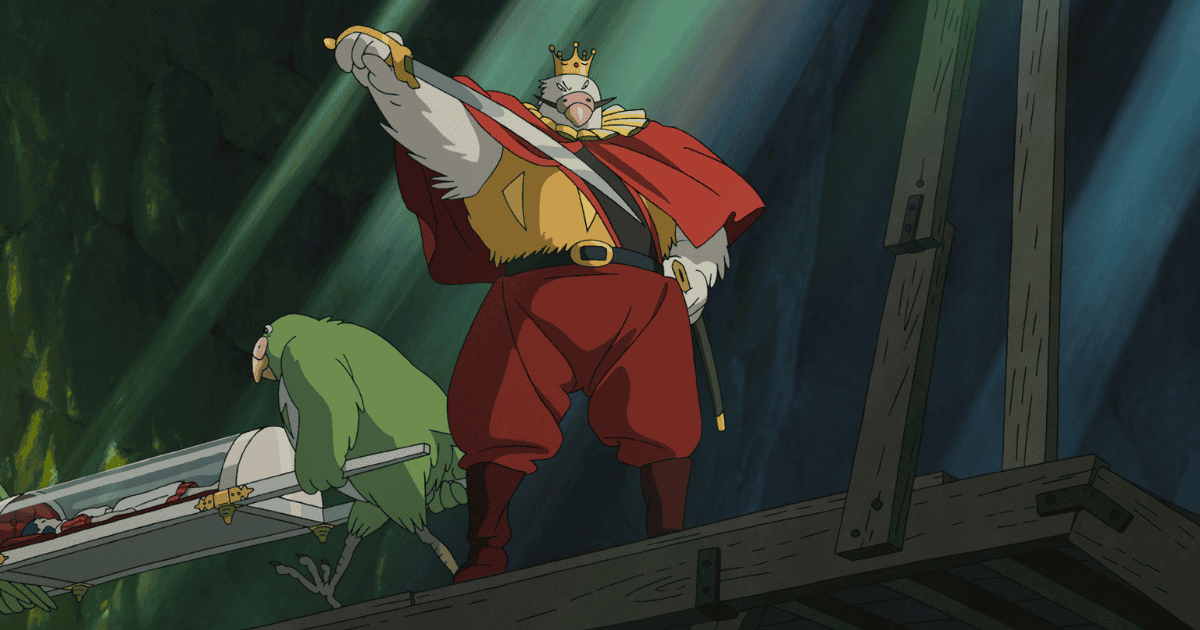
The Parakeet King’s Profile
The king of the many humanlike parakeets in the world below. They seem to have been brought there by the Granduncle, but the King demands that he hand over control of the world.
The meaning of the King and his flock is not easy to grasp, but Suzuki offers a clue in SWITCH Vol.41 No.9:
Miya-san says, “The Parakeet King is me.” He also said, “The other self I wanted to be is Mahito.”
(Original Text in Japanese)
宮さんは「インコ大王は自分だ」と言う。そして「なりたかったもう一人の自分が眞人だ」と言っていました。
Why would the Parakeet King be Miyazaki? I consider this alongside the pelican below and in more detail in the linked article. How did the parakeets look to you?
Read the detailed analysis: What Might the Parakeet King and His Flock Mean?
Noble Pelican|Voiced by: Willem Dafoe
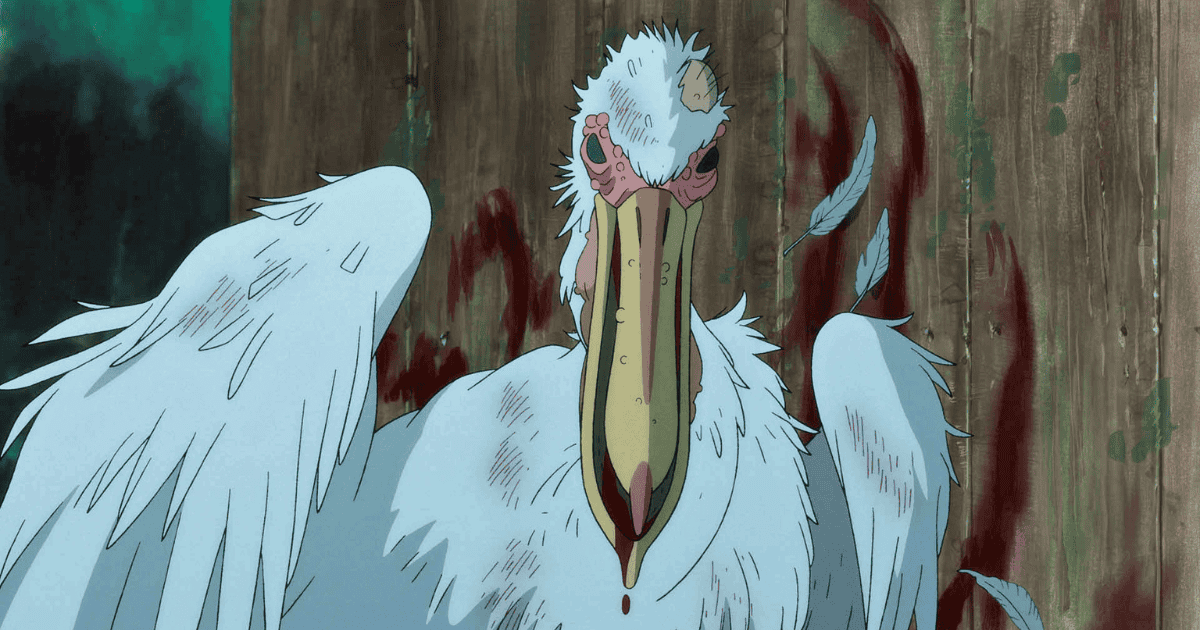
Noble Pelican’s Profile
One of the pelicans that eat the Warawara as they prepare to be born as humans. Mortally injured by Himi’s fire, he is eventually buried by Mahito.
[Image of a food chain ecosystem diagram]Pelicans and Parakeets as Images of Miyazaki Devouring Talent
The pelicans and parakeets seem to have been brought into the world by the Granduncle. The dying pelican’s words are full of suffering. If the world below is Miyazaki’s creative world, perhaps the Warawara flying out of it can be read as emerging talents—and the pelicans eat them.
A remark Miyazaki makes in Never-Ending Man: Hayao Miyazaki offers a clue to this reading. Parts of the recording were difficult to hear, and I have supplied some wording:
“I really feel that it is over. I did raise successors. But when they develop and you let them do the work, you end up eating them. Eating their talent. There is no one left I want to give a chance to. The studio eats people. That is its fate, I suppose. You eat them, and then it is over—finished, just like that. I have no regrets.”
(Original Text in Japanese)
「おわったんだなーってほんとに思うんだよ。いや、後継者を育てたよ。それで、後継者がそだって、やらせると、結局食べちゃうことになるんですよ。この人たちの才能食べちゃう。こいつにやらせてみたいという人間は一人もいなくなった。スタジオは人を食べてくんですよ。まあ、これがだから宿命だからね~。まあ、食べて。それで、おしまいになっちゃって、ぴしゃっとさ。なんの未練もないんだよ。」
I hear the pelicans’ invitation to go and eat as a whisper to Miyazaki: making another film means consuming more talent, but you cannot stop making films anyway, so why not go? The devouring parakeets could likewise reflect Miyazaki, especially given his identification with their king. Yet they might also stand more broadly for people who feed on his work, including us as its audience.
Explore the reading in more detail: The Pelicans and Parakeets as Devourers.
Granduncle|Voiced by: Mark Hamill
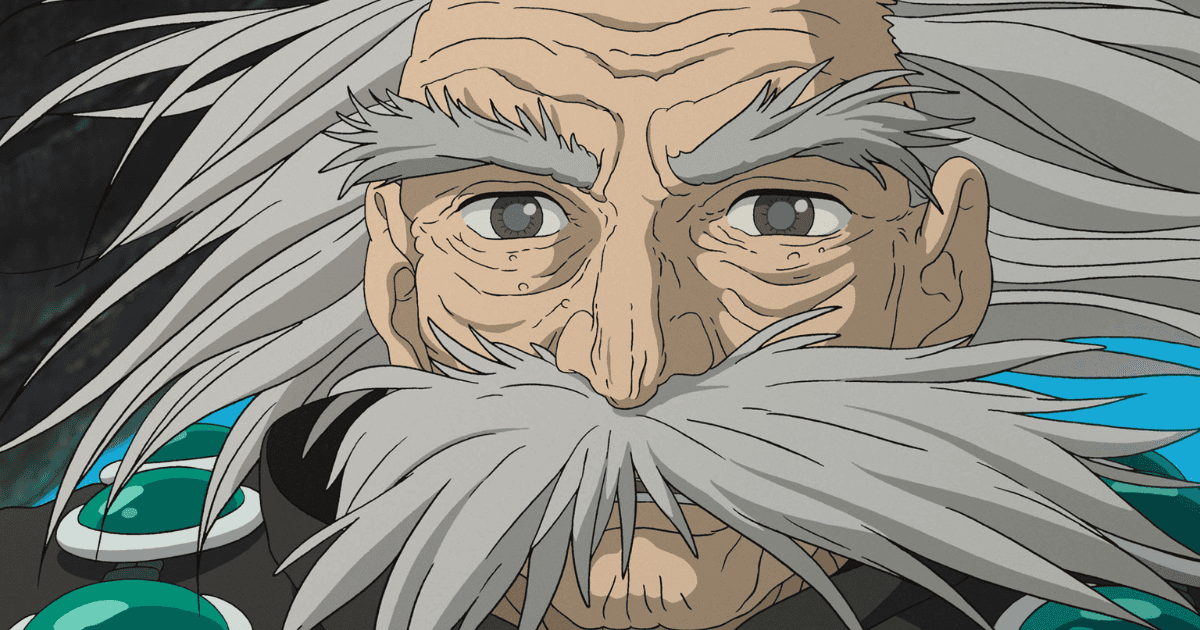
Granduncle’s Profile
The former master of the Blue Heron Mansion disappeared inside its mysterious tower. Natsuko says he became strange from reading too many books.
For decades, he continued building his own world and used the Heron to draw Mahito, his blood relative, into the tower as a potential successor. Mahito rejects that world, and it eventually collapses along with the tower. Even so, the Granduncle seems satisfied.
The Granduncle as Isao Takahata (and Miyazaki)
In the NHK documentary “Professional Work Style: 2399 Days with Ghibli and Hayao Miyazaki,” broadcast on December 16, 2023, Miyazaki identifies Takahata as the model for the Granduncle.
Yet I cannot see the Granduncle as Takahata alone. If the fantasy world is Miyazaki’s creative world, he seems to have projected himself into its maker too. Former Ghibli animator and director Hiromasa Yonebayashi also wondered whether both men were present in the character, while stressing that this was only his impression. Perhaps the collapse depicts Miyazaki bringing an older self to an end. But then, why does Mahito—another Miyazaki—bring a stone back? I explore that question in the linked analysis.
The Thirteen Stones and the Granduncle’s Stack of Eight
The thirteen “cold stones” the Granduncle tries to entrust to Mahito are another puzzle. I think they might represent Miyazaki’s work, but the number thirteen still catches my attention.
We could decide the number means nothing, yet I cannot resist trying to find a reason. Perhaps we need to consider it together with the eight stones in the Granduncle’s unstable stack.
The numbers might become meaningful through Miyazaki’s relationship with Takahata. That is an interpretation to explore, rather than a code whose answer has been established. How do you read them?
Read the proposed interpretation: The Meaning of the Eight and Thirteen Stones.
Other Characters and Voice Actors
The Seven Elderly Maids
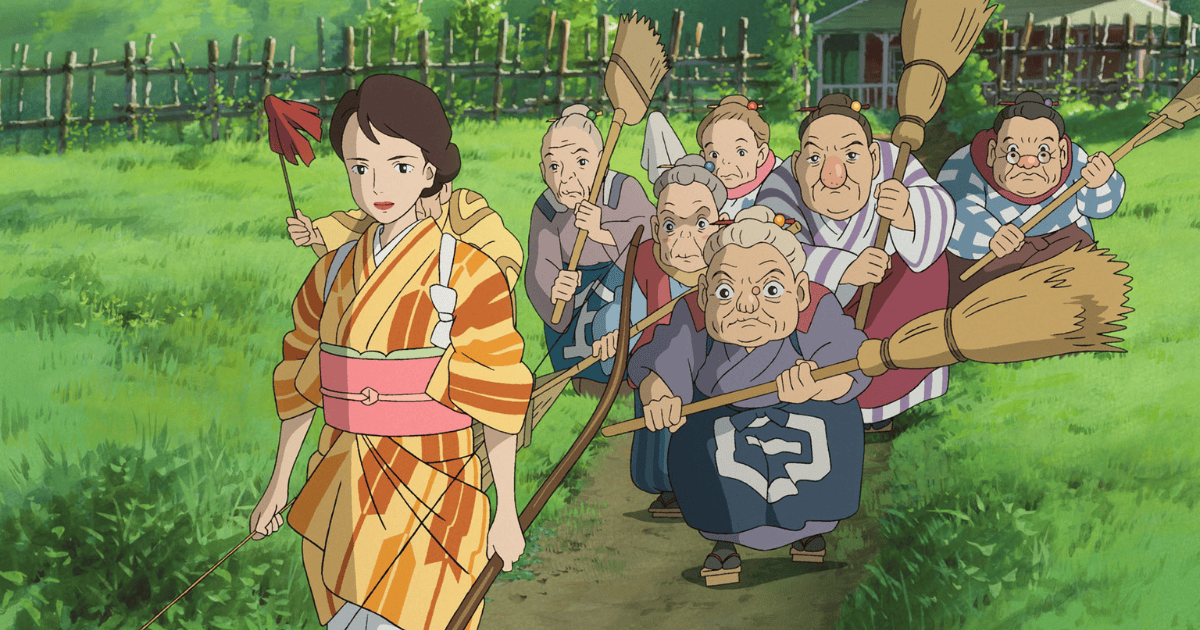
Seven elderly maids care for Mahito at the Blue Heron Mansion. Five are named below, with their English voice actors.
- Aiko: Barbara Goodson
- Izumi: Denise Pickering
- Utako: Barbara Rosenblat
- Eriko: Melora Harte
- Kiriko: Florence Pugh
The Boy and the Heron (2023) Original Japanese Voice Cast List
| Character Name | Voice Actor |
|---|---|
| Mahito Maki | Soma Santoki |
| The Gray Heron | Masaki Suda |
| Himi | Aimyon |
| Natsuko | Yoshino Kimura |
| Shoichi Maki | Takuya Kimura |
| Granduncle | Shōhei Hino |
| Kiriko | Ko Shibasaki |
| Noble Pelican | Kaoru Kobayashi |
| The Parakeet King | Jun Kunimura |
| Izumi | Keiko Takeshita |
| Utako | Jun Fubuki |
| Eriko | Sawako Agawa |
| Aiko | Shinobu Otake |
The images used in this article are provided by the “Still Images of Studio Ghibli Works” collection.
Can you name the movie before the scene comes into focus?
Put your visual memory to the test with a blurred Studio Ghibli scene.


Reader Comments
Have a thought or interpretation? Leave a comment